
Unveiling the Powerhouses: A Deep Dive into Thermal Energy Generation
Discover the intricate workings, diverse types, and critical considerations of thermal power plants in our modern world.
Thermal power plants are cornerstone facilities in the global energy landscape, dedicated to converting heat energy into much-needed electrical power. This presentation outline explores their fundamental principles, essential components, operational dynamics, and their evolving role in an energy-conscious world. As of May 07, 2025, these plants continue to be a significant source of electricity, adapting with technological advancements to meet both energy demands and environmental responsibilities.
Key Highlights of Thermal Power Generation
- Fundamental Process: At their core, thermal power plants utilize a heat source (often from burning fuels) to create high-pressure steam, which then drives turbines connected to generators to produce electricity, primarily following the Rankine thermodynamic cycle.
- Global Significance: These plants are responsible for a substantial portion of worldwide electricity production, providing reliable baseload power critical for industrial and residential needs. For instance, in countries like India, they contribute to around 66% of the electricity supply.
- Evolving Technology: While traditional fossil-fuel plants face environmental scrutiny, advancements in efficiency (like combined-cycle systems) and emissions control are continually reshaping the industry, alongside the exploration of cleaner heat sources.
The Heart of Power: Understanding the Working Principle
The Rankine Cycle in Action
The operation of most thermal power plants is elegantly described by the Rankine cycle, a closed-loop thermodynamic cycle that converts heat into mechanical work, which is then converted into electricity. Water is the typical working fluid.
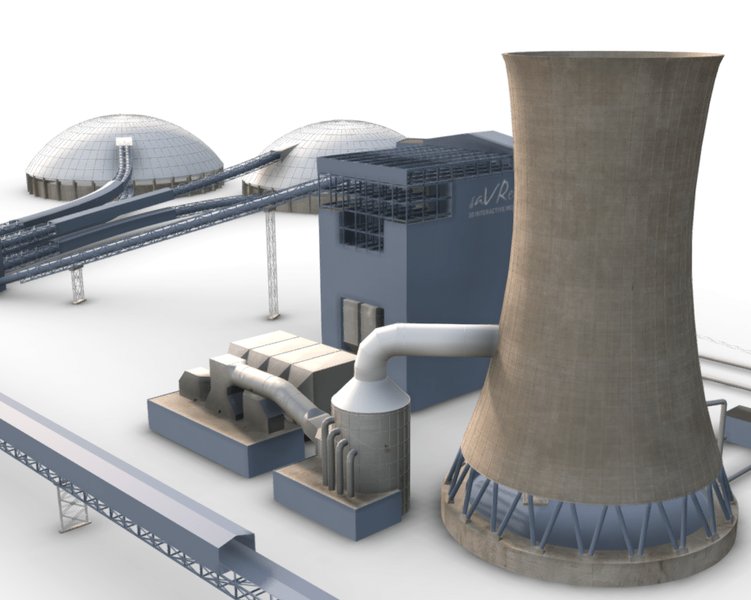
Schematic overview of a coal-fired thermal power plant employing the Rankine cycle.
Step-by-Step Breakdown:
- Fuel Combustion & Heat Generation: A fuel source (e.g., coal, natural gas, biomass) is burned in a furnace within a boiler. This combustion releases a tremendous amount of heat.
- Steam Generation: The heat from combustion is transferred to water circulating in boiler tubes, converting it into high-pressure, high-temperature steam. Modern plants can achieve steam conditions like 170 bar and 570°C for enhanced efficiency.
- Turbine Rotation: This superheated steam is directed at high velocity onto the blades of a turbine, causing the turbine shaft to rotate rapidly. This step converts the thermal energy of the steam into mechanical energy.
- Electricity Generation: The rotating turbine shaft is directly coupled to a generator. As the turbine spins, it drives the generator, which converts the mechanical energy into electrical energy through electromagnetic induction.
- Condensation: After passing through the turbine, the now lower-pressure steam is exhausted into a condenser. Here, it is cooled by circulating water (from a river, lake, or cooling tower), causing it to condense back into liquid water (feedwater).
- Feedwater Pumping: The condensed water is then pumped back to the boiler at high pressure by a feedwater pump, and the cycle begins anew. This closed-loop system conserves water and improves efficiency.
Anatomy of a Thermal Power Plant: Key Components
A thermal power plant is a complex assembly of various systems and components, each playing a crucial role in the energy conversion process. While specific components can vary based on fuel type and plant design, several are fundamental:
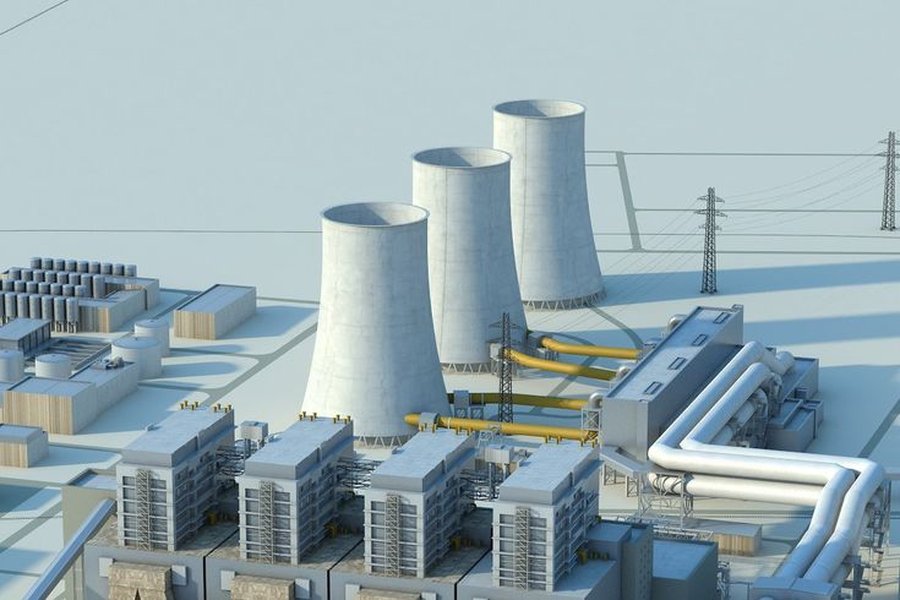
Simplified layout showcasing the primary components of a thermal power plant.
- Fuel Handling System: Manages the reception, storage, and preparation of fuel. For coal plants, this includes crushers and pulverizers. For gas plants, it involves pipelines and pressure regulation.
- Boiler (Steam Generator): A massive furnace where fuel is combusted to heat water and produce high-pressure, high-temperature steam. It includes various sections like the economizer, drum, superheater, and reheater.
- Turbine: A device with multiple sets of blades. High-pressure steam expands through the turbine, causing it to rotate. Turbines can be single-stage or multi-stage for greater efficiency.
- Generator (Alternator): Coupled to the turbine, it converts the rotational mechanical energy into electrical energy.
- Condenser: A heat exchanger where exhaust steam from the turbine is cooled and condensed back into water using a cooling medium (typically water). This creates a vacuum that improves turbine efficiency.
- Cooling Towers/Cooling System: Dissipate the waste heat absorbed by the cooling water in the condenser. This can be done through once-through cooling (drawing water from a large body and returning it) or, more commonly, via cooling towers that release heat to the atmosphere through evaporation.
- Feedwater Pump: A high-pressure pump that transports the condensed water (feedwater) back to the boiler.
- Water Treatment Plant: Purifies raw water to remove impurities that could cause scaling, corrosion, or carryover in the boiler and turbine, ensuring steam quality and equipment longevity.
- Ash Handling System (for solid fuels): Collects and disposes of ash produced from the combustion of fuels like coal or biomass.
- Flue Gas Treatment System (Chimney/Stack): Includes equipment like electrostatic precipitators (ESPs) and flue-gas desulfurization (FGD) units to remove particulate matter and pollutants (like SOx and NOx) from the exhaust gases before they are released into the atmosphere via a tall chimney.
- Control Systems: Sophisticated instrumentation and control systems monitor and regulate all plant operations for efficiency, safety, and compliance with environmental standards.
Visualizing the Interconnections: Power Plant Process Mindmap
The following mindmap illustrates the core processes and component relationships within a typical thermal power plant, showcasing the flow of energy from fuel input to electricity output.
Fueling the Nation: Types of Thermal Power Plants
Thermal power plants are categorized based on the primary heat source or fuel they utilize. Each type has distinct operational characteristics, efficiencies, and environmental impacts.
Fossil Fuel-Based Plants
- Coal-Fired Power Plants: Historically the most common type, these plants burn pulverized coal. They are known for fuel abundance but face challenges with emissions (CO2, SOx, NOx) and ash disposal.
- Natural Gas-Fired Power Plants:
- Simple Cycle Gas Turbine (SCGT): Natural gas is burned, and the hot gases directly drive a gas turbine. These are often used as peaker plants due to their quick startup times.
- Combined Cycle Gas Turbine (CCGT): Highly efficient plants where exhaust heat from a gas turbine is used to generate steam in a Heat Recovery Steam Generator (HRSG), which then drives a steam turbine. CCGT plants can achieve efficiencies exceeding 60%.
- Oil-Fired Power Plants: Use heavy fuel oil or diesel. Less common now due to higher fuel costs and emissions compared to natural gas.
Non-Fossil Fuel Based Plants
- Nuclear Power Plants: Utilize heat from nuclear fission reactions (typically uranium) to produce steam. They generate vast amounts of electricity with no greenhouse gas emissions during operation, but face challenges with radioactive waste management and public perception.
- Biomass Power Plants: Burn organic materials such as wood chips, agricultural waste, or dedicated energy crops. Considered a renewable energy source if biomass is sustainably sourced.
- Waste Incineration Plants (Waste-to-Energy): Burn municipal solid waste to generate steam and electricity, reducing landfill volume while producing energy. Require robust flue gas cleaning systems.
- Geothermal Power Plants: Tap into underground reservoirs of steam or hot water. The steam can directly drive turbines, or the hot water can be used to vaporize a secondary fluid with a lower boiling point in a binary cycle.
- Solar Thermal Electric Plants: Concentrate sunlight using mirrors or lenses to heat a fluid (e.g., oil or molten salt), which then generates steam to drive a turbine.
This video provides an animated overview of how a coal-fired thermal power plant operates, illustrating key components and processes.
Performance Metrics: Efficiency of Thermal Power Plants
The efficiency of a thermal power plant is a critical measure, defined as the ratio of the electrical energy output to the energy content of the fuel consumed. Higher efficiency means less fuel is needed to produce the same amount of electricity, leading to lower costs and reduced environmental impact.
- Typical Coal-Fired Plants: Modern subcritical plants typically achieve efficiencies of 35-38%.
- Advanced Coal Technologies:
- Supercritical Plants: Operate at higher steam pressures and temperatures, reaching efficiencies of around 42-44%.
- Ultra-Supercritical (USC) Plants: Operate at even higher parameters, with efficiencies up to 46% or slightly more.
- Simple Cycle Gas Turbines (SCGT): Efficiencies range from 20% to 35%.
- Combined Cycle Gas Turbines (CCGT): These are among the most efficient fossil fuel plants, with efficiencies often reaching 55-60%, and some advanced designs exceeding 62%.
- Nuclear Power Plants: Typically have thermal efficiencies around 30-37%, similar to older coal plants, but their fuel density is vastly higher.
- Biomass Plants: Efficiencies are generally lower, often in the 20-35% range, depending on technology and fuel moisture.
Losses occur at various stages, including heat lost in flue gases, incomplete combustion, heat rejected in the condenser, and mechanical/electrical losses in the turbine and generator.
Comparative Analysis of Power Plant Characteristics
The radar chart below provides a visual comparison of different thermal power plant types based on several key performance and impact indicators. The scales are relative; for instance, a higher "Environmental Friendliness" score indicates lower negative impact. "Capital Cost" and "Operating Cost" are presented such that lower numerical values on the chart imply higher costs (e.g., a score of 2 for capital cost means very high cost, while 8 means lower cost).
This chart helps in understanding the trade-offs involved in choosing a particular type of thermal power plant technology.
Pros and Cons: Evaluating Thermal Power Plants
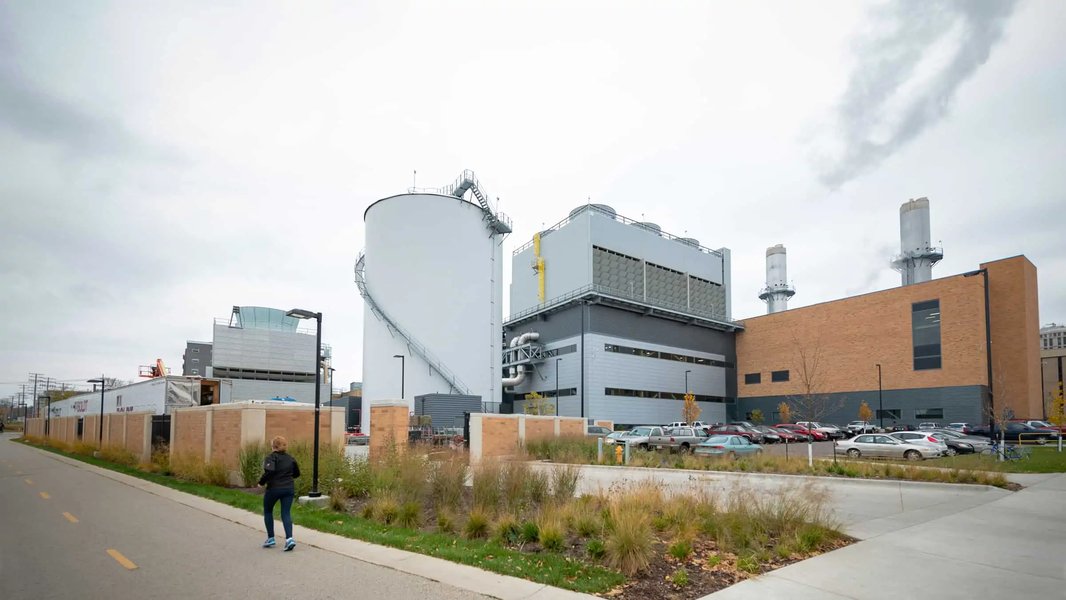
Modern thermal power plants aim to balance energy output with environmental considerations.
Advantages
- Reliability and Baseload Power: Thermal power plants, especially coal and nuclear, can operate 24/7, providing a consistent and reliable electricity supply essential for grid stability (baseload power).
- High Power Output: They can be built to generate large amounts of electricity from a single location, meeting the demands of large urban and industrial centers.
- Mature Technology: The technology for many types of thermal power plants (especially coal and gas) is well-established and understood.
- Fuel Availability (for some types): Coal is abundant in many parts of the world, and natural gas infrastructure is widespread.
- Locational Flexibility: Can be sited in various locations, though proximity to fuel sources and cooling water is advantageous. They can be built near load centers to reduce transmission losses.
- Cost-Effectiveness (in some contexts): For certain fuels like coal, the fuel cost can be relatively low, leading to cheaper electricity generation, although this is offset by environmental compliance costs.
Disadvantages and Environmental Considerations
- Environmental Impact (Fossil Fuels):
- Greenhouse Gas Emissions: Burning fossil fuels (coal, oil, natural gas) releases significant amounts of carbon dioxide (CO2), a primary greenhouse gas contributing to climate change.
- Air Pollutants: Emissions include sulfur oxides (SOx), nitrogen oxides (NOx), particulate matter (PM), and heavy metals like mercury, which contribute to acid rain, smog, and respiratory problems.
- Resource Depletion: Fossil fuels are finite, non-renewable resources. Over-reliance raises concerns about long-term energy security and price volatility.
- Water Consumption: Large volumes of water are required for the cooling process in condensers, which can strain local water resources, especially in arid regions. Thermal pollution of water bodies can also occur if cooling water is discharged at elevated temperatures.
- Waste Management:
- Ash Disposal (Coal/Biomass): Combustion of solid fuels produces large quantities of ash (fly ash and bottom ash) that require careful management and disposal to prevent environmental contamination.
- Radioactive Waste (Nuclear): Nuclear power plants produce radioactive waste that requires long-term, secure storage.
- Efficiency Limitations: While modern plants are improving, a significant portion of the energy in the fuel is lost as waste heat, particularly in older or simpler designs.
- High Initial Capital Costs: Building large thermal power plants, especially nuclear and advanced coal plants with comprehensive emission controls, requires substantial upfront investment.
The Evolving Landscape: Modern Developments and Future Trends
The thermal power sector is undergoing significant transformation driven by the need for higher efficiency, lower emissions, and integration with a changing energy mix.
Technological Advancements
- Combined Cycle Gas Turbines (CCGT): These continue to be a preferred technology for new gas-fired plants due to their high efficiency and lower emissions compared to coal.
- Advanced Ultrasupercritical (A-USC) Technology: Pushing steam temperatures and pressures even higher in coal plants to boost efficiency beyond 46-48%, reducing fuel consumption and CO2 emissions per unit of electricity.
- Carbon Capture, Utilization, and Storage (CCUS): Technologies to capture CO2 emissions from flue gases of fossil fuel plants and either utilize it in industrial processes or store it geologically to prevent atmospheric release. While promising, widespread deployment faces cost and scalability challenges.
- Flue Gas Desulfurization (FGD) and Selective Catalytic Reduction (SCR): Increasingly stringent emission standards necessitate advanced systems to remove SOx and NOx from exhaust gases.
Fuel Diversification and Hybridization
- Co-firing with Biomass/Hydrogen: Existing coal plants are being retrofitted to co-fire with biomass or hydrogen to reduce their carbon footprint.
- Waste-to-Energy Plants: Growing interest in converting municipal and industrial waste into energy, addressing waste management and energy production simultaneously.
- Integration with Renewables: Thermal plants are increasingly seen as partners to intermittent renewables (solar, wind) by providing grid stability and flexible backup power. Hybrid projects combining thermal and renewable sources are emerging.
Digitalization and Automation
- AI and Machine Learning: Used for optimizing combustion, predictive maintenance, improving plant efficiency, and reducing operational costs.
- Advanced Control Systems: Enable more flexible operation, allowing plants to ramp up or down more quickly in response to grid demand and renewable energy fluctuations.
Shift Towards Smaller, Modular Units
- Small Modular Reactors (SMRs): In the nuclear sector, SMRs offer potential benefits in terms of scalability, faster construction, and enhanced safety features for decentralized power generation.
Thermal Power Plant Types: A Comparative Overview
The table below summarizes key characteristics of different types of thermal power plants, offering a quick comparison of their fuel sources, typical efficiencies, and primary advantages and disadvantages.
| Fuel Type | Key Technology | Typical Efficiency Range | Primary Advantage(s) | Primary Disadvantage(s) |
|---|---|---|---|---|
| Coal | Pulverized Coal Boiler (Subcritical, Supercritical, USC) | 35-46% | Abundant fuel, relatively low fuel cost, baseload power | High CO2, SOx, NOx emissions; ash disposal; water intensive |
| Natural Gas (Simple Cycle) | Gas Turbine (GT) | 20-35% | Fast startup, good for peaking power, lower emissions than coal | Lower efficiency than CCGT, fuel price volatility |
| Natural Gas (Combined Cycle) | Gas Turbine (GT) + Steam Turbine (ST) via HRSG | 55-62%+ | High efficiency, significantly lower emissions than coal, operational flexibility | More complex, higher capital cost than SCGT, fuel price volatility |
| Nuclear | Nuclear Reactor (PWR, BWR, etc.) + Steam Turbine | 30-37% | No operational GHG emissions, very high power output, long fuel cycle | Radioactive waste management, high capital cost, public perception, proliferation concerns |
| Biomass | Boiler + Steam Turbine | 20-35% | Renewable fuel source (if sustainably managed), potential carbon neutrality | Fuel supply logistics and cost, lower energy density, ash disposal, potential NOx emissions |
| Geothermal | Dry Steam, Flash Steam, or Binary Cycle Plants | 10-23% | Renewable, baseload power, very low emissions | Site-specific (requires geothermal reservoirs), drilling costs, potential induced seismicity |
| Waste-to-Energy (Incineration) | Incinerator/Boiler + Steam Turbine | 15-27% | Reduces landfill volume, recovers energy from waste | Requires robust flue gas cleaning, potential for dioxin/furan emissions if not well controlled, ash disposal |
| Solar Thermal Electric | Concentrating Solar Power (CSP) + Steam Turbine | 15-25% (system efficiency) | Renewable, no fuel cost, can incorporate thermal storage for dispatchability | High capital cost, requires significant land area, intermittent (dependent on sunlight) |
Frequently Asked Questions (FAQ)
What is the most common fuel for thermal power plants?
Historically and globally, coal has been the most common fuel. However, natural gas usage is rapidly increasing due to its higher efficiency in combined-cycle plants and lower CO2 emissions per unit of energy compared to coal. The specific dominant fuel varies by region depending on resource availability and energy policy.
How efficient are thermal power plants?
Efficiency varies widely by fuel type and technology. Older coal plants might be around 30-35%. Modern supercritical coal plants can reach 42-46%. Simple cycle gas turbines are typically 20-35% efficient, while combined-cycle gas turbine (CCGT) plants can exceed 60% efficiency, making them among the most efficient fossil fuel power generation technologies.
What is the Rankine cycle?
The Rankine cycle is a thermodynamic cycle that converts heat into mechanical work, which is then typically used to generate electricity. It involves four main processes: 1) Pumping a working fluid (usually water) to high pressure. 2) Heating the fluid in a boiler to create high-pressure vapor (steam). 3) Expanding the vapor through a turbine to produce work. 4) Condensing the vapor back into a liquid in a condenser. Most steam-based thermal power plants operate on this cycle.
What are the main environmental concerns with thermal power plants?
The primary concerns, especially for fossil fuel plants, include:
- Air pollution: Emission of greenhouse gases (like CO2), sulfur oxides (SOx), nitrogen oxides (NOx), and particulate matter.
- Water usage: Large quantities of water are needed for cooling, which can strain local water resources.
- Waste disposal: Management of ash (from coal/biomass) or radioactive waste (from nuclear plants).
- Thermal pollution: Discharge of warm water into water bodies can affect aquatic ecosystems.
Are there cleaner types of thermal power plants?
Yes. Natural gas combined-cycle (CCGT) plants are significantly cleaner than coal plants in terms of CO2, SOx, and particulate emissions. Nuclear power plants produce no greenhouse gases during operation. Geothermal and solar thermal plants are renewable and have very low operational emissions. Biomass plants can be carbon neutral if the biomass is sustainably sourced. Additionally, technologies like carbon capture and storage (CCS) aim to reduce emissions from fossil fuel plants.
Recommended Further Exploration
To deepen your understanding of thermal power generation, consider exploring these related topics:
- Explore the detailed workings of a combined-cycle gas turbine power plant.
- Investigate the latest advancements in carbon capture technologies for thermal power plants.
- Compare the lifecycle environmental impact of coal versus natural gas power generation.
- Learn about the role of geothermal energy in the future of thermal power.
References
Last updated May 7, 2025