
Unveiling the Untold Secrets: The Third Punic War
Discover the fascinating facts, events, and legacies of Rome's final conflict with Carthage
Key Takeaways
- The Clash and Consequence: The Third Punic War (149–146 BCE) marks the last and most destructive conflict between Rome and Carthage, culminating in the complete annihilation of Carthage.
- Political Manipulation and Military Ingenuity: Influential figures like Cato the Elder and generals such as Scipio Aemilianus played pivotal roles, while innovative tactics and harsh demands shaped the war’s progress.
- Lasting Impact on the Mediterranean: Beyond the battlefield, the war had profound economic, cultural, and political implications that paved the way for Rome’s dominance in the Western Mediterranean.
Overview of the Third Punic War
The Third Punic War (149–146 BCE) stands as a critical chapter in ancient history, representing the final blow to one of Rome's greatest rivals, Carthage. Emerging from deep-seated Roman animosity—exacerbated by earlier conflicts and the stirring rhetoric of figures like Cato the Elder—the war was ignited by a combination of political intrigue, treaty violations, and strategic pretexts. Carthage, having endured two previous Punic Wars, was seen as a persistent threat even after being weakened, and its minor military misstep against Numidia provided the spark needed for Rome to strike decisively.
Political Catalyst and Causes
In the aftermath of the Second Punic War, Carthage was subjected to crippling conditions such as tribute payments and severe territorial limitations. However, Carthage’s resurgence in economic and military might raised alarms in Rome. Notably, the persistent calls for the utter destruction of Carthage by influential figures like Cato the Elder—who infamously ended his Senate speeches with the phrase “Carthage must be destroyed” (Carthago delenda est)—cemented a public sentiment in favor of a final, uncompromising conflict.
Additionally, the breach of the peace treaty by Carthage, when it engaged in military action against Numidia (a close ally to Rome), provided the official casus belli. Rome’s demands grew increasingly uncompromising, including the requirement for Carthage to surrender hostages and abandon any military ambitions, which further escalated tensions and set the stage for full-scale warfare.
Military Campaigns and Tactics
The war was predominantly fought on Carthage’s home ground, in the region that is modern-day northern Tunisia. Rome, launching a formidable two-pronged assault by landing a powerful military force at Utica, set about isolating and besieging the Carthaginian city. The siege of Carthage persisted for nearly three arduous years. Despite facing a heavily fortified city, the Romans eventually breached its defenses, employing innovative military strategies such as the use of siege towers, circumvallation, and an array of engineering feats.
A notable military innovation during this period was the Roman incorporation of the “corvus” tactic, originally designed during naval engagements. This boarding bridge mechanism facilitated the Roman forces in overcoming well-established defenses. Even though Carthage demonstrated remarkable resilience – with defenders exploiting their knowledge of the urban terrain and maintaining robust naval capabilities – the overwhelming Roman military strategy and persistent pressure eventually led to the city's downfall.
Leadership and Key Figures
Central to Rome's ultimate victory was the leadership of Scipio Aemilianus. Building upon a storied legacy inherited from his adoptive grandfather, Scipio Africanus, Aemilianus orchestrated the final siege with a combination of tactical brilliance and ruthless determination. His command not only led to military success but also symbolized the broader transformation of Rome into an imperial power that was willing to enforce its will on a grand scale.
In addition to Aemilianus, the role of Cato the Elder cannot be understated. His persistent admonitions and the legendary dictum “Carthage must be destroyed” resonated deeply within Roman society, galvanizing public opinion and ensuring that the destruction of Carthage became a matter of state policy. Historians such as Polybius chronicled these events in detail, providing crucial insights into the military and political maneuvers of the time.
The Siege and Destruction of Carthage
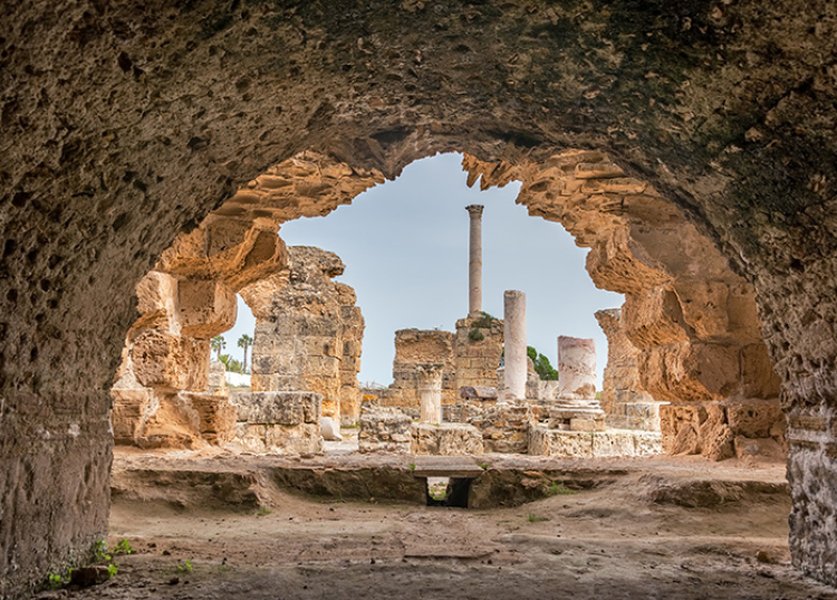
The climax of the war was marked by a prolonged and brutal siege. After finally breaching its walls in 146 BCE, Roman forces embarked on a relentless campaign to exterminate the Carthaginian population. Over the course of seven devastating days, Carthage was reduced to ashes. Thousands of its inhabitants were killed or enslaved—a grim reflection of the absolute determination of Rome to erase Carthage as a rival.
Following the destruction, the Romans declared the land uninhabitable, and Carthage’s legacy, both as a city and as a symbol of Mediterranean civilization, was obliterated. This catastrophic event not only eliminated a perceived threat but also served as a stark demonstration of Rome's military superiority and its uncompromising approach to imperial expansion.
In-Depth Analysis and Legacy
Economic and Cultural Impact
The destruction of Carthage had far-reaching economic implications. By seizing Carthage’s wealth and resources, Rome not only consolidated its power but also laid the groundwork for an economic boom in the western Mediterranean region. The subsequent incorporation of Carthaginian territories into Roman administration opened new trade routes and markets, significantly shaping the region’s commercial landscape.
The cultural ramifications of the Third Punic War were equally profound. With the fall of Carthage, a once-thriving civilization known for its maritime prowess and trading acumen was reduced to ruins. The loss of the Carthaginian library and various cultural artifacts resulted in a substantial diminution of historical records, leaving modern historians to piece together its legacy from the accounts of its conquerors. This cultural erasure, while tragic, also underscored the emergence of Rome as the central authority and cultural beacon in the Mediterranean world.
Transformation into a Roman Province
In the aftermath of the war, the lands formerly under Carthaginian control were reorganized. Rome established the province of Africa, transforming the region into an integral component of the Roman Republic and, later, the Roman Empire. This reorganization was not only political but also served as a blueprint for how Rome would manage its rapidly expanding territories in the centuries to come.
The legacy of the Third Punic War is thus twofold: it epitomizes both the ruthless nature of ancient warfare and the strategic foresight that allowed Rome to transition from a republic embroiled in domestic strife to an empire that dominated vast regions across Europe, Africa, and Asia.
Visual Insights: A Statistical Overview
Below is a radar chart that aggregates various interpretative measures regarding key factors of the Third Punic War, ranging from military tactics, leadership, political influence, economic impact, to cultural consequences. This representation offers a comparative perspective on these interrelated domains as viewed by historians and scholars.
Conceptual Map of the Third Punic War
The following mindmap illustrates the central themes and connections associated with the Third Punic War, ranging from its political origins to its enduring legacy. It serves as a conceptual guide to the various facets of this historical conflict.
Comparative Analysis: Key Aspects of the Third Punic War
The table below summarizes and compares the key aspects of the Third Punic War, including its timeline, causes, military strategies, and outcomes. It aggregates perspectives from multiple historical sources to provide a consolidated view.
| Aspect | Description |
|---|---|
| Duration | 149–146 BCE; a brief yet decisive conflict marking the conclusion of the Punic Wars. |
| Primary Cause | Carthage’s violation of treaty terms by attacking Numidia, coupled with historical animosity and political pressures. |
| Key Military Strategies | Prolonged siege tactics, use of innovative methods like the “corvus,” circumvallation, and effective siege engineering. |
| Leadership Figures | Influential leaders included Scipio Aemilianus, who led Roman forces, and Cato the Elder, whose public rhetoric fueled the war effort. |
| Outcome | Complete destruction of Carthage; Carthaginian population enslaved or killed; territory reorganized as the Roman province of Africa. |
| Economic & Cultural Impact | Rome acquired significant resources while the cultural heritage of Carthage was largely obliterated, reshaping Mediterranean power dynamics. |
Frequently Asked Questions
What led to the outbreak of the Third Punic War?
The war was triggered primarily by Carthage’s violation of its treaty with Rome after attacking Numidia, combined with longstanding Roman resentment fueled by influential figures such as Cato the Elder, who repeatedly asserted that "Carthage must be destroyed."
How did Rome manage to win against a resilient Carthage?
Rome deployed an overwhelming military force, used strategic siege techniques and innovative methods such as the corvus boarding tactic, and maintained a relentless campaign that eventually breached Carthage’s defenses, leading to its complete destruction.
What were the long-term consequences of the war?
Besides the complete eradication of Carthage, the war significantly bolstered Rome’s economic resources and solidified its political dominance in the Mediterranean by allowing it to restructure conquered territories as Roman provinces.
How reliable are the historical accounts of the Third Punic War?
Much of what we know comes from primary sources like the historian Polybius, whose accounts have been corroborated by various other historical analyses, though interpretations may vary depending on the perspective.
References
- Third Punic War Facts - History for Kids
- Overview - Kiddle Encyclopedia
- Punic Wars Insights - History Hit
- Detailed Analysis - Coolaboo
- Comprehensive Wikipedia Article
- World History Encyclopedia
Recommended Related Queries
Last updated March 31, 2025