
Is Time Travel Theoretically Possible?
Exploring the Scientific Foundations and Challenges of Time Travel
Key Insights
- General Relativity and Spacetime Curvature: Einstein's theory lays the foundation by merging space and time, suggesting under specific conditions, time travel could occur.
- Time Dilation and Closed Timelike Curves: Time dilation effects near the speed of light and solutions like closed timelike curves indicate theoretical methods to "travel" through time.
- Challenges and Paradoxes: The practical hurdles, energy requirements, and paradoxical implications such as the grandfather paradox remain significant obstacles.
Introduction to Time Travel in Theoretical Physics
Time travel has been a subject of intrigue both in scientific research and popular culture. Modern physics, particularly through Einstein’s theory of general relativity, provides a framework that brings some aspects of time travel into the realm of theoretical possibility. However, while the science lays out fascinating scenarios where time travel could, in principle, occur, several practical and conceptual challenges must be overcome before it can move beyond the domain of theoretical investigation.
Central to the discussion is the notion that space and time are not separate entities but are intertwined in a four-dimensional fabric known as spacetime. This understanding, fundamentally altered by Einstein’s contributions, opens up the possibility of phenomena such as time dilation, closed timelike curves, and wormholes, all of which suggest that the linear progression of time might be altered under certain extreme physical conditions.
Theoretical Foundations of Time Travel
1. General Relativity and the Fabric of Spacetime
At the heart of modern discussions about time travel lies Albert Einstein's theory of general relativity. This theory revolutionized our understanding of gravity by describing it as a curvature of spacetime caused by mass and energy. In this framework, time is treated as another dimension similar to the three spatial dimensions. When massive objects create a curvature in spacetime, they can cause time to behave in unusual ways under extreme conditions.
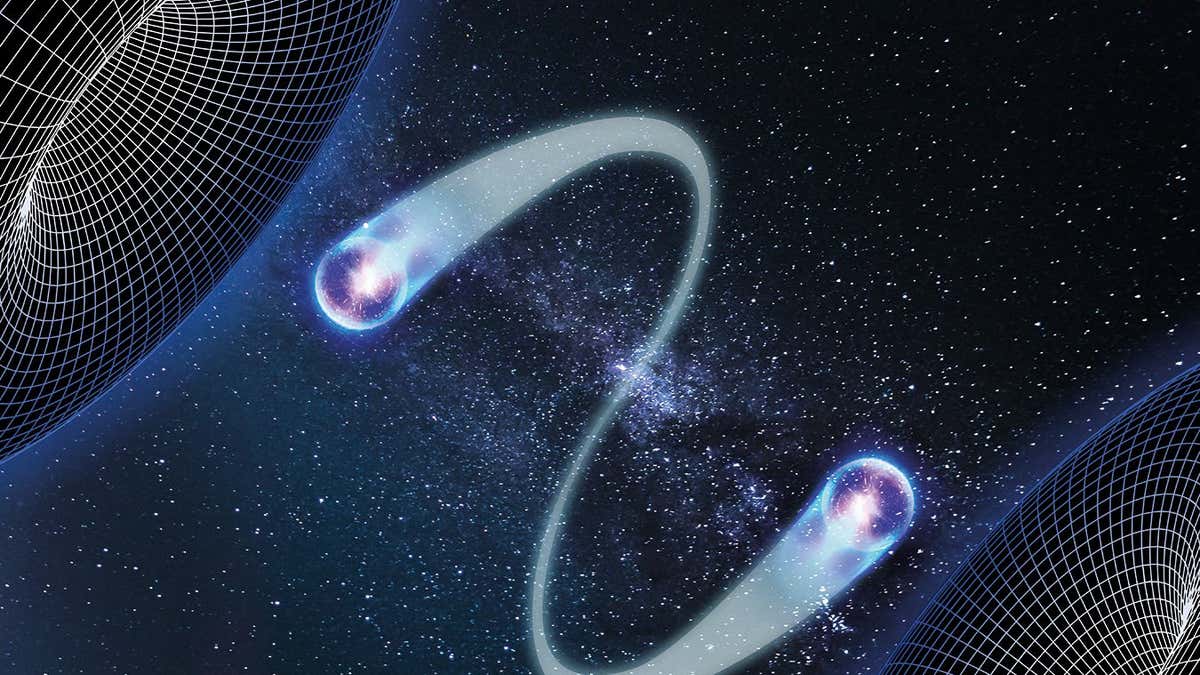
This curvature leads to the potential existence of closed timelike curves (CTCs), which are paths in spacetime that loop back on themselves. In other words, an object traveling along such a curve could, theoretically, return to an earlier point in its own timeline. Several solutions to Einstein’s equations of general relativity suggest the existence of these curves, although they are often accompanied by conditions that are currently not feasible with our existing technology.
2. Time Dilation and Special Relativity
Time dilation is another cornerstone concept that arises from physics, particularly under the theory of special relativity. This phenomenon occurs when an object moves at speeds close to the speed of light. As an object accelerates to these extreme velocities, time for the moving observer slows down relative to that of a stationary observer. This effect has been empirically validated using highly precise atomic clocks placed on airplanes and satellites.
In essence, while this does not allow an observer to travel backward in time, it serves as evidence that the passage of time is relative and can be manipulated under specific conditions. A traveler moving at near-light speed would experience less time compared to someone who remains stationary, effectively “traveling into the future.”
3. Wormholes – Tunnels Through Spacetime
Wormholes are another compelling aspect of theoretical physics that suggest a method to traverse the fabric of spacetime. They are hypothesized as tunnels connecting two disparate points in spacetime. If one could create or naturally encounter a wormhole, and if the two ends of the wormhole were to experience different temporal flows, it might be possible to enter one end in the present and exit at a different time — either in the past or the future.
However, generating or stabilizing wormholes would likely require forms of energy or exotic matter that exhibit characteristics not yet observed in nature. The manipulation of these theoretical constructs remains one of the most significant hurdles preventing tangible applications.
4. Alcubierre Warp Drive
An intriguing extension of relativity is the concept of the Alcubierre warp drive. Proposed by physicist Miguel Alcubierre, the idea is based on creating a bubble of warped spacetime that contracts space in front of a spacecraft and expands it behind. This mechanism would allow the spacecraft to travel faster than light relative to the space outside the bubble while staying within the bounds of relativity’s rules locally.
Although the warp drive does not provide a direct method to travel backward in time, it presents an innovative way of conceiving faster-than-light travel. Similar to wormholes, the energy requirements — especially the need for negative mass-energy density — challenge current scientific capabilities.
Concepts Challenging the Notion of Time Travel
1. The Grandfather Paradox and Causality
One of the most debated issues with the notion of time travel, particularly to the past, is the possibility of paradoxes. The grandfather paradox presents a classic scenario where a time traveler could, hypothetically, interfere in events in such a way that prevents their own existence. For instance, if a traveler were to prevent their grandparents from meeting, then the sequence of events leading to the time traveler’s birth could be disrupted, resulting in logical inconsistencies.
Theoreticians have proposed various resolutions to this paradox. One such resolution comes from the Novikov self-consistency principle, which suggests that any actions taken by a time traveler must be consistent with the traveler’s own history and cannot cause a paradox. This means that the timeline would, in some sense, “protect” itself from any self-contradictory changes. Another idea comes from more recent studies, which imply that spacetime might inherently adjust to prevent paradoxical outcomes.
2. Energy Requirements and Technological Hurdles
Beyond the logical and philosophical issues, the practical challenges associated with realizing time travel are formidable. The theoretical models that permit time travel often demand energies that are immense, frequently comparable to the energy output of entire stars. This is particularly true when considering both the manipulation of wormholes and the stabilization of closed timelike curves.
For instance, creating a traversable wormhole or maintaining a stable warp bubble engineered to contract and expand space would likely require amounts of exotic matter that have not yet been discovered or harnessed. Additionally, even if such energies could be generated, the technological systems required to control and direct them with the necessary precision are currently beyond our scientific and engineering capabilities.
3. The Timeline of Scientific Exploration
The ongoing investigation into the theoretical aspects of time travel not only enriches our understanding of the universe but also pushes the boundaries of experimental physics and technology. Much of the current study is based on purely theoretical work, mathematical models, and computer simulations. These studies often explore speculative solutions to Einstein’s equations, investigating how spacetime might behave under conditions that are vastly different from our everyday experiences.
Many physicists recognize that while our current technology is insufficient to produce time travel as typically portrayed in science fiction, the exploration of these ideas has yielded valuable insights into the nature of gravity, quantum mechanics, and the structure of the universe itself. Simply put, the theories provide a framework that encourages further research and might someday lead to technological breakthroughs that could change our understanding of time.
Theoretical Possibilities and Their Implications
1. Time Travel to the Future
The most straightforward and widely accepted form of time travel is forward time travel, made possible by the time dilation effects of special and general relativity. As discussed earlier, traveling at speeds close to the speed of light results in a scenario where the traveler experiences time at a slower rate compared to those who remain at lower velocities. In this manner, if a spacecraft were to travel at such high velocities for what appears to be a short period onboard, a much longer time could pass on Earth.
This phenomenon is not merely theoretical. It has been experimentally confirmed through the use of atomic clocks on fast-moving jets and satellites. Although this “time travel” only allows for access into the future and does not enable one to revisit the past, it nonetheless confirms that the flow of time is not absolute but relative.
2. Time Travel to the Past
In contrast, time travel to the past is riddled with greater theoretical and practical challenges. The creation of closed timelike curves, wormholes positioned such that one end is temporally displaced relative to the other, or even configurations similar to the Alcubierre drive, are all proposals that theoretically hint at backward time travel. Yet, each of these models comes with significant caveats:
- They require conditions or forms of matter outside the realm of current technological capabilities.
- The possibility of generating causal paradoxes, where the traveler's actions could contradict the established sequence of events, remains a serious concern.
- Proposals such as the chronology protection conjecture, famously championed by Stephen Hawking, suggest that the laws of physics might inherently prevent backward time travel to safeguard causality.
These proposals, while mathematically intriguing, have yet to transition from theoretical constructs to practical mechanisms. Their examination continues to drive research into the underlying principles of the universe.
3. Addressing the Paradoxes
A critical aspect that any theory of time travel must confront is the prevention of paradoxes that could undermine the consistency of the timeline. The grandfather paradox is the most cited example, and it has spurred intensive debate among physicists and philosophers. One of the most prominent resolutions is the Novikov self-consistency principle, which argues that any event occurring within a closed timelike curve would have to be self-consistent, thereby preventing any action that might cause a paradox.
Furthermore, recent studies propose that if a paradoxical event were to occur, some form of physical law or mechanism might intervene to nullify the paradox. Such interventions could include constraints on the traveler's actions or adjustments within the spacetime fabric aimed at preserving consistency. These speculative ideas, though still unproven, illustrate the innovative efforts within the theoretical physics community to resolve the inherent issues related to backward time travel.
Comparative Analysis of Theoretical Models
| Model/Concept | Description | Key Challenges |
|---|---|---|
| General Relativity & CTCs | Solutions to Einstein's equations that allow closed timelike curves where an object could theoretically loop back in time. | Requires extreme conditions and encounters causality paradoxes. |
| Time Dilation | The effect described by special relativity where time slows down for high-speed travelers relative to stationary observers. | Only permits travel into the future, not past. |
| Wormholes | Hypothetical tunnels connecting distant points in spacetime that could allow travel across time if one end is temporally out-of-sync. | Energy requirements and stabilization issues, including the need for exotic matter. |
| Alcubierre Warp Drive | A speculative concept to create a warp bubble that contracts space ahead and expands it behind, enabling faster-than-light travel. | Relies on massive energy requirements and negative mass-energy, which are currently unattainable. |
The table above synthesizes the primary theoretical models related to time travel. Each model emphasizes different facets of the problem, from the geometric properties of spacetime to the requirements for energy manipulation and consistency under physical laws. Their exploration deepens our understanding of not only time travel but also the broader behaviors of the universe.
Philosophical and Practical Reflections
Understanding the Implications
The study of time travel raises profound philosophical questions that extend beyond the realm of physics. For example, if time travel to the past were possible, it would compel us to re-examine our notions of free will, determinism, and the very nature of causality. Would our actions be predestined, or could a time traveler truly alter historical events without causing inconsistencies? These inquiries, while speculative, drive debate among scholars and stimulate deeper exploration of both physical and metaphysical principles.
Practically, the enormous energy demands and as-yet unproven requirements such as exotic matter or negative mass-energy imply that humans are likely many decades, if not centuries, away from attempting any form of time travel in a controlled, reproducible manner. Nonetheless, the thorough investigation of these theoretical models provides insights that are invaluable to our understanding of the universe, with potential applications in related fields such as quantum mechanics and cosmology.
Scientific Curiosity and Exploration
Time travel remains a captivating subject because it symbolizes the ultimate blend of scientific inquiry and imaginative speculation. The effort to understand time travel has led to significant advances in our comprehension of spacetime and gravitational physics. Whether through experiments that validate relativistic time dilation or through rigorous mathematical constructs predicting closed timelike curves, each step forward enhances our understanding of nature’s most profound secrets.
Although we do not yet possess the technology to manipulate spacetime at the level required to engineer a time machine, research continues to push the boundaries of what could be possible in the future. This continuing inquiry not only drives technological innovation but also enriches the scientific community’s collective understanding of the cosmos.
References
- NASA Space Place - NASA
- Is time travel really possible? - BBC
- Paradox-Free Time Travel - ScienceAlert
- Is Time Travel Possible? - USA Today
- Time Travel and Paradoxes - Business Insider
- Paradox-Free Time Travel - Popular Mechanics
Recommended Queries for Further Exploration
 yestimetravelispossible.wordpress.com
Last updated March 14, 2025