
Is Time Travel Theoretically Possible?
Exploring the Scientific Basis and Challenges of Temporal Travel
Highlights
- Relativistic Effects and Time Dilation: Traveling into the future is achievable through high-speed journeys and gravitational influences.
- Theoretical Constructs for Backward Time Travel: Concepts such as wormholes and closed timelike curves hint at the possibility of moving backward in time.
- Significant Scientific and Technological Challenges: Realizing these theories in practice involves overcoming immense theoretical and technological hurdles, including paradoxes and exotic energy requirements.
Understanding the Basis of Time Travel
Time travel has long captured the imagination of scientists, philosophers, and science fiction enthusiasts alike. Within modern physics, there are two key domains that provide the theoretical framework supporting the possibility of time travel: Einstein’s theories of relativity and various interpretations of quantum mechanics.
Relativity and Time Dilation
Einstein's theory of relativity fundamentally changed our understanding of space and time by merging them into a single four-dimensional fabric known as spacetime. One of the most significant consequences of this theory is time dilation – the phenomenon where time passes at different rates for observers in distinct frames of motion or gravitational fields. As an example, an astronaut traveling near the speed of light or spending time near a massive gravitational source would experience time more slowly compared to someone on Earth. This effect not only permits theoretical “travel” into the future but is also an observed and well-documented phenomenon.
Traversing the Past: Theoretical Constructs
While future time travel is supported by well-established relativistic principles, the concept of traveling to the past is much more complex and controversial. Several theoretical ideas have been proposed to accommodate backward time travel:
Wormholes
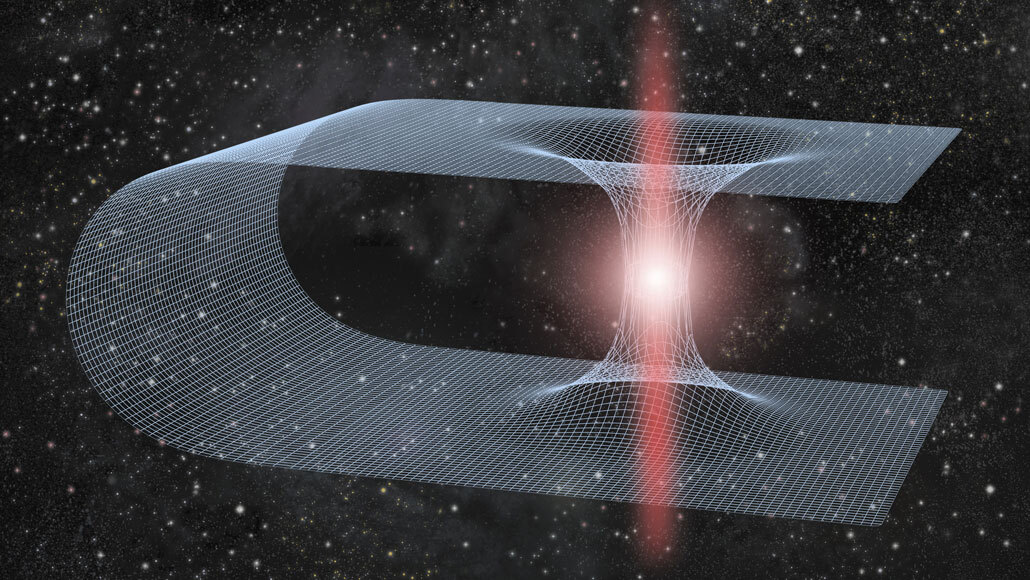
Wormholes are hypothesized shortcuts connecting two separate points in spacetime. In theory, if one end of a wormhole could be accelerated or otherwise manipulated relative to the other, time dilation effects might permit a traveler to emerge at a point in the past. However, the stability of such structures remains highly speculative. Additionally, maintaining a traversable wormhole would require conditions such as the existence of exotic matter—substances exhibiting negative mass or energy density—to prevent the wormhole from collapsing.
Closed Timelike Curves (CTCs)
General relativity allows for solutions known as closed timelike curves, which are loops in the fabric of spacetime permitting an object to return to an earlier moment in time. Some theoretical models propose that these CTCs could, in principle, allow for backward time travel. However, they also introduce challenging questions related to causality and the potential for paradoxical scenarios, famously exemplified by the grandfather paradox—the possibility of a traveler altering a past event and thereby impacting their own existence.
Other Concepts: Tipler Cylinders and Alcubierre Drives
Beyond wormholes and CTCs, theorists have also explored mechanisms such as the Tipler Cylinder—a hypothesized infinitely long, rapidly rotating object that could twist spacetime—or the Alcubierre Drive, which involves warping space to achieve effective superluminal travel. Although these ideas add fascinating perspectives to the discussion of time travel, they also underscore the enormous technological and energy challenges that must be overcome.
Scientific and Technological Challenges
Even though theoretical physics permits the possibility of time travel under certain spacetime configurations, the practical realization of such phenomena poses severe hurdles:
Paradoxes and Causality
The prospect of time travel to the past is inextricably linked with paradoxes. One of the most discussed is the grandfather paradox, which raises a fundamental issue: if a person were to travel back in time and prevent the events that led to their birth, how could they have existed to travel back in time in the first place? Various theories propose mechanisms for avoiding such inconsistencies – some suggest that the universe might automatically adjust events to maintain a consistent timeline (often referred to as self-consistency constraints), while others invoke the possibility of multiple branching timelines or parallel universes.
Exotic Matter and Energy Conditions
Many proposed methods for enabling time travel, such as stabilizing wormholes or creating closed timelike curves, require forms of matter or energy that have not yet been observed in the natural world. The realization of exotic matter with negative energy density is a recurring theme in these theoretical proposals, and the absence of empirical evidence for such matter is a substantial barrier.
Technological Feasibility
Beyond theoretical physics, the construction of any device or structure capable of manipulating spacetime on the necessary scale presents a colossal technological challenge. Current scientific advancements are far from being able to generate the extreme conditions – whether in terms of energy, precision, or engineering – required by these time travel proposals. Hence, while time travel might be permitted by theoretical models, actual implementation remains firmly in the realm of speculative research.
A Comparative Overview of Time Travel Mechanisms
The various theoretical mechanisms for time travel, both to the future and the past, can be synthesized into a comparative framework:
| Aspect | Explanation | Mechanism | Challenges |
|---|---|---|---|
| Time Dilation | Observed phenomenon where time slows down for objects moving near the speed of light. | High-speed travel; gravitational fields | Incremental future travel; requires near-light-speed conditions |
| Wormholes | Theoretical tunnels linking disparate points in spacetime. | Geometry-based shortcut | Stability issues and need for exotic matter |
| Closed Timelike Curves (CTCs) | Loops in spacetime permitting a return to an earlier time. | General relativity solutions | Causality paradoxes and unresolved physical conditions |
| Tipler Cylinder & Alcubierre Drive | Hypothetical constructs that involve manipulating spacetime curvature or warping. | Rotational energy and spacetime compression | Theoretical constructs requiring infinite or enormous energy |
Synthesis of Scientific Consensus
The scientific community’s stance on time travel is a mix of theoretical enthusiasm and pragmatic skepticism. The consensus can be summarized as follows:
Traveling to the Future
There is strong experimental evidence supporting time travel into the future via relativistic time dilation. Experiments with high-speed particles, spacecraft, and even everyday time adjustments with satellites have all confirmed that time can be manipulated by altering speed and gravity. Although the effect is subtle, it forms a robust foundation for the idea that we can indeed "travel" forward by experiencing time at a different rate.
Traveling to the Past
The notion of traveling back in time remains one of the most challenging and debated concepts. The existence of theoretical constructs like wormholes and closed timelike curves provide a mathematical basis for the possibility, yet they come with several caveats. The primary concerns include the engineering feasibility of such constructs, the necessity of exotic matter or extreme gravitational conditions, and the unresolved issues relating to causality and paradoxes. Some theories suggest that the universe might have built-in safeguards to maintain consistency, such as the Chronology Protection Conjecture proposed by Stephen Hawking, which could potentially prohibit the formation of time paradoxes.
Integrating Quantum Mechanics
In addition to general relativity, aspects of quantum mechanics also contribute insights into the possibility of time travel. Some modern theoretical approaches suggest that quantum phenomena might permit transient “loops” in time under specific conditions. Although these ideas are still in nascent stages of exploration, they raise intriguing questions about how quantum effects, such as entanglement and superposition, could interplay with the geometry of spacetime to allow for temporal transitions.
Paradox-Free Possibilities
A notable topic of research involves the idea that time travel might be achievable without introducing irresolvable paradoxes. Some models propose that if a time traveler were to attempt altering events in the past, the universe's self-consistency mechanisms would adjust events accordingly, leading to scenarios where the past remains invariant. While this might reconcile the laws of physics with the concept of backwards time travel, such hypotheses still reside primarily within the theoretical realm and await empirical validation.
Broader Implications
The exploration of time travel is not only a pursuit of a futuristic technology but also an investigation into the fundamental nature of reality. Understanding whether time travel is feasible requires a deep inquiry into the underlying structure of spacetime, the limits of our current physical theories, and the interplay between gravity and quantum mechanics. The implications extend from the potential to revolutionize space exploration to providing insights into causality, the nature of existence, and even the resolution of philosophical dilemmas concerning fate and free will.
Impacts on Technology and Philosophy
Should time travel ever move beyond theory, it would not only require the advent of breakthrough technologies but also a profound rethinking of our understanding of time itself. The theoretical investigations have already influenced technological research in related fields, including advanced propulsion systems and quantum computing. Moreover, these studies challenge our perceptions of time and causality, inviting interdisciplinary perspectives from physics, philosophy, and even literature.
References
- Is Time Travel Possible? A Look at the Science and Paradoxes - Scientific Origin
- Time Travel - NASA Space Place
- Doctor Who: Is Time Travel Really Possible? - BBC Future
- Paradox-Free Time Travel Is Theoretically Possible - ScienceAlert
- Paradox-Free Time Travel Theoretically Possible - NPR
Recommended Related Queries
Last updated March 18, 2025