
Unlock the Secrets to Shedding Unwanted Habits for Good
Discover proven strategies to identify triggers, replace negative behaviors, and build lasting positive change.
Highlights
- Understand the Habit Loop: Recognize the Cue-Routine-Reward cycle that drives your habits to effectively interrupt it.
- Replace, Don't Just Resist: Swapping a bad habit with a healthier alternative that provides a similar reward is significantly more effective than relying on willpower alone.
- Embrace Mindfulness and Planning: Increase awareness of your urges and triggers, and create a specific action plan to navigate challenges and reinforce new behaviors.
Decoding the Habit Cycle: Why Change is Challenging
Understanding the Mechanics of Your Behaviors
Breaking a bad habit often feels like an uphill battle because habits are deeply ingrained neurological shortcuts. They automate our behavior, allowing our brains to conserve energy. Many studies suggest that a significant portion of our daily actions, perhaps around 40%, are driven by habit rather than conscious decision-making. These habits operate via a simple yet powerful mechanism known as the "Habit Loop," consisting of three core components:
- Cue (Trigger): This is the signal that initiates the habit. It can be anything – a specific time of day, a location, an emotional state (like stress or boredom), the presence of certain people, or even a preceding action.
- Routine: This is the actual behavior or habit itself, the action you perform automatically in response to the cue.
- Reward: This is the benefit or positive feeling you gain from performing the routine, which reinforces the habit loop and makes your brain want to repeat it in the future. The reward satisfies the craving triggered by the cue.
Because this loop reinforces itself, simply trying to suppress the routine through willpower is often insufficient, especially when faced with strong cues or cravings. Effective change requires addressing all parts of this loop, particularly understanding the cues and replacing the routine with something more constructive.
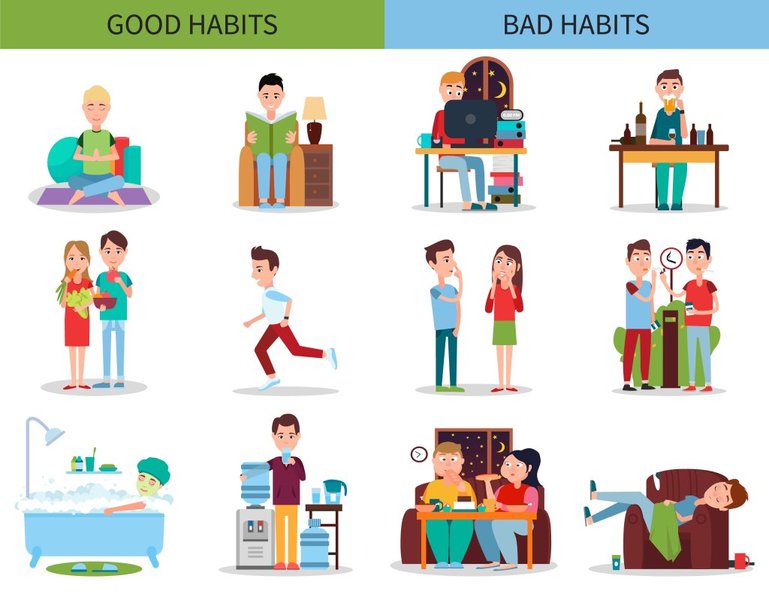
Understanding the underlying mechanisms of habits is the first step towards breaking free.
Strategic Steps to Overcome Bad Habits
A Comprehensive Toolkit for Lasting Change
Overcoming ingrained habits requires conscious effort and a strategic approach. Here’s a breakdown of effective techniques synthesized from expert advice and behavioral science:
1. Uncover Your Triggers: Become a Habit Detective
The first crucial step is to identify the specific cues that set your bad habit in motion. Since habits can be triggered by various factors, self-observation is key. Try keeping a "habit journal" for several days or a week. Note down:
- When does the habit occur? (Time of day)
- Where are you when it happens? (Location)
- What emotions are you feeling just before? (Stress, boredom, anxiety, happiness)
- Who are you with? (Alone, specific people)
- What action immediately preceded the urge? (e.g., finishing work, hearing a notification)
This detailed logging brings subconscious patterns into conscious awareness, revealing the specific triggers you need to manage or avoid. A single habit might even have multiple triggers.
2. Clarify Your 'Why' and Set Concrete Goals
Vague intentions like "I want to stop procrastinating" are less effective than clear, specific objectives. Understand deeply why you want to break this habit. Is it for better health, improved focus, stronger relationships, or financial savings? Write down your reasons and keep them visible as a source of motivation.
Then, set SMART goals:
- Specific: Clearly define what you want to change (e.g., "Reduce mindless phone scrolling").
- Measurable: How will you track progress? (e.g., "Limit scrolling to 30 minutes after work").
- Achievable: Is the goal realistic given your current situation? Start small if needed.
- Relevant: Does this goal align with your overall values and reasons for change?
- Time-bound: Set a deadline or timeline (e.g., "Achieve this within the next month").

Setting clear goals provides direction and motivation for changing habits.
3. Disrupt the Cue and Modify Your Environment
Once you know your triggers, actively work to minimize your exposure to them or disrupt the automatic link between the cue and the routine. This often involves changing your environment:
- Remove Temptations: If unhealthy snacks trigger mindless eating, don't keep them in the house. If your phone distracts you, put it in another room while working or sleeping.
- Add Friction: Make the bad habit harder to perform. Place the alarm clock across the room to avoid hitting snooze. Log out of social media apps to prevent impulsive checking.
- Change Context: If you always smoke in a certain chair or location, try avoiding that specific context or altering it.
By making the cue less obvious or the routine more difficult, you interrupt the automatic flow of the habit.
4. Replace the Bad Habit with a Better One
This is arguably the most critical step. Trying to simply eliminate a habit creates a vacuum that is hard to sustain. Instead, find a positive or neutral behavior to substitute for the unwanted one, ideally one that addresses the underlying need or provides a similar reward.
- If you snack out of boredom, try a short walk, stretching, or calling a friend instead.
- If you bite your nails when anxious, practice deep breathing exercises or use a fidget tool.
- If you reach for a cigarette when stressed, try meditation, listening to music, or chewing gum.
The replacement behavior should be easy to implement immediately when the cue arises.
5. Start Small and Build Momentum
Trying to overhaul multiple habits or make drastic changes overnight often leads to burnout and failure. Focus on small, manageable adjustments first. Break down your larger goal into tiny steps (sometimes called "micro-steps"). For example:
- Instead of aiming for a full hour of exercise daily, start with 10 minutes.
- Instead of quitting sugar cold turkey, reduce your intake gradually.
- If replacing scrolling with reading, start with just one page.
Small wins build confidence and make the process feel less overwhelming, gradually strengthening the new neural pathways.

Incremental progress is key to sustainable behavior change.
6. Practice Mindfulness and Self-Awareness
Mindfulness involves paying attention to your thoughts, feelings, and sensations in the present moment without judgment. When you feel the urge for the bad habit:
- Pause: Take a moment before acting impulsively.
- Observe: Notice the craving or urge. Where do you feel it in your body? What thoughts accompany it?
- "Surf the Urge": Acknowledge the feeling without needing to act on it. Recognize that cravings are temporary and will pass.
Mindfulness can weaken the habit's grip by making you more aware of the actual experience (which might be less rewarding than you think) and giving you the space to choose a different response.
7. Develop a Concrete Plan ("If-Then" Strategy)
Having a specific plan increases your chances of follow-through, especially in challenging situations. Use implementation intentions, often framed as "If-Then" statements:
- "If I feel stressed after work, then I will go for a 15-minute walk."
- "If I get the urge to check social media during work hours, then I will take three deep breaths and refocus on my task."
- "If I go to a party where snacks are served, then I will drink a glass of water first and choose only vegetables."
Think through potential obstacles and plan your response in advance.
8. Seek Support and Accountability
Changing habits is easier when you don't have to do it alone.
- Share Your Goals: Tell trusted friends, family, or colleagues about your intentions. They can offer encouragement and help keep you on track.
- Find a Partner: Team up with someone who has a similar goal.
- Join Groups: Consider support groups (online or in-person) focused on your specific habit.
- Consider Professional Help: For deeply ingrained habits or addictions, seeking guidance from a therapist or counselor can be beneficial.
External accountability can provide powerful motivation.
9. Prepare for Setbacks and Practice Persistence
Changing long-standing behavior is rarely a perfectly linear process. Expect occasional slip-ups or relapses. The key is not to view them as failures but as learning opportunities.
- Analyze the Slip-Up: What triggered it? What can you do differently next time?
- Recommit Immediately: Don't let one setback derail your entire effort. Get back on track with your next planned action.
- Be Patient and Kind to Yourself: Habit change takes time – sometimes weeks or months. Persistence is more important than perfection.
Visualizing Habit-Breaking Strategies
Comparing Approaches to Change
Different strategies for breaking bad habits vary in their approach and potential impact. The radar chart below offers a conceptual comparison of several key techniques based on factors like perceived effectiveness, ease of implementation, and required self-discipline. This is an illustrative analysis, not based on precise quantitative data, to help visualize the nuances of each method.
This chart suggests that while strategies like starting small and controlling your environment might be easier to implement initially, techniques like habit replacement and mindfulness potentially offer greater long-term effectiveness by directly addressing the habit loop's core components. Often, combining multiple strategies yields the best results.
Mapping Your Path to Change
A Mindmap Overview of Key Steps
To help consolidate these strategies, here is a mindmap outlining the core process for breaking a bad habit. It visually structures the key phases and actions involved in transforming your behavior.
(Cue, Routine, Reward)"] id1b["Recognize Triggers
(Time, Place, Emotion, People)"] id1c["Journaling & Self-Observation"] id2["2. Plan Your Strategy"] id2a["Define Clear 'Why' & Motivation"] id2b["Set SMART Goals
(Specific, Measurable, Achievable, Relevant, Time-bound)"] id2c["Create 'If-Then' Plans"] id3["3. Execute the Change"] id3a["Disrupt the Cue
(Modify Environment, Add Friction)"] id3b["Replace the Routine
(Find Healthy Substitute)"] id3c["Start Small (Micro-steps)"] id3d["Practice Mindfulness
(Pause, Observe Urges)"] id4["4. Reinforce & Sustain"] id4a["Seek Support & Accountability
(Friends, Family, Groups)"] id4b["Track Progress & Celebrate Wins"] id4c["Manage Setbacks
(Analyze & Recommit)"] id4d["Be Persistent & Patient"]
This mindmap serves as a visual checklist, guiding you through the essential stages from initial awareness to sustained change.
Applying the Habit Loop Framework
Intervening at Each Stage
Understanding the habit loop allows for targeted interventions. The table below breaks down each component and suggests specific actions you can take to disrupt the negative cycle and build a positive one.
| Habit Loop Component | Description | Intervention Strategies | Example (Habit: Stress Eating Junk Food) |
|---|---|---|---|
| Cue / Trigger | The signal that initiates the habit. | Identify specific triggers (stress, time of day). Avoid or modify cues. Change environment. | Cue: Feeling stressed after a meeting. Intervention: Recognize stress as the cue. Plan a non-food stress reliever. |
| Routine / Behavior | The automatic action performed. | Replace the negative routine with a positive one. Increase friction for the bad habit. Start with small changes. | Routine: Going to the kitchen and grabbing chips. Intervention: Replace with 5 minutes of deep breathing, a short walk, or drinking tea. Don't keep chips easily accessible. |
| Reward / Craving | The benefit or satisfaction gained, reinforcing the loop. | Find a healthy replacement that provides a similar reward. Understand the underlying need the habit fulfills. Make the old reward less satisfying (focus on negative consequences). Reward the new behavior. | Reward: Temporary comfort/distraction from stress. Intervention: The walk/breathing provides stress relief (similar reward). Acknowledge that chips lead to guilt later (less satisfying). Feel proud after choosing the healthy option (new reward). |
By consciously addressing each part of the loop, you can systematically dismantle the unwanted habit and install a healthier pattern of behavior.
Expert Insights on Habit Change
Understanding the Mechanism and Simple Tactics
Understanding the neuroscience behind habits can be incredibly empowering. Psychiatrist and neuroscientist Judson Brewer offers valuable insights into how habits, particularly those related to cravings and anxiety, form in our brains and how mindfulness can be a powerful tool to break free. His approach focuses on becoming aware of the reward mechanism and realizing that the bad habit might not be as satisfying as we perceive it to be.
In the following TED talk, Brewer explains the reward-based learning process that underlies habit formation and proposes a simple yet profound technique involving curiosity and mindfulness to help weaken the grip of unwanted behaviors. He emphasizes observing cravings and the actual experience of the habit without judgment, which can naturally decrease its appeal.
Brewer's work highlights that understanding *how* our minds work is key to changing them. By bringing awareness to the process, we can move from being controlled by our habits to consciously shaping them.
Frequently Asked Questions (FAQ)
Quick Answers to Common Concerns
How long does it typically take to break a bad habit? ▼
There's no single magic number. While you might hear "21 days," research suggests it varies significantly depending on the person, the habit's complexity, and how long it's been ingrained. Some studies indicate it can take anywhere from 18 to 254 days for a new behavior to become automatic. Focus on consistency and progress rather than a specific timeframe. Patience and persistence are key.
What should I do if I relapse or slip up? ▼
Relapses are a normal part of the process, not a sign of failure. Don't let a slip-up derail your entire effort. Instead, view it as a learning opportunity. Analyze what triggered the relapse – were you stressed, tired, or in a specific environment? Use this information to refine your plan and anticipate similar situations in the future. Acknowledge the slip-up without harsh self-criticism and recommit to your goal immediately.
Is it better to stop a bad habit cold turkey or gradually? ▼
Both approaches can work, but the best method often depends on the habit and the individual. For some habits (like smoking), quitting completely might be necessary. For others (like reducing sugar intake or screen time), a gradual approach (starting small, reducing frequency/duration) might be more sustainable and less overwhelming. Consider which approach feels more manageable and less likely to lead to burnout for you.
Can I try to break multiple bad habits at the same time? ▼
While it might seem efficient, experts generally advise against tackling multiple significant habits simultaneously. Habit change requires considerable mental energy, focus, and willpower. Trying to change too much at once can dilute your efforts, increase feelings of overwhelm, and raise the likelihood of giving up on all goals. It's usually more effective to focus on breaking one key habit first. Once you've made significant progress or the new behavior feels more automatic, you can then address another habit.
References
- How to Break Bad Habits and Change Negative Behaviors - HelpGuide.org
- How to Break a Habit: 15 Tips for Success - Healthline
- How to Break Bad Habits and Change Behaviors - American Heart Association
- How To Break Bad Habits - Cleveland Clinic Health Essentials
- How to break a bad habit - Harvard Health Blog
- How To Start New Habits That Actually Stick - James Clear
- 3 Science-Based Tips on How to Break Bad Habits - Psychology Today
Recommended
Last updated April 19, 2025