
Top 5 Flags Featuring Yellow and Green as Main Colors
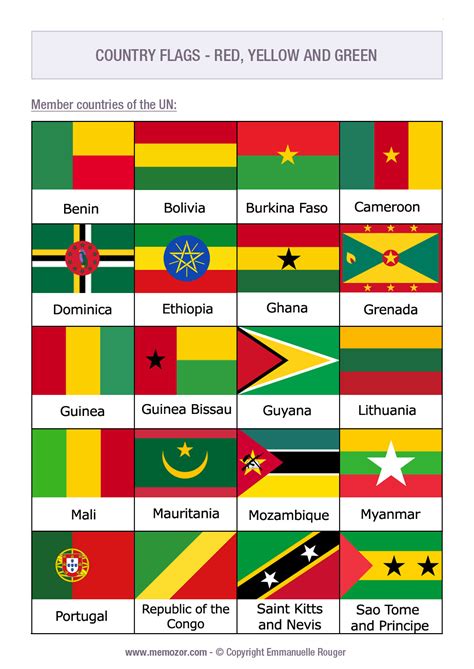
Flags are powerful symbols that encapsulate a nation's identity, history, and values. The combination of yellow and green is particularly popular, often representing prosperity, natural wealth, agriculture, and hope. This ranking synthesizes insights from multiple authoritative sources to present the top five flags where yellow and green play a dominant role, emphasizing their design, symbolism, and cultural significance.
1. Brazil
Design:
The Brazilian flag is one of the most recognizable in the world. It features a green field with a prominent yellow diamond at the center. Within the diamond lies a blue globe adorned with 27 white stars arranged to represent the night sky over Rio de Janeiro on November 15, 1889, the date of Brazil's proclamation as a republic. The globe also bears the national motto, "Ordem e Progresso" ("Order and Progress").
Symbolism:
- Green: Represents Brazil's lush forests, particularly the Amazon Rainforest, symbolizing the country's natural wealth and environmental richness.
- Yellow: Symbolizes the nation's abundant gold reserves and mineral wealth, reflecting Brazil's economic potential.
- Blue and White Stars: Represent the Brazilian states and the Federal District, with their arrangement mirroring the actual night sky over Rio de Janeiro on the significant historical date.
Cultural Significance:
Brazil's flag embodies the nation's deep connection to its natural environment and resources. The vibrant colors and intricate design reflect Brazil's diverse cultural heritage and its aspirations for progress and unity.
Global Recognition:
The Brazilian flag is instantly identifiable and widely respected for its beauty and symbolic depth. It is often associated with Brazil's vibrant culture, football legacy, and environmental importance.
For more information, visit the Encyclopedia Britannica entry on the Brazilian flag.
2. Jamaica
Design:
The Jamaican flag features a diagonal cross, known as a saltire, which divides the flag into four triangles. The cross itself is black, while the top and bottom triangles are green, and the left and right triangles are yellow.
Symbolism:
- Green: Represents the island's lush vegetation and agricultural resources, highlighting Jamaica's natural beauty.
- Yellow: Symbolizes the country's natural wealth, particularly its abundant sunshine and gold reserves.
- Black: Stands for the strength and creativity of the Jamaican people, as well as their resilience and determination.
Cultural Significance:
Adopted on August 6, 1962, when Jamaica gained independence from the United Kingdom, the flag's distinctive design sets it apart from other national symbols. It reflects the nation's pride, optimism, and vibrant cultural identity.
Global Recognition:
Jamaica's flag is renowned for its bold and unique color scheme. It is closely associated with the island's reggae music, Rastafarian culture, and its image as a tropical paradise.
For more details, refer to the Encyclopedia Britannica entry on the Jamaican flag.
3. Ghana
Design:
Ghana's flag consists of three horizontal stripes: red at the top, yellow in the middle, and green at the bottom. A black five-pointed star is centered on the yellow stripe.
Symbolism:
- Red: Honors the blood shed by those who fought for Ghana's independence, symbolizing courage and sacrifice.
- Yellow: Represents Ghana's mineral wealth, particularly gold, which has been crucial to the nation's economy.
- Green: Symbolizes the country's rich forests and agricultural resources, emphasizing Ghana's natural abundance.
- Black Star: Represents African freedom and the unity of African nations, serving as a beacon of hope and progress.
Cultural Significance:
Adopted in 1957, Ghana's flag was one of the first to incorporate the Pan-African colors of red, yellow, and green. It stands as a symbol of African independence and solidarity, reflecting the nation's leadership in the African liberation movement.
Global Recognition:
Ghana's flag is celebrated for its historical importance and its inspirational symbolism. It has influenced the designs of many other African nations' flags.
Learn more from the Encyclopedia Britannica entry on the Ghanaian flag.
4. Senegal
Design:
The Senegalese flag features three vertical stripes of green, yellow, and red, with a green five-pointed star centered on the yellow stripe.
Symbolism:
- Green: Represents Islam, the dominant religion in Senegal, as well as the country's agricultural wealth and hope for the future.
- Yellow: Symbolizes the nation's wealth, progress, and natural resources, emphasizing economic prosperity.
- Red: Stands for the sacrifices and determination of the Senegalese people in their fight for independence.
- Green Star: Signifies unity and the aspirations of the Senegalese people for a harmonious and prosperous nation.
Cultural Significance:
Adopted on August 20, 1960, upon Senegal's independence from France, the flag embodies the nation's commitment to unity and its cultural and religious identity. The green star is a nod to the country's dedication to progress and solidarity.
Global Recognition:
Senegal's flag is esteemed for its vibrant colors and meaningful symbolism. It represents the nation's leadership in West Africa and its rich cultural heritage.
For further information, visit the Encyclopedia Britannica entry on the Senegalese flag.
5. Lithuania
Design:
The Lithuanian flag comprises three horizontal stripes: yellow on the top, green in the middle, and red at the bottom.
Symbolism:
- Yellow: Represents prosperity, the sun, and the country's wheat fields, reflecting Lithuania's agricultural strength.
- Green: Symbolizes the forests, nature, and hope for the nation's future, highlighting Lithuania's rich natural landscapes.
- Red: Stands for the courage and sacrifices of the Lithuanian people throughout their history, emphasizing resilience.
Cultural Significance:
First adopted in 1918 following Lithuania's declaration of independence from Russia, the flag was reinstated in 1989 as the country regained independence from the Soviet Union. Its colors are deeply rooted in Lithuania's national identity and historical struggles.
Global Recognition:
Lithuania's flag is recognized for its simplicity and elegance. It symbolizes the nation's resilience and commitment to freedom, often seen at international events and representing Lithuania's active role in the European Union.
Discover more through the Encyclopedia Britannica entry on the Lithuanian flag.
Honorable Mentions
While the top five flags are the most prominent examples featuring yellow and green, several other flags also deserve recognition:
-
São Tomé and Príncipe: Features three horizontal stripes of green, yellow, and green with a red triangle and two black stars, symbolizing the country's natural wealth and its two main islands.
-
Cameroon: Consists of three vertical stripes of green, red, and yellow with a yellow star, representing the country's unity and natural resources.
-
Benin: Displays a green vertical stripe alongside horizontal yellow and red stripes, symbolizing hope and natural wealth.
These flags are notable for their unique designs and the meaningful combination of yellow and green, reflecting their respective nations' identities and values.
Conclusion
The combination of yellow and green in national flags is a testament to the universal themes of prosperity, natural wealth, and hope that resonate across different cultures and histories. Brazil, Jamaica, Ghana, Senegal, and Lithuania stand out as exemplary flags where yellow and green not only dominate the design but also convey profound meanings that encapsulate each nation's essence.
These flags serve as powerful symbols of national pride and unity, drawing from rich cultural heritages and aspirations for the future. Their vibrant colors and thoughtful symbolism make them standout representations on the global stage, embodying the unique identities and values of their respective countries.
For more detailed information on these and other national flags, you can refer to the following sources:
Last updated January 1, 2025