
Cracking the Code: Why is Model-Based Reinforcement Learning Still So Hard?
Unveiling the persistent hurdles hindering the full potential of learning environmental models for intelligent decision-making.
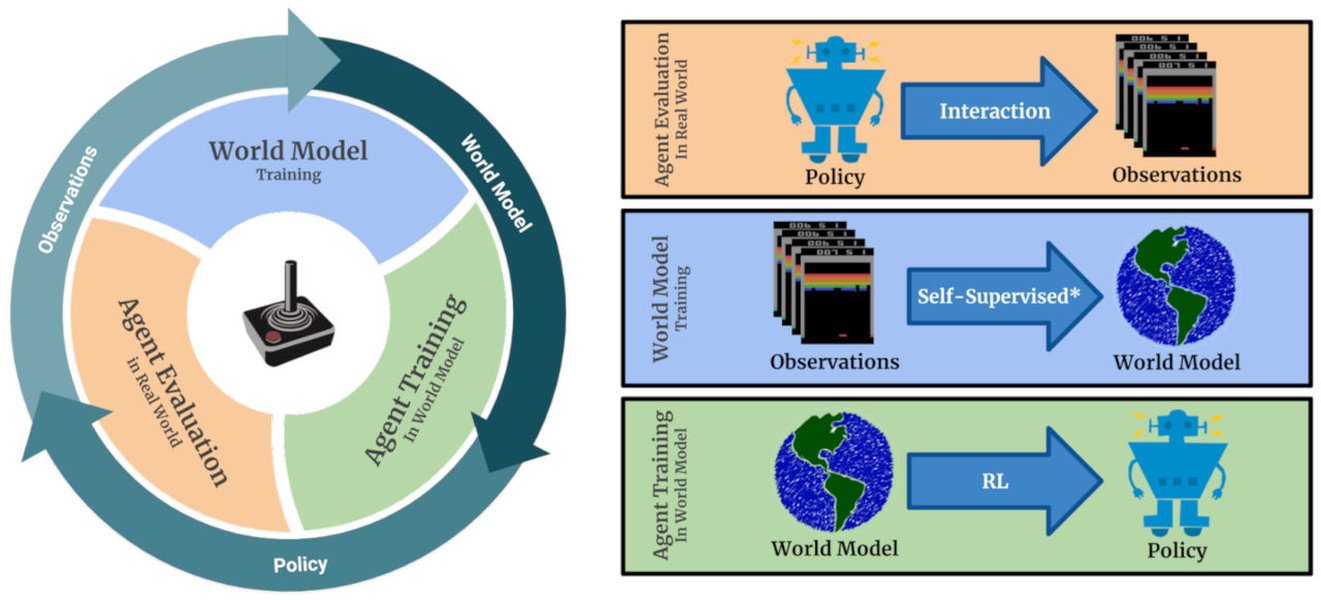
Model-Based Reinforcement Learning (MBRL) offers a compelling vision: agents that learn a model of their environment's dynamics, allowing them to simulate, plan, and potentially learn much faster than their model-free counterparts. However, translating this vision into robust, real-world applications remains a significant challenge. As of May 2025, several key obstacles continue to shape the research landscape.
Highlights: The Core Hurdles
- Model Fidelity is Fragile: Crafting environmental models that are both accurate and generalizable, especially in complex or noisy settings, remains a primary difficulty.
- The Scalability Barrier: The combined computational cost of learning the model and planning with it often restricts MBRL's application in high-dimensional or real-time scenarios.
- Predictive Power Decays: Errors in the learned model tend to compound over longer prediction horizons, limiting the effectiveness of long-term planning.
The Quest for Accurate World Models
Challenge 1: Achieving Model Accuracy and Reliability
Perhaps the most fundamental challenge in MBRL is the difficulty of learning an accurate model of the environment's dynamics. The agent's performance hinges entirely on the quality of this internal model, which it uses to simulate experiences and plan actions.
Sources of Inaccuracy
Several factors contribute to model inaccuracies:
- Complexity and Stochasticity: Real-world environments are often highly complex, noisy, and inherently random (stochastic). Capturing these nuances accurately within a learned model is exceptionally difficult.
- Partial Observability: Agents rarely have access to the complete state of the environment. Models learned from incomplete or noisy observations may fail to represent the true underlying dynamics, leading to flawed predictions.
- High Dimensionality: Environments with vast state-action spaces (e.g., involving image inputs or complex physics) make model learning exponentially harder. Small approximation errors can accumulate rapidly.
Impact of Inaccurate Models
An inaccurate or biased model can be detrimental. Planning based on flawed simulations leads to suboptimal or even unsafe policies. The agent might exploit perceived loopholes in its model that don't exist in reality, resulting in poor performance when deployed in the actual environment. Furthermore, poor models hinder generalization to situations not encountered during training.
A typical Reinforcement Learning cycle involving agent, environment, action, state, and reward.
The Computational Tightrope
Challenge 2: Computational Complexity and Scalability
MBRL methods introduce a dual computational burden: first, learning the environmental model, and second, using that model for planning or policy optimization (often involving extensive simulations). This combined cost can be substantial.
Sources of Computational Load
- Model Training: Learning complex dynamics models, especially deep neural networks, requires significant computational resources and data.
- Planning/Simulation: Using the learned model often involves simulating numerous possible future trajectories to find optimal actions. This planning process can be computationally intensive, particularly for long-horizon tasks or large state spaces.
- High-Dimensional Spaces: As mentioned, high dimensionality exacerbates computational costs for both model learning and planning. The "curse of dimensionality" significantly impacts MBRL's feasibility in complex domains like robotics with visual input.
Scalability Limitations
The high computational demands limit the scalability of many MBRL algorithms. Applying them to large-scale problems or systems requiring real-time decision-making (like autonomous driving or high-frequency trading) remains challenging. While hardware advances help, algorithmic efficiency is crucial for broader adoption.
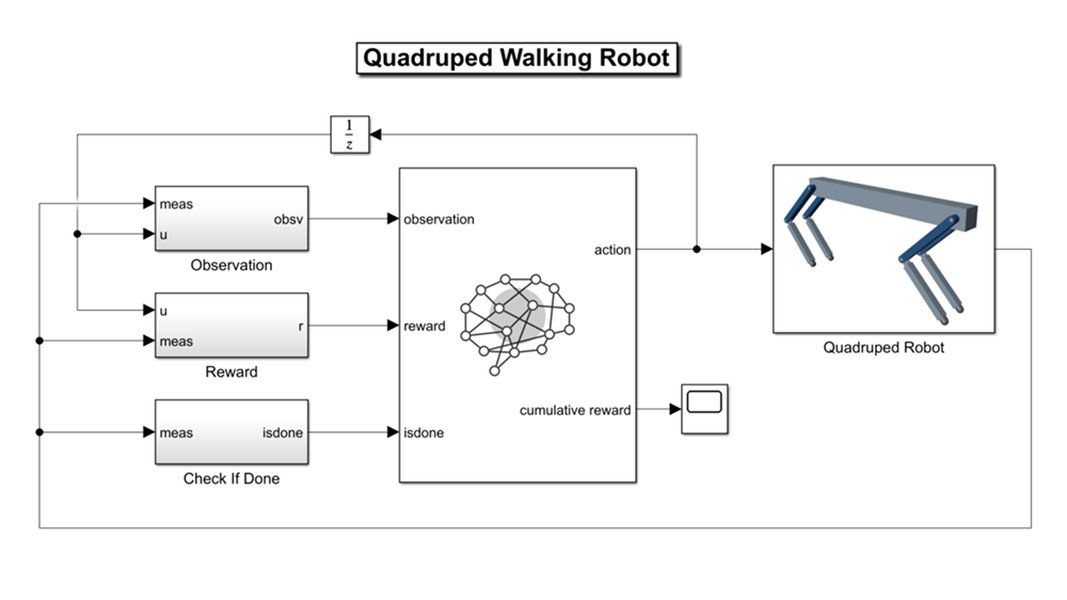
Concept illustration integrating AI techniques within a model-based design framework.
The Data Dilemma
Challenge 3: Sample Efficiency vs. Model Requirements
A key promise of MBRL is improved sample efficiency compared to model-free methods, as the learned model allows for "mental simulation" without constant real-world interaction. However, this advantage isn't always straightforward.
The Trade-off
There's an inherent trade-off: while simulation reduces the need for *real-world* samples for policy learning, building an *accurate* model in the first place often requires a substantial amount of high-quality interaction data. Complex environments demand complex models, which in turn demand more data for training. Insufficient or biased data leads back to the problem of model inaccuracy.
Performance Plateaus
Research indicates that sometimes, even with more data, MBRL performance can plateau. This might happen if the model architecture isn't capable of capturing crucial dynamics or if compounding errors (discussed next) negate the benefits of a slightly improved model based on new data.
The Problem of Foresight
Challenge 4: Long-Horizon Planning and Compounding Errors
Using the learned model to predict outcomes far into the future is crucial for tasks requiring strategic planning. Unfortunately, this is where models often falter.
Error Accumulation
Even small inaccuracies in the one-step predictions of a learned model can accumulate and amplify over multi-step simulations. When planning over long horizons, these compounding errors can render the predicted future states wildly inaccurate, leading the agent to make poor long-term decisions.
Impact on Complex Tasks
This limitation significantly hinders MBRL's effectiveness in tasks demanding foresight, such as complex robotic manipulation, strategic game playing, or long-term resource management. Mitigating these compounding errors, especially in partially observable or stochastic environments, is an active area of research.
Navigating the Unknown
Challenge 5: Uncertainty Management
Environments are rarely deterministic. MBRL agents must grapple with uncertainty, which arises from two main sources:
- Aleatoric Uncertainty: Inherent randomness in the environment itself (e.g., the outcome of a dice roll).
- Epistemic Uncertainty: Uncertainty due to the agent's lack of knowledge or limitations in its learned model.
The Danger of Exploiting Model Flaws
A critical challenge is preventing the agent from exploiting regions of the state space where its model is uncertain but confidently wrong. Policy optimization might find seemingly high-reward trajectories within the simulation that rely on these model inaccuracies, leading to catastrophic failure in the real world. Effective uncertainty quantification and incorporating this uncertainty into the planning process are essential but difficult.
Exploring Effectively and Generalizing Robustly
Challenge 6: Exploration and Generalization
Like all RL methods, MBRL faces the exploration-exploitation dilemma. However, it has unique facets in the model-based context.
Model-Building Exploration
The agent needs to explore the environment not just to find rewards, but also to gather diverse data to build a comprehensive and accurate model. Designing exploration strategies that efficiently improve the model, especially targeting areas of high uncertainty, is crucial.
The "Edge-of-Reach" Problem
Related to generalization is the "edge-of-reach" or extrapolation problem. Even with a locally accurate model, the agent might struggle if the planning process requires simulating states or actions far outside the distribution of the training data. The model's predictions in these unexplored regions can be unreliable, limiting the agent's ability to generalize and discover novel solutions.
Handling Distractions
Models can sometimes focus capacity on predicting predictable but irrelevant parts of the environment (e.g., background details in a video feed), neglecting the aspects critical for the task. Designing models robust to such distractions is an ongoing challenge.
Visualizing the Challenge Landscape
The challenges in MBRL are interconnected and vary in their perceived severity and the research attention they receive. The following radar chart provides a qualitative representation of these factors based on current understanding.
This chart illustrates that while all listed areas present significant challenges (Severity), areas like Model Accuracy, Uncertainty Management, and Scalability tend to receive particularly high research focus currently.
Interconnected Challenges: A Mindmap View
The difficulties in MBRL are not isolated. Issues in one area often impact others, creating a complex web of challenges that researchers must navigate. This mindmap provides a visual overview of these relationships.
As the mindmap shows, for instance, Model Issues directly influence Planning & Control Issues (e.g., inaccuracy leads to compounding errors) and Data & Learning Dynamics (e.g., poor models require better exploration). Similarly, Computational Hurdles affect the feasibility of addressing model complexity and planning needs.
Perspectives on Overcoming MBRL Challenges
Understanding these challenges is the first step toward overcoming them. Researchers are actively developing innovative techniques, including more robust model architectures, better uncertainty quantification methods, efficient planning algorithms, and hybrid approaches combining model-based and model-free techniques. The following video discusses some of these challenges and potential paths forward.
Csaba Szepesvári discussing challenges in model-based reinforcement learning and potential solutions.
Summary Table: Key MBRL Challenges (2025)
This table summarizes the core challenges discussed, highlighting their nature and primary impact on MBRL systems.
| Challenge Area | Description | Primary Impact |
|---|---|---|
| Model Accuracy & Reliability | Difficulty in learning precise representations of complex, stochastic, or partially observed environments. | Suboptimal policies, poor generalization, unsafe behavior due to planning with flawed simulations. |
| Computational Cost & Scalability | High computational demands for both model learning and planning phases. | Limits applicability to large-scale problems, high-dimensional spaces, and real-time decision-making. |
| Sample Efficiency & Data Needs | Accurate models often require significant data, potentially negating sample efficiency gains over model-free RL. | High cost/time for data acquisition; performance plateaus despite more data if model capacity is limited. |
| Long-Horizon Planning | Accumulation of prediction errors over extended simulation rollouts. | Ineffective planning for tasks requiring long-term foresight; poor performance in strategic scenarios. |
| Uncertainty Management | Difficulty in quantifying and acting upon model uncertainty (epistemic) and environmental randomness (aleatoric). | Risk of exploiting model inaccuracies; potential for overconfident, brittle policies. |
| Exploration & Generalization | Need for effective exploration to build good models; difficulty generalizing beyond training data distribution ("edge-of-reach"). | Incomplete models, failure to find optimal solutions, poor performance in novel situations. |
Frequently Asked Questions (FAQ)
What is often considered the biggest challenge in MBRL?
While several challenges are significant, **model accuracy** is frequently cited as the most fundamental hurdle. The effectiveness of the entire MBRL approach hinges on having a reliable model of the environment. Inaccuracies can lead to compounding errors, suboptimal planning, and poor real-world performance, undermining the core benefits of the model-based approach.
Is MBRL always more sample efficient than model-free RL?
Not necessarily. While MBRL *can* be more sample efficient by leveraging simulations, this advantage depends heavily on the complexity of the environment and the required model accuracy. Learning an accurate model might itself require a large number of samples from the real environment, potentially offsetting the gains from simulation. There's a trade-off: simpler environments might see significant sample efficiency gains, while complex ones might require substantial data just to build a usable model.
How does model inaccuracy specifically affect MBRL performance?
Model inaccuracy leads to several problems:
- Planning Errors: Simulating trajectories with an inaccurate model leads the planner to choose suboptimal actions.
- Compounding Errors: Small prediction errors accumulate over long simulation horizons, making long-term predictions unreliable.
- Exploitation of Flaws: The policy optimization process might find "solutions" that exploit inaccuracies in the model but fail in reality.
- Poor Generalization: An inaccurate model may not capture the underlying principles of the environment, hindering the agent's ability to adapt to new situations.
Why is scalability such a persistent problem for MBRL?
Scalability is challenging due to the combined computational load:
- Model Learning Cost: Training complex models (like deep neural networks) needed for high-dimensional state spaces (e.g., images) is computationally expensive.
- Planning Cost: Using the model often involves simulating many possible futures. The number of potential trajectories grows exponentially with the planning horizon and the size of the state-action space.
- Curse of Dimensionality: Both learning the model and planning within it become significantly harder as the number of state and action dimensions increases.
This dual burden makes it difficult to apply MBRL effectively to very large-scale problems or situations demanding fast responses without specialized algorithms or significant hardware resources.
Recommended Next Queries
- How are researchers improving model accuracy in MBRL?
- What are the latest breakthroughs in scalable MBRL algorithms?
- Explore the differences between model-based and model-free reinforcement learning.
- What are some successful real-world applications of MBRL despite its challenges?
References
Last updated May 4, 2025