
Bridging the Gap: How AI Can Align Indonesian IT Education with Tomorrow's Job Market
Discover a Transformer-based framework designed to map bilingual skills and ensure IT graduates in Indonesia are industry-ready.
Knowledge cutoff: Tuesday, 2025-05-06
Highlights
- AI-Powered Alignment: Understand how advanced Transformer AI models analyze job descriptions and university curricula in both Indonesian and English to identify crucial skill gaps.
- Bilingual Skill Focus: Learn why processing technical skills in both Bahasa Indonesia and English is vital for Indonesian IT graduates competing in a globalized digital economy.
- Actionable Insights for Education: See how this framework provides concrete recommendations for universities to update IT programs, enhancing graduate employability and supporting Indonesia's digital transformation.
The Challenge: Equipping Indonesia's Future Tech Leaders
Why is Aligning IT Education with Job Demands Crucial in Indonesia?
Indonesia is experiencing rapid digital transformation, with its digital economy projected to expand significantly. This growth fuels a high demand for skilled IT professionals. However, a persistent challenge lies in the gap between the skills acquired by IT undergraduates in Indonesian universities and the specific, often bilingual, competencies sought by employers in the dynamic tech industry.
Several factors contribute to this challenge:
- Curriculum Lag: University curricula sometimes struggle to keep pace with the rapid evolution of technologies like cloud computing, artificial intelligence (AI), cybersecurity, and data science.
- Bilingual Requirements: The global nature of the IT sector means proficiency in English, alongside Bahasa Indonesia, is often critical for accessing documentation, collaborating internationally, and working with certain technologies. Many technical terms remain in English.
- Mismatch Identification: Traditionally, identifying the precise discrepancies between educational outcomes and market needs has been a manual, time-consuming process, often lacking the granularity needed for effective curriculum redesign.
Addressing this skills gap is paramount for reducing graduate unemployment, supporting national digital ambitions, and enhancing the international competitiveness of Indonesian talent.
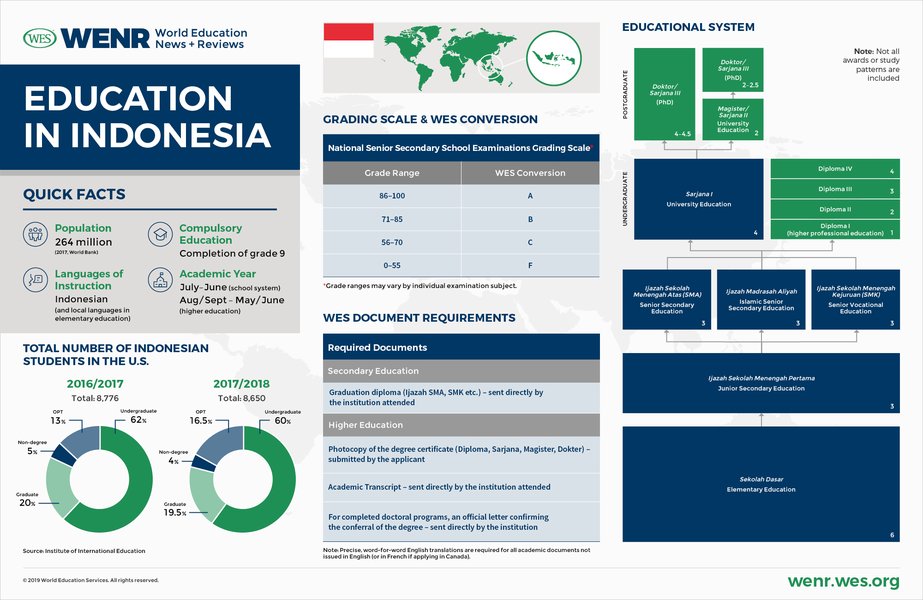
Overview of the educational landscape in Indonesia.
Introducing the Framework: A Smart Solution
What is a Transformer-based Bilingual Skill to Curriculum Mapping Framework?
This framework represents an innovative approach that leverages state-of-the-art Artificial Intelligence, specifically Transformer models, to systematically analyze and align educational content with real-world job requirements. Its core objective is to build a dynamic bridge between Indonesian IT undergraduate programs and the evolving demands of the national and international job market.
At its heart, the framework uses Natural Language Processing (NLP) techniques powered by Transformer models to:
- Understand the skills, technologies, and knowledge areas mentioned in job postings (in both Indonesian and English).
- Analyze the content of university curricula, including syllabi, course descriptions, and learning outcomes.
- Map the relationships between industry-demanded skills and the skills taught in academic programs.
- Identify alignment strengths, weaknesses, and critical gaps.
- Generate data-driven recommendations for curriculum enhancement.
The "bilingual" aspect is crucial. Transformers excel at processing and understanding context across multiple languages, making them ideal for handling the mix of Bahasa Indonesia and English prevalent in Indonesia's technical and educational domains.
Visualizing the Framework's Architecture
The following mindmap illustrates the key stages and components involved in the Transformer-based Bilingual Skill to Curriculum Mapping Framework, showing how data flows from collection through analysis to actionable recommendations.
Skill-Curriculum Mapping Framework"] id1["Data Sources"] id1a["Job Market Data
(Job Postings, Industry Reports)"] id1b["Curriculum Data
(Syllabi, Learning Outcomes)"] id2["Core Technologies"] id2a["Transformer Models
(e.g., BERT, T5, XLM-R)"] id2b["Natural Language Processing (NLP)"] id2c["Bilingual Embeddings"] id2d["Machine Learning"] id3["Mapping Process"] id3a["Skill Extraction
(Named Entity Recognition)"] id3b["Semantic Representation
(Vector Embeddings)"] id3c["Bilingual Alignment
(Cross-lingual Similarity)"] id3d["Gap Analysis"] id4["Outputs & Benefits"] id4a["Curriculum Recommendations"] id4b["Skill Gap Reports"] id4c["Alignment Dashboards"] id4d["Improved Employability"] id4e["Data-Driven Education"] id5["Indonesian Context"] id5a["Bahasa Indonesia & English Processing"] id5b["Local IT Ecosystem Focus"] id5c["Addressing National Skills Gap"] id5d["Supporting Digital Transformation"]
The Engine: Transformer Models Explained
Why Use Transformers for This Task?
Transformer models are a type of neural network architecture that revolutionized the field of Natural Language Processing (NLP). They are exceptionally adept at understanding context and relationships between words in a sequence, making them powerful tools for tasks like translation, summarization, and information extraction.
Key advantages of using Transformers in this framework include:
- Contextual Understanding: Unlike older models, Transformers use "attention mechanisms" to weigh the importance of different words when processing a sentence, leading to a deeper understanding of meaning and nuance.
- Multilingual Capabilities: Models like mBERT, XLM-RoBERTa, and mT5 are pre-trained on vast amounts of text data from many languages, enabling them to effectively process and compare information in both Bahasa Indonesia and English simultaneously.
- Semantic Similarity: They can convert text (like skill descriptions or course objectives) into numerical representations (embeddings) that capture semantic meaning. This allows the framework to identify conceptually similar skills even if they are described using different wording or languages.
- Transfer Learning: Pre-trained models can be fine-tuned on specific datasets (like Indonesian IT job posts and curricula) to improve performance on the targeted task of skill-to-curriculum mapping.
Understanding Transformer Architecture
The video below, from Carnegie Mellon University's Advanced NLP course, provides a technical overview of the Transformer architecture and its core concepts like multi-head attention.
CMU Advanced NLP 2024 (5): Transformers - Lecture explaining the model architecture.
Framework Components: A Step-by-Step Breakdown
Building an effective Transformer-based Bilingual Skill to Curriculum Mapping Framework involves several interconnected stages:
1. Data Collection and Preparation
Gathering the Raw Material
The foundation of the framework relies on comprehensive and relevant data:
- Job Market Data: Sourcing job postings, descriptions, required skill lists, and industry trend reports from Indonesian job portals (like LinkedIn, JobStreet, Kalibrr), company career pages, and market analyses. Focus is on IT roles.
- Curriculum Data: Collecting detailed information from Indonesian universities offering IT undergraduate programs. This includes official syllabi, course catalogues, learning outcomes, competency frameworks, and program structures.
- Data Cleaning & Structuring: Raw data needs preprocessing to standardize formats, remove noise, and potentially translate or identify language elements for bilingual processing.
2. Skill and Knowledge Extraction
Identifying Key Competencies with NLP
Transformer models are employed to automatically identify and extract relevant information:
- Named Entity Recognition (NER): Identifying specific technologies (e.g.,
Python,AWS,React), methodologies (e.g.,Agile,DevOps), and technical concepts. - Skill Phrase Extraction: Pinpointing action-oriented skills (e.g., "problem-solving," "database management," "API design," "team collaboration").
- Bilingual Term Handling: Using multilingual models to recognize and link technical terms whether they appear in Indonesian or English.
3. Skill Ontology and Representation
Structuring and Understanding Skills
Extracted skills need to be organized and represented numerically for comparison:
- Skill Taxonomy/Ontology: Developing a structured classification of skills (e.g., technical skills, domain knowledge, soft skills, language proficiency) relevant to the Indonesian IT sector. This provides a common vocabulary.
- Semantic Embeddings: Using Transformer models (like multilingual sentence transformers) to convert skill descriptions and curriculum content into dense vector representations. These vectors capture the semantic meaning, allowing for nuanced comparisons.
4. Bilingual Mapping and Alignment
Connecting the Dots Between Industry and Academia
This is the core analysis step where the framework compares the two data domains:
- Semantic Similarity Calculation: Comparing the embeddings of job market skills and curriculum elements to quantify their relatedness.
- Cross-Lingual Matching: Leveraging the bilingual capabilities of Transformers to match skills regardless of the original language (e.g., matching an English job requirement for "cloud architecture" with relevant Indonesian course content).
- Skill-to-Course Mapping: Identifying which specific courses or modules contribute to developing particular in-demand skills.
- Program-Level Assessment: Evaluating the overall alignment of an entire IT program with industry requirements.
5. Gap Analysis
Highlighting Discrepancies
The mapping results are analyzed to pinpoint areas needing attention:
- Identifying Underrepresented Skills: Finding skills highly demanded by the job market but insufficiently covered in the current curriculum.
- Recognizing Outdated Content: Flagging curriculum areas focused on less relevant or obsolete technologies.
- Assessing Proficiency Levels: Potentially analyzing the depth to which skills are taught versus the proficiency expected by employers.
6. Recommendations and Reporting
Generating Actionable Insights
The final stage translates the analysis into useful outputs:
- Curriculum Update Suggestions: Providing specific recommendations for modifying course content, introducing new electives, or restructuring modules to address identified gaps.
- Benchmarking: Allowing universities to compare their program alignment against industry standards or anonymized peers.
- Student Guidance: Potentially informing tools or guidance for students on which skills are most valuable and how to acquire them.
- Visual Dashboards: Presenting the findings (skill coverage, gaps, alignment scores) in an intuitive visual format for educators and administrators.
Technical Deep Dive: How Bilingual Mapping Works
Leveraging Transformers for Cross-Lingual Understanding
The framework's ability to handle both Indonesian and English relies heavily on the architecture and training of multilingual Transformer models. Techniques employed often include:
- Multilingual Embeddings: Models like XLM-RoBERTa learn shared representations for words and concepts across many languages during pre-training. This means the vector for "data analysis" in English can be close in the embedding space to the vector for "analisis data" in Indonesian.
- Cross-Lingual Attention Mechanisms: Attention layers within the Transformer can learn relationships between words/phrases in different languages, facilitating direct comparison and mapping.
- Fine-Tuning with Bilingual Data: While pre-trained models have general multilingual abilities, fine-tuning them on a specific dataset of parallel Indonesian-English IT terms, job descriptions, and curriculum snippets significantly improves accuracy for this specific task.
- Adapter Modules: Small, task-specific layers ("adapters") can be inserted into a pre-trained Transformer. These can be trained efficiently on the bilingual skill-mapping task without altering the entire base model, sometimes using separate pathways for academic vs. industry concepts.
Example: Preprocessing Job Data
A simplified code snippet illustrates how job posting text might be preprocessed before being fed into the Transformer model for embedding and analysis. This involves normalization and extracting key information.
# Example function demonstrating conceptual preprocessing steps
# Note: Actual implementation requires robust NLP libraries and models

def preprocess_job_posting_text(text, language_model):
    """
    Conceptual function to preprocess job posting text for analysis.

    Args:
        text (str): The raw text of the job posting.
        language_model: A pre-trained multilingual NLP model.

    Returns:
        dict: A dictionary containing processed information.
            'normalized_text': Text after cleaning and standardization.
            'extracted_skills': List of identified skills/technologies.
            'language': Detected primary language (e.g., 'id', 'en').
            'embeddings': Semantic vector representation (conceptual).
    """

    # 1. Normalize Language (basic cleaning, case folding)
    normalized_text = text.lower().strip() # Basic example

    # 2. Detect Language (using model or library)
    # language = detect_language(normalized_text) # Placeholder

    # 3. Extract Technical Terms/Skills (using NER or pattern matching via model)
    # entities = language_model.extract_entities(normalized_text) # Placeholder
    # extracted_skills = [e.text for e in entities if e.label_ in ["SKILL", "TECH"]] # Placeholder

    # 4. Generate Semantic Embeddings (using the Transformer model)
    # embeddings = language_model.generate_embeddings(normalized_text) # Placeholder

    # --- Placeholder return ---
    processed_info = {
        'normalized_text': normalized_text,
        'extracted_skills': ["python", "cloud computing", "problem solving"], # Example skills
        'language': 'en', # Example detected language
        'embeddings': [0.1, 0.5, ..., -0.2] # Example embedding vector
    }
    return processed_info

# Example usage:
# job_text = "Dibutuhkan Software Engineer mahir Python dan AWS. Kemampuan problem solving baik."
# processed_data = preprocess_job_posting_text(job_text, my_transformer_model)
# print(processed_data)
Aligning with the Indonesian IT Job Market
Mapping Skills: Current Focus vs. Industry Demand
The radar chart below provides a visual representation of the potential alignment challenges and opportunities within the Indonesian IT landscape. It contrasts hypothetical levels of emphasis in typical IT curricula against the perceived demand in the job market for various skill categories, and illustrates the potential impact of the mapping framework.
This chart highlights areas where typical curricula might lag behind market demand (e.g., potentially Cloud, AI/ML, Cybersecurity) and how a framework-informed approach could help rebalance the focus towards industry needs, while maintaining strong foundational knowledge.
In-Demand Skills in Indonesia (2025)
Analysis of the Indonesian IT job market reveals high demand for professionals skilled in:
- Programming Languages: Python, JavaScript (Node.js, React, Vue), Java, SQL.
- Cloud Computing: Expertise in platforms like AWS, Azure, and Google Cloud Platform, including architecture and deployment.
- Artificial Intelligence & Machine Learning: Roles for AI engineers, data scientists, and ML specialists are growing.
- Cybersecurity: Increased focus on security analysts and specialists to protect digital assets.
- Web Development: Full-stack developers remain highly sought after.
- Digital Skills: Broader digital literacy, data analysis, and proficiency with modern collaboration tools.
- Bilingual Communication: Ability to effectively communicate technical concepts in both Indonesian and English.
The framework directly addresses this by identifying these specific skills in job data and mapping them to university programs, ensuring graduates possess relevant, up-to-date competencies.
Framework Evaluation and Alignment Metrics
To ensure the framework is effective, its performance and the resulting alignment can be measured using various metrics. The table below outlines key areas of evaluation:
| Evaluation Area | Example Metric | Description | Target Goal |
|---|---|---|---|
| Skill Extraction Accuracy | F1-Score on Skill NER | Measures the accuracy of identifying technical skills and concepts from text (job posts, syllabi). | High precision and recall (>0.85) |
| Bilingual Mapping Consistency | Cross-lingual Semantic Similarity Score | Evaluates how well the model matches semantically equivalent skills described in Indonesian and English. | High similarity for known pairs |
| Curriculum Coverage | Percentage of In-Demand Skills Covered | Quantifies how many of the top market-demanded skills are addressed within a specific curriculum. | Increase over baseline |
| Gap Identification Relevance | Industry Expert Validation Rate | Measures the percentage of framework-identified skill gaps confirmed as relevant by industry professionals. | >90% agreement |
| Language Processing Quality | BLEU Score (for translation components, if used) | Assesses the quality of any internal translation mechanisms used for bridging language gaps. | Adequate score for technical context (>0.60) |
Tracking these metrics helps refine the Transformer models and ensures the framework provides reliable and actionable insights for curriculum development.

Technology training initiatives are crucial for upskilling the workforce in Indonesia.
Challenges and Considerations
Implementing such a sophisticated framework involves several practical challenges:
- Data Quality and Access: Obtaining comprehensive, up-to-date, and clean data for both job postings and university curricula can be difficult. Data privacy regulations must also be respected.
- Dynamic Job Market: The IT industry evolves rapidly. The framework requires continuous monitoring of job trends and regular updates to the models and skill ontologies.
- Bilingual Complexity: Accurately handling technical jargon, code-mixing (switching between Indonesian and English), and nuances in both languages requires robust and well-trained models.
- Computational Resources: Training and running large Transformer models demand significant computational power and expertise in AI/NLP.
- Stakeholder Buy-in: Effective implementation requires collaboration between universities, industry partners, and potentially government bodies to validate findings and enact curriculum changes.
- Bias Mitigation: Ensuring the AI models do not inadvertently perpetuate biases present in the training data (e.g., gender or regional bias in job descriptions) is critical.
- Cultural Context: While focusing on technical skills, understanding the importance of cultural fit and soft skills valued in the Indonesian workplace (as highlighted in some analyses) adds another layer of complexity.
Benefits for Indonesian IT Education
Despite the challenges, the potential benefits of this framework are substantial:
- Improved Graduate Employability: By aligning curricula more closely with industry needs, graduates are better prepared for available jobs, potentially reducing unemployment and underemployment rates.
- Enhanced Curriculum Relevance: Universities can make data-driven decisions about curriculum updates, ensuring programs remain current and effective.
- Support for Digital Transformation: Equipping the workforce with the right digital skills is crucial for achieving Indonesia's national goals for digital economic growth.
- Increased Competitiveness: Graduates with relevant, bilingual skills are better positioned to compete in both the local and global IT job markets.
- Efficient Resource Allocation: Educational institutions can focus resources on developing programs and courses that directly address documented industry demands.
- Better Guidance for Students: Insights from the framework can help guide students towards specializing in high-demand skill areas.
Frequently Asked Questions (FAQ)
What exactly are 'Transformer models' in this context?
Why is the 'bilingual' aspect so important for Indonesian IT?
How does this framework help IT students directly?
Is this framework difficult or expensive for universities to implement?
Recommended Reading
- How do Transformer models handle multilingual text processing?
- What are the most in-demand IT skills in Southeast Asia for 2025?
- Examples of successful university-industry collaboration in tech education.
- Challenges and strategies for curriculum development in higher education.
References
Last updated May 6, 2025