
Unmasking Trigeminal Neuralgia: Understanding the "Suicide Disease"
Explore the causes, symptoms, and cutting-edge treatments for this debilitating facial pain condition.
Key Insights into Trigeminal Neuralgia
- Excruciating Pain: Trigeminal neuralgia (TN) is defined by sudden, severe, electric shock-like pain in the face, typically on one side, triggered by everyday activities like talking or brushing teeth.
- Nerve Compression: The most common cause is compression of the trigeminal nerve by a blood vessel, leading to the wearing away of its protective myelin sheath.
- Diverse Treatment Paths: Management ranges from first-line anticonvulsant medications like carbamazepine to advanced surgical options such as microvascular decompression (MVD) and stereotactic radiosurgery.
Decoding Trigeminal Neuralgia: The Anatomy of Facial Pain
Trigeminal neuralgia (TN), often referred to as tic douloureux, is a chronic neurological disorder characterized by episodes of intense, stabbing, or electric shock-like pain in the face. This debilitating condition affects the trigeminal nerve, also known as the fifth cranial nerve, which is crucial for transmitting sensory information from the face, including the forehead, cheek, and jaw, to the brain. The pain is typically unilateral, meaning it affects one side of the face, and can significantly impair daily activities, making simple actions like eating, speaking, or even light facial contact excruciatingly painful. While it is more common in individuals over 50 and affects women more frequently, TN can occur at any age and is classified into various types based on its underlying cause.
The Trigeminal Nerve: A Vital Pathway
The trigeminal nerve is a complex cranial nerve with three main branches, each responsible for sensation in a different part of the face:
- Ophthalmic Branch (V1): Controls sensation in the forehead, eyes, and scalp.
- Maxillary Branch (V2): Responsible for sensation in the cheek, upper jaw, upper teeth, and side of the nose.
- Mandibular Branch (V3): Governs sensation in the lower jaw, lower teeth, lips, and some chewing muscles.
Disruption or irritation of any of these branches can lead to the characteristic pain of trigeminal neuralgia.
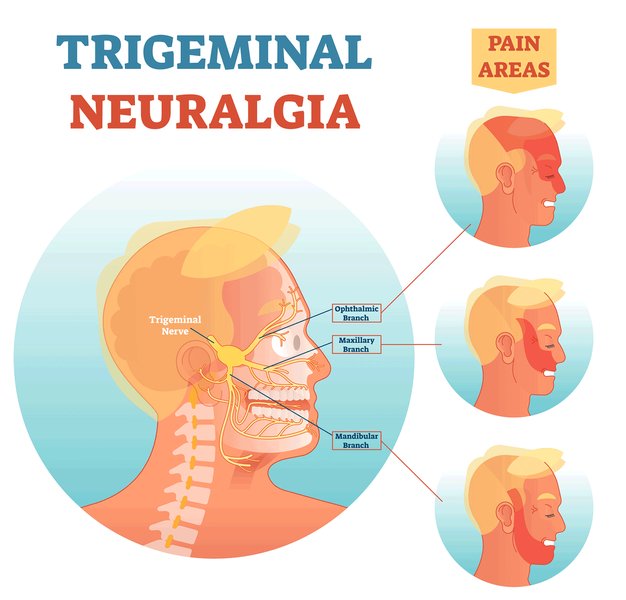
An illustration highlighting the trigeminal nerve and its three main branches across the face.
Understanding the Roots of Facial Agony: Causes of Trigeminal Neuralgia
The primary cause of trigeminal neuralgia is typically linked to irritation or compression of the trigeminal nerve. The most common underlying factor, especially in classical TN, is vascular compression. This occurs when a blood vessel, most frequently the superior cerebellar artery, presses against the trigeminal nerve at its root entry zone near the brainstem. Over time, the constant pulsation of the artery can erode the nerve's protective myelin sheath, leading to increased sensitivity and abnormal firing of pain signals.
Common Etiologies and Contributing Factors
- Vascular Compression: The pulsating impact of a blood vessel (e.g., superior cerebellar artery) against the trigeminal nerve at the brainstem.
- Multiple Sclerosis (MS): This autoimmune disease can cause demyelination of the trigeminal nerve, leading to secondary TN.
- Tumors: Less commonly, a tumor can compress the nerve, resulting in similar pain symptoms.
- Facial Trauma or Dental Procedures: In some instances, nerve injury from accidents or invasive dental work can trigger TN.
- Stroke: A stroke affecting the brain areas related to the trigeminal nerve can be a cause.
- Idiopathic Trigeminal Neuralgia: When no identifiable cause can be found, the condition is termed idiopathic.
The Unbearable Burden: Symptoms and Triggers of Trigeminal Neuralgia
The hallmark symptom of trigeminal neuralgia is its unique and devastating pain. The attacks are sudden, severe, and typically described as electric shock-like, shooting, or stabbing sensations. These excruciating episodes usually last from a few seconds to two minutes but can recur frequently, sometimes hundreds of times a day, leading to significant distress and disability.
Characteristic Pain Presentation
- Sudden Onset: Pain strikes abruptly and without warning.
- Unilateral: Almost always affects only one side of the face.
- Specific Locations: Concentrated in areas served by the trigeminal nerve, such as the jaw, cheek, lips, gums, or forehead.
- Brief but Intense: Episodes are short-lived but extremely severe.
Common Pain Triggers
A distinctive feature of TN is that pain attacks are often triggered by seemingly innocuous activities involving the face or head. Identifying and avoiding these triggers is a crucial part of managing the condition.
- Talking, chewing, or eating
- Brushing teeth or washing the face
- Shaving or applying makeup
- Touching the face lightly
- Exposure to wind or cold air
- Smiling or laughing
Some individuals may also experience a dull ache or numbness between attacks, a presentation often associated with "atypical trigeminal neuralgia."
Navigating the Diagnostic Journey: How Trigeminal Neuralgia is Identified
Diagnosing trigeminal neuralgia can sometimes be challenging due to its varied presentation and the need to differentiate it from other causes of facial pain, such as dental issues or temporomandibular joint (TMJ) disorders. A thorough diagnostic process typically involves a combination of clinical evaluation and imaging studies.
Key Diagnostic Steps
- Detailed Patient History: The doctor will inquire about the nature of the pain (e.g., electric shock-like, stabbing), its duration, frequency, triggers, and any associated symptoms.
- Neurological Examination: Physical tests may be performed to assess reflexes and pinpoint which branches of the trigeminal nerve are involved.
- Magnetic Resonance Imaging (MRI): An MRI scan of the brain is crucial. It helps to identify vascular compression of the trigeminal nerve, rule out tumors, or detect demyelination associated with conditions like multiple sclerosis.
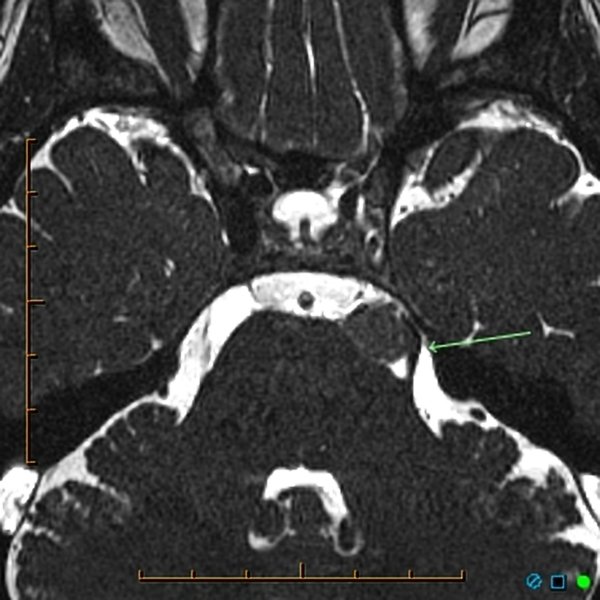
An MRI image illustrating nerve compression, a common cause of trigeminal neuralgia.
Chart of Trigeminal Neuralgia Treatment Efficacy (Opinion-Based Analysis)
This radar chart illustrates the perceived efficacy and characteristics of various trigeminal neuralgia treatments based on general clinical outcomes and patient experiences. It provides an opinionated analysis across several key dimensions, acknowledging that individual responses to treatments can vary widely.
Treatment Pathways: From Medications to Advanced Interventions
Managing trigeminal neuralgia requires a tailored approach, often combining different therapeutic strategies to achieve optimal pain control and improve quality of life. The choice of treatment depends on various factors, including the patient's age, overall health, pain severity, and the specific cause of their TN.
Medical Management: The First Line of Defense
Pharmacological treatments are usually the initial approach to managing TN pain. Anticonvulsant medications are considered the gold standard due to their efficacy in stabilizing nerve activity.
- Carbamazepine: This is typically the first-line drug of choice, providing significant pain relief for many patients.
- Oxcarbazepine: Another effective first-line anticonvulsant, often used when carbamazepine is not tolerated.
- Other Anticonvulsants: Gabapentin, pregabalin, lamotrigine, phenytoin, sodium valproate, and clonazepam may also be prescribed, sometimes in combination.
- Intravenous Fosphenytoin (fPHT): Recent studies suggest fPHT can offer rapid pain relief for acute exacerbations.
- TRPV1-target drugs and Sodium-channel blockers: Ongoing research explores new pharmacological targets for orofacial pain, including TN.
While medications are effective initially for a significant number of patients, side effects such as dizziness or fatigue can occur. Over time, some patients may develop tolerance, requiring higher doses or alternative treatments.
Surgical and Minimally Invasive Procedures: When Medications Fall Short
For patients who do not respond adequately to medication or experience intolerable side effects, surgical interventions become a viable option. These procedures aim to either alleviate nerve compression or disrupt pain signals.
Microvascular Decompression (MVD)
Considered the most effective long-term surgical treatment, MVD involves creating an opening in the skull (craniotomy) to access the trigeminal nerve. The surgeon then identifies and gently moves any blood vessels compressing the nerve, placing a small cushion (often Teflon) between the nerve and the vessel. MVD offers a high success rate for pain relief and long-term remission, especially for classical TN caused by vascular compression.
An educational video discussing the causes and surgical treatment options for trigeminal neuralgia.
Stereotactic Radiosurgery (Gamma Knife/CyberKnife)
This non-invasive procedure uses highly focused beams of radiation to target the trigeminal nerve root where it enters the brainstem. The radiation causes a gradual disruption of pain signals over time, leading to pain relief. It's an excellent option for patients who are not candidates for invasive surgery or prefer a less invasive approach. While pain relief may not be immediate, it offers up to 80% pain reduction for many patients with minimal recovery time.
Percutaneous Ablative Procedures
These minimally invasive techniques involve inserting a needle through the cheek to selectively damage nerve fibers responsible for pain. While effective for a few years, they are generally not permanent and may carry a risk of facial numbness.
- Glycerol Rhizotomy: Involves injecting sterile glycerol around the nerve to damage pain-transmitting fibers.
- Radiofrequency (RF) Ablation: Uses heat generated by a radiofrequency current to destroy a small portion of the nerve.
- Balloon Compression: A balloon is inflated to gently compress the nerve, causing a controlled injury that disrupts pain signals.
Peripheral Nerve Blocks
These minor procedures involve injecting local anesthetics or other substances near the affected nerve branches to provide temporary pain relief.
Adjunctive and Emerging Therapies
Beyond standard medical and surgical options, several adjunct treatments and promising new therapies are being explored:
- Depression Management: Given the profound impact of TN on mental health, addressing depression is crucial for holistic care.
- Mechanical, Electrical, and Thermal Stimuli: Some patients find relief through non-pharmacological methods to modify pain signals.
- Vitamin B12: While not a cure, it has shown pharmacological utility for neuropathic pain.
- Focused Ultrasound: Emerging non-invasive therapies using sound waves are showing promising results in clinical trials for pain reduction.
- Self-adhesive bandages: May be used in some cases for protective or sensory modulation purposes.
Understanding Trigeminal Neuralgia: A Mindmap of Key Concepts
This mindmap visually organizes the key aspects of Trigeminal Neuralgia, from its fundamental definition and common causes to its characteristic symptoms, diagnostic methods, and diverse treatment approaches. It highlights the interconnectedness of these factors in understanding and managing the condition.
Stabbing
Shooting
Burning"] Duration["Seconds to 2 minutes"] Frequency["Recurrent attacks
Hundreds daily (severe)"] Location["Unilateral facial pain"] AreasAffected["Jaw
Cheek
Lips
Gums
Forehead"] Triggers["Common Pain Provokers"] DailyActivities["Talking
Chewing
Eating"] FacialContact["Brushing teeth
Washing face
Shaving
Makeup"] Environmental["Wind
Cold air"] Expressions["Smiling
Laughing"] AtypicalSymptoms["Dull Ache
Persistent Pain
Numbness"] Diagnosis["Identification Process"] ClinicalEvaluation["Patient History
Neurological Exam"] Imaging["MRI (Magnetic Resonance Imaging)"] Purpose["Identify compression
Rule out tumors/MS"] Treatment["Management Strategies"] MedicalTherapy["Pharmacological First Line"] Anticonvulsants["Carbamazepine
Oxcarbazepine
Gabapentin
Pregabalin"] NewerDrugs["Intravenous Fosphenytoin
TRPV1-target drugs"] SurgicalOptions["Invasive Procedures"] MVD["Microvascular Decompression"] Benefit["Most effective long-term"] Mechanism["Relocate blood vessel"] Radiosurgery["Stereotactic Radiosurgery (Gamma Knife)"] Benefit["Non-invasive
Targeted radiation"] AblativeProcedures["Percutaneous Nerve Damage"] Types["Glycerol Rhizotomy
Radiofrequency Ablation
Balloon Compression"] AdjunctTherapies["Supportive & Emerging"] PainManagement["Depression management
Avoid triggers"] Alternative["Acupuncture
Vitamin B12"] Future["Focused Ultrasound"]
Comparative Overview of Trigeminal Neuralgia Treatments
The following table provides a concise comparison of the primary treatment modalities for trigeminal neuralgia, highlighting their mechanisms, typical applications, and general outcomes. This helps to illustrate the diverse options available to patients and their healthcare providers.
| Treatment Type | Mechanism of Action | Typical Application | Pros | Cons |
|---|---|---|---|---|
| Anticonvulsant Medications (e.g., Carbamazepine, Oxcarbazepine) | Stabilizes nerve membranes, reducing abnormal electrical activity and pain signals. | First-line treatment for most patients. | Non-invasive, initial high success rate in pain control. | Side effects (dizziness, fatigue), potential for tolerance over time, not a permanent cure. |
| Microvascular Decompression (MVD) | Surgically separates a compressing blood vessel from the trigeminal nerve. | Preferred for classical TN caused by vascular compression in healthy patients. | Highest rate of long-term pain relief, addresses the root cause. | Invasive brain surgery, longer recovery time, potential for complications. |
| Stereotactic Radiosurgery (Gamma Knife, CyberKnife) | Uses focused radiation to gradually damage the nerve, disrupting pain signal transmission. | Good for patients not suitable for surgery or those seeking a non-invasive option. | Non-invasive, outpatient procedure, minimal recovery time. | Pain relief is not immediate (can take weeks to months), potential for delayed numbness, recurrence possible. |
| Percutaneous Ablative Procedures (Glycerol Rhizotomy, RF Ablation, Balloon Compression) | Controlled injury to nerve fibers to disrupt pain signals. | For patients who fail medications and are not MVD candidates, or as a temporary measure. | Minimally invasive, relatively quick pain relief. | Pain relief is often temporary (1-5 years), higher risk of facial numbness, recurrence is common. |
Frequently Asked Questions about Trigeminal Neuralgia
What is the "suicide disease" associated with trigeminal neuralgia?
Can trigeminal neuralgia be cured?
Is trigeminal neuralgia a sign of something more serious?
What is the difference between typical and atypical trigeminal neuralgia?
What should I do if I suspect I have trigeminal neuralgia?
Conclusion: Hope for Managing Trigeminal Neuralgia
Trigeminal neuralgia is a profoundly painful condition that can severely impact an individual's life. However, with advancements in diagnostics and a wide array of treatment options, from precise pharmacological interventions to highly effective surgical procedures, managing the symptoms and improving quality of life is increasingly achievable. Early and accurate diagnosis is paramount, allowing for a personalized treatment plan that can mitigate pain, reduce the frequency of attacks, and help patients regain control over their daily lives. Continuous research and emerging therapies offer ongoing hope for even better outcomes in the future.
Recommended Further Reading
- Understanding the role of myelin sheath in trigeminal neuralgia
- Latest research on non-invasive treatments for neuropathic facial pain
- Coping strategies and psychological support for chronic facial pain
- Differential diagnosis of facial pain conditions vs trigeminal neuralgia