
Understanding Trivial Instructions in HW/SW Codesign
Exploring Simple Operations and Their Dual Implementations
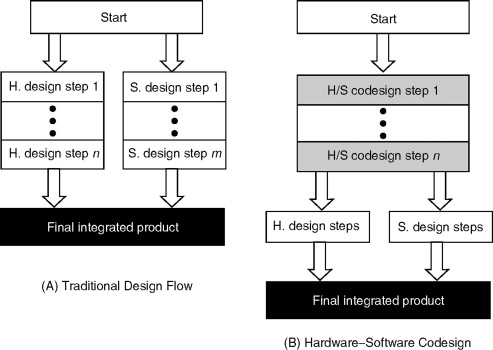
Key Highlights
- Simple Operations: Trivial instructions are fundamental operations that can be directly implemented in both hardware and software with minimal computational overhead.
- Dual Implementation: Their simplicity enables straightforward implementation, such as basic data transfers or arithmetic operations, often serving as building blocks for more complex functions.
- Efficient Codesign: Understanding these instructions helps in partitioning tasks between hardware and software, optimizing performance for embedded and sophisticated systems alike.
Defining Trivial Instructions in HW/SW Codesign
In the integrated domain of hardware/software codesign, the concept of a "trivial instruction" does not have a single, universally defined meaning. Instead, it is used to describe operations that are intentionally kept simple to facilitate an efficient mapping to either hardware or software. At its core, a trivial instruction should be characterized by the following:
Simplicity and Ease of Implementation
A trivial instruction commonly involves tasks which require only basic operations, such as data movement, minimal arithmetic, or control flow that does not demand elaborate decision-making or resource management. Because of their inherent simplicity, these instructions can be implemented in hardware with dedicated circuitry that performs the operation in a single cycle, or in software with straightforward assembly instructions that execute with minimal clock cycles. This minimalism makes them attractive as they form the essential building blocks for more complex instructions and behaviors.
Minimal Impact on System Resources
Another distinguishing feature of trivial instructions is that they tend to have a negligible impact on overall system performance when compared to more complex, computationally heavy instructions. Their low resource consumption ensures that they do not introduce latency or require significant logic resources, which is particularly important in designs where efficiency and speed are critical. An example is a basic load or store instruction that primarily handles data transfer between memory and registers.
Building Blocks for More Complex Operations
Trivial instructions are integral to constructing more intricate algorithms and operations. By offloading elementary tasks to these simple instructions, the design can focus on optimizing complex functions at a higher abstraction level. In both hardware and software paradigms, these operations establish foundational techniques that can later be combined into sophisticated procedures, supporting a modular approach to system design.
Examples of Trivial Instructions
The notion of a trivial instruction can be best understood by considering familiar examples from widely used architectures. Let’s review two specific illustrations:
Example 1: Byte Swap Operation
Consider an operation that converts data between little-endian and big-endian formats. A byte swap is inherently a simple manipulation of bits where multiple shifting and masking operations rearrange the byte order.
Hardware Implementation
In hardware, a byte swap can be implemented using dedicated logic circuits that rearrange the bits in a predetermined manner. For instance, this might use simple wiring or minimal logic gates to perform the swapping in one or two clock cycles. The hardware can exploit parallel processing, reducing the time required to accomplish the task.
Software Implementation
In software, the same operation might be executed using a series of bit-shift and mask instructions. For example, an implementation in C might combine several inline assembly instructions or utilize a standard library function that encapsulates the swap mechanism:
// Example C code for byte swap operation
unsigned int ByteSwap (unsigned int value) {
    return ((value >> 24) & 0xff)      |
           ((value << 8)  & 0xff0000)  |
           ((value >> 8)  & 0xff00)    |
           ((value << 24) & 0xff000000);
}
Although the software version may require multiple instructions, the fundamental concept remains trivial due to its predictable and limited scope. This dual nature exemplifies how a trivial instruction, while conceptually simple, is defined by its ease of implementation in both domains.
Example 2: Simple Register Increment
A common example of a trivial instruction in many computer architectures is a register increment operation. Such an operation increases the value stored in a register by one. This operation is straightforward and can be directly mapped into minimalistic hardware circuits or implemented as an assembly instruction.
Software Implementation in RISC-V
In a RISC-V assembly environment, an increment can be made using an add immediate instruction. Consider the following code snippet:
addi x1, x1, 1 <!-- This increments the value of x1 by 1 -->This instruction simply adds the immediate value of one to the content of register x1 and stores the result back in x1. The elementary nature of this operation makes it a quintessential example of a trivial instruction.
Hardware Implementation
From a hardware perspective, the increment operation may be implemented using a straightforward adder circuit, such as a full adder or even simpler logic circuits if the context allows. This circuit adds the constant value ‘1’ to the register's binary value, achieving the same result as the software implementation, but typically in a single cycle with minimal circuitry.
Trivial Register Allocation (TRA) in HW/SW Codesign
Beyond simple arithmetic and data manipulation instructions, the concept of triviality also extends to design strategies such as trivial register allocation (TRA) in the context of lowering higher-level constructs to target architectures like RISC-V. This process involves a basic method for managing registers that support the simple mapping of virtual registers onto physical ones with a fixed, small number of registers.
Understanding Trivial Register Allocation
TRA is designed under the assumption that most instructions use only a limited number of registers – often up to three. This allows the register allocation algorithm to be extremely straightforward:
- Assigning each abstract register a unique memory offset typically allocated on the stack.
- Loading values from the stack into a fixed set of physical registers.
- Storing the computed results back into the stack framework after each operation.
This process minimizes complexity in the register allocation phase, as it avoids more sophisticated allocation strategies that could otherwise lead to multiple memory accesses or complicated scheduling.
Implementation Example
Below is an example in a RISC-V assembly context that illustrates TRA. Suppose we need to add two values stored at specific stack offsets and store the output back on the stack. The code snippet might look like this:
  # Load operand a from stack into register t0
  lw t0, 0(sp)        <!-- Load value of a into t0 -->

  # Load operand b from stack into register t1
  lw t1, 4(sp)        <!-- Load value of b into t1 -->

  # Perform addition of registers t0 and t1, result in t2
  add t2, t0, t1      <!-- t2 now contains a + b -->

  # Store result from t2 to a designated stack location for variable c
  sw t2, 8(sp)        <!-- Store result in c's stack position -->
Here, the process is deemed trivial because it employs a fixed and simple allocation model using three well-defined registers (t0, t1, and t2) for a basic arithmetic operation. The design sacrifices some potential efficiency in favor of simplicity and predictable behavior, which is often beneficial in early prototyping or educational contexts.
Comparing Hardware vs. Software Implementation
It is important to note that while the term “trivial instruction” is used in both hardware and software domains, the implementation details may differ significantly. The table below compares typical characteristics of these implementations:
| Aspect | Hardware Implementation | Software Implementation |
|---|---|---|
| Simplicity | Implemented using dedicated or minimal logic gates | Implemented using straightforward assembly or high-level instructions |
| Execution Speed | Typically single-cycle execution | May require multiple micro-operations, but optimized through compilers |
| Resource Usage | Low resource usage: minimal circuitry and power consumption | Low computational overhead; however, depends on processor efficiency |
| Design Goals | Ensure deterministic execution with parallelism where possible | Maintain code clarity and modularity, allowing easy updates and debugging |
| Typical Usage | Basic data movement, arithmetic operations, simple control logic | Elementary operations within larger software routines and code generation |
Importance in HW/SW Codesign
The identification and implementation of trivial instructions are crucial elements of HW/SW codesign. Designers leverage these instructions to:
Enhance Efficiency
By delegating simple operations to either a hardware module or software routine based on what is most efficient for the target application, systems can achieve optimal performance. For example, while a byte swap operation might be executed extremely quickly in hardware, simpler arithmetic increments may be more effectively managed in software.
Reduce Complexity
Trivial instructions minimize the complexity of both hardware circuits and software compilers. In doing so, engineers reduce design time and lower the probability of errors during implementation. This simplification is particularly valuable when prototyping new systems or teaching fundamental codesign techniques.
Facilitate Partitioning
One of the primary challenges in HW/SW codesign is deciding which tasks to assign to hardware and which to implement in software. Trivial instructions, by virtue of their transferability between domains, provide a clear case study in effective partitioning. When designers clearly understand which operations are trivial, they can allocate more complex tasks to specialized hardware accelerators, while leaving simple control and data movement tasks to software.
Additional Considerations and Best Practices
While trivial instructions are elementary, their correct use in HW/SW codesign requires careful analysis:
Balancing Trade-offs
Designers must evaluate trade-offs when choosing between hardware and software implementations. Although trivial instructions are simple, the overhead associated with switching contexts between hardware and software or managing memory in a registers-mapped scheme can influence the decision. Evaluating these trade-offs early in the design phase can lead to a more balanced and robust system architecture.
Scalability and Future Enhancements
The simplicity of trivial instructions permits scalability. As a system evolves or as new functions are required, the core principle of utilizing trivial instructions as building blocks remains applicable. Moreover, as technologies advance, what was once considered trivial might be optimized further, reinforcing foundational design practices.
Educational Value
From an educational perspective, examining trivial instructions provides an excellent entry point into understanding the complexities of HW/SW codesign. They allow students and new designers to grasp the fundamentals before progressing to more sophisticated methods such as advanced register allocation strategies and specialized hardware accelerators.
References
- Target Architectures - CS Uni Paderborn
- HW/SW Codesign by Frederic - SciencesConf
- Trivial vs Non-Trivial Software - SE StackExchange
- SW Instruction Details - NTU Singapore
- LW and SW MIPS - Stack Overflow
Recommended Further Queries
Last updated March 20, 2025