
Understanding Tuberculosis
A comprehensive guide to the causes, transmission, diagnosis, treatment, and prevention of TB
Key Takeaways
- Tuberculosis (TB) is an airborne bacterial infection that primarily affects the lungs but can impact multiple organs.
- TB exists in two main forms: latent infection, which is non-contagious, and active disease, which is symptomatic and infectious.
- Timely diagnosis, strict adherence to treatment regimens, and public health measures are essential to control TB and prevent drug resistance.
Introduction
Tuberculosis (TB) is a serious infectious disease caused by the bacterium Mycobacterium tuberculosis. Although TB primarily affects the lungs—leading to pulmonary tuberculosis—it can also spread to other parts of the body such as the kidneys, spine, brain, and lymph nodes. Given its status as one of the leading causes of death due to infectious disease globally, understanding TB is crucial for both prevention and effective management.
Epidemiology and Global Impact
TB remains a major global health challenge. It is estimated that millions contract TB annually, and a significant number of these cases lead to death if not diagnosed and treated promptly. Approximately a quarter of the world's population is thought to have a latent TB infection (LTBI), though only a fraction of these individuals will develop active TB disease. Regions with limited access to healthcare, overcrowded conditions, and high prevalence of coexisting conditions such as HIV are particularly susceptible.
The epidemiological impact of TB is further compounded by the emergence of drug-resistant strains. Multidrug-resistant TB (MDR-TB) and extensively drug-resistant TB (XDR-TB) are challenging to treat and demand more complex, lengthy, and often more toxic treatment regimens. These resistant strains not only pose a threat to public health but also emphasize the need for strict treatment adherence and robust public health measures.
Pathogenesis and Transmission
Mechanism of Infection
TB is caused by Mycobacterium tuberculosis, a bacterium that is transmitted through airborne particles known as droplet nuclei. When a person with active pulmonary TB coughs, sneezes, talks, or sings, tiny droplets containing the bacteria are expelled into the air. Once inhaled, these droplets can travel deep into the lungs and trigger an immune response.
In the alveoli—the tiny air sacs in the lungs—the bacteria are engulfed by macrophages, a type of white blood cell. This interaction stimulates further immune activity, often resulting in the formation of granulomas. These granulomas help contain the infection, leading to latent TB infection in many individuals. However, if the host’s immune response is compromised or insufficient, the bacteria can multiply, leading to active TB disease.
Modes of Transmission
TB is predominantly an airborne disease. Transmission typically occurs in close-contact settings such as households, healthcare facilities, prisons, and shelters where ventilation is poor. It is important to note that not everyone infected with the TB bacterium will develop active TB disease; many individuals experience latent TB infection, a state in which the bacteria are present but inactive, and the person remains asymptomatic and not contagious.
Clinical Forms of Tuberculosis
Latent TB Infection (LTBI)
Latent TB infection occurs when a person is infected with Mycobacterium tuberculosis but does not show symptoms of active disease. The bacteria in latent TB remain in the body in a dormant state, and the infected individual is not contagious. Diagnosis typically involves a positive skin test or blood test, with no evidence of active disease on a chest X-ray. Despite the absence of symptoms, individuals with LTBI are at risk of developing active TB if their immune system weakens.
Active TB Disease
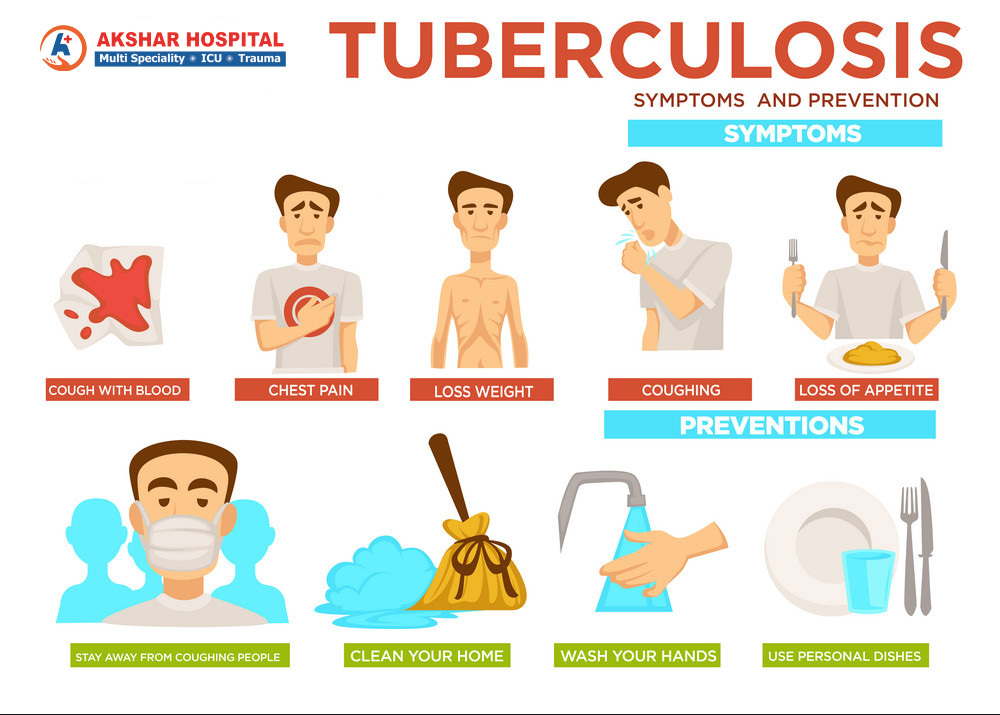
Active TB disease occurs when the immune system fails to contain the growth of the bacteria, leading to their active multiplication. This form is contagious and typically presents with a variety of clinical symptoms. The hallmark symptoms of pulmonary TB include a persistent cough lasting more than three weeks, coughing up blood or sputum, chest pain, fever, night sweats, weight loss, and fatigue. TB can also manifest in non-pulmonary sites, producing symptoms related to the organs involved such as back pain in spinal TB or neurological symptoms in TB meningitis.
Comparison Table: Latent TB vs. Active TB
| Characteristic | Latent TB Infection | Active TB Disease |
|---|---|---|
| Infectiousness | Not contagious | Contagious |
| Symptoms | No symptoms | Persistent cough, fever, weight loss, night sweats |
| Chest X-ray | Typically normal | Often abnormal with signs of lung involvement |
| Sputum Analysis | Negative for bacteria | Positive for Mycobacterium tuberculosis |
| Treatment | Preventive antibiotic therapy to avoid progression | Combination antibiotic regimens for an extended period |
Clinical Manifestations and Diagnosis
Symptoms of Active TB
The clinical presentation of active TB can vary depending on the site of infection. In cases of pulmonary TB, common symptoms include:
- Cough that persists for more than three weeks
- Coughing up blood or sputum
- Chest pain or discomfort
- Fever and chills
- Night sweats
- Unexplained weight loss and fatigue
For extrapulmonary TB, symptoms are localized based on the affected organ. For example, TB of the spine might result in back pain, while TB meningitis can cause headaches and altered mental status.
Diagnostic Methods
Diagnosing TB involves a combination of patient history, physical examination, and diagnostic testing. Key diagnostic steps include:
- Medical History and Physical Examination: Evaluation of symptoms, risk factors, and potential exposure to TB.
- Skin Tests: The Mantoux tuberculin skin test (TST) is a common method to detect TB infection.
- Blood Tests: Interferon-gamma release assays (IGRAs) are used to detect immune responses to TB bacteria.
- Chest X-rays: Radiographic examinations help identify abnormalities in the lungs that may suggest active TB.
- Sputum Analysis: Sputum smear microscopy, culture tests, and nucleic acid amplification tests (NAATs) are pivotal for confirming active pulmonary TB.
Diagnosing TB accurately is critical not only for initiating appropriate treatment but also for preventing the spread of the infection, especially in high-risk settings such as hospitals, correctional facilities, and shelters.
Treatment Strategies for Tuberculosis
Treatment for Latent TB
Individuals with latent TB infection typically do not require the intensive antibiotic regimen needed for active TB. The primary goal in treating LTBI is to prevent the progression of the infection into active disease. Preventive treatment regimens usually include:
- A 3- to 4-month course of combination antibiotics, such as isoniazid combined with rifapentine, or
- A shorter course of daily rifampin therapy.
These regimens are selected based on their effectiveness, safety profile, and higher treatment completion rates compared to longer courses of monotherapy.
Treatment for Active TB
Active TB disease is treated using multiple antibiotics simultaneously over an extended period. The standard regimen typically lasts for at least six months and involves an intensive phase followed by a continuation phase.
In the initial phase, a combination of drugs—commonly isoniazid, rifampin, pyrazinamide, and ethambutol—is administered to rapidly reduce the bacterial population. Following this, the continuation phase usually involves isoniazid and rifampin to eliminate any remaining bacteria and prevent relapse. Adjustments to the treatment plan may be necessary depending on factors such as drug susceptibility, patient tolerance, and the presence of comorbid conditions.
In cases where drug-resistant TB is identified, treatment regimens become more complex and may last 18–24 months or longer. Such cases require close supervision by specialized TB experts. Ensuring strict adherence to the treatment regimen is vital to prevent the development and spread of further resistance.
Directly Observed Therapy (DOT)
One of the most effective methods to ensure treatment adherence is Directly Observed Therapy (DOT). DOT involves a healthcare provider or a trained individual directly observing the patient take each dose of their medication. This approach has been shown to improve treatment outcomes and reduce the risk of drug-resistant TB.
Prevention and Public Health Measures
Vaccination
The Bacillus Calmette-Guérin (BCG) vaccine is the primary vaccine used in many countries to prevent severe forms of TB in children, such as miliary TB and TB meningitis. While the vaccine's effectiveness against pulmonary TB in adults is variable, its use in high-prevalence regions has contributed significantly to reductions in TB-related mortality.
Infection Control in High-Risk Settings
Infection control measures are indispensable in limiting TB transmission. Effective strategies include:
- Early detection and isolation: Rapid identification and segregation of individuals with active TB can significantly reduce the spread of the disease in healthcare facilities, correctional centers, homeless shelters, and other crowded environments.
- Improved ventilation: Ensuring adequate air exchange in buildings and public spaces minimizes the concentration of infectious airborne particles.
- Screening programs: Regular TB screening for high-risk populations, such as healthcare workers and close contacts of TB patients, aids in early identification of latent or active infections.
- Public awareness: Education about TB transmission, symptoms, and the importance of treatment adherence is crucial in reducing stigma and improving community health outcomes.
Risk Reduction and Community Interventions
Beyond the clinical setting, community interventions play a pivotal role in TB prevention. These include improving living conditions, reducing overcrowding, and addressing broader socio-economic determinants that contribute to the spread of TB. Public health campaigns that emphasize the importance of timely healthcare, proper nutrition, and smoking cessation also help in reducing the risk of progression from latent to active TB.
Special Considerations in TB Management
Vulnerable Populations
Certain populations are more vulnerable to TB infection and progression to active disease. Individuals with compromised immune systems, including those with HIV/AIDS, diabetes, or malnutrition, face higher risks. Children, the elderly, and individuals living or working in crowded settings such as prisons or shelters are also considered high risk.
In these groups, the risk of latent TB progressing to active TB is increased, making regular screening and early intervention critical. In addition, immunosuppressive therapies—such as corticosteroids or tumor necrosis factor (TNF) antagonists—can also increase susceptibility, warranting careful medical supervision and tailored treatment approaches.
Drug-Resistant TB
The emergence of drug-resistant TB strains is one of the most significant challenges in TB management today. Inappropriate treatment, poor adherence to prescribed regimens, or incomplete therapy can lead to the development of multidrug-resistant TB (MDR-TB) or extensively drug-resistant TB (XDR-TB). Managing drug-resistant TB typically involves a longer duration of treatment with a more complex combination of medications that may have increased toxicity and side effects.
Continuous monitoring, specialized diagnostic tests to assess drug susceptibility, and strategies such as directly observed therapy are essential components of managing these resistant forms. Furthermore, patient education and robust public health interventions are necessary to curb the transmission of drug-resistant TB.
Innovative Approaches and Future Directions
Advances in Diagnostic Techniques
Innovations in diagnostic testing have significantly improved the speed and accuracy of TB detection. Novel molecular techniques, such as nucleic acid amplification tests (NAATs), allow for rapid identification of TB bacteria and drug resistance markers. These advancements have shortened the time between diagnosis and treatment initiation, which is pivotal in reducing TB transmission and improving patient outcomes.
New Treatment Regimens
Research and development in TB therapeutics continue to advance the field. Recent studies support the use of short-course, rifamycin-based regimens for treating latent TB infection. These regimens are not only effective but also exhibit higher rates of patient compliance compared to traditional longer-duration treatments. For active TB, ongoing clinical trials are exploring regimens that could decrease treatment durations without compromising efficacy, thereby minimizing the risk of drug resistance and adverse effects.
The integration of directly observed therapy with modern technology—such as video DOT (vDOT)—represents a significant step forward in ensuring treatment adherence, particularly in remote or resource-limited settings. These innovations are vital for curbing the global burden of TB.
Integrative Public Health Strategies
Future directions in TB control emphasize a multifaceted approach integrating clinical management with broad public health strategies. Key areas of focus include:
- Implementing widespread screening and vaccination programs, especially in high-risk communities.
- Enhancing international cooperation and resource sharing to ensure effective TB control measures globally.
- Fostering partnerships between public health agencies, non-governmental organizations, and local communities to address socio-economic determinants of health that contribute to TB transmission.
Conclusion
Tuberculosis remains a significant public health challenge affecting millions worldwide. Its dual forms—latent infection and active disease—present complex diagnostic, therapeutic, and epidemiological challenges. With its mode of transmission primarily through airborne droplets, TB easily spreads in crowded environments, underscoring the importance of early detection, accurate diagnosis, and comprehensive treatment strategies.
The cornerstone of TB management lies in ensuring complete adherence to treatment regimens to prevent the development of drug resistance. Advances in rapid diagnostic techniques and shorter, more effective treatment courses are promising developments. Additionally, public health measures such as vaccination, improved infection control, and community education are essential components in reducing TB incidence and transmission globally.
Ultimately, a concerted effort combining clinical expertise, public health initiatives, and ongoing research continues to drive progress in the fight against TB. These integrative strategies not only help in managing current TB cases but also pave the way for a future where TB can be effectively contained and ultimately eliminated.
References
- Clinical Overview of Tuberculosis - CDC
- Tuberculosis Symptoms & Causes - Mayo Clinic
- Tuberculosis - World Health Organization
-
Tuberculosis Details - Cleveland Clinic
- Tuberculosis Information - Johns Hopkins Medicine
Related Queries
Last updated February 18, 2025