
Unlocking Inclusive Learning: How Academic Librarians Champion Universal Design for Learning
Discover the innovative strategies academic librarians use to make higher education resources and services accessible to all.
Highlights of UDL in Academic Libraries
- Intentional Inclusivity: Academic librarians are proactively redesigning instruction, resources, and spaces using Universal Design for Learning (UDL) principles to cater to diverse student needs from the outset, rather than as an afterthought.
- Multi-Modal Approach: Implementation spans providing information in multiple formats (text, audio, video), offering varied ways for students to engage and demonstrate learning, and creating motivating, supportive environments.
- Collaborative Advancement: Librarians are key players in campus-wide UDL adoption, working with faculty, disability services, and instructional designers to embed accessibility and inclusivity across the institution.
Understanding Universal Design for Learning (UDL) in Libraries
Universal Design for Learning (UDL) is an educational framework grounded in scientific insights into how humans learn. It guides the creation of flexible learning experiences and environments that accommodate the wide spectrum of learner variability. In higher education, academic librarians are increasingly adopting UDL to ensure that library services, resources, and instructional practices are accessible and effective for all students, including those with diverse learning preferences, abilities, and disabilities. The core idea is to move accessibility from a reactive accommodation to a proactive design feature, thereby minimizing barriers and maximizing learning opportunities for every student.
Core Principles of UDL in Action
UDL is built on three primary principles, each guiding academic librarians in creating more accessible and equitable learning experiences. These principles are not prescriptive but offer a framework for providing flexibility and support to all learners.
Multiple Means of Representation: Presenting Information in Diverse Ways
This principle focuses on the "WHAT" of learning. It acknowledges that learners perceive and comprehend information differently. Academic librarians apply this by offering content in various formats to cater to diverse learning styles and sensory needs.
Strategies for Representation:
- Developing instructional materials that combine text, images, audio, and video (e.g., captioned videos, audio descriptions for visual content).
- Creating online research guides (LibGuides) and tutorials with customizable display options (e.g., adjustable text size, contrast) and compatibility with assistive technologies like screen readers.
- Ensuring digital collections and databases are accessible, with clear navigation and alternative text for images.
- Providing outlines, glossaries, and summaries to support comprehension of complex information.
Multiple Means of Action & Expression: Offering Various Ways to Interact and Demonstrate Learning
This principle addresses the "HOW" of learning. It recognizes that students vary in how they navigate a learning environment and express what they know. Librarians support this by providing flexible options for interaction, navigation, and response.
Strategies for Action & Expression:
- Offering various ways for students to demonstrate their understanding of information literacy concepts, such as through written assignments, oral presentations, multimedia projects, or interactive quizzes.
- Designing interactive tutorials that allow for different paces and pathways of learning.
- Providing tools like assignment calculators or step-by-step research planners to help students manage complex tasks.
- Ensuring physical service points and study spaces are easily navigable and usable by individuals with diverse physical abilities.
Multiple Means of Engagement: Motivating and Sustaining Learner Interest
This principle targets the "WHY" of learning. It emphasizes the importance of tapping into learners' interests, offering appropriate challenges, and increasing motivation. Librarians achieve this by designing learning experiences that are relevant, authentic, and foster learner agency.
Strategies for Engagement:
- Incorporating active learning strategies, group work, and real-world examples into library instruction sessions.
- Providing choices in research topics or tools where appropriate to foster autonomy.
- Creating welcoming, supportive, and low-distraction physical and digital library environments (e.g., quiet study zones, comfortable seating, clear signage).
- Offering clear learning goals and providing constructive feedback to help students monitor their progress and sustain effort.
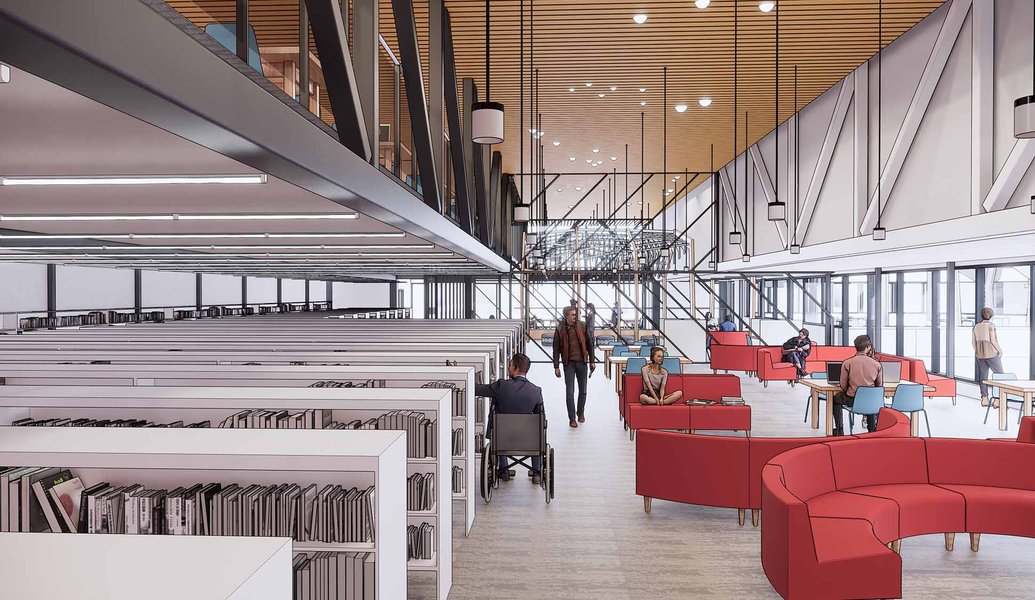
An inclusive library space at the University of Winnipeg, designed to accommodate diverse learners with varied seating and accessible workstations.
Key Arenas for UDL Implementation in Academic Libraries
Academic librarians are applying UDL principles across a wide range of services and functions to foster a more inclusive learning environment. This multifaceted approach ensures that accessibility is woven into the fabric of the library experience.
Transforming Library Instruction and Reference Services
Library instruction, whether delivered in-person, online, synchronously, or asynchronously, is a primary area for UDL implementation. Librarians are also rethinking reference services to be more inclusive.
Redesigning Instructional Sessions:
Librarians are designing lesson plans and activities with built-in flexibility. This includes providing clear agendas, breaking down complex research tasks into manageable steps, and using a variety of teaching methods to cater to different learning preferences. For instance, an instruction session might include a brief lecture, a hands-on database searching activity, and a collaborative problem-solving exercise.
Enhancing Research Consultations:
One-on-one research consultations are being adapted to be more accessible. This can involve offering consultations in various formats (in-person, virtual, chat), ensuring the physical consultation space is accessible, and being mindful of communication preferences. Librarians often collaborate with student disability services to refine these practices.
Crafting Accessible Materials and Resources
A significant focus is on ensuring that all library-provided materials, from digital collections to research guides, are designed with accessibility in mind.
Digital Collections and Open Educational Resources (OERs):
Libraries are actively working to ensure their digital collections meet accessibility standards. This includes advocating for accessible content from vendors and creating or curating Open Educational Resources (OERs) that are designed from the ground up using UDL principles, making them more equitable and usable for all students.
Interactive Learning Objects:
Librarians are developing interactive tutorials and online learning modules (e.g., using tools like LibWizard) that incorporate UDL. These resources often feature multimedia elements with captions, transcripts, keyboard navigability, and options for self-pacing, enhancing engagement and comprehension.

A modern library space designed by Steelcase for flexible and collaborative learning, embodying UDL principles through varied furniture and technology integration.
Designing Inclusive Physical and Digital Library Spaces
The concept of universal design extends to the physical layout and digital interfaces of the library, aiming to create environments that are welcoming and usable by everyone.
Physical Accessibility:
This includes ensuring wheelchair-accessible entrances, information desks, and book returns; providing wide and clear aisles; offering adjustable-height furniture; installing clear, high-contrast signage; and designating quiet study zones or sensory rooms for students who need low-distraction environments.
Digital Accessibility:
Librarians strive to make library websites, databases, and online platforms navigable and usable for everyone. This involves adhering to web accessibility guidelines (like WCAG), ensuring compatibility with assistive technologies, and providing intuitive interfaces.
Fostering Professional Development and Advocacy
Librarians play a crucial role in promoting UDL principles not only within the library but across the entire campus.
Training and Support for Staff and Faculty:
Academic libraries often lead or contribute to professional development initiatives, such as workshops or "UDL academies," to train library staff and university faculty on UDL principles and practical implementation strategies. This empowers educators to create more inclusive learning experiences in their own contexts.
Championing UDL Across Campus:
Librarians advocate for UDL as a fundamental aspect of equity, diversity, and inclusion in higher education. They often see UDL not just as a set of techniques but as a moral responsibility, aligning with professional commitments to serve all members of the academic community.
Strengthening Collaborations for Broader Impact
Effective UDL implementation often relies on strong partnerships with other campus units.
Partnerships with Disability Services:
Collaboration with student disability services offices is vital for understanding student needs, developing appropriate support strategies, and ensuring that library services complement campus-wide accessibility efforts. This can lead to simple yet impactful changes in how research consultations or library services are offered.
Working with Faculty:
Librarians work with faculty to integrate UDL into course design and assignments. This might involve co-designing research activities, helping select accessible course materials, or providing expertise on how information literacy instruction can be made more inclusive.
Visualizing UDL Impact in Academic Libraries
The following chart illustrates a qualitative assessment of the perceived impact of various UDL implementation strategies within academic libraries. This is based on the emphasis found in current literature, reflecting areas where UDL can significantly enhance inclusivity and learning. Higher scores indicate a greater perceived impact on creating an accessible learning environment for diverse students.
Mapping UDL Implementation in Academic Libraries
This mindmap visually outlines the multifaceted approach academic librarians take to implement Universal Design for Learning. It showcases the core UDL principles and the various library services and functions they influence, demonstrating the interconnectedness of these efforts to create a comprehensively inclusive environment.
Academic Libraries"] id1["Core UDL Principles"] id1a["Multiple Means of
Representation"] id1a1["Varied Content Formats
(Text, Audio, Video)"] id1a2["Captions & Transcripts"] id1a3["Customizable Displays"] id1a4["Accessible Language"] id1b["Multiple Means of
Action & Expression"] id1b1["Flexible Interaction Methods"] id1b2["Varied Assessment Options"] id1b3["Assistive Technologies Support"] id1b4["Scaffolding & Support Tools"] id1c["Multiple Means of
Engagement"] id1c1["Choice & Autonomy"] id1c2["Relevance & Authenticity"] id1c3["Supportive &
Low-Distraction Environments"] id1c4["Collaborative Learning Options"] id2["Key Application Areas"] id2a["Library Instruction"] id2a1["Flexible Lesson Plans"] id2a2["Online & In-Person Delivery"] id2a3["Interactive Tutorials (e.g., LibWizard)"] id2a4["Clear Agendas & Objectives"] id2b["Reference Services"] id2b1["Inclusive Consultations (Varied Formats)"] id2b2["Collaboration with
Disability Services"] id2b3["Clear Communication of Support Options"] id2c["Resource Development"] id2c1["Accessible Digital Collections"] id2c2["Accessible OERs Creation & Curation"] id2c3["LibGuides with UDL Features"] id2c4["Review of Vendor Accessibility"] id2d["Physical & Digital Spaces"] id2d1["Accessible Building Design & Furniture"] id2d2["Quiet Study Zones & Sensory Rooms"] id2d3["Accessible Websites & Databases (WCAG)"] id2d4["Assistive Technology Workstations"] id2e["Professional Development & Advocacy"] id2e1["Staff Training on UDL Principles"] id2e2["Faculty Workshops & UDL Academies"] id2e3["Promoting UDL Campus-Wide"] id2e4["Contributing to UDL Scholarship"]
Practical UDL Strategies: A Quick Guide
The following table summarizes concrete strategies academic librarians employ, categorized by the three core UDL principles. These examples illustrate how theory translates into practice to support diverse learners.
| UDL Principle | Strategy Examples in Academic Libraries |
|---|---|
| Multiple Means of Representation (The "WHAT" of learning) |
|
| Multiple Means of Action & Expression (The "HOW" of learning) |
|
| Multiple Means of Engagement (The "WHY" of learning) |
|
UDL in Academic Librarianship: A Deeper Dive
To further understand the practical application and importance of Universal Design for Learning in academic library settings, the following video offers valuable insights. It features a librarian discussing the basics of UD and its significance in academic librarianship, providing context on how these principles are being integrated to support all learners.
Implementing Universal Design In Academic Librarianship. This video provides an overview of how Universal Design principles are applied in academic library settings.
The Benefits of UDL in Higher Education Libraries
The implementation of Universal Design for Learning in academic libraries yields substantial benefits. Primarily, it reduces barriers to information and services, ensuring that a wider range of students can effectively access and utilize library resources. This proactive approach not only supports students with documented disabilities but also benefits students with diverse learning preferences, English language learners, and anyone who might struggle with traditional educational formats. By fostering more inclusive environments, UDL contributes to improved student engagement, retention, and overall academic success. Furthermore, it aligns libraries with institutional goals of equity and inclusion, reinforcing the library's role as a central, supportive hub for all learners in the higher education community. Librarians who adopt UDL also find it enriches their teaching practices, encouraging more creative and flexible instructional design.
Frequently Asked Questions (FAQ)
What is Universal Design for Learning (UDL)?
Why is UDL important for academic libraries?
How does UDL differ from traditional accessibility efforts or accommodations?
Can UDL benefit students without disabilities?
Conclusion
The implementation of Universal Design for Learning by academic librarians represents a significant shift towards creating truly inclusive and equitable higher education environments. By intentionally designing library instruction, resources, services, and spaces with learner variability in mind, librarians are not merely complying with accessibility standards but are actively fostering environments where all students have the opportunity to thrive. This proactive, principled approach, encompassing multiple means of representation, action & expression, and engagement, ensures that academic libraries are welcoming and effective for every learner. As UDL practices continue to evolve and expand, academic libraries will further solidify their role as essential partners in supporting student success and advancing the inclusive mission of higher education.
Recommended Further Exploration
- What are specific examples of UDL lesson plans used in academic library instruction?
- How can academic libraries measure the effectiveness of their UDL implementations?
- What role does technology play in supporting UDL in academic libraries?
- What are the common challenges academic librarians face when implementing UDL and how can they be overcome?