
Understanding "Anything": A Comprehensive Analysis
Exploring the Versatility and Nuances of the Indefinite Pronoun "Anything"
Key Takeaways
- "Anything" serves as a versatile pronoun in English, functioning in various grammatical contexts.
- The word has numerous synonyms and is integral to many idiomatic expressions.
- "Anything" holds significant cultural relevance, appearing in literature, media, and branding.
1. Definition and Grammatical Usage of "Anything"
1.1. General Definition
"Anything" is an indefinite pronoun in the English language used to refer to any object, event, situation, or concept without specifying which one. It is a highly versatile word that can function in various grammatical roles within a sentence, including as a subject, object, or complement.
1.2. Grammatical Functions
As an indefinite pronoun, "anything" can perform multiple grammatical functions:
- Subject: "Anything is possible if you believe."
- Object: "She didn't say anything."
- Complement: "His suggestion is anything but practical."
1.3. Sentence Structures and Examples
"Anything" is commonly used in various sentence structures, including questions, negative statements, and conditional clauses. Here are some examples:
- Questions: "Is there anything I can assist you with?"
- Negative Statements: "I don't have anything to add."
- Conditional Clauses: "If you need anything, let me know."
- Affirmative Statements: "You can choose anything from the menu."
1.4. Etymology and Historical Usage
The word "anything" originates from Old English "æghwæt," which combines "ægh-" meaning "each, every" and "hwæt" meaning "what." Over centuries, it has evolved into its current form and usage, maintaining its function as a versatile indefinite pronoun.
2. Synonyms and Related Terms
2.1. Common Synonyms
"Anything" shares its meaning with several other indefinite pronouns, each carrying subtle nuances:
| Synonym | Definition | Usage Example |
|---|---|---|
| Whatever | Any thing that; used to emphasize a lack of restriction. | "You can take whatever you need." |
| Something | An unspecified object, fact, or matter. | "I heard something outside." |
| Whatnot | And other things of a similar kind. | "They sell chairs, tables, and whatnot." |
| Whichever | Any one of a set of specified items. | "Choose whichever color you prefer." |
2.2. Nuances Among Synonyms
While these synonyms are often interchangeable with "anything," their usage can vary based on context and the level of specificity required. For instance, "something" implies the existence of at least one item, whereas "anything" does not presuppose this and offers more flexibility.
2.3. Choosing the Right Term
Selecting the appropriate synonym depends on the desired emphasis and the grammatical structure of the sentence. Understanding these nuances ensures precise and effective communication.
3. Idiomatic Expressions Involving "Anything"
3.1. Common Phrases
"Anything" is integral to numerous idiomatic expressions that convey specific meanings beyond their literal definitions:
- Anything but: Indicates exclusion or negation. Example: "She is anything but shy."
- Anything goes: Suggests that all options are acceptable. Example: "In this competition, anything goes."
- Run anything by: To present an idea for consideration. Example: "Feel free to run anything by me."
- Pick anything: Select any item without restriction. Example: "You can pick anything from the selection."
3.2. Usage in Speech and Writing
These idiomatic expressions are commonly used in both spoken and written English, enhancing the language's expressiveness and adaptability.
3.3. Cultural Significance
The prevalence of these phrases in media, literature, and everyday conversation underscores their importance in conveying nuanced meanings and emotions.
4. "Anything" in Cultural Contexts
4.1. Literature and Media
The word "anything" frequently appears in literary works and media, often symbolizing openness, possibilities, or the absence thereof. For example:
- Literature: In literature, authors use "anything" to express uncertainty or vast possibilities. Example: "He was willing to face anything to achieve his dreams."
- Film and Television: Titles and dialogues often incorporate "anything" to convey themes of freedom or desolation. Example: The film Anything explores human connections.
- Music: Song lyrics use "anything" to express wide-ranging emotions and scenarios. Example: "I'll do anything for love."
4.2. Branding and Marketing
Brands utilize "anything" to convey flexibility, customer-centricity, and comprehensive service offerings. For instance:
- Companies: Businesses like "aNYthing" emphasize convenience and broad service ranges, indicating that they cater to diverse customer needs.
- Advertising: Advertisements use phrases like "We can handle anything" to build consumer trust and highlight reliability.
4.3. Social and Cultural Movements
"Anything" features in slogans and messaging for social movements, symbolizing inclusivity and the removal of barriers. Example: "Anything is possible when we work together."
5. Practical Applications of "Anything"
5.1. Everyday Communication
In daily conversations, "anything" facilitates open-ended inquiries and offers without imposing restrictions. Examples include:
- "Is there anything you need?"
- "You can eat anything you like."
- "Let me know if you want anything."
5.2. Formal and Informal Contexts
"Anything" is equally applicable in both formal and informal settings, enhancing versatility in communication. Whether drafting a formal email or engaging in casual conversation, it serves as a useful linguistic tool.
5.3. Educational Settings
In teaching English as a second language, understanding the usage of "anything" is crucial. It aids learners in constructing correct sentence structures and expressing a range of ideas.
5.4. Technical and Specialized Fields
Although less common, "anything" finds applications in technical writing and specialized fields to denote non-specific elements or variables. For example:
# Example in Python
def perform_action(action=None):
    if action is anything:
        print("Performing the specified action.")
    else:
        print("No action specified.")
*Note: In actual programming scenarios, more precise terms are typically used.*
6. Comparative Analysis of "Anything" Across Languages
6.1. Translation and Equivalence
While "anything" is predominantly an English construct, its equivalents in other languages carry similar indefinite, non-specific connotations. Examples include:
- Spanish: "Cualquier cosa"
- French: "N'importe quoi"
- German: "Irgendetwas"
- Chinese: "任何事" (Rènhé shì)
6.2. Usage Nuances in Different Cultures
The usage of equivalents to "anything" varies across languages, influenced by cultural communication styles and linguistic structures. Understanding these nuances is essential for effective cross-cultural communication.
7. Advanced Linguistic Insights
7.1. Pragmatic Functions
Beyond its basic grammatical role, "anything" serves pragmatic functions in conversation, such as softening requests or making offers more polite and less imposing.
- "Can I get you anything to drink?" – A polite offer without assuming the recipient’s needs.
- "Feel free to ask me anything." – Encourages open dialogue and shows willingness to help.
7.2. Semantic Range and Ambiguity
"Anything" possesses a broad semantic range, allowing it to represent a wide array of objects, actions, or concepts. This flexibility can sometimes introduce ambiguity, requiring contextual cues to clarify meaning.
7.3. Syntactic Flexibility
The syntactic flexibility of "anything" permits its placement in various parts of a sentence without altering the sentence’s fundamental structure. This adaptability enhances its utility in both written and spoken language.
7.4. Interaction with Modifiers
"Anything" often interacts with modifiers to adjust its scope and meaning:
- "Almost anything" – Nearly any item or concept.
- "Hardly anything" – Very few items or concepts.
- "Nearly anything" – Almost any possible option.
These modifiers provide precision, allowing speakers and writers to convey nuanced meanings.
8. Common Mistakes and Misuses
8.1. Overuse and Vagueness
While "anything" offers flexibility, overusing it can lead to vagueness in communication. It's essential to balance its use with more specific terms to maintain clarity.
8.2. Confusion with Similar Pronouns
Learners may confuse "anything" with "something," "nothing," or "everything." Understanding the distinct contexts and meanings of each pronoun is crucial for accurate usage.
8.3. Incorrect Placement in Sentences
Misplacing "anything" within a sentence can alter its intended meaning or lead to grammatical errors. Ensuring proper syntactic placement enhances sentence structure and comprehension.
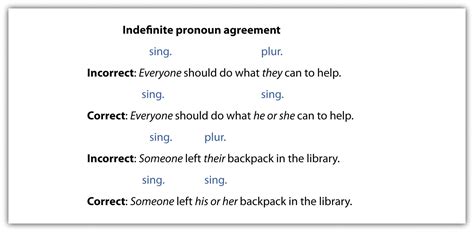
8.4. Subject-Verb Agreement Errors
As "anything" is singular, it requires singular verb forms. For example:
Correct: "Anything is possible."
Incorrect: "Anything are possible."
Adhering to subject-verb agreement rules prevents grammatical inaccuracies.
9. Educational Importance of "Anything"
9.1. Role in Language Learning
Understanding "anything" is fundamental for learners of English, as it enhances their ability to form versatile and nuanced sentences. It is integral to mastering conversational English and advanced writing.
9.2. Teaching Strategies
Educators employ various strategies to teach the usage of "anything," including:
-
Contextual exercises to illustrate different uses.
-
Comparative analyses with similar pronouns.
-
Interactive activities that encourage students to use "anything" in speech and writing.
9.3. Assessment and Evaluation
Assessing the understanding of "anything" involves evaluating the ability to use it correctly in diverse contexts, recognizing its synonyms, and identifying its role in idiomatic expressions.
10. Technological Integration of "Anything"
10.1. Natural Language Processing (NLP)
In the realm of NLP, understanding and processing indefinite pronouns like "anything" is crucial for tasks such as sentiment analysis, machine translation, and text generation. Accurate recognition and usage enable more natural and coherent interactions between humans and machines.
10.2. Speech Recognition Systems
Speech recognition technologies must accurately interpret "anything" within spoken language to ensure effective communication and command execution. This involves training models to recognize the word in various accents and contexts.
10.3. Educational Technology
Language learning apps incorporate lessons on pronouns like "anything" to aid learners in achieving fluency. Interactive modules and quizzes reinforce correct usage and grammatical understanding.
Conclusion
The word "anything" exemplifies the richness and adaptability of the English language. As an indefinite pronoun, it facilitates open-ended communication, allowing speakers and writers to express a wide array of ideas without limiting specificity. Its presence in everyday conversation, literature, media, and various professional fields underscores its fundamental role in effective communication. Understanding the nuanced uses and functions of "anything" enhances linguistic proficiency and contributes to more nuanced and dynamic expression.
References
Last updated January 18, 2025