
Beyond the Surface: Unveiling the Power of Crack Segmentation
How AI precisely maps structural flaws at the pixel level for enhanced safety and predictive maintenance.
Crack segmentation is a specialized computer vision technique focused on identifying and precisely delineating cracks or fractures on various surfaces. This process goes beyond simple detection by classifying each pixel in an image as either belonging to a crack or the background. It is crucial for monitoring the health, safety, and longevity of critical infrastructure like buildings, bridges, roads, pavements, pipelines, and dams.
Highlights
- Pixel-Perfect Precision: Crack segmentation provides high-resolution, pixel-level identification of cracks, enabling accurate measurement of their geometry (length, width, area) and detailed analysis.
- AI-Driven Advancements: Deep learning, particularly Convolutional Neural Networks (CNNs) and specialized architectures like U-Net and YOLO variants, has revolutionized crack segmentation, offering superior accuracy and robustness compared to traditional methods.
- Proactive Infrastructure Management: Automated crack segmentation facilitates timely maintenance, enhances safety by preventing potential failures, reduces inspection costs, and enables data-driven predictive maintenance strategies.
Why is Crack Segmentation Crucial?
Ensuring Structural Integrity and Safety
The ability to automatically and accurately map cracks is fundamental to modern structural health monitoring (SHM). Manual visual inspection, the traditional approach, is often time-consuming, expensive, potentially hazardous for inspectors, and prone to subjective inconsistencies. Crack segmentation offers a quantitative, objective, and efficient alternative.
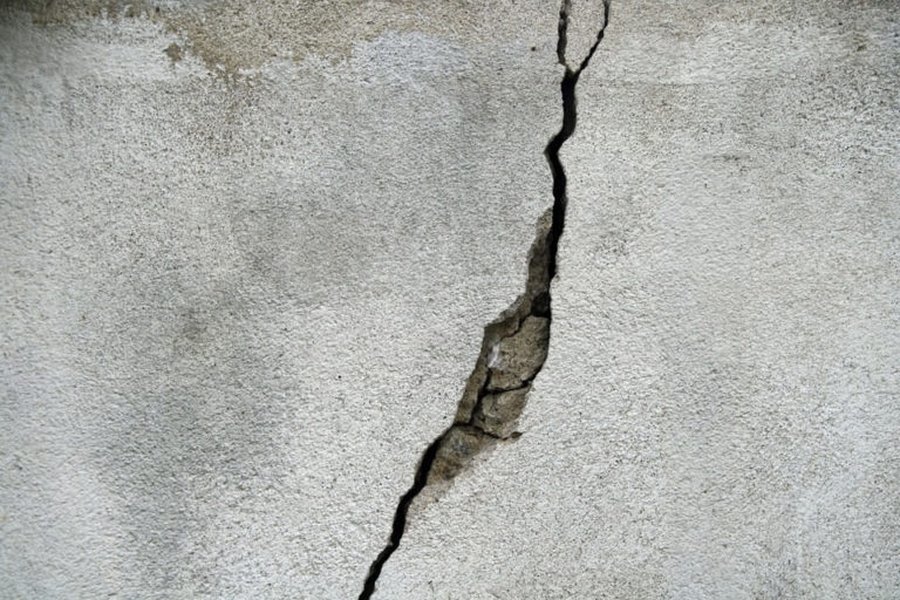
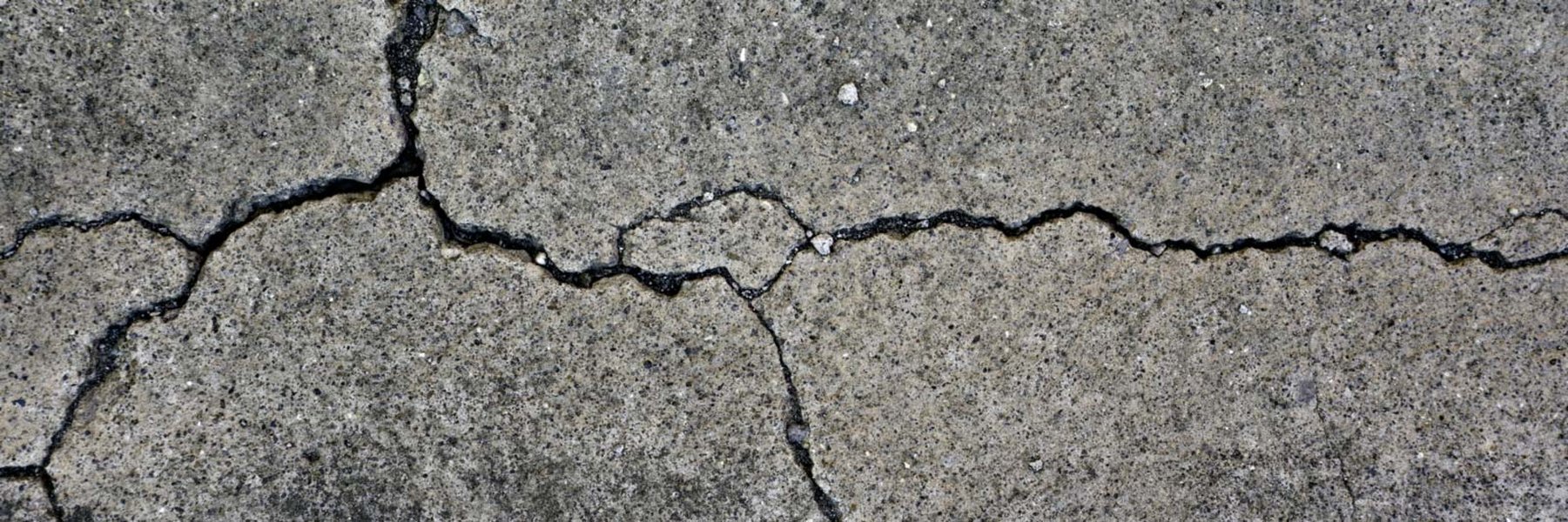
Detailed view of a concrete crack, highlighting the type of defect targeted by segmentation.
Key Benefits:
- Infrastructure Maintenance: Early and precise identification allows for timely repairs, extending the service life of structures and preventing minor issues from escalating.
- Safety Assurance: Detecting cracks, especially in critical components, can prevent catastrophic failures, ensuring public safety.
- Cost and Labor Savings: Automation significantly reduces the need for extensive manual inspections, lowering labor costs and increasing inspection frequency.
- Data-Driven Decisions: Segmented crack data (shape, size, location, density) provides quantitative insights for analysis, monitoring crack growth over time, and implementing predictive maintenance schedules.
The Evolution of Detection Techniques
From Traditional Methods to Deep Learning
Historically, crack detection relied on traditional image processing techniques. These methods often involved steps like edge detection (using operators like Sobel or Canny), thresholding (converting grayscale images to binary based on intensity), morphological operations (like dilation and erosion to enhance crack shapes), and texture analysis.
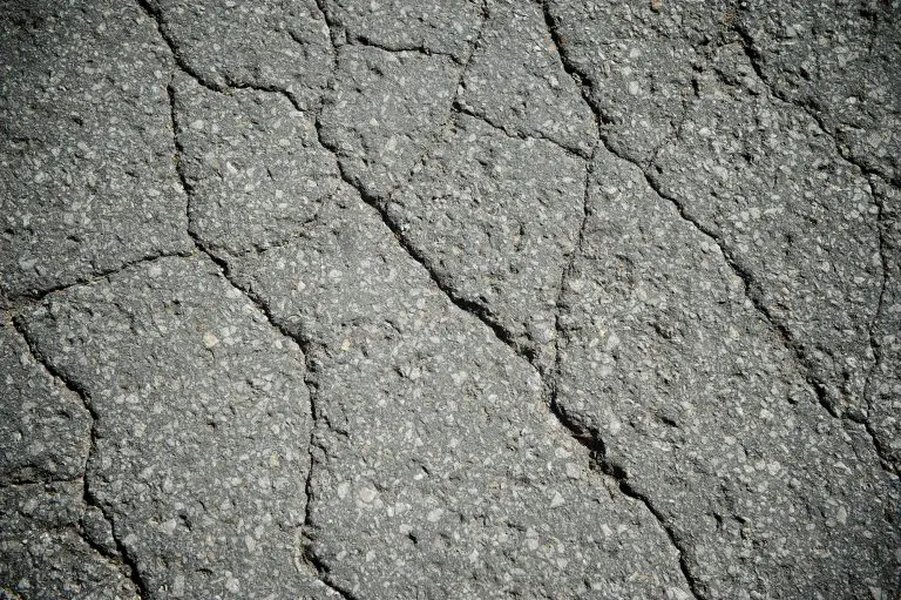
Complex cracking patterns, like alligator cracking in asphalt, challenge traditional detection methods but are better handled by deep learning.
Limitations of Traditional Approaches:
- Sensitivity to Noise: Easily affected by variations in illumination, shadows, surface stains, water marks, and image blur.
- Manual Feature Engineering: Required careful selection and tuning of features and thresholds, often specific to certain conditions.
- Lower Accuracy: Prone to false positives (identifying non-cracks) and false negatives (missing actual cracks), especially for thin or complex cracks.
- Computational Cost: While some algorithms were fast, achieving robustness often required complex processing pipelines.
These limitations spurred the adoption of machine learning, and subsequently deep learning, which demonstrated remarkable success in various computer vision tasks.
Deep Learning Dominance in Crack Segmentation
Automating Feature Extraction for Superior Performance
Deep learning, particularly using Convolutional Neural Networks (CNNs) and Deep Convolutional Neural Networks (DCNNs), represents the current state-of-the-art in crack segmentation. These methods automatically learn hierarchical features directly from image data, eliminating the need for manual feature design and significantly improving accuracy and robustness.
Key Deep Learning Architectures:
- Convolutional Neural Networks (CNNs): The foundational technology, adept at extracting spatial hierarchies of features from images. Many segmentation models are built upon CNN principles.
- Encoder-Decoder Networks (e.g., U-Net, FCN): Architectures like U-Net are highly popular. They consist of an encoder path (to capture context) and a decoder path (to enable precise localization), often using skip connections to combine low-level and high-level features. Fully Convolutional Networks (FCNs) were pioneers in end-to-end pixel-level prediction.
- DeepCrack: A specialized hierarchical feature learning architecture designed specifically for crack segmentation, processing features at multiple scales for high precision.
- YOLO Variants (e.g., YOLOv8, YOLOv9): While originally for object detection, recent YOLO versions have been adapted and enhanced for segmentation tasks, including crack segmentation (e.g., YOLOv8-CD). They often incorporate attention mechanisms (like Triplet Attention, Multi-Head Self-Attention - MSHA) and multi-scale feature fusion to improve performance, particularly for real-time applications due to their efficiency.
- Hybrid CNN-Transformer Models: Emerging architectures like EfficientCrackNet combine the local feature strength of CNNs with the global context understanding of Transformers, aiming for high accuracy with computational efficiency.
- Specialized Models: Research continues to produce models combining techniques like morphological networks, multiple loss functions (e.g., Dice loss), channel-spatial convolutions, and frequency feature aggregation to tackle specific challenges.
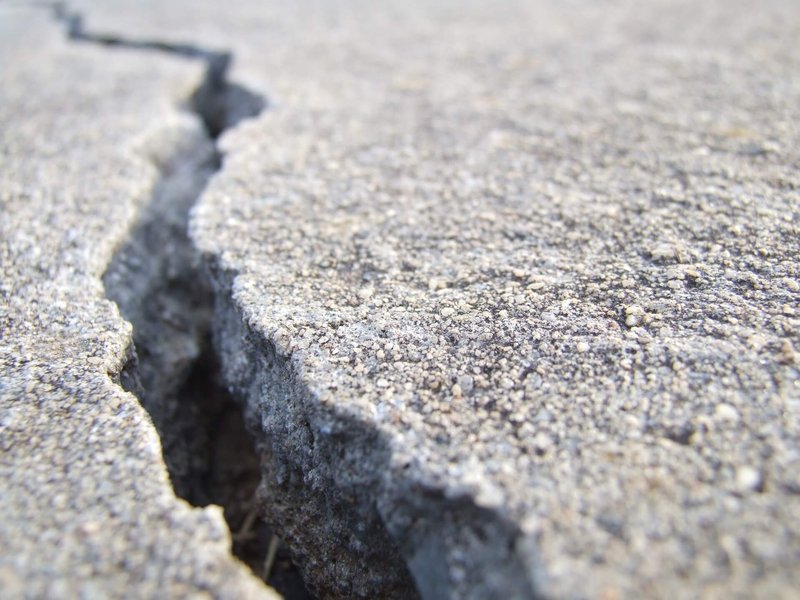
Deep learning models excel at segmenting complex and fine cracks like this one.
Advantages of Deep Learning:
- Automatic Feature Learning: Eliminates manual feature engineering.
- High Accuracy: Achieves superior performance, especially on challenging cracks (thin, low contrast, complex backgrounds).
- Robustness: Better handles variations in lighting, noise, and crack appearance.
- End-to-End Training: Simplifies the development pipeline.
Visualizing Crack Segmentation Concepts
Understanding the Landscape
The field of crack segmentation involves various interconnected concepts, from the underlying problem to the techniques and applications. This mindmap provides a visual overview:
This mindmap illustrates how deep learning techniques have become central to addressing the challenges and enabling diverse applications in crack segmentation for improved infrastructure management.
Comparing Segmentation Approaches
A Performance Snapshot
Different approaches to crack segmentation offer varying trade-offs in terms of accuracy, robustness, speed, and complexity. The radar chart below provides a conceptual comparison of key characteristics for Traditional Image Processing methods versus different categories of Deep Learning models. Scores are indicative (1-10 scale, higher is better), reflecting general trends reported in research.
As illustrated, advanced deep learning models generally outperform traditional methods and basic CNNs across most metrics, particularly in accuracy, robustness, and handling diverse crack types. However, they are typically more data-hungry and can be more complex to implement and train.
Addressing the Inherent Challenges
Overcoming Obstacles for Reliable Segmentation
Despite significant progress, crack segmentation remains a challenging task due to several factors:
- Variability in Cracks: Cracks differ widely in shape, width, length, texture, and orientation.
- Complex Backgrounds: Surfaces may have inherent textures, stains, shadows, varying illumination, water marks, vegetation, or repairs that can be mistaken for cracks or obscure them.
- Noise and Image Quality: Issues like blurriness, low resolution, or sensor noise can impede detection.
- Pixel Imbalance: In most images, crack pixels constitute a very small fraction compared to background pixels, which can bias model training.
- Dataset Scarcity and Diversity: While datasets exist, obtaining large, diverse, and accurately annotated datasets covering all possible scenarios remains a challenge.
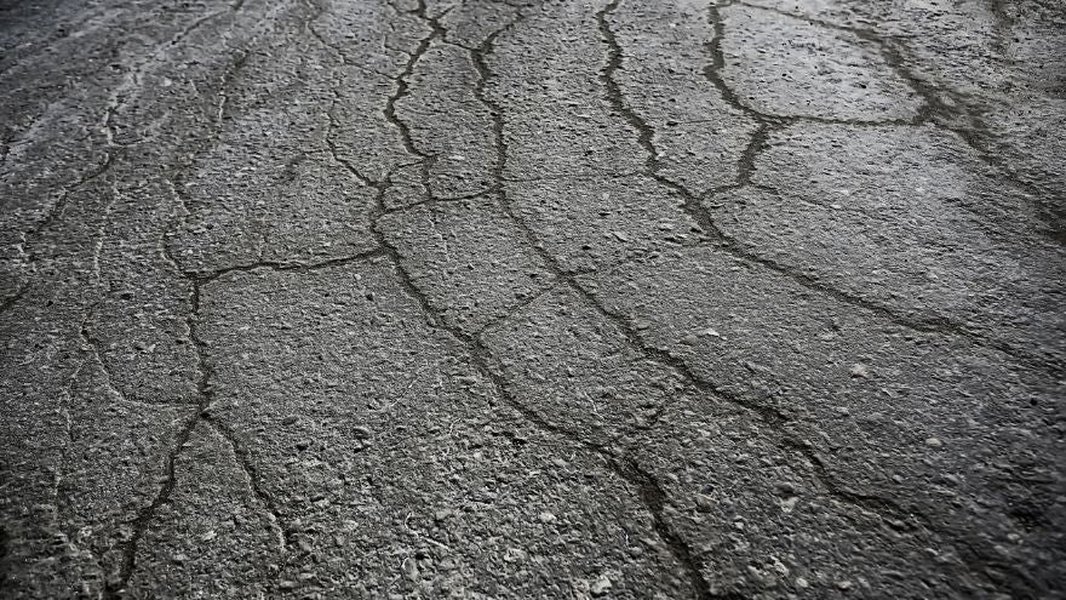
Diverse crack types and surface conditions pose challenges for segmentation algorithms.
Techniques to Improve Performance:
Researchers employ various strategies to mitigate these challenges:
- Attention Mechanisms: Help models focus on relevant crack features while suppressing background noise.
- Multi-Scale Feature Fusion: Combines features extracted at different network depths or image resolutions to detect cracks of varying sizes.
- Advanced Loss Functions: Using functions like Dice loss or focal loss helps address pixel imbalance and focus training on difficult examples.
- Data Augmentation: Artificially increasing the training dataset size and diversity through transformations like rotation, scaling, flipping, and adding noise.
- Test-Time Augmentation (TTA): Applying augmentations during inference and averaging predictions to improve robustness.
- Super-Resolution Reconstruction (SRR): Enhancing low-resolution images before segmentation to better detect microcracks.
- Lightweight Models: Developing efficient architectures (e.g., using depthwise separable convolutions) for real-time processing on edge devices like drones or robots.
- Statistical Analysis: Evaluating models over multiple training runs to ensure reproducibility and reliability of results.
Evaluation and Benchmarking
Measuring Success and Driving Progress
Standardized evaluation metrics and public benchmark datasets are crucial for comparing different crack segmentation methods and tracking progress in the field.
Common Evaluation Metrics:
- Intersection over Union (IoU) / Mean IoU (mIoU): Measures the overlap between the predicted segmentation mask and the ground truth mask.
- Optimal Dataset Scale (ODS) F-score: The F1-score (harmonic mean of precision and recall) computed on the entire dataset using a single, fixed threshold optimized for the dataset.
- Optimal Image Scale (OIS) F-score: The F1-score computed by finding the optimal threshold for each image individually and averaging the scores.
- Average Precision (AP) / Mean Average Precision (mAP): Often used in detection tasks but adapted for segmentation, measuring performance across different recall levels.
- Absolute Intersection over Union (AIU): A metric sometimes used, related to IoU.
- Scaled ODS (sODS): A variant of ODS used in some studies.
Key Benchmark Datasets:
Publicly available datasets allow researchers to train and test their models on standardized data. Some widely used ones include:
| Dataset Name | Description | Focus / Characteristics |
|---|---|---|
| Crack500 | Contains 500 images of pavement cracks with pixel-level annotations. | Pavement cracks, diverse conditions. |
| CrackTree200 | Includes 206 images with complex tree-like crack patterns. | Complex crack structures, challenging topology. |
| CFD (Concrete Crack Dataset for Pavement Distress) | Images of concrete pavement cracks. | Concrete surfaces, pavement distress. |
| GAPs384 | Contains 384 grayscale images captured from different viewpoints. | Varied perspectives, grayscale images. |
| DeepCrack Dataset | Associated with the DeepCrack model, includes diverse crack images. | Multiple scales and contexts. |
| Structure | A dataset used for evaluating segmentation on civil structures. | General civil infrastructure cracks. |
| AEL (Asphalt Crack Dataset) | Focuses on cracks specifically in asphalt surfaces. | Asphalt pavement cracks. |
| CrackSeg9k / Kaggle Datasets | Aggregated datasets combining multiple sources for larger scale training/benchmarking. | Large scale, diverse sources. |
Using these datasets and metrics allows for objective comparison and fosters innovation in developing more accurate and robust crack segmentation algorithms.
Real-World Applications and Future Trends
Integrating Segmentation into Inspection Workflows
Crack segmentation technology is increasingly being integrated into practical inspection workflows, often combined with imaging platforms like drones (UAVs) or ground-based robots. This allows for rapid, large-scale data acquisition and automated analysis.
Automated segmentation helps assess damage on surfaces like driveways and pavements.
Key Application Areas:
- Road and Pavement Management: Assessing surface condition, planning maintenance.
- Bridge Inspection: Monitoring critical structural elements for cracks.
- Building Facade Assessment: Checking for cracks in walls and structures.
- Pipeline Integrity Monitoring: Detecting defects in pipeline surfaces.
- Dam Safety Evaluation: Identifying cracks in concrete dam structures.
Future Directions:
- Real-Time On-Device Processing: Deploying lightweight models directly onto inspection devices (drones, robots) for immediate analysis.
- 3D Crack Analysis: Moving beyond 2D images to segment and analyze cracks in 3D point clouds or volumetric data (e.g., from CT scans) for a more comprehensive understanding of crack depth and volume.
- Improved Generalization: Developing models that perform well across diverse environments and crack types with minimal retraining.
- Instance Segmentation: Distinguishing between individual crack instances, not just segmenting all crack pixels together.
- Automated Reporting: Generating detailed reports automatically from segmentation results, including crack measurements and severity assessments.
Demonstration: YOLOv7 for Concrete Crack Segmentation
The following video provides a tutorial on using a specific deep learning model, YOLOv7, for the task of concrete crack segmentation. It demonstrates the practical steps involved in applying such a model, showcasing how these advanced algorithms are implemented for infrastructure inspection tasks. Watching this can provide insight into the pipeline from model selection to potential deployment on platforms like Google Colab.
Frequently Asked Questions (FAQ)
What is the difference between crack detection and crack segmentation?
Crack detection typically refers to identifying the presence and general location of cracks, often by drawing bounding boxes around them (object detection) or simply classifying an image patch as containing a crack or not (image classification). Crack segmentation is more precise; it aims to classify every single pixel in an image as either belonging to a crack or the background, generating a detailed mask that outlines the exact shape and extent of the cracks.
Why are deep learning methods preferred over traditional techniques?
Deep learning methods, especially CNNs, excel because they can automatically learn relevant features from raw pixel data. Traditional methods require manual feature engineering (choosing specific filters, thresholds, etc.), which is often difficult to generalize across different conditions (lighting, noise, crack types). Deep learning models learn hierarchical representations, capturing both fine details and broader context, leading to higher accuracy, better robustness to noise and variations, and reduced need for manual tuning.
What are the main challenges in achieving accurate crack segmentation?
Key challenges include: 1) Crack Variability: Cracks come in diverse shapes, sizes (from microcracks to large fissures), and textures. 2) Complex Backgrounds: Distinguishing cracks from surface textures, stains, shadows, vegetation, or sealant materials. 3) Image Quality: Issues like poor lighting, blur, and low resolution can hinder detection. 4) Pixel Imbalance: Crack pixels are usually a small minority, making training difficult. 5) Data Availability: Acquiring large, accurately annotated datasets covering all scenarios is challenging.
Can crack segmentation be done in real-time?
Yes, achieving real-time crack segmentation is an active area of research and development. Lightweight deep learning models (e.g., optimized YOLO variants, MobileNets adapted for segmentation) are being developed that balance accuracy with computational efficiency. These models can potentially run on edge devices like drones or robots during inspection, enabling on-the-fly analysis, although there might be trade-offs in accuracy compared to larger, more computationally intensive models.
References
-
Deep learning algorithm for real-time automatic crack detection in industrial computed tomography images based on morphological network and multiple loss mechanism - ScienceDirect
- A Novel Crack Segmentation Model Combining Morphological Network and Multiple Loss Mechanism for Industrial Computed Tomography Images - MDPI
-
Pixel-level crack segmentation in images of planar domains of civil infrastructures using deep convolutional neural networks: State-of-the-art review - ScienceDirect
- DeepCrack: A Deep Hierarchical Feature Learning Architecture for Crack Segmentation - GitHub
- Crack Segmentation | Papers With Code - PapersWithCode
-
Optimized deep encoder–decoder methods applied for crack segmentation on images from civil engineering structures - ScienceDirect
- Research on Concrete Crack Segmentation Method Based on Semantic Segmentation - MDPI
Recommended Reading
Last updated April 19, 2025