
Understanding Fire: Phenomenon or Substance?
Delving into the Nature of Fire and Its Fundamental Characteristics
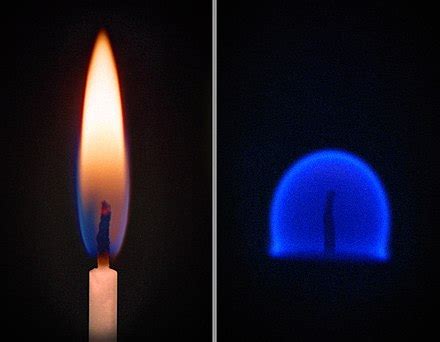
Key Takeaways
- Fire is a Phenomenon: Fire is the visible manifestation of the combustion process, not a tangible substance.
- Essential Components: The occurrence and sustainability of fire require heat, fuel, and an oxidizing agent.
- Energy Transformation: Fire involves the exothermic chemical reaction of combustion, releasing heat and light.
Introduction
Fire has been a pivotal element in human civilization, serving as a source of warmth, a tool for cooking, and a means of protection. Despite its ubiquitous presence, the fundamental nature of fire often leads to debates: Is it a phenomenon or a substance? This comprehensive analysis aims to elucidate the true nature of fire by synthesizing scientific insights and consensus from authoritative sources.
Defining Fire
Fire as a Phenomenon
Fire is best described as a phenomenon—a visible display resulting from the complex interplay of various factors. It is not a substance that exists independently but rather the outcome of a chemical reaction known as combustion.
The Combustion Process
Combustion is an exothermic chemical reaction where a fuel source reacts rapidly with an oxidizing agent, typically oxygen, producing heat, light, and various reaction products such as carbon dioxide and water vapor. This process transforms the original materials, indicating that fire itself lacks a physical form or mass, further supporting its classification as a phenomenon rather than a substance.
The Fire Triangle
The concept of the fire triangle is fundamental in understanding the requirements for fire to ignite and sustain itself. The fire triangle outlines three essential components:
-
Heat: Provides the necessary energy to initiate and maintain the combustion reaction. Without sufficient heat, the combustion process cannot begin.
-
Fuel: Any combustible material that can react with oxygen to produce fire. Fuels can be solids, liquids, or gases, emphasizing that fire is not confined to a single state of matter.
-
Oxidizing Agent: Typically oxygen in the air, it supports the chemical reactions involved in combustion. Without an adequate supply of oxygen, the combustion process cannot proceed.
These three components must be present simultaneously for fire to occur. The removal of any one of these elements will extinguish the fire, highlighting its dependence on a dynamic chemical process rather than a static material.
Fire vs. Traditional States of Matter
Fire's Unique Nature
Traditional states of matter are classified into solids, liquids, and gases, each with distinct characteristics. Fire, however, does not fit neatly into any of these categories. Instead, fire is a dynamic mixture of hot gases, incandescent particles, and energy forms, making it a transient and complex phenomenon.
Plasma and Fire
While certain conditions can cause fire to resemble plasma—a state of matter characterized by ionized particles—this is not universally applicable to all flames. Plasma is a distinct state of matter, primarily found in extremely high-temperature environments like stars. Fire, in general, remains best described as a phenomenological occurrence resulting from chemical and energy transformations.
Energy Transformation in Fire
Exothermic Reactions
Fire is fundamentally an exothermic reaction, meaning it releases energy in the form of heat and light. During combustion, chemical bonds in the fuel and oxygen are broken, and new bonds are formed in the reaction products. The energy difference between the reactants and products manifests as heat and light, which we perceive as flames.
Heat and Light Emission
The emission of heat and light during combustion is a direct consequence of energy transformation. Heat sustains the combustion process by maintaining the necessary temperature, while light provides a visible indicator of the ongoing reaction. These energy forms are not substances but rather interactions resulting from the chemical processes at play.
Scientific Perspectives on Fire
National Institute of Standards and Technology (NIST)
According to the National Institute of Standards and Technology (NIST), fire is characterized as an exothermic chemical reaction that emits heat and light. This definition reinforces the understanding of fire as a process rather than a tangible substance.
Scientific Definitions and Classifications
Scientific literature consistently defines fire within the context of chemical reactions and energy transformations. It is described as the visible effect of combustion, a specific type of chemical reaction involving the rapid oxidation of fuel in the presence of oxygen.
Implications of Fire Being a Phenomenon
Containment and Control
Understanding fire as a phenomenon has significant implications for its containment and control. Since fire relies on continuous fuel, oxygen, and heat, effective strategies for extinguishing fire focus on disrupting one or more of these components. Methods include removing the fuel source, reducing the oxygen supply, or lowering the temperature.
Fire Safety and Prevention
Fire safety measures are predicated on the principles of the fire triangle. By ensuring that combustible materials are managed, oxygen sources are controlled, and ignition sources are minimized, the risk of fire occurrence and spread can be significantly reduced. This proactive approach is rooted in the understanding of fire as a dynamic chemical process.
Common Misconceptions About Fire
Fire as a Material Substance
A prevalent misconception is perceiving fire as a material substance similar to solids, liquids, or gases. This misunderstanding arises from the tangible effects of fire—heat, light, and physical transformations of materials being combusted. However, these effects are products of the combustion process, not fire itself.
Fire's Physical Attributes
While fire exhibits physical attributes such as color, shape, and movement, these are manifestations of the underlying chemical reactions. The flames represent hot gases and incandescent particles resulting from the energy released during combustion, not a physical entity that can be isolated or quantified as a substance.
Comparative Analysis with Other Phenomena
Lightning and Electricity
Similar to fire, lightning is often misconstrued as a tangible phenomenon. In reality, lightning is an electrical discharge resulting from imbalances in electrical charges within the atmosphere. Both fire and lightning are phenomena arising from complex processes rather than standalone substances.
Thunder and Sound
Thunder is the audible manifestation of lightning, a phenomenon produced by the rapid expansion of air heated by the lightning bolt. Like fire, it is not a substance but the result of energy changes within the environment.
Historical and Cultural Perspectives
Mythologies and Symbolism
Throughout history, fire has been imbued with symbolic meanings, often representing destruction, purification, and transformation. In various mythologies, fire is depicted as a divine or mystical force, emphasizing its powerful and transformative nature. These cultural interpretations echo the scientific understanding of fire as a potent and dynamic phenomenon.
Technological Advancements
The mastery of fire has been a cornerstone of technological progress. From early human societies using fire for warmth and cooking to modern applications in industry and energy production, the utilization of fire underscores its role as a controllable process rather than a material entity.
Fire in Modern Science
Thermodynamics and Fire
In thermodynamics, fire is associated with the transfer and transformation of energy. The principles of energy conservation and entropy apply to the combustion process, where chemical energy in fuel is converted into thermal and radiant energy. This scientific framework further cements fire's classification as a phenomenon grounded in energy dynamics.
Chemical Kinetics of Combustion
The study of chemical kinetics delves into the rates and mechanisms of the combustion reaction. Understanding the reaction pathways, activation energy, and intermediates involved in combustion provides deeper insights into fire's behavior and properties, reinforcing the concept of fire as a complex chemical process.
Practical Applications and Implications
Fire in Engineering and Safety
In engineering, the principles of combustion are applied in the design of engines, furnaces, and industrial processes. Safety protocols are developed based on the understanding of fire's requirements, ensuring that systems are designed to prevent unintended combustion and mitigate risks associated with fire-related incidents.
Environmental Impact of Fire
Fire plays a significant role in ecological systems, such as forest regeneration and nutrient cycling. However, uncontrolled wildfires can lead to habitat destruction, air pollution, and loss of biodiversity. The environmental implications of fire underscore the need for balanced management strategies that consider both its ecological benefits and potential hazards.
Conclusion
In summary, fire is fundamentally a phenomenon arising from the combustion of fuel in the presence of an oxidizing agent and sufficient heat. It is not a tangible substance but rather the visible and energetic manifestation of a complex chemical process. Understanding fire's nature as a phenomenon informs its safe management, technological applications, and ecological impact, highlighting its integral role in both natural and human-engineered systems.
References
Last updated January 13, 2025