
Unlocking the Power of Words: What Exactly is a Large Language Model?
Dive into the AI that understands and generates human-like text, revolutionizing how we interact with technology.
A Large Language Model, commonly abbreviated as LLM, represents a cutting-edge category of artificial intelligence (AI) programs. These models are meticulously engineered to comprehend, interpret, generate, and interact with human language in a remarkably sophisticated and nuanced manner. The "large" in their name refers to two critical aspects: the colossal volume of text data they are trained on and the enormous number of parameters (internal variables the model learns from data) they contain, often numbering in the billions or even trillions. This scale allows LLMs to capture the intricate patterns, grammar, semantics, and even some common-sense knowledge embedded within human language.
Core Insights into LLMs
- Transformer Architecture: Most modern LLMs are built upon the transformer architecture, a neural network design that excels at handling sequential data like text by using mechanisms like "self-attention" to weigh the importance of different words in a sentence.
- Massive Data Training: LLMs learn by processing immense datasets, including books, articles, websites, and other textual sources, enabling them to generate coherent and contextually relevant content.
- Versatile Applications: These models power a wide array of applications, from chatbots and virtual assistants to content creation, language translation, code generation, and complex problem-solving.
The Inner Workings: How LLMs Learn and Operate
Understanding how LLMs function requires a look into their training, architecture, and operational processes. They are not just simple programs; they are complex systems born from advanced machine learning techniques.
The Foundation: Training on Vast Datasets
The journey of an LLM begins with training on an astronomical amount of text data. This data can encompass a significant portion of the publicly available internet, digitized books, scientific papers, and other textual corpora. The primary goal of this initial training phase, often called "pre-training," is for the model to learn the statistical relationships between words, phrases, and concepts.
Self-Supervised Learning
LLMs typically employ self-supervised learning during pre-training. In this paradigm, the model learns from the data itself without explicit human-provided labels for each specific input-output pair. Common self-supervised tasks include predicting the next word in a sentence or filling in masked (hidden) words within a text passage. By repeatedly performing these tasks on diverse data, the model gradually develops a sophisticated understanding of language structure, grammar, context, and even some level of factual knowledge.
Architectural Blueprint: The Transformer Model
The transformer architecture, introduced in 2017, has been pivotal to the success of modern LLMs. Unlike older models like Recurrent Neural Networks (RNNs) that process words sequentially (which can be slow and lead to loss of context over long sequences), transformers can process all words in a sequence simultaneously. This parallel processing capability, often accelerated by powerful Graphics Processing Units (GPUs), significantly reduces training time and improves the model's ability to capture long-range dependencies in text.

A conceptual representation of a neural network, the underlying technology for LLMs.
Key Components of Transformers:
- Encoders: These components process the input text, creating rich numerical representations (embeddings) that capture the meaning and context of each word.
- Decoders: These components take the encoder's representations and generate the output text, word by word, based on the learned patterns.
- Self-Attention Mechanism: This is a crucial innovation within transformers. It allows the model to weigh the importance of different words in the input (or already generated output) when processing or generating a particular word. For example, when translating a sentence, the model can "pay attention" to the subject of the sentence even when generating words much later in the translated output.
Tokenization
Before text is fed into an LLM, it undergoes a process called tokenization. This involves breaking down the raw text into smaller units called tokens. Tokens can be words, sub-words (e.g., "unbelievable" might become "un", "believe", "able"), or even characters. This approach allows the model to handle a vast vocabulary, including rare words and new word formations, more effectively.
Refinement: Fine-Tuning for Specific Tasks
After the general pre-training phase, an LLM can be further trained on smaller, more specific datasets to adapt its capabilities for particular tasks. This process is known as fine-tuning. For example, a pre-trained LLM can be fine-tuned on a dataset of medical research papers to improve its performance in answering medical questions or summarizing clinical trial results. Fine-tuning tailors the model's parameters to excel in specialized domains or applications, making it more accurate and relevant for the intended use case.
A Comparative Look at LLM Capabilities
Different Large Language Models exhibit varying strengths across a spectrum of capabilities. This radar chart offers a conceptual comparison of prominent LLM archetypes based on several key performance indicators. The values are illustrative, representing general tendencies rather than precise benchmarks, as capabilities continually evolve.
This chart visualizes how different types of LLMs might compare. For instance, an advanced proprietary model might excel in overall text generation quality and instruction following, while a specialized, fine-tuned model could demonstrate superior reasoning in its specific domain (like coding). Open-source models offer greater adaptability for fine-tuning by a wider community. It's important to note that these are generalized comparisons, and individual model performance can vary significantly.
Diverse Capabilities and Real-World Applications
LLMs are not just theoretical constructs; they are powerful tools with a rapidly expanding range of practical applications across various sectors. Their ability to process and generate human-like text has unlocked new possibilities and efficiencies.
Core Language-Based Tasks:
- Text Generation: Crafting articles, stories, poetry, marketing copy, emails, and even computer code with remarkable fluency and coherence.
- Conversational AI: Powering sophisticated chatbots, virtual assistants (like Siri or Alexa), and customer service bots that can understand nuanced queries and engage in natural-sounding dialogues.
- Language Translation: Translating text between numerous languages with increasing accuracy and contextual understanding.
- Summarization: Condensing long documents, articles, or research papers into concise summaries, highlighting key points and insights.
- Question Answering: Providing direct answers to user questions based on the information contained in their training data or specific documents they are given access to.
- Sentiment Analysis & Text Classification: Analyzing text to determine the underlying sentiment (positive, negative, neutral) or classifying text into predefined categories (e.g., spam detection, topic categorization).
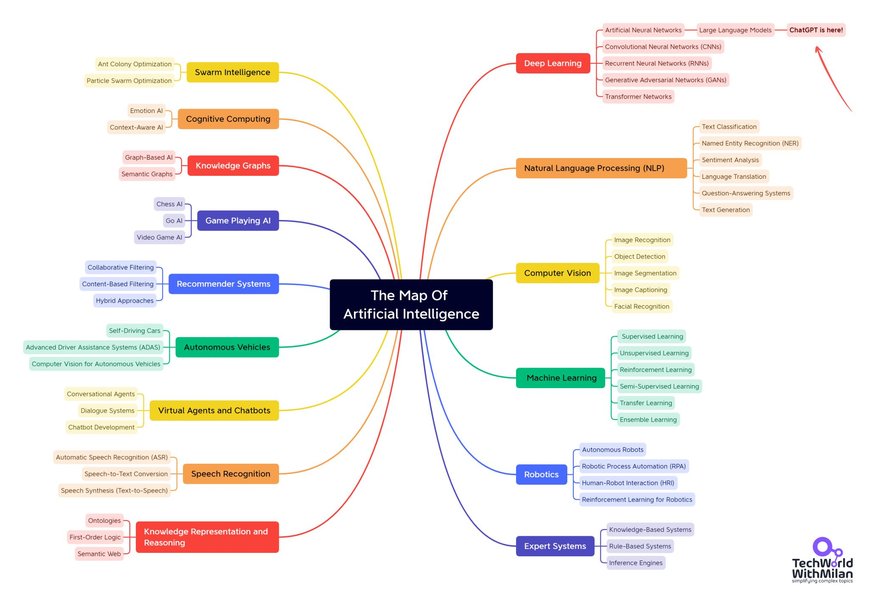
An overview of the Artificial Intelligence landscape, where LLMs are a key component of Natural Language Processing and Generative AI.
Expanding Horizons: Advanced and Multimodal Applications
Beyond core text tasks, LLMs are demonstrating capabilities in more complex areas:
- Reasoning and Problem Solving: Some advanced LLMs are showing emerging abilities in logical reasoning, mathematical problem-solving, and common-sense understanding, although this is an area of active research and development.
- Code Generation and Understanding: LLMs can generate code in various programming languages based on natural language descriptions and can also help explain or debug existing code.
- Multimodal Learning: An exciting frontier is the development of multimodal LLMs that can process and generate information across different types of data, not just text. This includes understanding and generating images, audio, and even video content in conjunction with text. For example, a user could provide an image and ask the LLM to describe it or write a story based on it.
- Scientific Research: LLMs are being used to analyze scientific literature, predict protein structures (like AlphaFold, though not strictly an LLM in the traditional text sense, it shares deep learning principles), and accelerate discovery in various scientific fields.
- Education: Personalized learning tools, automated grading assistance, and interactive educational content are being developed using LLMs.
- Healthcare: Assisting in analyzing medical records, generating patient summaries, and providing information to healthcare professionals (always under human supervision).
This video provides a general-audience introduction to Large Language Models, discussing their core technical components and capabilities, which aligns well with understanding the fundamentals of LLMs as explained in this response.
Mapping the LLM Landscape
To better understand the interconnected concepts surrounding Large Language Models, the following mindmap provides a visual overview of their key aspects, from fundamental definitions to advanced applications and inherent challenges.
This mindmap illustrates that LLMs are multifaceted AI systems. Starting from their core definition as AI models for NLP, it branches out to their operational mechanics involving transformer architecture and extensive training. It then highlights their diverse capabilities, from text generation to complex reasoning, leading to numerous applications. Finally, it touches upon critical examples and the significant challenges that need addressing, such as bias and computational cost.
A Glimpse at Prominent LLMs
The field of Large Language Models is dynamic, with numerous models developed by various research labs and companies. Each often has its own architectural nuances, training datasets, and target applications. Below is a table highlighting some well-known LLMs and their key characteristics:
| Model Name/Series | Developer(s) | Key Characteristics/Focus | Notable Feature(s) |
|---|---|---|---|
| GPT Series (e.g., GPT-3.5, GPT-4) | OpenAI | Generative Pre-trained Transformer, versatile text generation, strong instruction following. | Large parameter count, broad knowledge base, widely used in applications. |
| BERT (Bidirectional Encoder Representations from Transformers) | Understanding context from both directions in a sentence (bidirectional). | Excellent for text classification, search query understanding, encoder-only architecture. | |
| PaLM (Pathways Language Model) / Gemini Series | Large-scale models optimized for complex reasoning and multimodal tasks. | Gemini Ultra for high-quality output; PaLM for scaling and efficiency. | |
| Claude Series (e.g., Claude 3.5 Sonnet) | Anthropic | Emphasis on safety, helpfulness, and harmlessness in AI interactions. | Designed for controllable and ethical AI, strong conversational abilities. |
| LLaMA Series (e.g., Llama 3.3) | Meta AI | Open-source models focusing on efficiency and accessibility for research and development. | Available in various sizes, promotes community-driven innovation. |
| Turing NLG | Microsoft | Large generative model, used within Microsoft products. | Strong language generation capabilities. |
| Bloom | BigScience (Open-source initiative) | Large, multilingual open-source model. | Supports numerous languages, fosters open research. |
| Qwen2.5-Max / DeepSeek-R1 | Alibaba / DeepSeek AI | High-performing models, often benchmarked for reasoning and coding. | Strong in specific benchmarks, pushing boundaries in specialized tasks. |
This table provides a snapshot of the diverse LLM landscape. It's important to note that this field is rapidly evolving, with new models and improved versions being released frequently. The choice of LLM often depends on the specific task, required performance, computational resources, and whether a proprietary or open-source solution is preferred.
Navigating Challenges and Ethical Considerations
Despite their impressive capabilities, LLMs are not without their challenges and limitations. Responsible development and deployment require careful consideration of these issues.
Computational Demands and Environmental Impact
Training state-of-the-art LLMs requires immense computational power, typically involving large clusters of specialized hardware like GPUs or TPUs. This translates to significant energy consumption and, consequently, a substantial carbon footprint. Research is ongoing to develop more energy-efficient training methods and smaller, yet powerful, models.
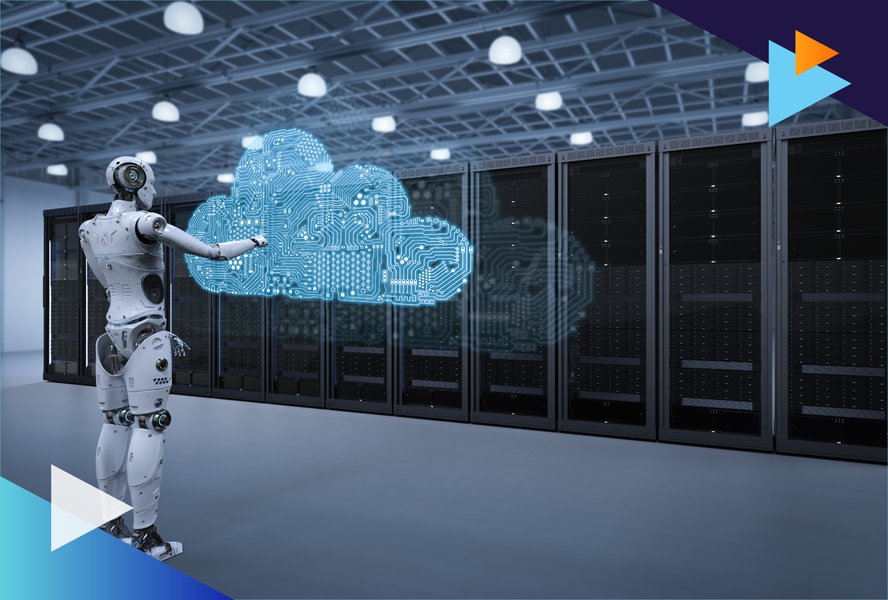
High-density data centers are crucial for housing the computational power needed to train and run LLMs.
Bias and Fairness
LLMs learn from the data they are trained on. If this data contains societal biases (e.g., related to gender, race, or stereotypes), the model can inadvertently learn and perpetuate these biases in its outputs. For example, an LLM might associate certain professions predominantly with one gender if the training data reflects historical imbalances. Mitigating bias is a critical area of research, involving techniques like curating training data, algorithmic adjustments, and bias detection tools.
Accuracy, Misinformation, and "Hallucinations"
While LLMs can generate remarkably fluent and coherent text, they do not "understand" concepts or truth in the human sense. They generate text based on patterns learned from their training data. This can lead to several issues:
- Factual Inaccuracies: LLMs can sometimes generate incorrect or misleading information with high confidence.
- "Hallucinations": This term refers to instances where the model generates text that is nonsensical, irrelevant, or entirely fabricated, yet presents it as factual.
- Misinformation: The ability of LLMs to generate plausible-sounding text makes them potential tools for creating and spreading misinformation or propaganda at scale.
Data Memorization and Privacy
LLMs are trained on vast datasets, which may include personal or sensitive information. There's a risk that models might inadvertently memorize and reproduce snippets of their training data, potentially leading to privacy violations if that data was not intended for public dissemination.
Ethical Use and Potential for Misuse
The power of LLMs also brings ethical responsibilities. Beyond misinformation, concerns exist about their potential misuse in areas like generating malicious code, creating deepfakes for impersonation, automating spam or phishing attacks, or in applications that could have harmful societal impacts (e.g., autonomous weapons systems or biased decision-making in critical areas like hiring or loan applications).
Developing robust ethical guidelines, safety protocols, and regulatory frameworks is crucial to harness the benefits of LLMs while mitigating their risks.
Frequently Asked Questions (FAQ)
Do LLMs truly understand language like humans do?
How is an LLM different from older Natural Language Processing (NLP) models?
What does the "transformer architecture" in LLMs refer to?
What are "parameters" in the context of an LLM?
Recommended Further Exploration
To delve deeper into the world of Large Language Models, consider exploring these related queries:
- How does the transformer architecture in LLMs actually work?
- What are the ethical implications and societal impacts of widespread LLM adoption?
- Compare the processes of pre-training versus fine-tuning for Large Language Models.
- What are the latest breakthroughs in multimodal LLMs that combine text with image or audio processing?
References
 aws.amazon.com
Last updated May 19, 2025