
Unveiling the Power Behind Volt Qòshuvchi Transformator: The Electrical Backbone of Modern Society
Discover how these essential devices manipulate voltage levels to power everything from household appliances to nationwide electrical grids
Key Insights About Voltage Transformers
- Transformers operate on electromagnetic induction, transferring electrical energy between circuits while modifying voltage levels
- The turns ratio between primary and secondary windings determines whether a transformer steps voltage up or down
- While transformers can increase voltage, they must decrease current proportionally to conserve energy - no power is created or destroyed
Understanding Volt Qòshuvchi Transformator
A "Volt qòshuvchi transformator" (from Uzbek) refers to a voltage transformer, a crucial electrical device that transfers energy between circuits through electromagnetic induction while changing voltage levels. These transformers serve as the backbone of electrical power systems worldwide, enabling the efficient transmission and distribution of electricity across vast distances.
Transformers work based on two fundamental principles: electromagnetic induction and the conservation of energy. When alternating current flows through the primary winding, it creates a varying magnetic field in the transformer's core. This changing magnetic field induces a voltage in the secondary winding. The ratio of turns between the primary and secondary windings determines whether the transformer increases voltage (step-up) or decreases it (step-down).
The Essential Physics Behind Transformer Operation
The operation of a voltage transformer follows Faraday's Law of Electromagnetic Induction, which states that the induced electromotive force (EMF) in a circuit is proportional to the rate of change of magnetic flux through the circuit. In a transformer, this principle manifests through the relationship between the primary and secondary windings:
\[ \frac{V_s}{V_p} = \frac{N_s}{N_p} \]
Where:
- Vs = Secondary voltage
- Vp = Primary voltage
- Ns = Number of turns in the secondary winding
- Np = Number of turns in the primary winding
This formula demonstrates that if the secondary winding has more turns than the primary winding (Ns > Np), the secondary voltage will be higher than the primary voltage, creating a step-up transformer. Conversely, if the secondary has fewer turns than the primary (Ns < Np), the transformer steps down the voltage.
Conservation of Energy in Transformers
Importantly, transformers don't create energy. While they can increase voltage, they must decrease current proportionally to maintain the same power level (ignoring small efficiency losses). This relationship is expressed as:
\[ V_p \times I_p = V_s \times I_s \]
Where Ip and Is represent the primary and secondary currents, respectively. This equation demonstrates that power input equals power output in an ideal transformer.
Types of Voltage Transformers
Voltage transformers come in various configurations to meet different electrical needs:
| Type | Function | Applications | Characteristics |
|---|---|---|---|
| Step-Up Transformer | Increases voltage level | Power transmission, high-voltage equipment | Secondary has more turns than primary |
| Step-Down Transformer | Decreases voltage level | Residential power distribution, electronic devices | Secondary has fewer turns than primary |
| Autotransformer | Adjusts voltage using single winding | Voltage regulation, motor starting | Single winding with multiple taps |
| Three-Phase Transformer | Transforms three-phase power | Industrial applications, power distribution | Three sets of windings arranged in delta or star configuration |
| Isolation Transformer | Provides electrical isolation | Medical equipment, sensitive electronics | No direct electrical connection between windings |
Transformer Core Materials and Designs
The core of a transformer is crucial to its performance. Most modern transformers use silicon steel laminations to minimize eddy current losses. Other designs include:
- Core type: Windings surround the core limbs
- Shell type: Core surrounds significant portions of the windings
- Toroidal: Donut-shaped core with windings wrapped around the entire circumference
- Air core: Used for high-frequency applications where iron losses would be excessive
Applications of Volt Qòshuvchi Transformator
Voltage transformers serve numerous critical functions in modern electrical systems:
Power Transmission and Distribution
The most visible application of transformers is in power transmission. Electricity generated at power plants (typically 11-25kV) is stepped up to extremely high voltages (110kV to 1,200kV) for long-distance transmission. This reduces current and minimizes power losses through transmission lines. Near residential areas, step-down transformers reduce voltage to safer levels (typically 110-240V) for consumer use.
Industrial Applications
Industries use transformers for various purposes, including powering machinery, electric furnaces, and providing isolation for sensitive equipment. Many industrial processes require specific voltage levels different from standard supply voltages.
Consumer Electronics
Small transformers are used in consumer electronics and appliances to convert standard outlet voltage to the lower voltages required by electronic circuits. These may be built into devices or provided as external power adapters.
International Voltage Conversion
Voltage transformers are essential for travelers or those relocating internationally. They allow devices designed for one country's voltage standard to operate safely in another country with different voltage standards (e.g., converting between 110V and 220V).
Performance Characteristics of Transformers
This radar chart compares performance characteristics of different transformer types across key metrics. High-end power transformers excel in efficiency, voltage regulation, and power handling but are less cost-effective. Consumer-grade voltage converters prioritize portability and affordability but sacrifice some performance metrics.
Structural Understanding of Transformer Operation
This mindmap illustrates the comprehensive structure of voltage transformers, from their core components to performance considerations. Understanding the interrelation between these elements helps in selecting the appropriate transformer for specific applications.
Transformer Selection and Installation
When selecting a voltage transformer, several factors must be considered:
Key Selection Criteria
- Power Rating: The transformer must handle the total wattage requirements of connected devices
- Voltage Ratio: Primary and secondary voltage must match input supply and required output
- Frequency: Must match the supply frequency (typically 50Hz or 60Hz)
- Efficiency: Higher efficiency transformers cost more initially but save energy over time
- Temperature Rating: Must be suitable for the installation environment
- Physical Size: Must fit available space while allowing for proper ventilation
Installation Considerations
Proper installation is critical for transformer safety and performance:
- Install in well-ventilated areas to prevent overheating
- Ensure proper grounding according to electrical codes
- Provide adequate protection through fuses or circuit breakers
- Mount securely to prevent vibration damage
- Keep away from flammable materials and moisture
This comprehensive video explains how transformers work and provides practical guidance on wiring transformers correctly for various applications. The tutorial covers essential safety measures, connection methods, and testing procedures that ensure proper transformer operation and longevity.
Visual Examples of Voltage Transformers
Voltage transformers come in various shapes and sizes depending on their application. Below are some common examples:

High-capacity industrial transformer installation
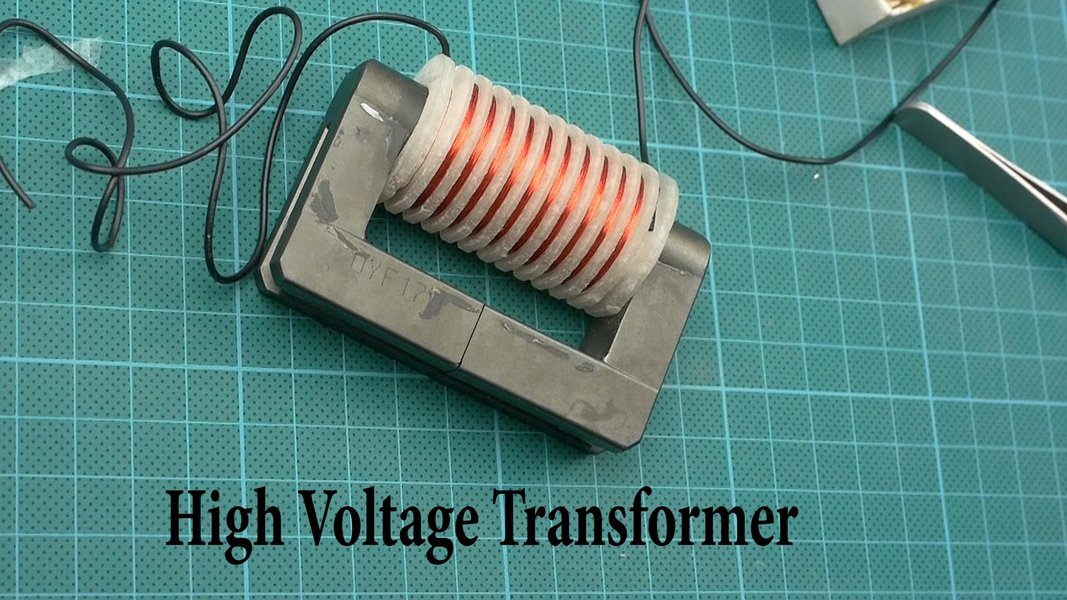
DIY high-voltage transformer for educational purposes
The diversity in transformer designs reflects their versatility in applications ranging from massive power distribution installations to small consumer-grade voltage converters for international travel. Each type is engineered with specific performance characteristics to meet the demands of its intended use case.
Frequently Asked Questions
References
- How Transformers Increase Voltage - The Engineering Mindset
- Transformer Voltage Calculations - EE Power
- Transformer - Wikipedia
- Transformer Calculator - Good Calculators
- Cooling Methods of Transformer - Electrical Volt
- Transformer Calculator - Calculator Online
- Voltage Converter Buying Guide - 220 Electronics
Recommended Topics

Last updated April 4, 2025