
Voltaire: Unmasking the Enlightenment Titan Who Championed Reason and Revolution
Discover the brilliant mind whose wit and words challenged empires and defined an era of intellectual awakening.
François-Marie Arouet, better known by his pen name Voltaire (1694-1778), stands as one of history's most formidable intellectuals and a quintessential figure of the French Enlightenment. A prolific writer, incisive historian, and passionate philosopher, Voltaire wielded his sharp wit and powerful prose to champion civil liberties, including freedom of speech, freedom of religion, and the crucial separation of church and state. His relentless critique of religious dogma, intolerance, and governmental injustice often led to perilous conflicts with authorities, resulting in imprisonments and exiles. Yet, these adversities only seemed to fuel his resolve, solidifying his legacy as a fearless advocate for reason and human rights whose ideas profoundly shaped modern Western thought and reverberated through the American and French Revolutions.
Key Insights into Voltaire's World
Essential Takeaways from His Life and Work
- Champion of Liberties: Voltaire was a fervent advocate for freedom of speech, religious tolerance, and the separation of church and state, using his writings to combat injustice and oppression.
- Master of Satire: His most famous work, Candide (1759), exemplifies his satirical genius, critiquing philosophical optimism and societal ills with biting wit and enduring relevance.
- Enduring Influence: Voltaire's ideas significantly impacted the Enlightenment, playing a crucial role in inspiring both the American and French Revolutions and shaping modern concepts of human rights and secular governance.
Who Was Voltaire? The Man Behind the Pen Name
Born François-Marie Arouet on November 21, 1694, in Paris, France, Voltaire emerged from a prosperous middle-class background. His intellectual journey and outspoken nature would soon set him on a collision course with the established powers of his time, forging a legacy as one of the Enlightenment's most influential voices.
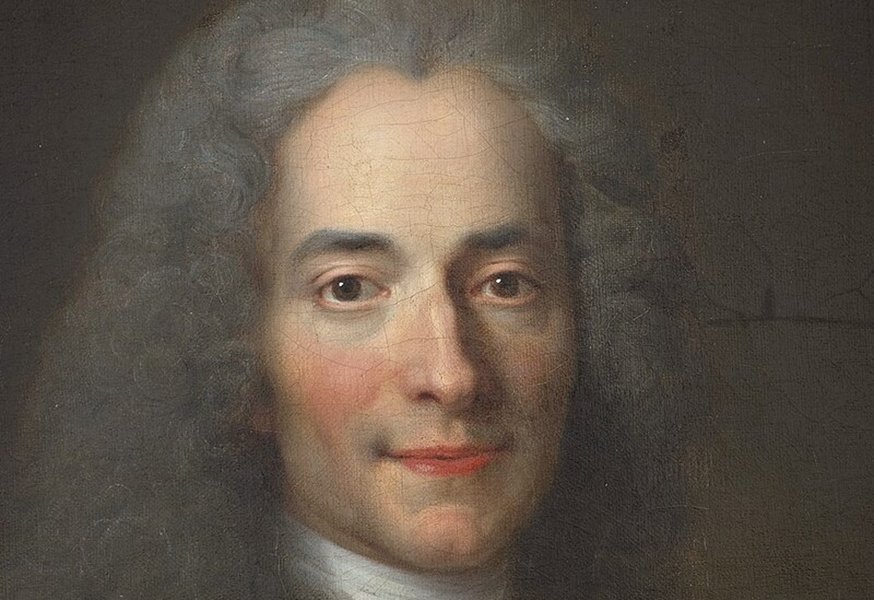
A portrait depicting Voltaire, the influential Enlightenment philosopher and writer.
Early Life and Intellectual Awakening
Formative Years and Education
Voltaire was the youngest of five children. His father, François Arouet, was a lawyer and treasury official, and his mother, Marie Marguerite Daumard, passed away when he was just seven. From 1704 to 1711, he received a classical education at the Jesuit Collège Louis-le-Grand in Paris. There, he demonstrated exceptional talent in literature, rhetoric, and theatre, developing the sharp wit and critical thinking that would define his career. This Jesuit education, while traditional, exposed him to classical works and emerging scientific ideas, laying the groundwork for his later skepticism towards unquestioned authority.
Despite his father's desire for him to pursue a legal career, Voltaire was irresistibly drawn to writing. He feigned law studies while secretly penning poetry and essays, leading to early friction with his family and a clear indication of his independent spirit.
The Spark of Rebellion: Imprisonment and Exile
Adoption of a Pseudonym and English Influence
Voltaire's provocative writings, particularly his satirical verses aimed at the French aristocracy and the Regent, Philippe II, Duke of Orléans, quickly brought him into conflict with the authorities. In 1717, he was imprisoned in the Bastille for eleven months for allegedly writing offensive poems. It was after this period of incarceration, around 1718, that François-Marie Arouet adopted the pen name "Voltaire." The origin of this name is debated, but it is often suggested to be an anagram of "Arouet l.j." (le jeune, or "the younger") or to symbolize a break from his family and past.
A second imprisonment in the Bastille occurred in 1726 following a public dispute and physical altercation with the Chevalier de Rohan, a powerful nobleman. To secure his release, Voltaire agreed to exile in England, where he lived from 1726 to 1729. This period proved profoundly influential. He was deeply impressed by British constitutional monarchy, its relative religious tolerance, and the intellectual freedom enjoyed by thinkers such as John Locke and Isaac Newton. These observations would heavily inform his later critiques of French absolutism and religious intolerance.
A Prolific Voice for Change
An Unparalleled Literary Output
Voltaire was an extraordinarily prolific writer, producing an immense body of work that spanned numerous genres. His literary output includes over 50 plays, dozens of philosophical treatises, historical works, poems, essays, and an astonishing collection of more than 20,000 letters. His writings were characterized by their clarity, wit, and relentless argumentation against injustice and superstition. Through his vast correspondence and published works, Voltaire became a central figure in the "Republic of Letters," an intellectual community that transcended national borders during the Enlightenment.
Voltaire's Enduring Philosophy and Core Beliefs
Voltaire's philosophical contributions were pivotal in shaping Enlightenment thought. He consistently championed reason over dogma and advocated for a society grounded in tolerance and justice.
Champion of Civil Liberties
Advocacy for Fundamental Freedoms
At the heart of Voltaire's philosophy was an unwavering commitment to civil liberties. He is famously associated with the defense of freedom of speech, often encapsulated (though not directly penned by him) in the phrase: "I disapprove of what you say, but I will defend to the death your right to say it." He tirelessly campaigned for freedom of the press and the right to a fair trial, viewing these as essential safeguards against tyranny.
Critique of Religious Intolerance
Deism and the Fight Against Fanaticism
Voltaire was a staunch critic of religious fanaticism, intolerance, and the abuses of organized religion, particularly the Catholic Church of his time. He was not an atheist but a deist, believing in a creator God who established the universe and its laws but did not intervene in human affairs or reveal himself through scripture or miracles. His famous rallying cry, "Écrasez l'infâme!" ("Crush the infamous thing!"), targeted religious superstition, bigotry, and persecution, urging society to eradicate these sources of conflict and suffering.
Advocate for Reason and Science
Embracing Empirical Thought
Deeply influenced by the scientific revolution, particularly the work of Isaac Newton, Voltaire promoted empirical reason and scientific inquiry as the primary tools for understanding the world. He played a significant role in popularizing Newtonian physics and Lockean empiricism in France, contrasting these rational approaches with the speculative metaphysics and dogmatism that he believed hindered progress. He argued for a society guided by observable facts and logical deduction rather than blind faith or inherited prejudices.
Separation of Church and State
A Call for Secular Governance
Voltaire was a strong proponent of the separation of church and state. He believed that religious institutions wielded excessive power in political affairs, often leading to corruption, oppression, and the suppression of intellectual freedom. He argued for a secular state that would guarantee religious freedom for all citizens while preventing any single religious doctrine from dominating public life or policy.
Literary Masterpieces and Their Impact
Voltaire's literary works were not mere entertainment; they were powerful vehicles for his philosophical ideas and social critiques. His ability to blend wit, satire, and profound insight made his writings accessible and highly influential.
Candide, ou l'Optimisme (1759): A Satirical Magnum Opus
Perhaps his most famous work, Candide is a satirical novella that mercilessly lampoons the philosophical optimism espoused by Gottfried Wilhelm Leibniz, particularly the idea that "all is for the best in this best of all possible worlds." Through the picaresque adventures of its naive protagonist, Candide, Voltaire exposes the absurdity of such optimism in the face of war, natural disasters (like the 1755 Lisbon earthquake, which deeply affected him), religious persecution, and human cruelty. The novella concludes with the pragmatic advice to "cultivate one's own garden," suggesting a focus on practical work and improvement rather than abstract philosophical speculation.
Lettres philosophiques sur les Anglais (Letters on England) (1734)
Based on his experiences during his exile in England, the Lettres philosophiques (or Letters Concerning the English Nation) was a landmark work. In it, Voltaire praised English religious tolerance, its political system, empirical philosophy (Locke), and scientific advancements (Newton). By contrasting English liberties with French absolutism and societal restrictions, the book served as an indirect but potent critique of the French Ancien Régime. Its publication caused a scandal in France, leading to its condemnation and burning, and forcing Voltaire to flee Paris once again.
Other Notable Works
Voltaire's vast oeuvre includes many other significant works:
- Zadig ou la Destinée (1747): A philosophical tale exploring themes of fate, providence, and the search for happiness through reason and virtue.
- Essai sur les mœurs et l'esprit des nations (Essay on the Manners and Spirit of Nations) (1756): A pioneering work of world history that moved beyond a Eurocentric and purely political narrative, emphasizing cultural, social, and economic factors.
- Plays: Voltaire was a successful playwright, with tragedies like Œdipe (1718) and Zaïre (1732) enjoying considerable popularity and often subtly conveying his philosophical messages.
- Philosophical Dictionary (1764): An encyclopedic collection of articles alphabetically arranged, critiquing various aspects of religion, ethics, and politics with characteristic wit and skepticism.
Key Works and Their Core Themes
The following table summarizes some of Voltaire's most influential writings and their central messages, illustrating the breadth and depth of his literary and philosophical contributions.
| Work | Year of Publication | Primary Theme(s) |
|---|---|---|
| Œdipe (Play) | 1718 | Critique of religious hypocrisy and arbitrary power, early success establishing his literary reputation. |
| Lettres philosophiques sur les Anglais | 1734 | Praise of English political and religious liberties, scientific thought (Newton, Locke); implicit critique of French absolutism. |
| Zadig ou la Destinée | 1747 | Philosophical tale exploring fate, morality, reason, and the complexities of human existence. |
| Essai sur les mœurs et l'esprit des nations | 1756 | A universal history emphasizing cultural tolerance, challenging Eurocentric perspectives, and focusing on social progress. |
| Candide, ou l'Optimisme | 1759 | Satire on philosophical optimism (Leibniz); critique of suffering, war, religious fanaticism, and injustice; advocacy for practical action. |
| Traité sur la tolérance (Treatise on Tolerance) | 1763 | Plea for religious toleration, inspired by the Jean Calas affair; condemnation of fanaticism. |
| Dictionnaire philosophique (Philosophical Dictionary) | 1764 | Alphabetical collection of essays challenging religious dogma, superstition, and political abuses with wit and reason. |
Visualizing Voltaire's Sphere of Influence
Voltaire's impact resonated across multiple domains, from philosophical discourse to political activism. The chart below offers a representation of his perceived influence in several key areas, reflecting both his historical significance and his continuing relevance in contemporary discussions about liberty, reason, and human rights. His advocacy for free speech and religious tolerance remains particularly potent today.
This radar chart visualizes estimations of Voltaire's impact, highlighting his profound and lasting contributions as a champion of free expression and a critic of oppression (Historical Impact), alongside his enduring significance in ongoing debates about societal values and governance (Relevance in Modern Discourse). Areas like "Freedom of Speech" and "Religious Tolerance" score highly in both historical and modern contexts, underscoring their timeless importance.
The Sage of Ferney: Later Years and Activism
In his later years, from 1759 until shortly before his death, Voltaire resided at Ferney (now Ferney-Voltaire) near the Swiss border. This estate provided him with a degree of independence from French authorities. During this period, he became known as the "Patriarch of Ferney" and continued his prolific writing and activism.
One of the most notable aspects of his time in Ferney was his vigorous involvement in campaigns against judicial injustice. The most famous of these was the Calas affair. Jean Calas was a Protestant merchant from Toulouse who was wrongfully accused, tortured, and executed in 1762 for allegedly murdering his son to prevent him from converting to Catholicism. Voltaire launched an impassioned campaign to clear Calas's name, meticulously investigating the case, publishing pamphlets (including his Treatise on Tolerance in 1763), and lobbying influential figures. His efforts eventually led to the posthumous exoneration of Calas in 1765 and the compensation of his family. This case became a powerful symbol of religious intolerance and the fallibility of the justice system, and Voltaire's intervention cemented his reputation as a defender of the persecuted.
He also transformed Ferney into a thriving community, draining marshes, establishing industries like watchmaking and silk weaving, and supporting local agriculture, embodying his own advice from Candide to "cultivate one's garden."
Mapping Voltaire's Universe: A Conceptual Overview
Voltaire's life and work were multifaceted, interconnecting philosophy, literature, social critique, and activism. The mindmap below provides a visual summary of the key aspects that defined this extraordinary figure, from his formative experiences and core beliefs to his monumental works and enduring legacy. It illustrates how his personal journey, intellectual convictions, and literary endeavors combined to make him a pivotal force in the Age of Enlightenment.
(François-Marie Arouet)"] id1["Early Life & Education"] id1a["Born in Paris, 1694"] id1b["Jesuit Education
(Collège Louis-le-Grand)"] id1c["Literary Ambitions vs. Law"] id2["Key Beliefs & Philosophy"] id2a["Champion of Civil Liberties"] id2a1["Freedom of Speech"] id2a2["Freedom of Religion"] id2b["Critique of Intolerance & Injustice"] id2c["Deism"] id2d["Advocacy for Reason & Science"] id2e["Separation of Church & State"] id3["Major Works"] id3a["Candide (1759)"] id3b["Lettres philosophiques (1734)"] id3c["Zadig (1747)"] id3d["Plays (e.g., Oedipus)"] id3e["Historical Works (e.g., Essay on the Manners...)"] id3f["Philosophical Dictionary (1764)"] id4["Challenges & Exile"] id4a["Imprisonments in the Bastille"] id4b["Adoption of 'Voltaire' pseudonym"] id4c["Exile in England (1726-1729)"] id4c1["Influence of Locke & Newton"] id5["Later Life & Activism (Ferney)"] id5a["'Patriarch of Ferney'"] id5b["Campaigns against injustice
(e.g., Jean Calas case)"] id5c["Treatise on Tolerance (1763)"] id6["Legacy"] id6a["Influence on French & American Revolutions"] id6b["Enduring symbol of Enlightenment values"] id6c["Advocate for human rights"] id6d["Died in Paris, 1778"]
This conceptual map highlights the interconnectedness of Voltaire's experiences, beliefs, literary output, and lasting impact, providing a structured overview of his contributions to intellectual history.
Voltaire's Lasting Legacy
Voltaire returned to Paris in February 1778 to a hero's welcome. He died there on May 30, 1778. Due to his criticisms of the Church, he was initially denied a Christian burial in Paris, but his friends managed to have him secretly buried at an abbey in Champagne. In 1791, during the French Revolution, his remains were transferred to the Panthéon in Paris, a resting place for France's national heroes, acknowledging his profound influence on the revolutionary ideals of liberty, equality, and fraternity.
Voltaire's legacy is immense. His relentless advocacy for reason, tolerance, and justice resonated deeply with Enlightenment thinkers and played a significant role in shaping the intellectual climate that led to the American and French Revolutions. The principles he championed are enshrined in foundational documents like the U.S. Bill of Rights and the French Declaration of the Rights of Man and of the Citizen. He remains a potent symbol of the fight against tyranny and bigotry, and his works continue to be read and studied worldwide for their wit, intellectual rigor, and passionate defense of human dignity.
This video explores Voltaire's enduring lessons on toleration, a central theme in his life and writings, highlighting his continued relevance.
The embedded video provides an engaging overview of Voltaire's core ideas, particularly his teachings on toleration, which were radical for his time and remain crucial today. It delves into how his wit and intelligence were deployed to challenge prejudice and advocate for a more understanding and open society. Voltaire believed that religious toleration was not merely a matter of political expediency but a moral imperative, essential for peace and human progress. His arguments against fanaticism, as vividly portrayed in his handling of the Jean Calas case, demonstrate his commitment to these ideals in practice, not just in theory.
100-Word Biography of Voltaire
A Concise Summary
Voltaire, born François-Marie Arouet in Paris (1694-1778), was a towering French Enlightenment writer, philosopher, and satirist. Educated by Jesuits, he championed reason and civil liberties—notably freedom of speech and religion—and the separation of church and state. His sharp critiques of intolerance and injustice often led to imprisonment and exile, including a formative period in England. Voltaire's prolific works, including the satirical novella Candide and Letters on England, powerfully influenced revolutionary thought in America and France. He remains celebrated for his wit and unwavering defense of human rights, leaving an indelible mark on modern liberal values.
Frequently Asked Questions (FAQ)
Why did François-Marie Arouet adopt the name Voltaire?
François-Marie Arouet adopted the pen name "Voltaire" around 1718, following his imprisonment in the Bastille. While the exact origin is debated, common theories suggest it was an anagram of "Arouet l.j." (Arouet le jeune, or "Arouet the younger"), or a Latinized version of his family name. Symbolically, the name change represented a break from his past, his family (with whom he had a somewhat strained relationship regarding his career choices), and his emergence as an independent and often controversial public intellectual.
What were Voltaire's main criticisms of society?
Voltaire was a fierce critic of many aspects of 18th-century European society. His primary targets included:
- Religious Intolerance and Fanaticism: He vehemently opposed persecution based on religious beliefs and the abuses committed in the name of organized religion.
- Tyranny and Absolutism: He criticized arbitrary and unchecked governmental power, advocating for systems that protected individual liberties.
- Injustice and Legal Abuses: He campaigned against unfair trials, torture, and cruel punishments, as exemplified by his involvement in the Jean Calas case.
- Superstition and Irrationality: He championed reason and scientific inquiry over blind faith and unfounded beliefs.
- Social Inequality and Privilege: He was critical of the hereditary privileges of the aristocracy and the vast disparities in wealth and opportunity.
What is Deism, and how did it relate to Voltaire's beliefs?
Deism is a philosophical belief that posits that God exists and created the universe but does not intervene in its workings or in human affairs. Deists typically reject miracles, divine revelation, and the authority of organized religion, emphasizing reason and observation of the natural world as the means to understand the divine. Voltaire was a prominent deist. He believed in a rational creator but was highly critical of the dogma, rituals, and perceived corruption of established churches, especially the Catholic Church. His deism allowed him to reconcile a belief in a higher power with his commitment to reason and his attacks on religious superstition and intolerance.
How did Voltaire's time in England influence him?
Voltaire's exile in England from 1726 to 1729 was a profoundly formative experience. He was greatly impressed by several aspects of English society and thought:
- Constitutional Monarchy and Political Liberty: He admired the English system of government, which limited the power of the monarch and provided greater political freedoms compared to French absolutism.
- Religious Tolerance: He observed a greater degree of religious diversity and tolerance in England, which contrasted sharply with the religious uniformity enforced in France.
- Intellectual Freedom: He was exposed to the works of English thinkers like John Locke (empiricism and natural rights) and Isaac Newton (scientific methodology), which deeply influenced his own philosophical development. He also appreciated the higher social status accorded to writers and intellectuals in England.
Recommended Further Exploration
Delve Deeper into Related Topics
- What were the main ideas of the Enlightenment and how did Voltaire contribute to them?
- Explore the impact of Voltaire's Candide on philosophical thought and literature.
- How did Voltaire's advocacy for religious tolerance influence modern concepts of secularism?
- Compare Voltaire's philosophy with that of his contemporary Jean-Jacques Rousseau.
References
Sources Used for This Overview
 voltairefoundation.wordpress.com
Last updated May 6, 2025