
How VR and AR Enhance Language Learning
Immersive Technologies Revolutionizing Language Education
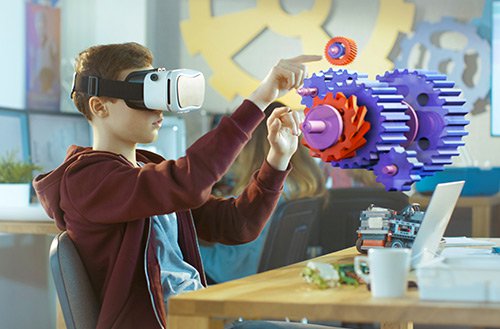
Highlights
- Immersive Environments: Experience realistic, contextual scenarios that simulate real-life language use.
- Interactive and Engaging: Utilize hands-on, collaborative activities that heighten motivation and retention.
- Personalized Learning: Adapt lessons to individual needs and proficiency levels with immediate feedback.
Understanding the Role of Immersive Technologies
Virtual Reality (VR) and Augmented Reality (AR) represent a new frontier in language learning, revolutionizing traditional methods by providing immersive, interactive, and highly engaging experiences. These technologies bridge abstract learning concepts with real-world application, offering learners an opportunity to practice a new language in environments that simulate authentic cultural and social interactions. By integrating digital content with experiential learning, VR and AR enhance the efficiency and enjoyment of language acquisition.
Immersive Learning Environments
Immersive environments are at the core of both VR and AR applications in language education. VR completely immerses learners in a digital world where they can actively participate in scenarios that mirror everyday settings—such as dining in a virtual restaurant, shopping in a market, or traveling through a digital city. This immersive experience facilitates natural language development by exposing learners to situations in which they must use vocabulary, grammar, and conversational skills in context.
In contrast, AR overlays digital elements onto the real world, enabling language learning to occur in familiar environments. For example, learners might use AR-enabled devices to see vocabulary words pop up on everyday objects, thereby linking words to tangible items. This contextual learning not only reinforces memory retention but also helps learners understand the practical applications of the language in everyday life.
Enhancing Engagement and Reducing Anxiety
One of the most significant benefits of both VR and AR is their ability to substantially enhance learner engagement. Traditional classroom settings can sometimes cause anxiety, particularly when students are afraid of making mistakes in public. VR and AR environments provide safe, judgment-free spaces where learners can experiment with language without fear of real-world consequences.
In a VR scenario, students can engage in simulated conversations with avatars or participate in virtual interactive exercises, which allow them to practice speaking and listening skills freely. The excitement and novelty of interacting within these digital worlds serve to reduce anxiety and build confidence.
Similarly, AR's interactive approach—where users interact with digital overlays in real-life contexts—brings a playful, game-like element to language learning. This reduces the typical stress associated with language acquisition and creates an engaging and supportive learning atmosphere.
Interactive and Collaborative Learning
Interactivity is a cornerstone of effective language learning. Both VR and AR technologies offer numerous interactive features that encourage active participation. For example, VR platforms can host virtual group sessions or one-on-one language practice sessions with real-time feedback, enabling learners to interact with both digital characters and other learners. This enhances communication skills and fosters a collaborative learning environment.
AR applications similarly provide opportunities for collaborative activities. By enabling learners to view and interact with overlays in their immediate surroundings, AR facilitates group tasks where users can learn collectively. Group-based activities, whether virtual or augmented, stimulate discussion, reinforce learning through peer interaction, and contribute to better language retention.
Personalization and Adaptability in Learning
Personalized learning is another significant advantage offered by VR and AR-based educational tools. With the integration of emerging Artificial Intelligence (AI) technologies, these platforms can now offer adaptive and tailored learning experiences. They adjust to individual user needs and provide immediate feedback on language use, pronunciation, and grammar.
Adaptive learning systems within these platforms continuously monitor progress and adjust the difficulty and type of content presented, ensuring that each learner is challenged appropriately. This custom-tailored approach not only makes lessons more efficient but also emphasizes the strengths and addresses the weaknesses of a learner in real-time.
Key Features and Benefits of VR and AR in Language Learning
Virtual Reality (VR)
Immersive Simulations
VR transports learners into fully digital environments where they can engage in realistic language scenarios. This technology allows users to interact with simulated real-world settings, ranging from virtual cafes to international travel experiences. Such simulations help learners practice language in context, making abstract lessons concrete and memorable.
Real-time Interaction
By engaging with avatars or other learners within VR environments, students receive instant feedback on their language skills. This interactive environment sharpens their listening, speaking, and even non-verbal communication skills. Additionally, the social interaction provided by VR supports collaborative learning and enhances cultural competence.
Reducing Speaking Anxiety
The safe and controlled virtual space allows learners to practice speaking without the pressure of real-life judgment. This environment is especially valuable for beginners or those who experience anxiety in traditional speaking scenarios, as it encourages practice in a stress-free setting.
Augmented Reality (AR)
Overlaying Digital Information
AR augments the real world by overlaying digital information such as text, images, and interactive elements onto physical objects. This capability is particularly useful for vocabulary building. For instance, a language learner can point a device at everyday items and instantly see the corresponding word or phrase in the target language, reinforcing learning through immediate contextualization.
Flexible Learning Environment
With AR, language learning is not confined to a classroom or specific digital space. Instead, it becomes integrated into the learner’s daily environment. This blending of the digital and physical worlds enables users to practice language skills in a variety of settings, broadening the learning experience.
Interactive Vocabulary and Grammar Practice
AR technology can offer interactive exercises that emphasize vocabulary, grammar, and pronunciation in real time. By engaging multiple senses—visual, auditory, and sometimes kinesthetic—AR helps students reinforce their understanding of linguistic elements through dynamic activities.
Comparative Table: VR vs. AR in Language Learning
| Aspect | Virtual Reality (VR) | Augmented Reality (AR) |
|---|---|---|
| Environment | Fully digital, immersive environments simulating real-world settings. | Overlays digital content onto physical real-world environments. |
| Engagement | High engagement through immersive, interactive scenarios. | Interactive and context-based learning in everyday settings. |
| Application | Simulations like virtual restaurants, debates, cultural tours. | Contextual vocabulary lessons using real-world objects and settings. |
| Feedback | Real-time corrections, interactive language tasks with avatars. | Instant overlays and contextual cues for improved comprehension. |
| Ease of Use | Requires specialized equipment like headsets, sometimes more expensive. | Utilizes common devices (smartphones, tablets), making it broadly accessible. |
| Learning Environment | Controlled, simulated environments; ideal for practice without external distractions. | Integrates with the learner’s actual environment, blending learning with daily life. |
Detailed Benefits of VR and AR for Language Learners
Increased Motivation and Engagement
Both VR and AR are exceptionally effective at increasing motivation among students. The dynamic and interactive nature of these technologies transforms language lessons into an experiential process rather than a rote exercise. Students are more eager to participate when learning feels like a game or a real-life adventure. This increased engagement is especially evident in younger learners and those who may otherwise lack interest in traditional methods.
Research indicates that when learners are motivated and actively engaged, they experience better retention and faster language acquisition. These technologies simulate real-world scenarios where language use is vital, thereby reinforcing learning and memory retention through repetitive practice in diverse contexts.
Contextual and Experiential Learning
One of the most compelling aspects of using VR and AR in language education is the provision of context-rich experiences. Rather than learning isolated vocabulary or grammatical rules, students are immersed in environments that necessitate the use of language in relevant contexts. For instance, a VR experience might place a learner in a bustling marketplace where they need to ask questions, bargain, and navigate social interactions—all in the target language.
Similarly, AR applications allow learners to connect words with everyday objects. When a student points a smartphone at a piece of furniture and immediately sees its name in another language, it creates a memorable learning moment. These contextual connections are critical to long-term retention and help learners understand the functional application of language skills.
Improved Listening and Speaking Skills
The interactive features of VR and AR actively promote the development of listening and speaking skills. In VR scenarios, learners can engage in simulated dialogue with virtual characters, which helps refine pronunciation and accent through continuous practice and immediate feedback. This environment encourages a natural flow of conversation, thus preparing learners for real-world interactions.
AR also enhances these skills by integrating auditory cues with visual content. For example, when learners hear the pronunciation of a word while simultaneously reading it on-screen, the dual input can significantly strengthen their auditory and comprehension abilities. Such multisensory engagement is often missing in conventional textbook-based learning.
Cultural and Social Immersion
Beyond linguistic proficiency, effective language learning must incorporate cultural understanding. VR technologies enable learners to explore diverse cultural settings—from historic European cities to contemporary Asian streets—providing not only language practice but also insights into cultural nuances and traditions. This experiential immersion builds empathy and intercultural competence, key components in mastering any language.
AR can similarly introduce cultural contexts into daily life. By overlaying cultural facts or historical images onto real-world locations, AR enriches the learning experience, allowing learners to draw connections between language and its cultural roots.
Personalized, Adaptive Learning Experiences
With the integration of AI, VR and AR platforms are now capable of delivering personalized learning experiences. These adaptive systems continuously monitor a learner’s progress and provide tailored content that adapts to their pace. Such customization ensures that each learner is appropriately challenged, resulting in more efficient progression through language learning milestones.
Furthermore, real-time feedback aids in immediate correction of mistakes, allowing students to understand and adjust their usage of vocabulary, grammar, and pronunciation as they practice. This rapid-response learning environment not only accelerates proficiency but also builds confidence by affirming progress through personalized guidance.
Practical Applications and Real-World Impact
Educational Institutions and Language Programs
Many educational institutions and language programs have successfully integrated VR and AR into their curricula. These institutions have found that immersive technologies can transform language classes into dynamic, interactive sessions that are both enjoyable and highly effective. Through simulated practical scenarios and interactive vocabulary exercises, teachers can cater to different learning styles, fostering a more inclusive and supportive learning environment.
As digital literacy continues to grow, more institutions are investing in these tools to support language acquisition. Aside from the primary academic benefits, these tools help bridge geographical barriers by enabling remote, virtual interactions that mimic in-person learning experiences.
Industry Training and Professional Development
Beyond formal education, VR and AR are proving invaluable in industry training and professional language development. Businesses are leveraging these technologies to train employees in specialized vocabulary, cultural etiquette, and communication skills required in global markets. By simulating client interactions and providing a safe space for practice, companies can rapidly improve the language proficiency of their workforce.
This approach not only enhances customer relationships but also equips employees with the necessary tools to navigate multicultural business environments. The seamless integration of immersive technology in professional settings highlights its versatility and practical benefits.
Summary of Impact on Language Learning
In summary, VR and AR technologies have transformed the landscape of language learning by merging the digital and physical worlds to create interactive, immersive, and personalized learning experiences. With the ability to simulate real-life environments, reduce performance anxiety, and adapt to individual learning needs, these technologies make language acquisition more efficient and enjoyable.
The integration of these immersive tools into educational and professional settings underscores a significant shift towards experiential learning, where the focus extends beyond rote memorization to practical application and cultural immersion. As technology continues to advance, further improvements in these platforms promise even more refined, effective, and accessible language learning solutions for a global audience.
References
- Exploring the Role of VR & AR in Language Learning - ResearchGate
- Systematic Integration of AR/VR - MDPI
- Augmented & Virtual Reality in Language Teaching - Cambridge
- Revolutionizing Language Learning with AR, VR & AI - Medium
- Virtual & Augmented Reality in Education - ClassVR
Recommended Queries
Last updated March 8, 2025