
Unlocking Movement: How Virtual Reality is Revolutionizing the Study of Visual-Motor Coordination
Dive into the immersive world of VR and discover its transformative impact on understanding and enhancing how we see and move.
Key Insights
- Immersive Environments: VR creates highly controllable, realistic, and interactive scenarios, offering unparalleled precision in studying how visual information guides motor actions.
- Therapeutic Breakthroughs: VR is proving to be a powerful tool in neurorehabilitation, significantly improving motor skills in individuals with conditions like cerebral palsy and developmental coordination disorder.
- Multisensory Engagement: By stimulating multiple senses simultaneously, VR enhances learning and adaptation, leading to more effective and engaging training for visual-motor tasks.
Visual-motor coordination, the intricate ability to integrate visual information with motor actions, is fundamental to countless everyday tasks, from reaching for an object to navigating complex environments. Scientists and clinicians are increasingly turning to virtual reality (VR) as a groundbreaking tool to explore, assess, and enhance this critical cognitive function. As of May 6, 2025, the field is rapidly advancing, leveraging VR's unique capabilities to provide novel insights and therapeutic interventions.
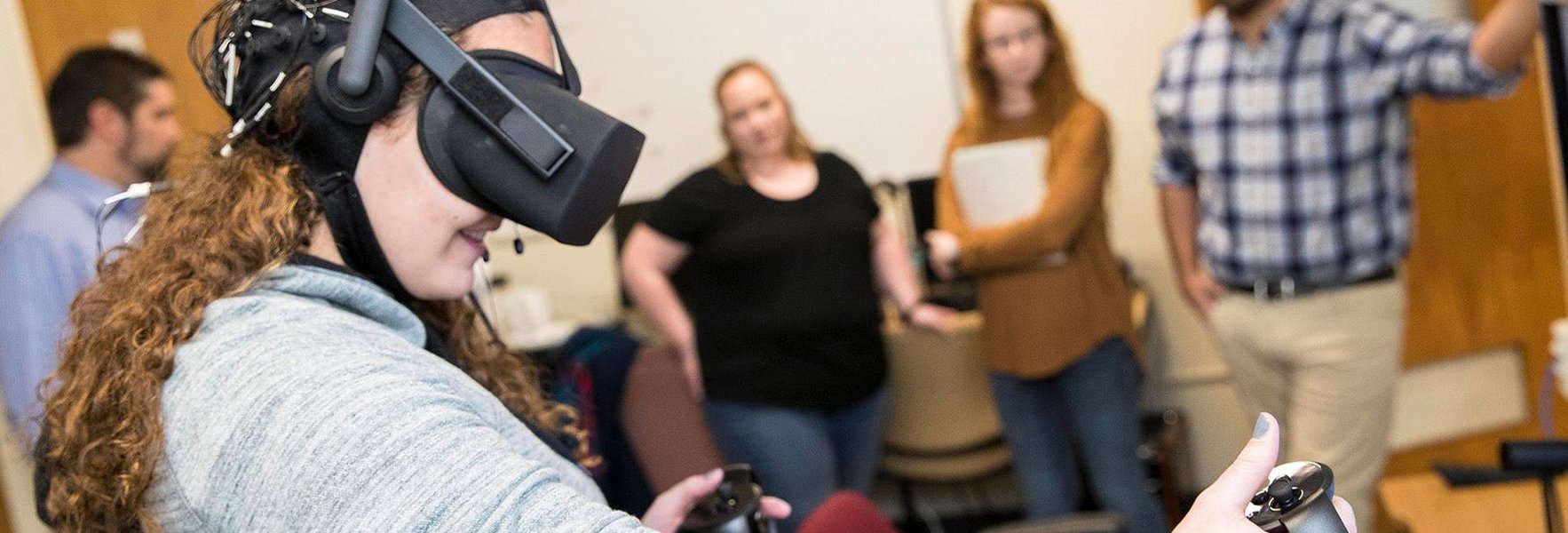
A user engages with a virtual environment, demonstrating the immersive nature of VR in visual-motor studies.
How Virtual Reality Enhances the Study of Visual-Motor Coordination
VR technology offers a dynamic and adaptable platform that overcomes many limitations of traditional research methods. Its capacity to create simulated yet realistic worlds allows for precise manipulation and measurement of variables crucial to understanding visual-motor processes.
Controlled and Realistic Environments
VR systems empower researchers to design highly controlled, repeatable, and ecologically valid environments. These digital worlds can mimic real-life scenarios with remarkable fidelity, or be systematically altered to test specific hypotheses. Visual stimuli, such as object size, speed, and trajectory, can be precisely manipulated, and the corresponding motor responses can be tracked with high-resolution motion capture technology. This level of control is often difficult, if not impossible, to achieve in real-world settings.
Immersive Sensory Feedback and Multisensory Stimulation
Unlike traditional screen-based tasks, immersive VR, often delivered via head-mounted displays (HMDs), provides a comprehensive sensory experience. It stimulates the visual system more completely, offering depth perception and rich spatial cues that facilitate naturalistic motor engagement. Beyond visual input, VR can incorporate auditory and, increasingly, haptic (touch) feedback. This multisensory approach is vital, as real-world motor control relies on the integration of information from various senses. For instance, somatosensory stimulation through tactile and proprioceptive training within VR can create more congruent and effective learning environments, especially for individuals with sensory loss, such as stroke survivors.
Interactive and Engaging Tasks
A significant advantage of VR is its ability to transform assessment and training tasks into engaging, game-like experiences. This gamification can increase participant motivation and adherence, particularly in pediatric populations or during lengthy rehabilitation programs. The interactive nature of VR tasks ensures active participation, which is crucial for motor learning and neuroplasticity. Users can directly manipulate virtual objects, navigate complex spaces, and receive immediate feedback on their performance, fostering a more dynamic learning process.
Precision Measurement and Multimodal Data Collection
Modern VR platforms can be integrated with a variety of sensors, including motion capture systems (tracking limb and body movements), eye-tracking glasses (monitoring gaze patterns), and force sensors. This allows for the collection of rich, multimodal data, providing detailed insights into motor output, reaction times, movement accuracy, trajectory smoothness, and visual attention strategies. Such precise quantitative data is invaluable for dissecting the complex interplay between visual perception and motor execution, and for objectively tracking progress in therapeutic settings.
Applications of VR in Visual-Motor Coordination
The applications of VR in this field are diverse, spanning fundamental research in neuroscience to practical therapeutic interventions for various populations.
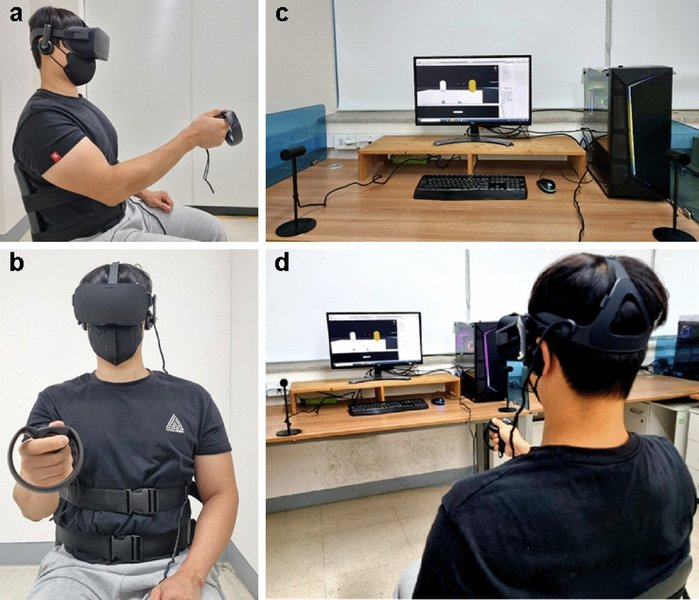
Illustration of a VR setup used to study the effects of virtual body representation on motor skill learning.
Research Applications
Neuroscience Investigations
VR is increasingly employed in cognitive and affective neuroscience to investigate the neural mechanisms underlying sensorimotor integration. Researchers use VR to probe how the brain adapts to altered sensory conditions, such as visuomotor discordance, where visual feedback is intentionally delayed, distorted, or rotated. These paradigms help to elucidate the brain's adaptive processes and the role of different brain regions in visual-motor control.
Skill Acquisition and Transfer
VR environments provide an ideal setting for studying how complex motor skills are learned and whether skills acquired in a virtual setting transfer to real-world performance. Studies explore the practice of fine and gross motor tasks in VR, analyzing subsequent performance in physical environments. This line of research sheds light on the principles of motor learning and the neuroplasticity that supports it.
Therapeutic and Rehabilitation Applications
Pediatric Motor Disorders
Children with neurodevelopmental conditions such as cerebral palsy (CP) and developmental coordination disorder (DCD) often exhibit significant challenges in visual-motor coordination. VR-based motor games and training programs have shown considerable promise in improving both fine motor skills (e.g., hand dexterity) and gross motor skills (e.g., balance, gait). The adaptive and motivating nature of VR makes it a particularly suitable therapeutic tool for children.
Neurorehabilitation
For adults recovering from neurological injuries like stroke or traumatic brain injury, VR offers a platform for intensive, repetitive, and task-specific training. It can help retrain visual-motor pathways, improve upper limb function, and enhance balance and mobility. The ability to customize tasks to individual patient needs and track progress objectively makes VR a valuable adjunct to traditional rehabilitation methods.
Occupational Therapy
Occupational therapists are incorporating VR tools to help patients relearn or improve coordination skills necessary for daily living activities. VR tasks can simulate activities like cooking, dressing, or shopping, allowing patients to practice in a safe and controlled environment before transitioning these skills to the real world.
Visualizing VR's Role in Visual-Motor Coordination
The following mindmap illustrates the interconnected aspects of how Virtual Reality is utilized in the study and enhancement of visual-motor coordination, highlighting its key components, applications, and target groups.
Evidence and Examples from Studies
A growing body of research substantiates the effectiveness of VR in studying and improving visual-motor coordination. Numerous studies highlight positive outcomes across various populations and task types.
For example, a 2024 systematic review in *Frontiers in Psychology* emphasized that VR motor games significantly enhance both fine and gross motor coordination in children with cerebral palsy, demonstrating substantial improvements in motor performance through engaging virtual exercises. Similarly, research focusing on children with DCD has shown that VR-based upper limb training can boost motor performance, leveraging VR's interactivity and adaptability. Studies have also utilized commercial VR systems and games, such as Beat Saber, to investigate improvements in hand-eye coordination, reaction time, motor balance, and visual attention in typically developing individuals.
The table below summarizes findings from selected studies, illustrating the diverse applications and outcomes of VR in visual-motor coordination research and therapy:
| Study Focus/Population | VR Intervention Type | Key Findings/Outcomes | Source Indication |
|---|---|---|---|
| Children with Cerebral Palsy (CP) | VR motor games | Significant improvements in gross motor skills and fine motor coordination. VR seen as an efficient, interactive, and motivating physiotherapy choice. | Frontiers in Psychology (2024), J Med Genet Genomics (2022) |
| Children with Developmental Coordination Disorder (DCD) | VR game training for upper limbs | VR identified as a promising therapeutic tool for improving upper limb motor performance by leveraging interactivity and adaptability. | J NeuroEng Rehab (2024) |
| Children with Hemiplegia | Immersive VR for eye-hand coordination assessment | VR provides fully visually immersive and more natural assessment conditions for visuomotor integration skills compared to traditional methods. | CTV Veeva (Study Protocol) |
| Typically Developing Students | Commercial immersive VR game (Beat Saber) training | Improvements in hand-eye coordination and reaction time. | SpringerLink (2023 RCT) |
| General (Comparison Study) | Controller-mediated VR vs. real-world object interaction | Current VR may not perfectly replicate real-world eye-hand coordination, possibly due to haptic feedback limitations, causing longer visual fixation in VR. | PMC (2024) |
| Individuals with Developmental Disabilities | VR exergames (e.g., stationary bicycle) | Positive effects on locomotor skill development and physical activity. | ScienceDirect (2022) |
Comparing VR with Traditional Approaches
This radar chart offers a comparative overview of Virtual Reality methods versus Traditional methods for studying and improving visual-motor coordination, based on several key factors. The scores are illustrative, reflecting general trends discussed in research.
The chart suggests VR excels in engagement, controllability, and data precision. Traditional methods may currently hold advantages in ecological validity (depending on the setup) and initial accessibility/cost, though this is rapidly changing with VR technology advancements.
This video showcases how a VR game developed by researchers can improve motor skills in children with cerebral palsy, illustrating a practical application of VR in therapeutic settings for visual-motor coordination.
Advantages and Potential of VR
The integration of VR into the study and treatment of visual-motor coordination offers numerous advantages:
- Enhanced Motivation and Engagement: Gamified VR experiences can make repetitive exercises more enjoyable, leading to better compliance and potentially faster learning.
- Personalized Interventions: VR systems can adapt task difficulty in real-time based on user performance, providing individualized training protocols.
- Safe Training Environments: VR allows individuals to practice challenging or potentially hazardous tasks in a secure virtual space before attempting them in the real world.
- Objective and Detailed Performance Metrics: VR systems can capture precise data on movements, reaction times, and error patterns, offering objective measures of progress.
- Accessibility and Reach: As VR technology becomes more affordable and user-friendly, it has the potential to deliver specialized rehabilitation to a wider audience, including those in remote areas.
Challenges and Considerations
Despite its significant potential, the use of VR in visual-motor coordination studies is not without its challenges:
- Fidelity and Real-World Transfer: While VR can create realistic simulations, questions remain about how well skills learned in VR transfer to real-world performance. Discrepancies in sensory feedback, particularly haptics, can influence coordination patterns. Some studies suggest that current VR may not perfectly replicate real-world eye-hand coordination, as users might compensate for limited haptic feedback by maintaining longer visual fixation on objects.
- Haptic Feedback Limitations: The lack of realistic physical sensations in many VR systems can be a drawback, as tactile and proprioceptive feedback are crucial for fine motor control.
- Cybersickness: Some users may experience motion sickness or discomfort in VR environments, which can limit the duration and effectiveness of interventions.
- Hardware and Cost: While becoming more accessible, high-end VR systems and specialized sensors can still be expensive, posing a barrier to widespread adoption. Device setup and calibration can also require technical expertise.
- Standardization: There is a need for more standardized VR protocols and outcome measures to allow for better comparison across studies and clinical applications.
- Role of Therapists: While VR can automate some aspects of therapy, the guidance, motivation, and clinical expertise of therapists remain essential for successful implementation and outcomes.
Future Directions
The field of VR in visual-motor coordination is dynamic and rapidly evolving. Future advancements are expected to address current limitations and unlock new possibilities:
- Improved Haptics: Ongoing development of sophisticated haptic feedback devices will bring VR experiences closer to real-world interaction, enhancing the realism of tactile sensations.
- Advanced Tracking and Analytics: Integration of AI and machine learning will enable more nuanced analysis of movement data, leading to highly personalized and adaptive training paradigms.
- Wider Accessibility: Continued reduction in cost and improvements in user-friendliness will make VR tools more widely available in clinical, educational, and home settings.
- Longitudinal Studies: More research is needed to understand the long-term effects of VR interventions and the durability of skill improvements.
- Combination Therapies: Exploring the synergistic effects of combining VR with other therapeutic modalities, such as transcranial magnetic stimulation (TMS) or traditional physical therapy, holds promise.
Overall, virtual reality stands as a transformative technology in the study of visual-motor coordination, offering powerful new ways to understand the intricate dance between what we see and how we move, and to help those who struggle with these essential skills.
Frequently Asked Questions (FAQ)
What is visual-motor coordination?
Visual-motor coordination is the ability to integrate visual information received through the eyes with the gross and fine motor movements of the body. It's essential for tasks like writing, catching a ball, driving, and many other daily activities that require us to coordinate our movements based on what we see.
How does VR specifically help children with cerebral palsy (CP)?
For children with CP, VR offers engaging and motivating game-like environments to practice specific movements. Studies show it can improve both fine motor skills (like hand movements) and gross motor skills (like balance and walking). The interactive feedback and ability to adjust task difficulty make it an effective therapeutic tool, potentially leading to neuroplastic changes in the brain that support improved motor function.
Is VR better than traditional therapy for visual-motor skills?
VR is often seen as a powerful supplement to traditional therapy, rather than a complete replacement. Its strengths lie in providing highly controlled, engaging, and measurable training environments. While some studies show VR can lead to significant improvements, often comparable or even superior to traditional methods for specific skills, the most effective approach may involve integrating VR with conventional therapy techniques. The optimal choice depends on the individual's needs, the specific goals, and available resources.
Are there any downsides to using VR for visual-motor training?
Yes, some challenges include the potential for cybersickness (VR-induced motion sickness) in some users, the cost and technical requirements of VR systems, and the current limitations in haptic (touch) feedback, which can make some virtual interactions feel less natural. Ensuring that skills learned in VR transfer effectively to real-world situations is also an ongoing area of research and development.
Recommended Further Exploration
- How does haptic feedback in virtual reality impact motor learning?
- What are the long-term benefits of virtual reality rehabilitation for stroke patients?
- Compare the effectiveness of immersive versus non-immersive virtual reality for motor skill training.
- What are the latest advancements in virtual reality technology for pediatric therapy?
References
Last updated May 6, 2025