
Unlocking the Secrets of Water Renewal: A Deep Dive into Wastewater and Sludge Treatment
Exploring the intricate processes that protect our health and environment, from traditional methods to cutting-edge innovations.
Wastewater, the used water from homes, industries, and agriculture, carries a complex mix of pollutants that must be removed before it can be safely returned to the environment or reused. The treatment process itself generates a byproduct called sludge, a semi-solid residue rich in organic matter, nutrients, and sometimes contaminants, which also requires careful management. This analysis delves into the multifaceted world of wastewater and sludge treatment, exploring the established methods, comparative advantages, contextual applications, and emerging trends shaping this critical field as of May 2025.
Essential Insights
- Treatment is multi-staged: Wastewater typically undergoes preliminary, primary, secondary, and sometimes tertiary treatment to progressively remove different types of pollutants.
- Sludge management is crucial: Sludge, the byproduct of wastewater treatment, requires stabilization, dewatering, and safe disposal or beneficial reuse (like energy generation or fertilizer).
- Context matters: The best treatment approach depends heavily on factors like wastewater source (urban vs. industrial), volume, required effluent quality, cost, and available technology.
The Journey of Wastewater: From Influent to Effluent
Understanding the Stages of Purification
Treating wastewater effectively involves a sequence of physical, biological, and sometimes chemical processes designed to remove contaminants systematically. Each stage targets specific types of pollutants.
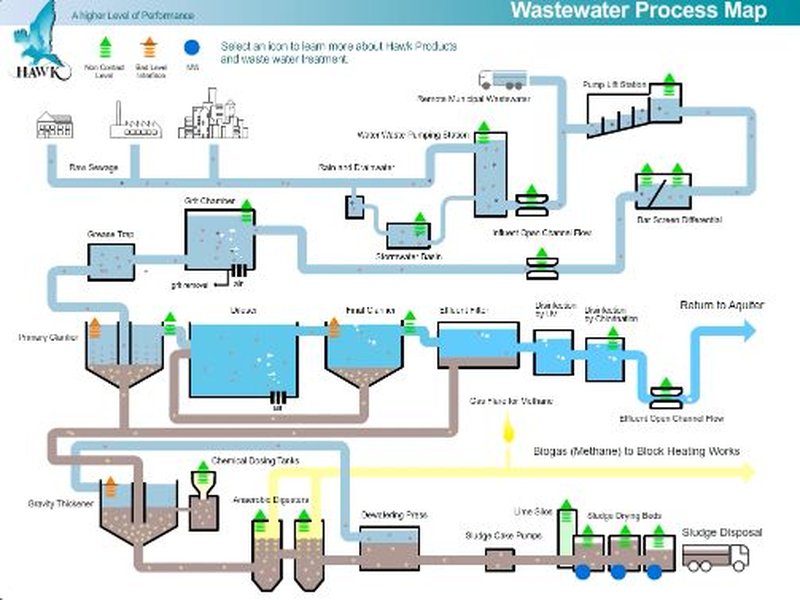
General Flow Diagram of a Wastewater Treatment Plant
Preliminary Treatment: The First Line of Defense
This initial step acts as a protective barrier for the downstream equipment. It involves:
- Screening: Removal of large objects like rags, sticks, and grit that could clog or damage pumps and pipes.
- Grit Removal: Settling out heavier inorganic materials like sand and gravel.
Primary Treatment: Settling the Solids
After preliminary screening, the wastewater flows into large tanks called primary clarifiers. Here, the flow velocity is reduced, allowing heavier suspended solids to settle out gravitationally. This settled material forms primary sludge. Primary treatment can typically remove about 30-60% of suspended solids and a portion of the organic matter.

Illustration of Primary Sedimentation and Secondary Biological Treatment
Secondary Treatment: The Biological Workhorse
The main goal of secondary treatment is to remove dissolved and colloidal organic matter that remains after primary treatment. This is typically achieved using biological processes where microorganisms consume the organic pollutants. Common methods include:
- Activated Sludge Process: Wastewater is mixed with a concentrated population of microorganisms (activated sludge) in aerated tanks. Oxygen is supplied (often via aeration systems like jet aerators or diffusers) to allow aerobic bacteria to break down organic matter. The mixture then flows to a secondary clarifier where the activated sludge settles out, producing secondary sludge (also known as Waste Activated Sludge or WAS). A portion of this sludge is returned to the aeration tank to maintain the microbial population.
- Trickling Filters: Wastewater trickles over a bed of media (like rocks or plastic) coated with a biofilm of microorganisms that consume the organic matter.
- Membrane Bioreactors (MBRs): These systems combine biological treatment (like activated sludge) with membrane filtration (microfiltration or ultrafiltration). MBRs produce a very high-quality effluent and have a smaller footprint than conventional systems but often come with higher energy and maintenance costs.
Secondary treatment significantly reduces Biochemical Oxygen Demand (BOD) and Chemical Oxygen Demand (COD), key indicators of water pollution.
Tertiary Treatment: Polishing for Purity
Tertiary or advanced treatment is employed when higher effluent quality is required, especially for water reuse or discharge into sensitive receiving waters. Processes can include:
- Nutrient Removal: Specific biological or chemical processes to remove nitrogen and phosphorus, which can cause eutrophication in waterways.
- Filtration: Using sand filters or membranes (like nanofiltration) to remove remaining suspended solids.
- Disinfection: Killing remaining pathogens using methods like chlorination, UV irradiation, or ozonation.
- Micropollutant Removal: Advanced techniques like activated carbon adsorption or advanced oxidation processes (AOPs) to remove trace organic compounds (e.g., pharmaceuticals, pesticides).
Managing the Residue: Sludge Treatment and Disposal
Transforming Waste into Resource (or Safe Disposal)
Wastewater treatment generates significant quantities of sludge (primary, secondary, and sometimes tertiary), a semi-solid material containing concentrated pollutants removed from the water. Treating sludge is essential to reduce its volume, stabilize organic matter, destroy pathogens, and facilitate safe disposal or beneficial reuse.
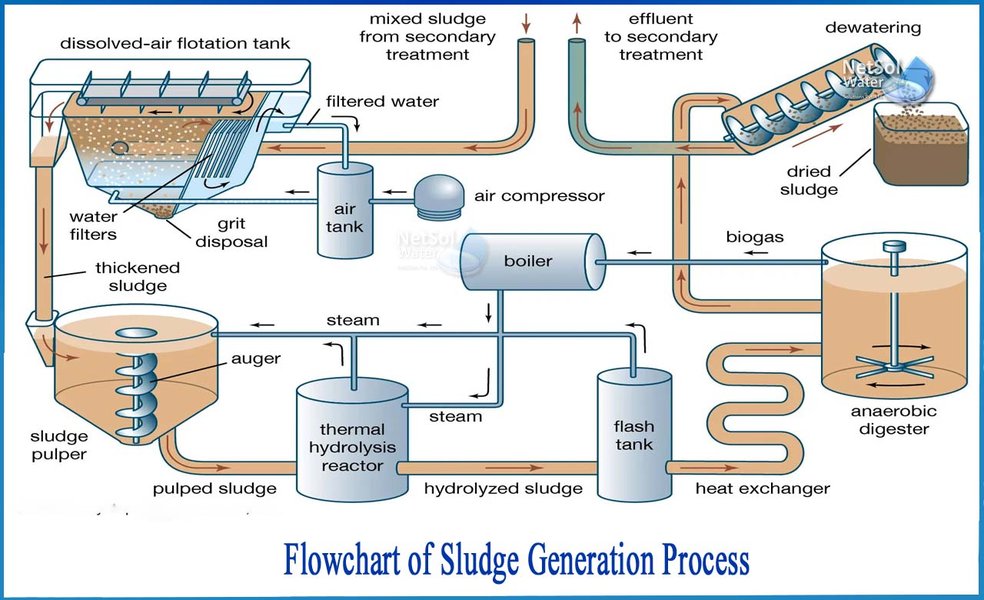
Typical Flowchart Illustrating Sludge Generation and Treatment Paths
Thickening: Reducing Water Content
Sludge initially contains a high percentage of water (often >95%). Thickening processes aim to increase the solids concentration (typically to 3-6%), reducing the volume handled in subsequent steps. Common methods include gravity thickening and mechanical thickening (e.g., rotating drum thickeners, gravity belt thickeners).
Stabilization: Reducing Odors and Pathogens
Stabilization processes break down organic matter and reduce pathogen levels, making the sludge less odorous and safer to handle. Key methods include:
- Anaerobic Digestion: Microorganisms break down organic matter in the absence of oxygen, typically in sealed tanks. This process produces biogas (mainly methane and carbon dioxide), a renewable energy source that can be captured and used to generate heat or electricity (Combined Heat and Power - CHP). The digested sludge (biosolids) is more stable.
- Aerobic Digestion: Similar to the activated sludge process, microorganisms consume organic matter in the presence of oxygen, reducing sludge volume and stabilizing it. It's often simpler to operate than anaerobic digestion but doesn't produce biogas and can be energy-intensive.
- Composting: Mixing dewatered sludge with bulking agents (like wood chips or yard waste) and allowing aerobic decomposition. This produces a stable, soil-like material suitable for land application.
- Lime Stabilization: Adding alkaline materials like lime raises the pH significantly (to 12 or higher), inhibiting microbial activity and inactivating pathogens.
- Thermal Hydrolysis: Pre-treating sludge with high temperature and pressure before digestion to break down cell structures, improving digestibility and biogas yield.
Dewatering: Further Volume Reduction
After stabilization, sludge often undergoes dewatering to remove more water and further reduce its volume, typically achieving 15-35% solids content. This significantly lowers transportation and disposal costs. Common dewatering technologies include:
- Belt Filter Presses: Sludge is squeezed between two porous belts.
- Centrifuges: High-speed rotation separates solids from water.
- Screw Presses: A rotating screw conveys and compresses the sludge.
- Filter Presses: Sludge is pumped between filter plates under pressure.
Final Disposal or Reuse: The End Game
The final destination of treated sludge (often called biosolids if it meets quality standards) depends on regulations, quality, and local options:
- Land Application: Applying biosolids to agricultural land as fertilizer or soil conditioner, recycling nutrients. Strict regulations govern quality (pathogen levels, heavy metals).
- Incineration: Burning dewatered sludge at high temperatures to drastically reduce volume, destroying organic matter and pathogens. Energy can sometimes be recovered. Ash requires disposal, potentially in landfills.
- Landfilling: Disposing of dewatered sludge in designated landfills. This is often the least preferred option due to land use and potential long-term environmental issues (e.g., leachate, greenhouse gas emissions).
- Other Uses: Emerging applications include use as construction material (e.g., cement production), conversion to bio-coal via processes like hydrothermal carbonization, or even resource recovery like extracting phosphorus or converting sludge to green hydrogen or animal feed (areas of ongoing research).
Comparing Treatment Approaches: Urban vs. Industrial Contexts
Tailoring Solutions to Specific Needs
The selection and design of wastewater and sludge treatment systems vary significantly between urban (municipal) and industrial settings due to differences in wastewater characteristics, flow rates, available space, regulatory requirements, and economic considerations.
Urban Wastewater Treatment Plants (WWTPs)
Municipal WWTPs primarily treat domestic sewage, which is relatively consistent in composition but highly variable in flow rate (daily and seasonal peaks). Key considerations include:
- Scale and Flow: Large volumes require robust, large-scale processes like conventional activated sludge (CAS).
- Space Constraints: In densely populated areas, compact technologies like Membrane Bioreactors (MBRs) or Integrated Fixed-film Activated Sludge (IFAS) systems might be preferred despite higher costs.
- Effluent Quality: Increasingly stringent regulations often necessitate tertiary treatment, especially nutrient removal and disinfection, particularly if the effluent discharges into sensitive waters or is intended for reuse.
- Sludge Management: Large urban plants often favor anaerobic digestion for sludge stabilization due to its potential for energy recovery (biogas) and significant volume reduction. Biosolids are often land-applied if quality permits, otherwise incinerated or landfilled.
- Energy Efficiency: Given the large scale, energy consumption is a major operational cost. Technologies like energy-efficient aeration (e.g., jet aeration), process optimization using AI, and biogas utilization are crucial.
Industrial Wastewater Treatment
Industrial wastewater varies widely depending on the industry (e.g., chemical, food processing, pharmaceutical, textile). It often contains specific, sometimes toxic or non-biodegradable pollutants, and concentrations can be much higher than in municipal sewage. Key considerations include:
- Pollutant Specificity: Treatment often requires specialized processes tailored to the specific contaminants, such as chemical precipitation for heavy metals, advanced oxidation processes (AOPs) for persistent organic pollutants, or specific biological treatments for high-strength organic waste.
- Pre-treatment: Industries often pre-treat their wastewater on-site before discharging to a municipal sewer to meet local limits or operate dedicated treatment plants.
- Variability: Industrial flows and pollutant loads can fluctuate significantly based on production cycles. Treatment systems need to be robust enough to handle these variations.
- Resource Recovery: Increasingly, industries look to recover valuable materials (e.g., metals, solvents) or water for reuse within their processes.
- Sludge Characteristics: Industrial sludge can be hazardous, requiring specialized handling and disposal methods like secure landfilling or incineration. Non-hazardous sludge might be managed similarly to municipal sludge.
- Technology Choice: Physical-chemical methods (coagulation, flocculation, adsorption) and advanced technologies like electrochemical treatment are often more prevalent in industrial settings compared to municipal ones, especially for removing specific or recalcitrant pollutants.
Comparative Analysis Table
This table provides a comparative overview of common treatment technologies regarding their suitability in different contexts.
| Treatment Method | Primary Application | Advantages | Limitations | Typical Context |
|---|---|---|---|---|
| Activated Sludge (CAS) | Secondary (Biological) | Effective organic removal, well-established, cost-effective at scale. | Large footprint, potential bulking issues, moderate effluent quality. | Large Urban WWTPs |
| Membrane Bioreactor (MBR) | Secondary/Tertiary (Biological + Filtration) | Excellent effluent quality, compact footprint, handles variable loads. | Higher capital and operational (energy, membrane replacement) costs, membrane fouling. | Urban (space-constrained), Industrial (high effluent quality needed), Decentralized |
| Anaerobic Digestion | Sludge Stabilization | Biogas production (energy recovery), significant volume reduction, pathogen reduction. | Slower process, requires heating, sensitive to inhibitors. | Large Urban WWTPs, Industrial (high-organic waste) |
| Aerobic Digestion | Sludge Stabilization | Simpler operation, effective stabilization. | Energy intensive (aeration), no biogas production. | Smaller Urban/Industrial Plants |
| Composting | Sludge Stabilization/Reuse | Produces valuable soil amendment, low-tech. | Requires large area, odor control needed, weather dependent. | Urban (where land available), Rural |
| Incineration | Sludge Disposal | Maximum volume reduction, destroys pathogens and organics, potential energy recovery. | High capital cost, energy intensive, requires air pollution control, ash disposal. | Large Urban WWTPs, Industrial (hazardous sludge) |
| Electrochemical Treatment | Advanced Oxidation/Removal | Effective on recalcitrant pollutants, reduces chemical use, can minimize sludge. | Can be energy-intensive, electrode longevity issues, potentially high cost. | Industrial (specific pollutants), Emerging in Municipal |
Comparing Treatment Technologies: A Performance Snapshot
Visualizing Key Performance Indicators
Choosing the right treatment technology involves balancing multiple factors. This radar chart provides a conceptual comparison of selected wastewater and sludge treatment methods based on key performance indicators relevant in 2025. The scores (ranging conceptually from 3 to 10, where higher is generally better or more significant) represent typical performance rather than absolute values, highlighting relative strengths and weaknesses.
Mapping the Treatment Landscape
A Mindmap Overview
This mindmap provides a visual summary of the key stages and options within wastewater and sludge treatment, illustrating the interconnected nature of the processes.
(Screening, Grit Removal)"] id1b["Primary
(Sedimentation)"] id1b1["Primary Sludge"] id1c["Secondary
(Biological Treatment)"] id1c1["Activated Sludge"] id1c2["Trickling Filters"] id1c3["MBR"] id1c4["Secondary Sludge (WAS)"] id1d["Tertiary
(Advanced Treatment)"] id1d1["Nutrient Removal (N, P)"] id1d2["Filtration"] id1d3["Disinfection (UV, Cl)"] id1d4["Micropollutant Removal"] id1e["Treated Effluent
(Discharge/Reuse)"] id2["Sludge Treatment & Management"] id2a["Sludge Sources
(Primary + Secondary + Tertiary)"] id2b["Thickening
(Volume Reduction)"] id2c["Stabilization"] id2c1["Anaerobic Digestion
(Biogas Production)"] id2c2["Aerobic Digestion"] id2c3["Composting"] id2c4["Lime Stabilization"] id2c5["Thermal Hydrolysis"] id2d["Dewatering
(Belt Press, Centrifuge, etc.)"] id2e["Final Disposal/Reuse"] id2e1["Land Application (Biosolids)"] id2e2["Incineration (Ash Disposal)"] id2e3["Landfilling"] id2e4["Resource Recovery
(Energy, Nutrients, Materials)"] id3["Contextual Factors"] id3a["Urban Settings
(Large Scale, Space Limits, Reuse Focus)"] id3b["Industrial Settings
(Specific Pollutants, Pre-treatment, Hazardous Waste)"] id4["Emerging Trends (2025+)"] id4a["Energy Efficiency / Carbon Neutrality"] id4b["Resource Recovery (Water, Energy, Nutrients)"] id4c["Advanced Technologies (Electrochemical, Nanofiltration)"] id4d["Digitalization & AI Optimization"]
Treatment Methods in Action: Real-World Examples
Case Studies and Applications
Examining real-world applications helps illustrate how different treatment strategies are implemented globally and regionally to address specific challenges.
Case Study 1: Urban Energy Recovery (Conceptual based on trends)
Many large municipal wastewater treatment plants, similar to those in major cities worldwide, integrate anaerobic digestion with Combined Heat and Power (CHP) systems. For example, a plant processing millions of gallons per day might use the biogas generated from sludge digestion to produce enough electricity and heat to significantly offset its own energy consumption, sometimes exporting surplus energy. This approach reduces operational costs, lowers the carbon footprint, and aligns with sustainability goals often seen in large urban centers focusing on resource recovery.
Case Study 2: Industrial Water Reuse (e.g., Beverage Bottling Plant - Fluence MBR)
A beverage bottling plant generating wastewater with high organic loads and requiring consistent effluent quality for potential reuse implemented an MBR system. The MBR's ability to produce high-quality treated water allowed the facility to reuse a significant portion (e.g., 80%) of its wastewater for non-potable applications like cleaning, reducing freshwater intake and discharge costs. This highlights the suitability of advanced technologies like MBRs in industrial settings where water scarcity or stringent discharge limits necessitate high levels of treatment and reuse.
Case Study 3: Decentralized Treatment (e.g., Remote Communities - Veolia Package Units)
In areas lacking centralized sewage infrastructure, like remote communities or developments, packaged biological treatment units offer a viable solution. Companies like Veolia provide containerized or skid-mounted systems that often combine secondary and tertiary treatment processes (e.g., MBR or Moving Bed Biofilm Reactor - MBBR). These units can treat sewage to a high standard, allowing for safe local discharge or reuse for irrigation. This demonstrates the flexibility of decentralized systems in providing effective wastewater management without requiring extensive sewer networks, crucial for both developing regions and specific applications in developed countries.
Case Study 4: Sludge Incineration for Volume Reduction (e.g., Japan/Singapore)
In densely populated areas with limited land availability for landfilling or land application, sludge incineration is a common practice. Cities in countries like Japan and Singapore often employ advanced incineration facilities, sometimes integrated with waste-to-energy plants (like Singapore's Tuas Nexus concept). These facilities significantly reduce sludge volume (up to 90%), destroy pathogens and hazardous organic compounds, and can recover energy. While capital-intensive and requiring stringent air emission controls, incineration provides a solution for managing large sludge quantities in land-scarce environments.
Visualizing Treatment Comparisons
Comparing Different Wastewater Treatment Approaches
Understanding the nuances between different wastewater treatment technologies is key to selecting the appropriate solution for a given facility or application. This video provides a comparison, discussing factors that influence the choice between various methods.
The video discusses how factors like influent characteristics, effluent requirements, footprint availability, operational complexity, and costs (both capital and operational) play a role in comparing and selecting treatment methods like conventional activated sludge, MBRs, MBBRs, and others. It emphasizes that there is no single "best" method; the optimal choice depends on the specific context and project goals, aligning with the comparative analysis presented earlier.
Frequently Asked Questions (FAQ)
Common Questions About Wastewater and Sludge Treatment
What's the difference between wastewater and sludge?
Wastewater is the used water discharged from homes, businesses, and industries, containing various dissolved and suspended pollutants. Sludge is the semi-solid residual material separated from wastewater during the treatment process. It's essentially the concentrated pollutants (organic matter, solids, microorganisms) removed from the water.
Why is secondary (biological) treatment so important?
Secondary treatment is crucial because it removes the dissolved and finely suspended organic matter that primary treatment cannot capture. Microorganisms consume these organics, significantly reducing the pollution load (measured by BOD/COD) before the water is discharged or further treated. Without effective secondary treatment, discharged wastewater would deplete oxygen in receiving waters, harming aquatic life.
Can treated sludge (biosolids) be safely used on farms?
Yes, treated sludge that meets strict regulatory standards (often referred to as biosolids) can be safely and beneficially applied to agricultural land. Regulations limit the concentration of heavy metals, pathogens, and other contaminants. Proper treatment processes like anaerobic digestion, composting, or lime stabilization significantly reduce pathogens. Land application recycles valuable nutrients (like nitrogen and phosphorus) and organic matter back to the soil.
What are the main emerging trends in wastewater treatment for 2025?
Key trends include a major focus on energy efficiency and achieving carbon neutrality in treatment plants (e.g., optimizing aeration, maximizing biogas production). Resource recovery is another significant trend, viewing wastewater and sludge not as waste but as sources of clean water, energy, nutrients, and other valuable materials. Advanced treatment technologies (like improved membranes, electrochemical methods) for removing challenging pollutants and increasing water reuse are also gaining traction, alongside digitalization and AI for process optimization.
Recommended Further Exploration
- Explore a detailed comparison between MBR and MBBR wastewater treatment technologies.
- Learn how biogas from anaerobic digestion is effectively used for energy generation in wastewater treatment plants.
- Discover the specific regulations governing the land application of biosolids in Europe and North America.
- Investigate the latest emerging technologies designed to remove micropollutants from wastewater streams.
References
Last updated May 3, 2025