
Statement of the Problem: Water Hyacinth Proliferation and Its Management
Analyzing the environmental and socioeconomic impacts of water hyacinth and a potential community-based solution
Key Takeaways
- Rapid Proliferation: Water hyacinth grows uncontrollably, causing environmental degradation.
- Eutrophication and Flooding: Dense growth contributes to nutrient imbalances and heightened flood risks.
- Innovative Community Solutions: A locally made water hyacinth stripper machine can help manage the infestation.
Introduction
Water hyacinth, an invasive aquatic plant, has become a severe environmental and socioeconomic challenge in many regions. Its rapid and uncontrolled growth not only disrupts aquatic ecosystems but also exacerbates several environmental problems. This statement of the problem synthesizes key research findings to highlight the impacts of water hyacinth proliferation and to propose a viable community-based management solution through the development of a locally made water hyacinth stripper machine.
Background and Context
Ecological Impact
Numerous studies have documented that water hyacinth grows at an alarming rate under conducive environmental conditions. The work by Villamagna and Murphy (2010) emphasizes that the plant’s rapid and uncontrolled expansion is one of the primary reasons behind its categorization as one of the most troublesome aquatic weeds globally. This invasive species forms thick mats on the surface of water bodies, limiting sunlight penetration and thereby suppressing photosynthesis in native species. As a result, underwater ecosystems suffer from reduced oxygen levels, and many aquatic organisms face habitat degradation.
In addition to its role in diminishing light availability, excessive plant growth has been shown to increase eutrophication. Eutrophication is a process where bodies of water receive excess nutrients, leading to dense plant growth and algal blooms. Sharma et al. (2020) have noted that the proliferation of water hyacinth exacerbates this nutrient enrichment process. The resulting condition ultimately leads to oxygen depletion in the water, causing further degradation of the aquatic environment.
Hydrological Alterations
Beyond its impact on water quality and aquatic life, the spread of water hyacinth significantly contributes to hydrological complications. Gopal (1987) highlights that the plant’s dense mats hinder water circulation and obstruct natural water flow in rivers and lakes. This blockage is often associated with increased flooding risks, especially during heavy rains. The physical barrier created by water hyacinth can lead to the accumulation of water, thereby contributing to more frequent and severe flood events.
Kumar and Kumar (2019) further elaborate on the issue by demonstrating that the spread of water hyacinth can directly contribute to flood conditions. The plant not only obstructs waterways but also prevents the natural flushing effect required for proper drainage in affected areas. These hydrological disruptions have considerable downstream effects on local communities, particularly those dependent on water resources for agriculture, fishing, or daily living.
Socioeconomic Implications
The ecological and hydrological impacts of water hyacinth are intertwined with significant socioeconomic consequences. In many regions, communities that rely on water bodies for their livelihoods are severely affected by the invasion. The reduction in water quality and the blockage of waterways lead to decreased fish populations, disrupted transportation, and limited access to water resources for both domestic and commercial use. These factors, in turn, lead to increased costs for management and mitigation measures.
The environmental challenges posed by water hyacinth also impose indirect economic burdens on local governments and communities. The increased need for water treatment, maintenance of water infrastructure, and damage to natural habitats can lead to substantial financial expenditures. This creates a compounded problem where the costs of managing the invasive species outweigh the benefits of maintaining ecological and social stability.
Proposed Solution: Locally Made Water Hyacinth Stripper Machine
Rationale for a Mechanical Solution
Given the multifaceted impacts of water hyacinth invasions, a singular approach is typically insufficient. Traditional control methods such as manual removal or chemical treatments often prove to be labor-intensive, environmentally damaging, or economically unsustainable over the long term. In response to these challenges, the development of a locally made water hyacinth stripper machine offers a more targeted and sustainable approach.
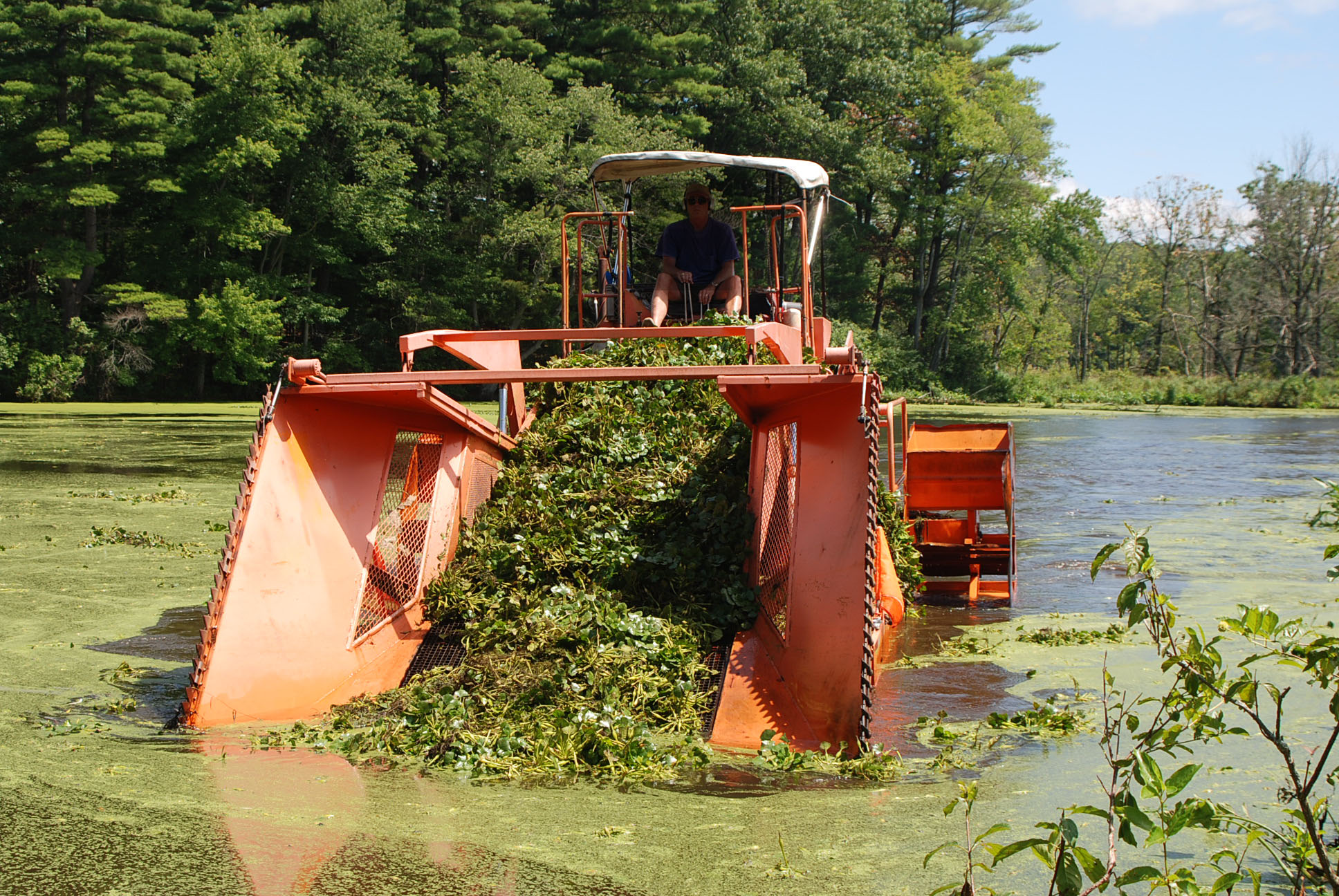
The stripper machine is designed to mechanically remove water hyacinth biomass from affected water bodies. This technology aims to decrease the plant’s coverage, mitigate eutrophication by improving oxygen penetration in water, and reduce the likelihood of flood events by ensuring unimpeded water flow. Additionally, employing locally designed and manufactured equipment can empower communities by reducing reliance on external resources and expertise. This aligns well with community-driven resource management principles and encourages local participation in sustainable environmental practices.
Technological Feasibility and Community Benefits
A locally made water hyacinth stripper machine represents a practical solution that integrates technology with local ingenuity. The design parameters of such a machine involve durability, cost-effectiveness, and ease of operation to suit the diverse conditions found in rural areas. By focusing on a mechanical approach, communities can address the biomass accumulation problem directly without the consent issues associated with chemical herbicides or the unpredictability of biological controls.
The benefits of developing and deploying such a machine are manifold:
- Environmental Restoration: By regularly removing excessive water hyacinth, water bodies can naturally recover from the adverse effects of eutrophication. With enhanced sunlight penetration and better oxygenation, native aquatic species are more likely to re-establish, leading to a more balanced ecosystem.
- Flood Mitigation: Mechanical removal helps restore normal water flow dynamics. This intervention can reduce the frequency and severity of floods, thereby protecting infrastructure and reducing potential damage to properties and livelihoods.
- Economic Empowerment: The local manufacture and maintenance of the water hyacinth stripper machine create job opportunities and foster skills development. Community members can participate not only in the operation of the equipment but also in its production, repair, and potential adaptation for other local needs.
- Cost Efficiency: Compared to recurrent chemical treatments, a mechanical approach potentially offers a low-cost, renewable solution. Once the technology is established and scaled within a community, the ongoing operational costs are likely to be significantly lower than those associated with chemical or manual removal methods.
Implementation Challenges and Considerations
While the development of a water hyacinth stripper machine offers promising solutions, several challenges must be addressed to ensure its successful implementation:
- Design Optimization: The machine must be engineered to effectively handle the dense and variable nature of water hyacinth growth. This requires careful design considerations to ensure the machine can operate in varying water depths and conditions without causing additional environmental damage.
- Training and Capacity Building: Local operators need to be trained in the use and maintenance of the machine. A successful implementation plan would include workshops and ongoing technical support to ensure that community members can operate the equipment proficiently.
- Funding and Resource Allocation: Though the machine is designed to be cost-effective, initial capital investment is necessary to manufacture and deploy it on a significant scale. Securing funding, either through local government support, non-governmental organizations, or community cooperatives, is critical to its long-term success.
- Integration with Existing Practices: The machine should complement other water management practices rather than replace them entirely. An integrated approach that combines mechanical removal with ecological restoration and proper waste management can provide a more sustainable solution.
- Environmental Monitoring: Post-deployment, it will be essential to monitor the impact of the machine on water quality and local ecosystems. Continuous monitoring will help determine if further adjustments are necessary and whether complementary measures are required for optimal results.
Table: Comparative Analysis of Traditional Control Methods vs. Mechanical Removal
| Control Method | Advantages | Disadvantages |
|---|---|---|
| Manual Removal |
|
|
| Chemical Control |
|
|
| Biological Control |
|
|
| Mechanical Removal (Stripper Machine) |
|
|
Discussion
The rapid growth and uncontrolled spread of water hyacinth present a critical issue that calls for integrated management strategies. The literature clearly indicates that the unchecked proliferation of water hyacinth not only disrupts aquatic ecosystems by shading out native species and depleting oxygen levels but also aggravates problems related to eutrophication. As excess nutrients accumulate due to the extensive biomass, water bodies suffer from decreased water quality, which further impacts aquatic life and overall ecosystem health.
The hydrological implications of the invasive growth of water hyacinth are equally concerning. Blockages caused by dense mats of the weed impede water flow, thus heightening the risk of floods. The concurrence of these effects—eutrophication and flooding—creates a compounded problem that affects both the physical environment and the socioeconomic stability of communities living near infested water bodies.
In response to these challenges, the development of a water hyacinth stripper machine emerges as a promising solution. By adopting a mechanical approach, communities can exercise a degree of autonomy in the management process. This technology-driven solution empowers local stakeholders, reduces dependency on chemical herbicides with their associated environmental risks, and paves the way for sustainable remediation practices.
Furthermore, a locally produced machine ensures that the solution is tailored to the specific needs and conditions of the affected communities. Such an approach not only helps in mitigating the immediate adverse effects of water hyacinth but also opens up avenues for local economic development. The machine can foster local manufacturing, create employment opportunities, and promote skill development in engineering and maintenance sectors. In this manner, the problem of water hyacinth infestation is transformed from being merely an environmental nuisance to becoming a catalyst for sustainable community development.
Conclusion
In conclusion, the rapid and uncontrolled growth of water hyacinth poses substantial challenges in terms of ecological balance, water quality, and socio-economic stability. With its capacity to exacerbate eutrophication and instigate flooding, the invasion of water hyacinth severely impacts the livelihoods of communities dependent on freshwater ecosystems. A locally made water hyacinth stripper machine presents a promising intervention that can significantly mitigate these environmental hazards. Through mechanical removal, communities can restore water quality, reduce the risk of floods, and harness local resources for economic empowerment and sustainable development. Addressing the problem with such innovative and community-driven methodologies will pave the way for integrated water resource management and long-term environmental resilience.
References
- Water Hyacinth - Aquatic Biologists
- Water Hyacinth Control - United Diversity Library
- PMC Article on Water Hyacinth - National Center for Biotechnology Information
- Water Hyacinth: Characteristics, Problems, Control Options and Beneficial Uses - ResearchGate
Learn More
Last updated February 18, 2025