
Comprehensive Report on Water System Design
An in-depth exploration of analysis and integration of water distribution systems
Key Highlights
- Demand Analysis and Hydraulic Principles: Emphasis on predicting water usage and understanding flow dynamics.
- Source Identification and Treatment Processes: Evaluating water sources and necessary treatment methods.
- System Integration and Optimization: Using modern tools such as GIS, computer modeling, and smart technologies for operational reliability.
Introduction
Designing a water system is a multifaceted process that integrates engineering principles, environmental considerations, and advanced technology to ensure a resilient, efficient, and sustainable supply of water for communities and industries. This report provides an extensive analysis of the design of water systems with a focus on both basic analysis and practical integration. It covers the essential technical components—from demand analysis to distribution network optimization—ensuring that the complexities of modern water management are understood and effectively implemented.
Basic Analysis of Water Systems
The successful design of a water system starts with a solid foundation in basic analysis. This process fundamentally involves understanding water demand, identifying reliable water sources, and determining the treatment and distribution requirements essential for system efficiency.
Water Demand Estimation
The first step in water system design is to accurately estimate water demand. Demand analysis involves forecasting both current and future needs based on factors such as:
- Population size and density
- Industrial and agricultural activities
- Historical consumption data and peak usage metrics
Typically, water demand is calculated by considering the Maximum Day Demand (MDD) and Peak Hour Demand (PHD), ensuring that the infrastructure can handle pressure fluctuations and volume requirements. For domestic applications, the peak domestic demand can be approximated as 2.5 times the required daily demand, accounting for various temporal increases.
Hydraulic Principles and Network Layout
Hydraulic design is critical to ensuring smooth water flow throughout the system. The design includes:
- Pipe Sizing: Determining the optimal diameter for pipes to ensure adequate flow rate and minimize friction losses.
- Pressure Management: Maintaining consistent pressure levels across the network to avoid supply interruptions or burst pipelines.
- Head Loss Calculations: Employing hydraulic formulas to compute losses due to friction and flow obstructions.
Engineers utilize advanced simulation and modeling tools to predict and adjust these parameters. This ensures hydraulic stability and greatly enhances the reliability of the water distribution network.
Water Source Identification and Treatment
Identifying a dependable water source is crucial. Water sources can be categorized as:
- Surface Water: Rivers, lakes, and reservoirs, which may require extensive treatment depending on the level of contamination.
- Groundwater: Aquifers that typically offer more consistent water quality but may involve challenges such as drawdown issues.
- Municipal Supplies: Pre-treated water that is distributed via local networks, often requiring minimal additional treatment.
Once a water source is identified, the next step is to implement appropriate treatment processes. This usually involves a series of steps such as:
- Coagulation and Sedimentation: Removing suspended particles.
- Filtration: Eliminating finer contaminants through sand or membrane filters.
- Disinfection: Using chemicals like chlorine or physical methods such as UV light to neutralize pathogens. For instance, UV treatment should achieve a dose of at least 186 mJ/cm2 for effective disinfection.
Practical Integration Strategies
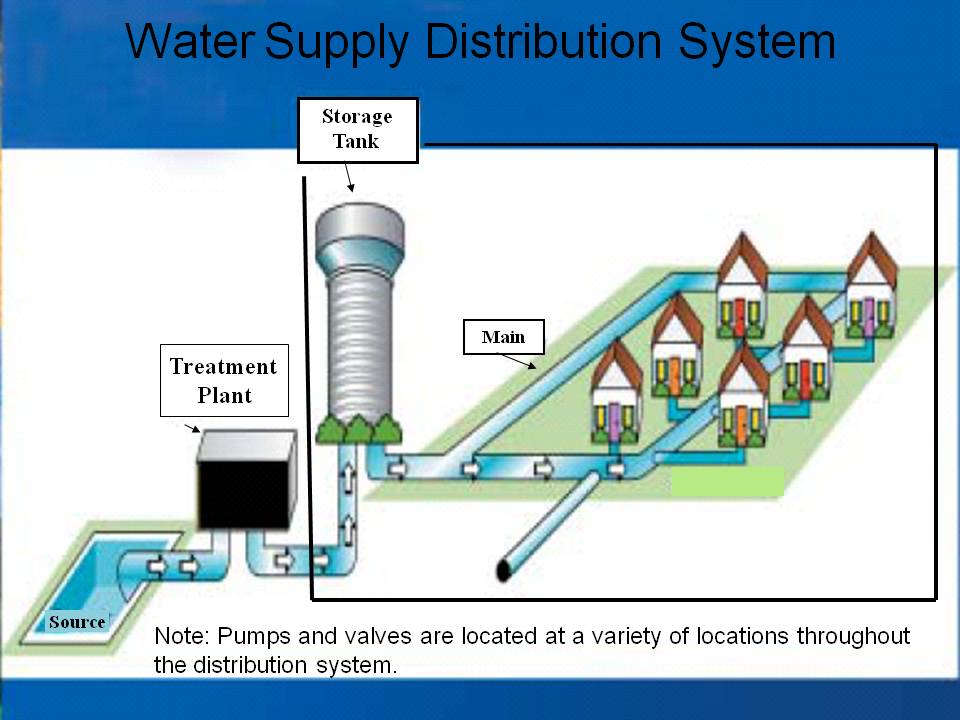
Practical integration of water systems involves combining various elements—technical components, management strategies, and modern innovations—into a cohesive, operational network. This integration ensures the system not only meets current demands but is also scalable for future requirements.
Component Integration and Infrastructure Design
Beyond the preliminary analysis, the design process advances to the detailed layout of the water system. Key components include:
- Distribution Network Configuration: Selecting the appropriate system layout, whether it is a dead-end system, radial system, ring network, or grid iron, based on local needs and geographic constraints. Each network type offers distinct benefits concerning reliability and maintenance.
- Storage Facilities: Designing reservoirs and tanks that provide a buffer during peak demand and serve as emergency supplies.
- Pump Stations: Strategically placing pump stations to maintain proper water pressure, especially in areas with significant elevation variations.
Systems Layout Comparison Table
| System Type | Advantages | Disadvantages |
|---|---|---|
| Dead End System | Simplicity, lower initial cost | Risk of stagnation, potential for quality degradation |
| Radial System | Efficient for high-rise developments, robust pressure management | Can be more costly, complex maintenance |
| Ring Distribution System | Flexibility and redundancy, continuous supply even if one section fails | Higher installation costs, requires more valves |
| Grid Iron System | Optimized for urban planning, enhanced connectivity | Requires intensive planning and maintenance efforts |
The table above summarizes the key considerations for different system layouts, highlighting the trade-offs between simplicity, reliability, and cost.
Optimization Techniques and Software Integration
Modern water system design increasingly relies on advanced computer modeling and simulation tools. These technologies facilitate:
- Hydraulic Modeling: Software such as EPANET helps in designing and testing water distribution networks under various demand scenarios to balance flow and pressure.
- Geographic Information Systems (GIS): GIS aids in mapping water distribution networks, pinpointing areas for future expansion, and planning maintenance routes.
- Real-time Monitoring: Implementing sensor networks for leak detection, pressure monitoring, and quality control allows for proactive operational management.
- Demand Forecasting: Integrating demand forecasting tools helps match supply with consumption patterns, thereby minimizing water loss and ensuring cost-effective management.
Operational Management and Maintenance Strategies
The long-term success of any water system depends on its operational management. Key aspects include:
- Regular Maintenance: Routine inspections of pumps, valves, pipes, and treatment facilities reduce the chance of system failures and prolong infrastructure lifespan.
- Water Quality Management: Continuous testing ensures that water remains safe for consumption. This involves monitoring chemical and microbial parameters and adjusting treatment protocols when needed.
- Infrastructure Upgrades: Leveraging data from monitoring systems to plan for necessary upgrades keeps the system efficient and scalable as demand evolves.
Case Studies and Practical Applications
To illustrate the practical implementation of these concepts, consider a case study involving a river water supply system implemented in a mid-sized city.
Case Study: River Water Supply System
In this project, engineers conducted a detailed analysis to determine the overall water demand and identified a sustainable river source with a consistent flow rate. The design considerations included:
- Intake Design: The intake was positioned upstream to reduce sediment interference, ensuring cleaner water reached the treatment facility.
- Pump Station Integration: Advanced, sediment-resistant pump models were installed to accommodate varying flow conditions, guaranteeing a stable supply during peak demand hours.
- Distribution Strategy: A ring network was adopted to improve reliability. In this configuration, if one segment of the network required maintenance, alternative pathways ensured continuous water supply.
Further, the system implemented a state-of-the-art Supervisory Control and Data Acquisition (SCADA) system that provided real-time monitoring of parameters such as pressure, flow, and water quality. This integration of technology considerably reduced downtime and improved overall efficiency.
Moreover, hydraulic models and GIS mapping were used in unison to identify potential future bottlenecks and gas emission points that could compromise system integrity. With these tools in place, the city ensured the water distribution system was adaptive enough to meet increasing demands due to urban growth.
Summary of Integrated System Design
The successful design and integration of water systems hinge on a balanced approach that combines technical analysis with practical implementation strategies:
- Comprehensive Demand Analysis: Accurate prediction of water usage helps in scaling the infrastructure effectively.
- Precise Hydraulic and Infrastructure Design: Proper pipe sizing, pressure management, and the strategic placement of pumps and storage tanks ensure a stable system.
- Advanced Modeling and Smart Integration: Utilizing cutting-edge software for hydraulic modeling, GIS mapping, and real-time monitoring optimizes the system’s operational efficiency.
- Regular Maintenance and Adaptive Upgrades: Long-term operational success relies on continuous monitoring, regular maintenance, and timely technological upgrades.
Incorporating these components into a single water system allows for increased reliability, cost-efficiency, and scalability. Through a systematic analysis of demand, careful planning of hydraulic properties, and advanced real-time integration, water systems can not only meet current demands but can also evolve to handle future challenges effectively.
References
- Fundamentals of Water System Design - ASHRAE
- Water Systems Analysis, Design, and Planning: Urban Infrastructure - Routledge
- Water Distribution System Design - Tango Valve
- Domestic Water Piping Design Guide - Eng Pro Guides
- Important Considerations for Water Distribution System Design - Fehr Graham
Recommended Further Inquiries

Last updated March 17, 2025