
Implementation of a Web-Based Water Billing and Online Payment System
Comprehensive Guide for Aqua Vester’s Capstone Project
Key Highlights
- Automation & Efficiency: Streamline water billing procedures with consumption-based estimation.
- Secure Online Portal: Provide real-time access for customers to manage billing and payments.
- Robust Integration: Incorporate advanced data management, advanced notifications, and smart meter readiness.
Project Overview and Rationale
The capstone title, "Implementation of a Web-Based Water Billing and Online Payment System with Consumption-Based Bill Estimation for Aqua Vester," encapsulates an innovative approach to improving utility management. This project seeks to build an integrated digital solution that revolutionizes the conventional water billing process by leveraging technology for automated meter reading, accurate consumption-based billing, and a secure online payment platform. In an era where digital transformation is pivotal, this system not only enhances operational efficiency but also greatly improves customer convenience and accuracy in billing.
The primary objective of this project is to develop a comprehensive system that facilitates the automation of meter reading, accurate bill estimation based on water consumption, and the provision of an easy-to-use interface for both administrative staff and customers. By integrating modern web technologies and secure payment gateways, the system is designed to streamline the traditional manual processes, reduce human error, and ensure that billing data is accessible in real-time.
System Architecture and Components
Core Modules
User Management
The platform will include comprehensive user registration and account management features for both customers and administrators. Customers will be able to create their profiles, access billing history, monitor water usage, and update personal information. Administrators will have privileges to manage customers, view system logs, adjust billing parameters, and perform routine maintenance.
Billing Engine
At the heart of this system lies the billing engine, which automates the meter reading collection process and calculates bills based on actual water consumption. An algorithm processes historical usage data, current rate structures, and consumption patterns to compute an accurate billing amount. This calculation is essential not only for billing precision but also for providing customers a clear view of their consumption trends and potential cost-saving opportunities.
Online Payment Integration
The payment module will integrate with multiple online payment gateways to offer flexibility for users. By accepting payments through credit cards, direct debits, or other secure methods, the system ensures the integrity and security of financial transactions. Additional features such as payment confirmations, receipt generation, and automated reminders enhance the overall user experience.
Real-Time Consumption Tracking
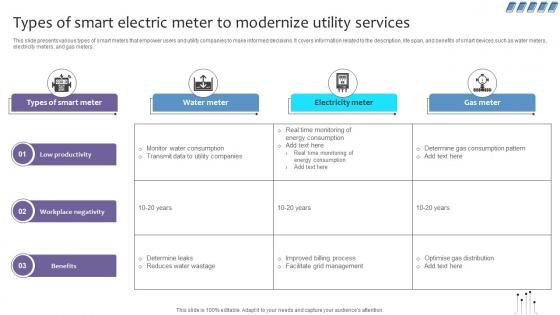
Real-time data tracking is an essential feature of the system, providing both consumers and administrators with up-to-date information on water usage. Utilizing web-based interfaces and potentially integrating with smart meter technology, the system can track consumption accurately, highlight anomalies, and predict future usage based on historical patterns.
Notification and Customer Support
Automated SMS and email notifications are integrated to remind customers about due dates, alert them on unusual consumption, and offer guidance for prompt payments. In addition, a real-time chat module could be incorporated to provide immediate customer support, tackling issues ranging from billing errors to troubleshooting access problems.
Development Methodology and Technical Stack
Methodological Approach
The system will be developed using an Agile method to ensure iterative improvements and flexibility in responding to emerging requirements. This approach allows for rapid prototyping, continuous testing, and constant feedback integration to resolve potential issues quickly. The iterative process also facilitates the incorporation of security updates and usability enhancements based on user feedback.
Technical Components
Front-End Technologies
The user interface will be developed using HTML, CSS, and JavaScript, ensuring a dynamic, responsive design that is accessible on various devices such as desktops, tablets, and smartphones. Incorporating frameworks like Bootstrap can help with rapid front-end development as well as enhance the overall responsiveness and visual appeal of the platform.
Back-End Technologies
The back-end will utilize PHP for server-side logic, with MySQL serving as the primary database management system to store user records, transaction details, billing history, and water consumption data. The use of PHP in combination with robust database systems provides a reliable and scalable foundation for processing large volumes of transactional data and user information.
Security & Compliance
Ensuring the security of sensitive data, particularly financial details and user records, is paramount. All payment transactions will be encrypted using industry-standard encryption techniques, such as SSL/TLS protocols. Moreover, the system will be designed in compliance with local data protection regulations, ensuring that user privacy and data security are robustly maintained.
Testing and Maintenance
Comprehensive testing procedures, including unit testing, integration testing, and user acceptance testing, will be implemented to ensure that all functionalities perform as expected. Regular maintenance and updates based on ISO 25010 software quality standards will further ensure system reliability and performance.
Feature Breakdown and Comparison
| Feature | Description | Benefits |
|---|---|---|
| User Management | Registration, account management, profile updates | Easy customer onboarding and administrative control |
| Billing Engine | Automated meter reading, consumption-based bill estimation, invoice generation | Accurate billing and minimized manual errors |
| Online Payment System | Multiple payment methods, secure transactions, receipt generation | Customer convenience and increased payment security |
| Real-Time Consumption Tracking | Live monitoring of water usage and historical data review | Enhanced customer insights and predictive consumption management |
| Notification System | Automated SMS, email reminders, and disconnection alerts | Timely notifications improve payment adherence and overall service reliability |
| Customer Support Module | Live chat and support ticket management | Swift resolution of queries and improved customer satisfaction |
Consumption-Based Bill Estimation: Detailed Explanation
Algorithm and Computation Techniques
The consumption-based bill estimation process integrates a well-defined algorithm that calculates monthly bills based on water usage. The algorithm collects data from automated meter readings and processes it against predefined tariff structures. The overall computational model is represented as:
\( \text{\( \text{Bill Amount} = \text{Fixed Charge} + (\text{Usage Units} \times \text{Rate per Unit}) \)} \)
Where the Fixed Charge is constant, and the Usage Units are derived from the difference between consecutive meter readings. The system further incorporates historical data to adjust for seasonal variations or consumption patterns, ensuring that the estimation is both accurate and predictive.
Customer Insights and Usage Trends
Beyond simple billing, the system also provides analytical dashboards that detail usage trends over a series of months. Customers can view charts representing their daily, weekly, or monthly water usage, empowering them to reduce wastage and manage their expenses effectively. This level of insight enhances both customer satisfaction and environmental awareness.
Operational Efficiency and Future Enhancements
Improvement in Operational Efficiency
Adopting a web-based solution brings significant benefits. Automated billing reduces manual effort, minimizes the risk of calculation errors, and accelerates the billing cycle. Moreover, integration with online payments expedites the collection process, decreases administrative overhead, and boosts customer trust in the system.
Additionally, centralized storage of water usage, billing data, and payment records creates a robust repository for analysis and planning. This centralization can support future initiatives such as resource optimization and proactive maintenance schedules.
Future Work and Scalability
The system architecture is designed to be scalable and adaptable. Future enhancements may include:
- Integration of smart meters to automate the real-time collection of water usage data.
- Expansion of the payment module to include mobile wallet integrations and advanced fraud detection mechanisms.
- Development of a mobile application to provide an even more accessible user experience.
- Implementation of advanced data analytics for better prediction of peak usage times and maintenance needs.
Implementation Challenges and Mitigation Strategies
Technical and Integration Challenges
Although the proposed system offers numerous advantages, several technical challenges must be addressed. Integrating disparate systems—such as existing infrastructure with the new web-based platform—can be complex. Ensuring compatibility between legacy systems and freshly implemented technologies requires thorough testing and gradual data migration strategies.
To mitigate these challenges, a phased implementation plan can be adopted. Initially, a pilot phase involving a small group of users can help identify integration issues and allow developers to refine the system. Subsequent phases will gradually extend the full functionality to all users after resolving any detected issues.
User Adoption and Accessibility Concerns
Another key challenge lies in encouraging user adoption, especially among those unfamiliar with digital payment platforms. To address this, the project emphasizes designing an intuitive and straightforward user interface paired with extensive educational resources and on-site training sessions for both customers and administrative personnel.
Incorporating features such as live chat support and comprehensive FAQs will further alleviate user concerns, ensuring that technical difficulties or doubts about security measures are promptly addressed.
Documentation, Testing, and Compliance
Comprehensive Documentation
Thorough documentation of system architecture, algorithms, and code is paramount to ensure long-term maintainability and ease future enhancements. Documentation should cover technical specifications, user manuals, and troubleshooting guidelines to serve both developers and end-users.
Testing and Quality Assurance
Rigorous testing is essential to guarantee that the system meets operational requirements. Different testing phases include:
- Unit Testing: Validate individual system components and functions.
- Integration Testing: Analyze interactions between distinct modules such as billing, payment, and user management.
- User Acceptance Testing (UAT): Gather feedback from actual users to ensure the interface meets their needs.
- Security Testing: Evaluate the robustness of the encryption and data protection measures, ensuring compliance with regulatory standards.
By following quality assurance best practices, the project can maintain a high standard of performance and security while continuously adapting to new challenges and expanding functionality.
Real-World Application and Strategic Significance
Operational Efficiency and Customer Empowerment
The system is poised to dramatically improve operational efficiency at Aqua Vester by reducing manual billing errors and automating routine tasks. Customers will benefit from transparent billing details, easy access to historical consumption data, and the convenience of paying bills online at any time. These features not only foster customer trust but also encourage responsible water usage by providing actionable insights into their consumption patterns.
Furthermore, the modular design of the system allows it to serve as a foundational platform that can be adapted for additional utilities or even integrated with smart city infrastructure, enhancing overall municipal efficiency.
Strategic Future Developments
As technology continues to evolve, future enhancements could include machine learning algorithms for predictive maintenance and usage forecasting. Integration with IoT devices like smart sensors and connected appliances can further refine consumption data, providing even more granular insights. By continuously refining these systems, Aqua Vester can remain at the forefront of technological innovation in utility management.
References
- Water Billing Management System PHP/OOP Free Source Code - SourceCodester
- Web Based Water Billing System - Scribd
- Water Billing System PHP/MySQLi Full Source Code - SourceCodester
- Web-Based Billing - Commercial Water & Energy
- Water Billing System Database Project - iNetTutor
Recommended Further Queries
Last updated March 9, 2025