
What is NGINX?
Introduction
NGINX (pronounced "engine-x") is a powerful, high-performance open-source web server and reverse proxy server. Since its inception, NGINX has gained widespread popularity due to its ability to handle a large number of concurrent connections with minimal resource consumption. It is a versatile tool employed not only for serving web content but also for managing and optimizing network traffic in various types of applications and services.
History and Origins
NGINX was created by Igor Sysoev in 2002, with the first public release occurring in 2004. Sysoev developed NGINX to address the C10k problem, which refers to the challenge of handling 10,000 simultaneous client connections efficiently. Its design focused on delivering high performance, stability, and scalability, making it a preferred choice for websites with significant traffic demands.
Core Functionalities
Web Server
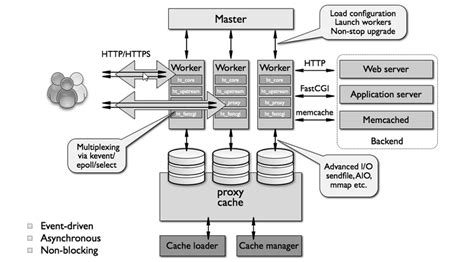
At its core, NGINX functions as a web server capable of serving both static and dynamic content. It efficiently handles requests for static files such as HTML, CSS, JavaScript, and images, ensuring quick delivery to end-users. For dynamic content, NGINX can interface with application servers like Node.js, Python's Django, or PHP's FastCGI, acting as an intermediary that forwards requests and responses between clients and backend services.
Reverse Proxy
NGINX excels as a reverse proxy server, sitting between clients and backend servers. In this role, it manages client requests, forwarding them to the appropriate server based on predefined rules. This setup enhances security by obscuring the details of backend servers, facilitates load distribution, and enables features like SSL termination, where NGINX handles SSL encryption and decryption, offloading this processing from backend systems.
Load Balancer
As a load balancer, NGINX distributes incoming network traffic across multiple servers to ensure no single server becomes a bottleneck. This distribution optimizes resource use, maximizes throughput, reduces latency, and enhances the availability and reliability of applications. NGINX supports various load balancing algorithms, including round-robin, least connections, and IP hash, allowing administrators to tailor traffic distribution based on specific needs.
HTTP Cache and Mail Proxy
NGINX also functions as an HTTP cache, storing copies of frequently accessed content to speed up subsequent requests. By serving cached content, NGINX reduces the load on backend servers and decreases response times, resulting in a better user experience. Additionally, NGINX can operate as a mail proxy server, handling protocols like IMAP, POP3, and SMTP, which is particularly useful in email server setups.
Key Features
High Performance
One of NGINX's standout features is its ability to manage thousands of concurrent connections with minimal resource usage. Its event-driven, asynchronous architecture allows it to handle multiple requests simultaneously without spawning a new thread or process for each connection, unlike traditional servers. This efficiency makes NGINX an excellent choice for high-traffic websites and applications.
Scalability and Efficiency
NGINX's design emphasizes scalability and efficient resource utilization. Its lightweight footprint ensures that it can operate effectively even on servers with limited hardware capabilities. The asynchronous, non-blocking architecture allows NGINX to scale horizontally, accommodating increasing traffic demands without the need for substantial hardware upgrades.
Support for Modern Protocols
NGINX supports a wide range of modern web protocols, including HTTP/1.1, HTTP/2, and HTTP/3. Support for HTTP/2 and HTTP/3 brings benefits like reduced latency, improved load times, and enhanced security features such as built-in encryption. Additionally, NGINX offers support for WebSockets, enabling real-time, two-way communication between clients and servers, which is essential for applications like live chats and online gaming.
Security Features
Security is a paramount concern in web server operations, and NGINX addresses this through various features. It supports SSL/TLS encryption, allowing for secure data transmission between clients and servers. NGINX also offers capabilities like rate limiting, IP whitelisting/blacklisting, and request filtering, which help mitigate common web threats such as DDoS attacks, brute force attempts, and injection attacks.
Common Use Cases
NGINX is employed in a multitude of scenarios due to its versatility and robust feature set. Some of the most common use cases include:
Hosting Websites
Whether for small personal blogs or large-scale enterprise websites, NGINX provides a reliable platform for hosting web content. Its ability to serve static files quickly and efficiently makes it ideal for delivering HTML, CSS, JavaScript, and multimedia content to users.
Reverse Proxy for Application Servers
In modern web architectures, application servers handle dynamic content generation. NGINX acts as a reverse proxy in front of these servers, managing client requests, enhancing security, and ensuring smooth communication between clients and backend services.
Load Balancing Web Traffic
To achieve high availability and fault tolerance, NGINX distributes incoming traffic across multiple servers. This load balancing ensures that no single server becomes overwhelmed, providing a seamless experience for users even during traffic spikes.
Serving as a Front-Facing Proxy for Web Applications
For complex web applications that rely on various backend services, NGINX serves as the front-facing proxy, managing all incoming requests and directing them appropriately. This setup simplifies the architecture and enhances performance by optimizing request handling and response delivery.
Static File Serving
NGINX is exceptionally efficient at serving static files. Its ability to deliver files like images, videos, and downloadable content swiftly contributes to faster load times and improved user satisfaction.
Performance and Scalability
NGINX's architecture is inherently designed for performance and scalability. By employing an event-driven, asynchronous model, it avoids the overhead associated with traditional thread-based servers. This allows NGINX to maintain high throughput and low latency, even under heavy load conditions. Additionally, its ability to scale horizontally means that organizations can add more servers to handle increasing traffic without significant reconfiguration.
The efficient handling of concurrent connections makes NGINX particularly suitable for applications requiring real-time data processing, such as live streaming services, online gaming platforms, and financial trading systems.
Adoption and Popularity
NGINX boasts substantial adoption across the internet, powering approximately 33% of all websites globally. Its reliability, combined with a rich feature set, has made it a preferred choice for numerous high-profile companies and services. Notable organizations utilizing NGINX include:
- Netflix: Utilizes NGINX to manage its immense streaming traffic, ensuring smooth delivery of content to millions of users worldwide.
- Dropbox: Employs NGINX to handle file storage and synchronization services efficiently.
- Airbnb: Uses NGINX to manage its vast user base and complex reservation systems.
Beyond these giants, countless startups and medium-sized enterprises leverage NGINX to build scalable and reliable web infrastructures. Its open-source nature also fosters a strong community, contributing to continuous improvements and a wealth of resources for users.
Conclusion
In summary, NGINX stands out as a versatile and robust solution for web server and proxy needs. Its high performance, scalability, and extensive feature set make it an ideal choice for a wide range of applications, from personal blogs to enterprise-level services. Whether serving static content, managing dynamic requests, balancing loads, or securing communications, NGINX delivers efficiency and reliability. Its widespread adoption and active community support further reinforce its position as a cornerstone in modern web infrastructure.
For more detailed information and resources, you can visit the official NGINX website: https://www.nginx.com/ or https://nginx.org/.
Last updated January 3, 2025