
Unlocking Musical Potential: Your Comprehensive 6-Month Music Teaching Guide
Craft an engaging and effective music program, whether for infants or budding musicians, over six transformative months.
Embarking on a journey to teach music over a six-month period requires a thoughtful approach, whether you're nurturing the earliest musical experiences in infants or guiding young children through a structured curriculum. This guide provides a comprehensive framework, drawing on established practices and resources, to help you design an enriching and developmentally appropriate music teaching manual.
Key Highlights of Your 6-Month Music Journey
- Dual Focus Adaptability: Learn to tailor music lessons specifically for infants around 6 months old, emphasizing sensory exploration and bonding, or structure a comprehensive 6-month curriculum for toddlers, preschoolers, and early elementary children, focusing on progressive skill development.
- Developmentally-Centered Learning: Prioritize age-appropriate activities that make learning joyful and effective. For the youngest learners, this means emphasizing play, interaction, movement, and sensory experiences.
- Structured Skill Progression: Understand how to build musical skills gradually over the six months, starting with foundational concepts like rhythm and beat, moving through melody and pitch exploration, and introducing basic theory and creative expression as appropriate for the age group.
Nurturing Early Sprouts: Music for Infants (Around 6 Months Old)
Fostering a Love for Music from the Start
For infants around six months of age, music education is less about formal instruction and more about creating a rich, interactive, and joyful auditory environment. The goal is to stimulate early neural pathways, encourage sensory exploration, promote language development, enhance motor skills, and strengthen the bond between caregiver and child.
A music classroom setting designed to engage young learners with accessible instruments and a playful atmosphere.
Core Principles for Infant Music Activities:
- Sensory Engagement: Utilize songs and activities that involve touch, sight, and sound. Simple props like colorful scarves, soft shakers (e.g., plastic eggs filled with rice), and bells can enhance the experience.
- Interactive Songs and Rhymes: Repetitive, simple songs and nursery rhymes are foundational. Activities like echo songs, call-and-response, and songs involving gentle movements (rocking, bouncing, clapping) help build rhythm awareness and trust.
- Movement and Body Awareness: Incorporate gentle movements such as tapping feet, wiggling fingers, or swaying to music. Songs like "Wake Up Feet" can help babies identify body parts while associating them with rhythmic sounds.
- Vocal Play: Encourage cooing, babbling, and imitation of sounds. Caregivers' expressive singing voices are crucial models.
- Parental/Caregiver Involvement: Active participation from caregivers is paramount. Singing during daily routines (diaper changes, feeding, playtime) integrates music naturally into the infant's life.
- Short and Sweet Sessions: Keep music sessions brief (10-15 minutes) to match infants' attention spans, but offer them frequently.
Resources like "Interactive Songs for Babies: 0-6 Months" (highlighted by Simple Music Teaching) and insights from programs focusing on music for 6-15 month-olds (like those mentioned by Moms on Call) emphasize these developmentally appropriate practices.
This video demonstrates engaging songs and activities suitable for older babies (6-12 months), showcasing how movement and interaction are key components of early music learning. It provides practical examples that align with the principles of teaching music to this age group, focusing on rhythm, motor skills, and caregiver-child bonding.
Building a Foundation: Structuring a 6-Month Music Curriculum
A Progressive Path for Young Musicians (Toddlers to Early Elementary)
For slightly older children (toddlers, preschoolers, or early elementary ages), a six-month music teaching manual can take the form of a structured curriculum that progressively introduces musical concepts and skills. The aim is to cultivate a love for music while building a solid foundation in areas like rhythm, melody, harmony, expression, and basic music literacy.

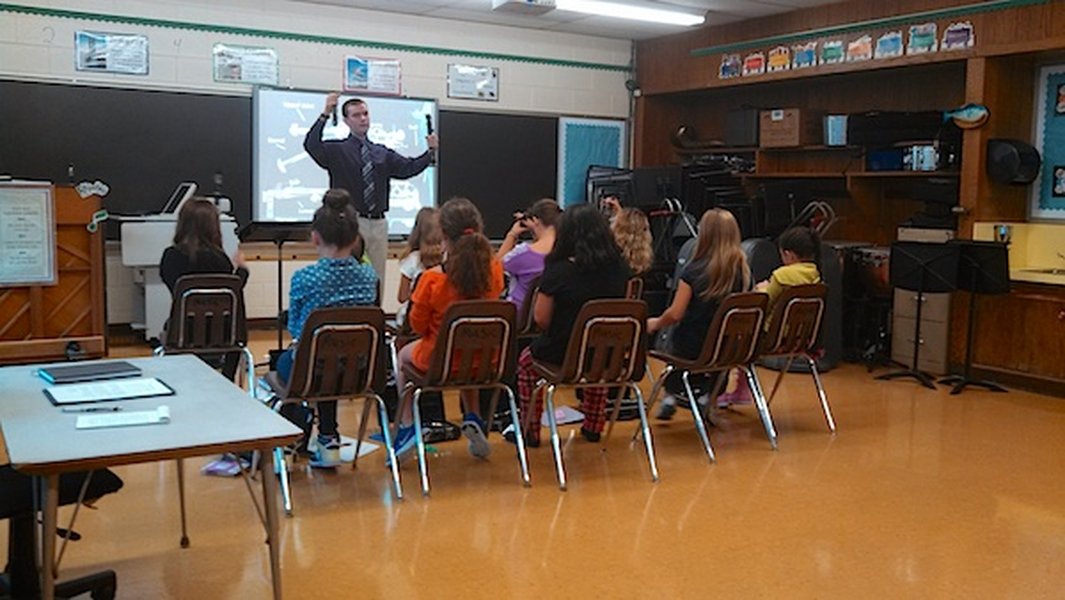
An educator guides young students in a musical activity, highlighting the interactive nature of early music education.
Key Components of a Comprehensive Manual:
- Scope and Sequence: A clear outline of what will be taught each month or week, with skills and concepts building logically. This includes objectives for units on rhythm, melody, basic theory, ear training, different musical styles, and instrumental techniques (age-appropriate, like percussion, ukulele, or recorder).
- Detailed Lesson Plans: Weekly or daily plans that include specific activities, songs, exercises, and informal assessment ideas. Suggestions for individual, partner, and group work enhance variety.
- Materials and Resources: Lists of recommended instruments (both pitched and unpitched percussion are great starting points), technology tools (apps, simple recording software), printable handouts (like rhythm cards or visual aids for solfege), and diverse listening examples.
- Assessment and Evaluation: Simple rubrics or checklists to track progress in areas like rhythmic accuracy, pitch matching, participation, and creative contributions. The focus should be on encouragement and identifying areas for support.
- Flexibility and Adaptation: Guidance on how to modify lessons based on student engagement, progress, and specific interests. Repetition and reinforcement strategies are vital for mastery.
Sample 6-Month Thematic Progression:
Below is a sample thematic outline. The depth and complexity of each theme would be adjusted based on the specific age group within the toddler to early elementary range.
| Month | Theme/Focus Area | Sample Activities & Concepts for Toddlers (1-3 years) | Sample Activities & Concepts for Preschool/Early Elementary (3-6 years) |
|---|---|---|---|
| Month 1: Welcome to Music & Beat | Introduction to steady beat, listening skills, musical play | Hello songs, body percussion (clapping, stomping), playing simple rhythm instruments (shakers, drums) to a beat, movement songs. | Exploring beat vs. rhythm, echo clapping, identifying fast/slow, loud/soft, introduction to quarter/eighth notes through movement/icons. |
| Month 2: Exploring Sounds & Pitch | High/low sounds, vocal exploration, instrument timbre | Singing songs with pitch contours (up/down), animal sound imitation, exploring sounds of different classroom instruments. | Introduction to Solfege (So-Mi, then La), melodic direction, matching pitch, introduction to the staff (as a visual representation). Pitch Hill method can be introduced. |
| Month 3: Rhythm & Movement | Rhythmic patterns, creative movement, storytelling through music | Moving to different tempos and rhythms, action songs, using scarves or ribbons for expressive movement. | Reading simple rhythmic notation (stick notation or standard), creating short rhythm patterns, folk dances, call-and-response rhythms. |
| Month 4: Melodies & Simple Songs | Learning and singing simple songs, melodic memory | Singing familiar nursery rhymes and simple folk songs, identifying melodies. | Learning songs by rote and with visual aids, understanding song form (verse/chorus), introduction to Do-Re-Mi. Simple instrumental accompaniment on xylophones or keyboards. |
| Month 5: Musical Stories & Creativity | Expressing ideas through music, basic improvisation | Making up sounds for story characters, improvising on percussion instruments. | Creating soundscapes for stories, simple melodic or rhythmic improvisation, composing short musical phrases. Exploring different music genres. |
| Month 6: Celebration of Music & Sharing | Review of concepts, sharing learned music, ensemble experience | Participating in group singing games, "concert" of favorite songs for peers or caregivers. | Review key concepts, prepare for a small informal performance or sharing session, playing/singing together as an ensemble. Reflecting on favorite musical experiences. |
This table provides a flexible framework. The specific content within each month should be adapted to the children's developmental stage and interests. Resources like "First Steps in Music" by John Feierabend offer structured approaches for young children, while the Suzuki Method can be relevant for instrument-specific learning focusing on aural skills from a young age.
Visualizing Curriculum Focus: A Comparative Look
Balancing Elements Across Age Groups
A successful 6-month music program balances various musical elements according to the developmental stage of the learners. The radar chart below illustrates how the emphasis on different components might shift when designing curricula for infants, toddlers, preschoolers, and early elementary children. The scale for each element is from 1 (lowest emphasis) to 10 (highest emphasis).
This chart visually represents that while elements like Rhythm & Beat and Vocal Exploration are crucial across all early age groups, the introduction of Basic Theory and more complex Instrumental Play becomes more significant as children mature. Music Appreciation and Creative Expression are nurtured throughout, adapting in complexity.
Mapping Your Music Manual: Core Components
A Bird's-Eye View of Your Teaching Framework
Creating a comprehensive 6-month music teaching manual involves several interconnected components. This mindmap illustrates the essential pillars and considerations for designing an effective and engaging program, whether for infants or older young children.
Focus: Sensory, Bonding, Play"] id1b["Toddlers (1-3 years)
Focus: Exploration, Movement, Basic Concepts"] id1c["Preschoolers (3-5 years)
Focus: Skill Building, Creativity, Early Literacy"] id1d["Early Elementary (K-2)
Focus: Notation Intro, Ensemble, Deeper Concepts"] id2["Curriculum Pillars"] id2a["Rhythm & Beat
(Steady Beat, Patterns)"] id2b["Melody & Pitch
(High/Low, Solfege, Tunes)"] id2c["Vocal Development
(Singing, Chanting, Vocal Play)"] id2d["Instrumental Exploration
(Percussion, Simple Pitched Inst.)"] id2e["Music & Movement
(Gross Motor, Expressive Dance)"] id2f["Creative Expression
(Improvisation, Simple Composition)"] id2g["Music Appreciation & Literacy
(Listening, Styles, Basic Notation - Age Approp.)"] id3["Monthly Progression (Example)"] id3a["Month 1: Foundations & Introduction"] id3b["Month 2: Rhythmic & Melodic Exploration"] id3c["Month 3: Skill Building & Movement"] id3d["Month 4: Introducing Notation & Diverse Sounds"] id3e["Month 5: Creativity & Improvisation"] id3f["Month 6: Review, Performance & Celebration"] id4["Essential Elements for the Manual"] id4a["Clear Scope & Sequence"] id4b["Detailed Lesson Plans (Weekly/Daily)"] id4c["Resource Lists (Songs, Instruments, Props, Tech)"] id4d["Assessment Strategies (Observation, Checklists)"] id4e["Guidance for Flexibility & Adaptation"] id5["Effective Teaching Strategies"] id5a["Play-Based Learning"] id5b["Repetition & Routine"] id5c["Parental/Caregiver Involvement (esp. younger ages)"] id5d["Varied Group & Individual Activities"] id5e["Positive Reinforcement & Encouragement"]
This mindmap highlights that a robust music teaching manual considers the learner's age and development, structures content around core musical pillars, plans a logical monthly progression, includes essential practical elements like lesson plans and resources, and employs effective, engaging teaching strategies.
Leveraging Technology and Resources
Modern Tools for Engaging Music Education
In today's world, technology can significantly enhance music teaching, even for young learners. Interactive apps, online resources, and simple recording tools can supplement traditional methods. Many platforms like Teachers Pay Teachers offer a wealth of downloadable lesson plans, activities, and printable materials that can be adapted for a 6-month curriculum. Additionally, resources like "Music for Kiddos" or Abeka's "Music Manual" provide structured content that can be invaluable.

Technology integrated into a music classroom can offer new ways to learn about rhythm, melody, and composition.
Practical Tips for Implementation:
- Be Flexible: Always be ready to adapt your plans based on the children's responses and progress. What works for one group might need tweaking for another.
- Embrace Repetition: Young children thrive on repetition. Repeating songs, games, and activities helps reinforce learning and builds confidence.
- Keep it Fun: The primary goal is to foster a love for music. Ensure activities are engaging, playful, and joyful.
- Integrate Music into Routines: For the youngest children, weaving music into daily activities (like clean-up songs or transition songs) makes it a natural part of their day.
- Document and Reflect: Keep simple notes on what works well and what could be improved. This will help refine your manual over time.
Frequently Asked Questions (FAQ)
What is the best age to start formal music lessons?
While informal music exposure can begin from birth (and even prenatally!), more structured "lessons" often begin around ages 3-5 for general music exploration (like group classes focusing on rhythm, singing, and movement). Instrument-specific lessons might start slightly later, depending on the instrument and the child's physical and cognitive development (e.g., piano around 5-7, some Suzuki programs start earlier). The key is developmental readiness and fostering enjoyment.
How long should a music session be for a young child?
For infants (0-12 months), music interactions might be very short, 5-15 minutes at a time, integrated throughout the day. Toddlers (1-3 years) might engage for 15-25 minutes. Preschoolers (3-5 years) can often focus for 20-30 minutes in a structured group setting. It's important to watch for cues of engagement and end on a positive note rather than pushing for a set duration.
Do I need expensive instruments to teach music to young children?
Not at all! The voice is the first and most important instrument. Body percussion (clapping, stomping, snapping) is free and effective. Simple, robust instruments like shakers (can be homemade), rhythm sticks, hand drums, and scarves are excellent. For pitch, a quality glockenspiel or keyboard can be useful but isn't essential for foundational learning.
How can I make music learning fun and engaging for a 6-month period?
Use a variety of activities: singing, moving, playing instruments, listening, and creating. Incorporate games, stories, and props. Keep a positive and enthusiastic attitude. Allow for child-led exploration within structured activities. Introduce new concepts gradually and revisit familiar ones to build confidence. Thematic units can also maintain interest over several weeks.
What if I'm not a trained musician? Can I still effectively teach music to young children?
Yes! Enthusiasm, a willingness to learn alongside the children, and a love for music are most important for teaching young children. Many excellent resources and curricula are designed for teachers without extensive music backgrounds. Focus on simple songs, rhythmic activities, and fostering a joyful musical environment. Your positive engagement is more critical than perfect pitch or instrumental prowess at this stage.
Recommended Further Exploration
Delve deeper into specific areas of music education with these related queries:
- How can I effectively integrate movement and dance into music lessons for young children?
- What are some age-appropriate musical instruments that are best suited for toddlers and preschoolers?
- What are effective methods for introducing solfege and pitch concepts to young children?
- Can you provide examples of project-based learning activities suitable for elementary music classes?
References
The information synthesized in this guide draws upon insights from various music education resources. For further reading, consider exploring the following (or similar) resources:

Last updated May 14, 2025