
Impact of Activation Mechanics in Miniature Wargaming
Exploring how activation systems shape strategy, tension, and overall gameplay
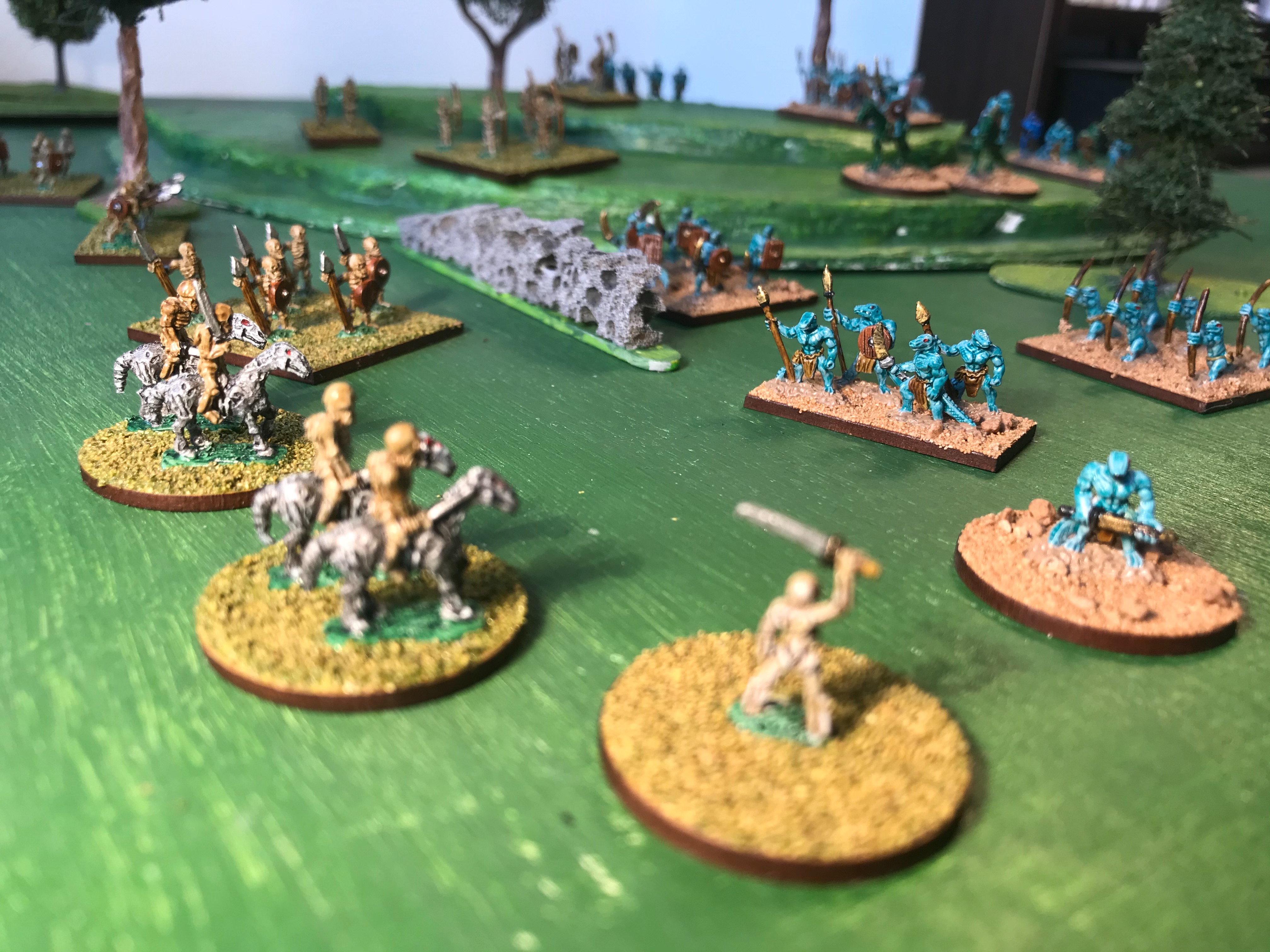
Key Highlights
- Enhanced Strategic Depth: Activation mechanics force players to prioritize and decide which unit to move, fostering tactical planning.
- Dynamic and Unpredictable Gameplay: By incorporating elements of chance and timing, these systems introduce unpredictability that keeps the gameplay engaging.
- Realism and Resource Management: By simulating battlefield command challenges, activation systems add a layer of realism while balancing player power through limited actions.
Understanding Activation Mechanics
Overview
Activation mechanics in miniature wargaming determine the timing and order in which units can act during a game turn. Departing from the classic “I Go, You Go” method, modern wargames employ various systems such as alternate, random, and managed activations. These systems not only influence the flow of the game but also establish a framework that challenges players to make critical decisions in real time. The impact of these mechanics spans multiple facets including strategy, game pace, realism, and overall player engagement.
Types of Activation Mechanics
IGOUGO (I Go, You Go)
This traditional system allows one player to move all their units during their turn, followed by the opponent. While simple to understand and execute, it offers less interaction during the opponent’s turn and can lead to predictable outcomes.
Alternate Activation
In this system, players take turns activating individual units, which introduces a higher level of interactivity. It requires strategic foresight as players balance offensive and defensive moves while anticipating the opponent’s responses.
Random Activation
Activation determined by chance elements such as dice rolls or card draws creates uncertainty and unpredictability. This randomness forces players to adapt their strategies on the fly, enhancing the overall dynamic of the game.
Managed Activation
With managed activation, players are given limited resources (like command or action points) that regulate how many units can be activated in a round. This system not only adds strategic complexity by requiring careful allocation of resources but also emulates the constraints of real-world command structures.
Key Impacts on Gameplay
Strategic Complexity and Decision-Making
One of the primary impacts of activation mechanics is the enhancement of tactical decision-making. With each activation representing an opportunity and a potential risk, players must decide which units to mobilize and when, often under pressure. For instance, an alternate activation system can compel players to decide between advancing a fragile unit to capitalize on an opportunity or holding back for defense. This careful balancing act elevates the level of strategic depth in the game.
Dynamic Pace and Game Flow
The pace of a game is largely determined by how activation is managed. Fast-paced systems, where activations occur rapidly in succession, maintain high engagement and constant tension. Alternatively, systems that involve waiting periods—such as those affected by random chance mechanics—can inject suspense and a sense of inevitability into the unfolding narrative of the game. This interplay between speed and suspense ensures that each game session feels unique.
Enhancing Realism
Activation mechanics also contribute to the realism of miniature wargaming. By simulating real-world challenges in commanding military units, these systems mirror the difficulties inherent in battlefield communication and coordination. For example, managed activation systems, which rely on constrained resources, reflect the complexities of actual military logistics where not every unit can act at once. This realism not only deepens immersion but also demands that players think like real commanders, considering factors such as timing, resource allocation, and risk.
Impact on Balance and Fairness
The structure of activation mechanics plays a crucial role in balancing the game, particularly when the forces or armies involved differ in numbers or capabilities. Systems that limit the number of activations per turn can even the playing field, ensuring that a larger, more potent force does not overwhelm a smaller opposing unit. Alternatively, systems that randomize activations can introduce discrepancies which, if not carefully controlled, may benefit one player over another. Well-designed activation systems therefore strive to maintain a fair and balanced experience, prompting designers to consider mechanisms such as bonus activations or compensatory measures.
Uncertainty and Player Engagement
Introducing elements of randomness through card draws or dice rolls can create a “fog of war” effect in the game. This uncertainty compels players to remain constantly engaged and react to unforeseen developments. The unpredictability of which units will be activated next makes every turn feel loaded with potential consequences, ensuring that players remain on their toes and that no two rounds are ever identical.
Comparative Analysis of Activation Systems
| Activation System | Description | Key Impact |
|---|---|---|
| IGOUGO | Players complete all actions in their turn before the opponent begins. | Simplifies game flow but may lead to predictable outcomes. |
| Alternate Activation | Players alternate activation of individual units. | Enhances tactical interaction and requires careful planning. |
| Random Activation | Determines unit actions via dice rolls or card draws. | Introduces uncertainty and increases adaptability requirements. |
| Managed Activation | Uses limited resources to control unit movement. | Balances gameplay by simulating realistic command constraints. |
Application in Game Design
Design Considerations
When designing a miniature wargame, activation mechanics should align with the intended gameplay experience. Designers may opt for a particular system based on the desired level of strategic complexity or the target audience's familiarity with tactical gaming. For example, beginners might benefit from the simplicity of the IGOUGO system, while veteran players might prefer the intricate planning that comes with alternate or managed activations. These choices have a profound impact on how players perceive and engage with the game.
Integrating Realism and Immersion
The real-world simulation aspect of activation mechanics cannot be overemphasized. Mechanics that mimic command challenges—such as limited communication or resource constraints—help create a more immersive experience. By enforcing these limitations, game designers allow players to experience the tension and pressure of directing a battlefield. This immersion reinforces the thematic elements of the game, making each decision feel weighty and immersive.
Balancing Strategic and Tactical Choices
Activating units in a constrained environment not only tests a player’s tactical acumen but also challenges broader strategic planning. Players often need to consider multiple layers of decision-making — from the micro-management of individual units to the macro-management of overall battle plans. This duality maintains continuous engagement, as each action has cascading effects on subsequent turns. The balance between strategic overview and tactical detail is the hallmark of successful activation mechanics.
Practical Examples in Miniature Wargaming
Scenario-Based Dynamics
Consider a scenario where players rely on managed activation with limited command points. A player might be forced to choose between activating a high-impact unit early in the turn or reserving points for future turns. Such decisions replicate real command dilemmas and encourage players to think resourcefully. Similarly, in games utilizing random activation systems, a player might have to adjust a carefully laid plan due to an unexpected unit move, thereby injecting a constant need for adaptability.
Testing Player Skill
Beyond simulating battlefield conditions, activation mechanics serve as a crucible for evaluating player skill. Poor activation choices can result in missed opportunities or expose vulnerabilities, making the activation phase a critical test of both a player’s tactical execution and strategic planning. This element of the game not only rewards quick thinking and adaptability but also encourages long-term mastery as players seek to refine their decision-making processes.
Mathematical Perspective on Activation Decisions
Resource Allocation Model
In managed activation systems, designers often model resource constraints with basic mathematical relationships. For instance, if a player has a finite number of command points \( \left( \text{\( \text{CP} \)} \right) \) and each activation costs a predefined amount \( \left( \text{\( \text{Cost} \)} \right) \), the maximum number of activations can be expressed as:
\( \displaystyle \text{\( \text{Max Activations} = \frac{\text{CP}}{\text{Cost}} \)} \)
This simple formula emphasizes the need for efficiency in resource use, as each additional activation must be weighed against the overall strategic plan. The mathematical underpinning ensures that every decision carries quantifiable consequences.
References
- Goonhammer Historicals: Activation Roundtable - Goonhammer
- Activation Mechanisms: What Do They Model? - BoardGameGeek
- Surprise Activation and Solo Wargamer - Solo Battles
- Lead Adventure Forum Discussion - Lead Adventure Forum
- Command and Control in Wargames: Why Activation Matters - Small Scale Victory
Recommended Related Queries
 wargaming-mechanics.blogspot.com
wargaming-mechanics.blogspot.com
 solo-battles.blogspot.com
 gridbasedwargaming.blogspot.com
 palousewargamingjournal.blogspot.com
 deltavector.blogspot.com
wargaming-mechanics.blogspot.com
wargaming-mechanics.blogspot.com
solo-battles.blogspot.com
gridbasedwargaming.blogspot.com
wargaming-mechanics.blogspot.com
Last updated March 9, 2025