
Beyond the Four-Year Mark: Unlocking a New Level of Writing Mastery?
Discover advanced strategies to refine your established writing skills and elevate your craft to professional heights.
Key Insights for the Experienced Writer
- Elevate Your Craft with Rigorous Feedback: Move beyond surface-level corrections by actively seeking in-depth critiques from experienced peers, mentors, or professional writing groups to uncover nuanced areas for growth and refine your unique voice.
- Master Advanced Stylistic and Structural Techniques: Delve into sophisticated sentence structures, rhetorical devices, purposeful vocabulary, and narrative pacing to add profound depth, unwavering clarity, and memorable impact to your prose.
- Embrace Deliberate Practice and Strategic Reading: Transition from mere quantity to quality by setting specific, challenging writing goals, experimenting with new forms and genres, and meticulously deconstructing the work of acclaimed authors to internalize their most effective techniques.
The Evolving Writer: Beyond Foundational Skills
Having dedicated four years to writing, you've likely built a solid foundation in grammar, structure, and consistent practice. The journey to becoming a better writer at this stage isn't about revisiting the basics, but about refining your craft with precision, exploring advanced techniques, and cultivating a more critical and insightful approach. It’s a shift from accumulating experience to strategically honing expertise, transforming competence into artistry.
Unlocking Deeper Proficiency: Advanced Strategies
To elevate your writing further, consider integrating the following advanced strategies into your routine. These methods are designed to challenge your existing habits and push you towards a more sophisticated and impactful writing style.
Seek and Integrate Rigorous, Constructive Feedback
After several years of writing, objective feedback becomes invaluable for identifying blind spots and areas for subtle improvement that you might overlook. The goal is to find critiques that go beyond typos and grammatical errors, focusing instead on aspects like tone, pacing, voice consistency, and the effectiveness of your argumentation or storytelling.

An organized workspace can facilitate the focused effort required for deep revision and feedback incorporation.
Finding Quality Critiques
Look for experienced readers who can offer insightful, actionable advice. This could involve:
- Joining advanced writing workshops or critique groups where members are committed to providing detailed feedback.
- Seeking a mentor or a professional editor who understands your genre and goals.
- Utilizing online platforms designed for writers, but be selective and look for communities with experienced members. Cambridge's "Write & Improve" tool, for instance, can offer structured feedback on specific aspects like grammar and vocabulary.
- Clearly articulating the type of feedback you're seeking when you share your work. Are you concerned about plot holes, character development, the clarity of an argument, or stylistic choices?
Processing and Applying Feedback Effectively
Receiving criticism, even when constructive, can be challenging. Develop a methodical approach to processing feedback:
- Listen or read attentively without immediately becoming defensive.
- Take time to digest the comments before deciding on revisions.
- Look for patterns in the feedback. If multiple readers point out the same issue, it likely needs addressing.
- Remember that you are the ultimate authority on your work. Not all feedback needs to be implemented, but all of it should be considered thoughtfully.
Master Advanced Stylistic and Structural Nuances
With a grasp of basic sentence structure, it's time to explore more complex and varied ways to express your ideas. This adds sophistication and can significantly enhance reader engagement.
Elevating Sentence Craft
Experiment with different sentence types and lengths to create rhythm and emphasis. This includes:
- Complex Sentences: Using clauses effectively to convey intricate relationships between ideas (e.g., "Although the storm raged, the lighthouse keeper remained steadfast at his post.").
- Cleft Sentences: Structuring sentences to emphasize a particular piece of information (e.g., "It was her unwavering determination, not luck, that led to her success.").
- Varied Sentence Lengths: Mixing short, punchy sentences with longer, more descriptive ones to avoid monotony and control pacing.
Moderation is key; overuse of any single complex structure can make writing cumbersome rather than sophisticated.
Employing Rhetorical Devices with Purpose
Rhetorical devices, when used judiciously, can add layers of meaning and artistry to your writing. Consider exploring:
- Metaphors and Similes: To create vivid imagery and deeper understanding.
- Parallelism: To create balance and rhythm, reinforcing ideas.
- Alliteration and Assonance: To add musicality to your prose, though these are often more prevalent in creative or persuasive writing.
Refining Narrative Structure and Pacing
For fiction and non-fiction alike, how you structure your piece and control its pacing is crucial. Analyze how suspense is built, how information is revealed, and how transitions guide the reader smoothly from one point to the next. Experiment with non-linear narratives or advanced organizational patterns if appropriate for your genre.
Strategic Reading: Deconstructing the Masters
One of the most effective ways to improve your own writing is to become a more critical and analytical reader. Study writers you admire, not just for enjoyment, but to understand their techniques.

Strategic reading involves dissecting texts to understand the craft behind them.
Active Reading vs. Passive Consumption
Shift from simply reading the story or argument to analyzing how it's constructed. Ask yourself:
- How does the author introduce characters or concepts?
- What makes the dialogue effective (or ineffective)?
- How is tension built and resolved?
- What sentence structures or vocabulary choices stand out, and why?
- How does the author establish a specific tone or voice?
Emulation as a Learning Tool
Try rewriting a paragraph or a short passage in the style of an author you admire. This isn't about plagiarism, but about internalizing their techniques by actively practicing them. Deconstruct their use of rhetorical devices, sentence variety, and pacing, then try to apply similar methods in your own practice pieces.
The Art of Ruthless Revision
Experienced writers understand that writing is rewriting. Advancing your skills means adopting a more rigorous and multi-layered revision process. Go beyond simple proofreading to critically evaluate every aspect of your work.
A structured approach to revision can ensure all facets of the writing are addressed, from the overarching message down to the smallest punctuation mark. Consider the following multi-stage strategy:
| Stage | Focus | Key Actions | Tools/Techniques |
|---|---|---|---|
| Macro Edit (Big Picture) | Content, Argument, Overall Structure | Verify thesis/main idea, check logical flow of sections, ensure all key points are addressed, assess audience engagement. | Outlining, Reverse Outlining, Storyboarding, Peer Review. |
| Meso Edit (Paragraph & Section Level) | Cohesion, Transitions, Topic Sentences, Paragraph Development | Ensure each paragraph/section has a clear focus, smooth transitions connect ideas, topic sentences are effective, and paragraphs are well-developed with sufficient support. | Paragraph-by-paragraph review, checking linkage words. |
| Micro Edit (Sentence Level) | Clarity, Conciseness, Style, Voice, Word Choice | Eliminate wordiness and redundancy, refine sentence structure for impact and variety, check for consistent voice, enhance vocabulary. | Reading aloud, using a thesaurus judiciously, focusing on active vs. passive voice. |
| Proofreading (Surface Level) | Grammar, Spelling, Punctuation, Formatting | Correct all errors in mechanics, ensure adherence to style guides (if applicable), check for consistency in formatting. | Grammar/spell-check tools (as a first pass), manual proofreading (multiple times, sometimes backwards). |
The Power of Reading Aloud
Reading your work aloud is a surprisingly effective technique for catching awkward phrasing, clunky sentences, repetitive words, and issues with rhythm or flow that your eyes might miss. This auditory feedback can highlight areas needing refinement.
Additionally, allow your drafts to rest. Stepping away from a piece for a few days, or even weeks, allows you to return with fresh eyes, making it easier to spot flaws and opportunities for improvement.
Purposeful Practice and Creative Exploration
Continuous improvement requires consistent, focused effort. It's not just about writing more, but writing more deliberately and pushing your boundaries.
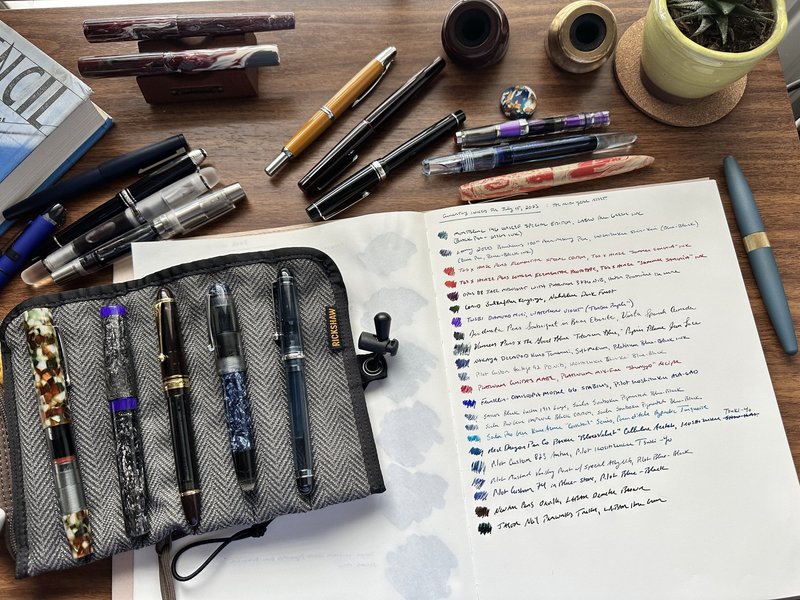
Journaling or dedicated practice notebooks can be spaces for experimentation and goal-setting.
Setting Specific Writing Goals
Instead of just "writing daily," set specific, achievable goals for each writing session or project. For example:
- "Today, I will focus on improving the dialogue in this chapter."
- "For this essay, I will concentrate on using more varied sentence structures."
- "My goal for this month is to write a short story that effectively uses foreshadowing."
Venturing into New Genres and Forms
Stepping outside your comfort zone can unlock new skills and perspectives. If you primarily write academic papers, try your hand at creative non-fiction or even poetry. If you're a novelist, experiment with short stories or scriptwriting. Each form has its own conventions and challenges, which can enrich your overall writing toolkit.
Continuous Learning and Reflective Practice
The best writers are lifelong learners. Actively seek out opportunities to expand your knowledge and critically assess your own progress.
Leveraging Advanced Workshops and Courses
Consider enrolling in advanced writing workshops or courses that focus on specific areas you wish to improve, such as advanced storytelling techniques, specialized non-fiction writing, or mastering a particular style. These can provide structured learning and expert guidance.
The Importance of Self-Critique
Develop the habit of reflecting on your writing. Keep a journal where you analyze what worked well in a piece, what challenges you faced, and what you learned from the process. This self-awareness is crucial for identifying patterns in your strengths and weaknesses and for making conscious improvements over time.
Visualizing Your Growth Path in Writing
To further refine your skills after four years, it's helpful to identify specific facets of writing that offer the most potential for growth. The following chart visualizes several key areas an experienced writer might focus on, with hypothetical self-assessed current strengths and targeted improvement goals. This is not based on universal data but serves as a conceptual tool to inspire focused self-evaluation and goal setting. Consider where you stand in these or similar dimensions and where you'd like to direct your efforts.
Use this type of self-assessment to guide your learning. For example, if 'Audience Resonance' is an area you wish to develop, you might focus on studying audience analysis techniques or seeking feedback specifically on how well your writing connects with its intended readers.
Interconnected Pathways to Writing Excellence
Improving your writing after gaining substantial experience involves a multifaceted approach. The various strategies discussed are not isolated; they often overlap and reinforce one another. This mindmap illustrates how different areas of focus connect to form a holistic path towards greater writing proficiency. Exploring these connections can help you build a comprehensive improvement plan.
Understanding these interconnections allows you to see, for example, how seeking targeted feedback (id1c) can directly inform your efforts in mastering advanced techniques (id2) or how strategic reading (id3) can provide models for experimental practice (id5b).
Insights from an Expert: Refining Your Craft
To supplement these strategies, hearing directly from experienced writers and editors can provide additional motivation and practical tips. The following video offers insights on taking your writing to the next level, particularly focusing on book writing, but many principles apply broadly to refining any form of advanced writing. It touches upon elements that can help polish your work and develop a more professional approach after you've already established a foundation.
The video emphasizes critical self-editing and understanding reader expectations—themes that resonate strongly with the journey of an experienced writer looking to improve. Concepts like "showing vs. telling," pacing, and viewpoint consistency are often areas where even seasoned writers can find room for refinement. Applying such advice with your four years of experience as a backdrop can accelerate your growth significantly.
Frequently Asked Questions (FAQ)
How often should I seek feedback at this advanced stage?
At an advanced stage, the frequency of seeking feedback might be less about quantity and more about quality and timing. Instead of seeking feedback on every short piece, focus on getting in-depth critiques for significant revisions of larger projects or when you're experimenting with new styles or techniques. Aim for feedback at critical junctures: after a complete first draft, after a major revision, or when you feel you've taken a piece as far as you can on your own. For smaller, regular practice pieces, self-critique and applying lessons from previous feedback might be more efficient.
What's the best way to find a good critique partner or mentor?
Finding the right critique partner or mentor involves looking for individuals whose writing style or expertise you respect and who can offer constructive, honest feedback. Consider:
- Writing Communities: Join local or online writing groups. Participate actively and observe who provides thoughtful critiques.
- Conferences and Workshops: These are excellent networking opportunities.
- Alumni Networks: If you've taken writing courses, connect with fellow students or instructors.
- Professional Organizations: Many genres have organizations that may offer mentorship programs.
When approaching potential critique partners, offer to exchange critiques. For mentors, be clear about what you're seeking and respect their time. It's about finding a good fit in terms of experience, genre, and feedback style.
How do I balance stylistic experimentation with clarity?
Balancing stylistic experimentation with clarity is crucial. The goal of advanced techniques is to enhance your message, not obscure it. Keep your audience and purpose in mind. After experimenting with a new style or complex structure, step back and read the piece from the perspective of your intended reader. Ask yourself: "Is this clear? Does the style support the content, or does it distract?" Getting feedback from trusted readers is especially important here. If your stylistic choices confuse readers or detract from your main points, you may need to simplify or refine your approach. Often, the most effective advanced writing seamlessly integrates sophisticated techniques without drawing undue attention to them.
Are there specific tools particularly helpful for advanced writers?
While foundational tools like grammar checkers (e.g., Grammarly, ProWritingAid) remain useful for catching errors, advanced writers might benefit more from tools that aid in structure, analysis, and deeper editing. Examples include:
- Scrivener or Ulysses: For managing complex projects, outlining, and organizing research.
- Hemingway Editor: Helps identify overly complex sentences, passive voice, and excessive adverbs, encouraging conciseness.
- Thesauruses and Dictionaries (Advanced): Beyond basic definitions, explore resources like the Oxford English Dictionary (OED) for etymology and nuanced usage.
- Reference Management Software (e.g., Zotero, Mendeley): Essential for academic or research-heavy writing.
- Write & Improve (Cambridge English): Useful for targeted feedback on specific writing tasks and identifying areas for improvement in vocabulary and grammar in an EFL/ESL context or for general polishing.
However, tools are aids, not substitutes for critical thinking and careful revision. The most important "tool" remains your own analytical mind and commitment to craft.
Recommended Further Exploration
- What are advanced rhetorical devices and how can they be effectively incorporated into persuasive writing?
- How can I develop a unique authorial voice that resonates with readers in contemporary fiction?
- What are the best strategies for deep structural editing of a novel-length manuscript?
- How can analyzing prize-winning essays or literary works improve my own non-fiction writing skills?
References

Last updated May 6, 2025