
Digital Echoes: Can AI Truly Recreate Conversations with Loved Ones?
Exploring the fascinating and complex world of AI voice and personality cloning for simulating interactions with those we miss or who are far away.
Highlights: The Core of AI Conversational Clones
- Advanced AI Synthesis: Technology can now create highly realistic voice replicas and model personality traits from digital footprints and audio recordings, enabling simulated conversations.
- Bridging Emotional Gaps: Primary applications focus on "grief tech" for interacting with digital versions of deceased loved ones and maintaining connections with individuals who are extremely busy.
- Navigating an Ethical Frontier: The development and use of these AI clones raise significant ethical questions regarding consent, emotional impact, data privacy, and the potential for misuse.
The ability to simulate conversations with individuals, whether they are no longer with us or are simply too busy for frequent interaction, has transitioned from the realm of science fiction to an emerging technological reality. AI voice and personality cloning technologies are at the forefront of this evolution, offering methods to create digital representations that can speak and respond in ways reminiscent of a specific person. This exploration delves into how these technologies function, their applications, the processes involved, and the critical ethical considerations that accompany their use.
How Does AI Voice and Personality Cloning Work?
Creating a convincing digital likeness involves two primary components: replicating a person's unique voice and mimicking their personality and conversational style. These are then often integrated into an interactive avatar or chatbot.
The Mechanics of Voice Cloning
AI voice cloning aims to capture and reproduce the distinct auditory characteristics of an individual's speech.
Data Acquisition and Preprocessing
The process begins with collecting audio recordings of the target individual. The quality and quantity of this data are crucial. While some advanced systems can work with as little as a few seconds or minutes of clear audio, more extensive datasets generally yield more accurate results. This audio is then preprocessed to remove noise, segment speech, and prepare it for analysis.
Feature Extraction and Modeling
Sophisticated algorithms, often involving deep learning models like Convolutional Neural Networks (CNNs), Recurrent Neural Networks (RNNs), and Long Short-Term Memory (LSTM) networks, analyze the audio. They extract key vocal features such as pitch, tone, cadence, accent, and Mel-frequency cepstral coefficients (MFCCs). These features create a unique vocal signature of the speaker.
Voice Synthesis and Refinement
Once the model is trained on these features, it can synthesize new speech from text input. This involves converting text to phonemes, predicting audio features based on the learned patterns, and then generating a waveform audio using a vocoder. The synthetic voice aims to be indistinguishable from the original speaker. Fine-tuning with smaller, specific datasets can further enhance the likeness. The quality is often evaluated using metrics like the Mean Opinion Score (MOS).
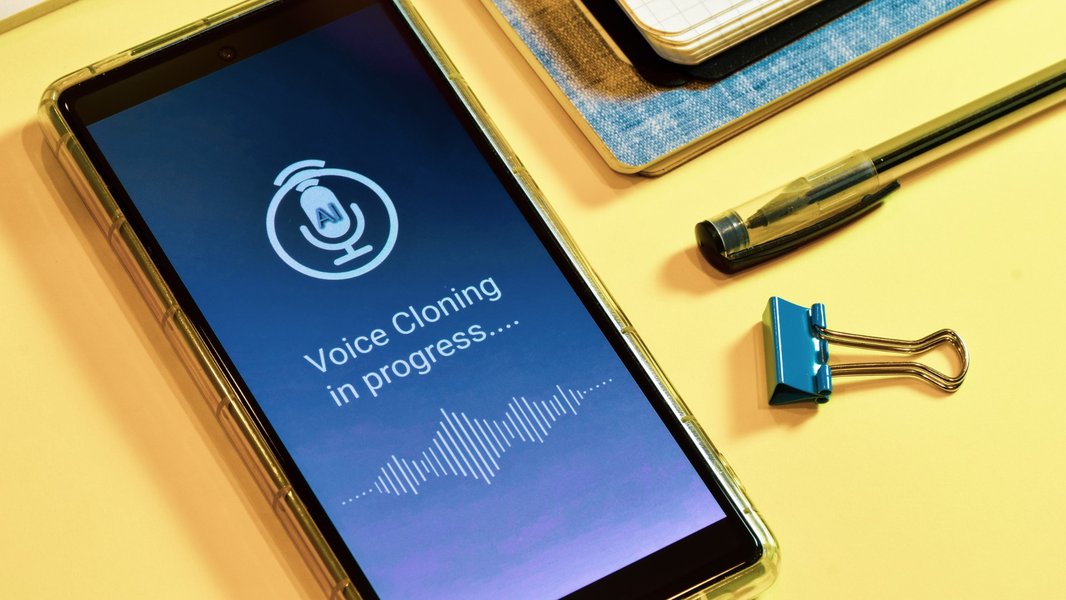
Conceptual illustration of AI voice synthesis and analysis.
Unpacking Personality Cloning
Personality cloning goes beyond voice, seeking to replicate an individual's communication style, knowledge, preferences, and behavioral patterns.
Gathering Digital Footprints
To model personality, AI systems are fed vast amounts of data generated by the individual. This can include text messages, emails, social media posts, blog entries, public statements, and even transcripts of audio or video recordings. The more comprehensive and diverse the data, the better the AI can learn to emulate the person's characteristic responses and expressions.
AI Training for Behavioral Mimicry
Large Language Models (LLMs) are often fine-tuned on this personalized dataset. The AI learns patterns in language use, common phrases, emotional tone, typical topics of conversation, and even humor. The goal is for the AI to generate responses that sound like something the specific individual would have said in a given context.
The Integrated System: Creating a Digital Persona
When voice and personality cloning are combined, the result is a "digital persona" or an AI avatar. This system can interact with users, speaking in the cloned voice and responding in a manner consistent with the cloned personality. This integration allows for more immersive and seemingly authentic simulated conversations.
Applications: Bridging Gaps with Digital Likenesses
The applications of AI voice and personality cloning are varied, but two prominent areas emerge in the context of family and friends: interacting with simulations of deceased loved ones and connecting with those who are extremely busy.
Simulating Conversations with Deceased Loved Ones
This application area, often termed "grief tech" or "digital immortality," aims to provide comfort, preserve memories, or offer a sense of continued connection.
"Grief Tech": A New Frontier in Coping
Several platforms and services are emerging that allow individuals to interact with AI simulations of deceased relatives. These tools can help some people process grief by providing a way to "speak" to their loved ones, hear their voice, and receive responses that feel familiar. The aim is often to create a comforting, personalized interaction.
Preserving Legacies and Memories
AI clones can serve as interactive archives of a person's memories, stories, and personality. Families can use these to maintain a connection across generations, allowing younger members to "meet" relatives who passed before their time. This is also being explored for preserving the legacies of notable figures.
The Quest for Closure
For some, interacting with a digital likeness of a deceased loved one might offer a form of closure, especially if there were unresolved issues or unsaid words. The simulated conversation can provide an outlet for these emotions, though the psychological effects are still being studied.
Connecting with Busy Family and Friends
While less developed than grief tech, the concept of using AI clones to simulate the presence of living but unavailable individuals is also being explored.
Maintaining Presence and Communication
For individuals who are frequently unavailable due to demanding schedules, an AI clone could potentially handle certain types of communication, send messages in their voice, or provide updates, thereby maintaining a sense of connection with family and friends.
Digital Stand-ins: Possibilities and Practicalities
The idea of a digital replica "standing in" for someone in virtual meetings or family chats is technically feasible. The AI would draw upon the person's known communication style and knowledge to interact. However, the ethical and practical implications of such uses are significant and require careful consideration.
Key Technologies and Platforms in 2025
A growing number of companies offer services in voice cloning, personality simulation, and avatar creation. The market is dynamic, with tools becoming increasingly sophisticated and accessible.
Leading Voice Cloning Services
Platforms like ElevenLabs, Respeecher, Descript, WellSaid Labs, Podcastle, Fliki, and HeyGen are prominent in the voice cloning space. They utilize machine learning to analyze and replicate unique vocal characteristics, including tone, pitch, and emotional inflections. Many can generate high-fidelity voice clones from relatively small audio samples and some support multi-language cloning.
Platforms for Personality and Avatar Creation
For more comprehensive digital personas, services combine voice cloning with personality modeling:
- HereAfter AI: Records interviews with individuals before they pass away, allowing family members to ask questions and receive responses in the deceased’s voice.
- StoryFile: Creates interactive digital memories by recording extensive question-and-answer sessions, enabling users to "converse" with a video and audio representation of the person.
- DeepBrain AI (Re;memory 2): Generates realistic AI avatars of deceased loved ones using a photo and a short audio clip, creating interactive memorial experiences.
- Delphi AI: Offers digital cloning to create chatbots modeled after an individual's online communications, mimicking their personality.
- Augmented Eternity: A concept platform that aims to create a digital persona from a deceased person’s data for interaction with relatives.
The following table provides a comparative overview of some approaches in this field:
| Platform/Approach | Primary Focus | Typical Data Required | Key Feature |
|---|---|---|---|
| ElevenLabs | High-fidelity Voice Cloning | Short audio samples (seconds to minutes) | Realistic voice replication with emotional nuance |
| HereAfter AI | Posthumous Conversational AI | Pre-recorded interviews (audio) | Interactive Q&A with deceased's voice and stories |
| StoryFile | Interactive Video/Audio Memories | Hours-long Q&A video sessions | Conversational video responses based on pre-recordings |
| DeepBrain AI (Re;memory 2) | AI Memorial Avatars | Photo and short audio clip | Realistic visual and vocal avatar creation for memorials |
| Personality Cloning (General) | Behavioral and Stylistic Mimicry | Texts, emails, social media, writings | Chatbots that emulate communication style and knowledge |
The capabilities of these AI cloning technologies can be assessed across various dimensions. The radar chart below offers a conceptual comparison of factors like voice realism, personality authenticity, data dependency, ethical risk level, and potential for emotional support.
This chart illustrates that while voice realism might be high with certain specialized tools, achieving authentic personality replication is generally more complex and data-dependent. All applications carry notable ethical risks that require careful management, while their potential for emotional support and accessibility varies.
The Step-by-Step Process: From Data to Dialogue
Creating an AI clone capable of simulated conversation generally follows a structured workflow, regardless of the specific platform.
Data Collection: The Foundation
This is the initial and most critical phase. For voice cloning, high-quality audio samples are gathered. For personality cloning, a diverse range of digital outputs from the individual is collected (texts, emails, social media activity, interview transcripts, etc.). The more comprehensive and representative the data, the more nuanced the resulting AI clone can be.
Model Training: Teaching the AI
The collected data is used to train machine learning models. Voice data trains speech synthesis models to capture vocal characteristics. Textual and behavioral data trains language models to learn communication style, knowledge, and personality traits. This phase can be computationally intensive and may require significant expertise.
Avatar/Chatbot Creation and Integration
The trained voice and personality models are then integrated into a user-facing application, which could be a chatbot interface, a 2D or 3D avatar, or even a system that generates pre-rendered video responses. This interface allows users to interact with the AI clone.
User Interaction: The Conversational Experience
Finally, users can engage with the AI clone by typing or speaking their questions or statements. The AI processes this input and generates a response using the cloned voice and personality, aiming to simulate a natural conversation.
The relationships between these components and their applications can be visualized as follows:
(CNNs, RNNs)"] V3["Output: Synthetic Voice"] P["Personality Cloning"] P1["Data: Digital Footprint
(Texts, Posts, Interviews)"] P2["Process: LLM Fine-Tuning"] P3["Output: Behavioral &
Conversational Style"] APP["Applications"] APP1["Deceased Individuals
('Grief Tech')"] APP1a["Memorialization"] APP1b["Simulated Dialogue"] APP1c["Preserving Legacy"] APP2["Busy/Unavailable Individuals"] APP2a["Maintaining Connection"] APP2b["Digital Stand-in (Potential)"] ETH["Ethical & Practical Concerns"] ETH1["Consent & Authorization"] ETH2["Emotional Impact (Grief, Dependency)"] ETH3["Misuse (Deepfakes, Scams)"] ETH4["Data Privacy & Security"] ETH5["Authenticity vs. Illusion"] ETH6["Commercialization of Grief"] TEC["Core Technologies"] TEC1["Natural Language Processing (NLP)"] TEC2["Speech Synthesis (TTS)"] TEC3["Machine Learning / Deep Learning"] TEC4["Large Language Models (LLMs)"]
This mindmap illustrates how voice and personality cloning, fueled by core AI technologies and various data sources, lead to applications primarily focused on simulating conversations with deceased or busy individuals, all while navigating a complex landscape of ethical and practical considerations.
Navigating the Ethical Maze and Practical Challenges
The power to recreate voices and personalities brings profound ethical questions and significant practical hurdles that must be addressed responsibly.
Ethical Quandaries
The creation and use of AI clones, especially of deceased individuals, venture into sensitive territory.
Impact on the Grieving Process
While some may find comfort, there's concern that interacting with an AI replica could hinder healthy grieving by creating an illusion that the loved one hasn't truly passed or by fostering an unhealthy dependency. The long-term psychological effects are not yet fully understood.
Consent, Authorization, and Posthumous Rights
A critical issue is consent. Should an individual's voice and personality be cloned without their explicit permission, especially after death? Many platforms require authorization from the person (if living) or their next of kin. The legal and ethical frameworks for posthumous digital rights are still evolving.
The Risk of Misuse and Impersonation
Voice cloning technology can be exploited for malicious purposes, such as creating deepfakes for scams, spreading misinformation, or impersonating individuals. Robust safeguards are needed to prevent unauthorized cloning and misuse, but current protections are inconsistent across platforms.
Data Privacy and Security
The extensive personal data required for cloning raises significant privacy and security concerns. This sensitive information needs to be protected from breaches and unauthorized access.
Blurring Reality: Psychological Implications
There's a risk that users might begin to confuse the AI simulation with the actual person or prefer interactions with the AI over real-world relationships. Maintaining a clear boundary between the simulation and reality is crucial.
The Commercialization of Remembrance
Some express discomfort with the idea of companies profiting from grief by offering services to "resurrect" deceased relatives in digital form. The commercial incentives must be balanced with ethical responsibilities.
Limitations and Hurdles
Beyond ethics, there are practical challenges to creating convincing and reliable AI clones.
Data Dependency and Quality
The effectiveness of cloning heavily depends on the amount and quality of available data. Insufficient or low-quality data can lead to inaccurate or unconvincing clones. For individuals with a small digital footprint, creating a rich personality clone is particularly challenging.
Technical Complexity and Accessibility
While some tools are becoming more user-friendly, developing high-fidelity clones still often requires technical expertise and significant computational resources. This can limit broader accessibility.
Authenticity vs. Artifice
No matter how advanced, an AI clone is still a simulation. It cannot truly replicate human consciousness, emotions, or growth. Users must understand that they are interacting with a sophisticated algorithm, not the actual person. The "uncanny valley" can also be an issue, where slight imperfections make the clone unsettling.
Visualizing Interaction: AI and Deceased Loved Ones
The development of platforms that allow individuals to interact with AI representations of deceased loved ones is a significant application of this technology. Companies like StoryFile have pioneered approaches where individuals record answers to a multitude of questions while they are alive. After their passing, AI uses these recordings to enable interactive conversations, where family members can ask questions and receive video responses in the person's own voice and likeness. This approach attempts to create a more dynamic and personal way of preserving memories compared to static photos or videos.
The video below showcases an example of such a platform, illustrating how these interactions are facilitated and the kind of experience they aim to provide. It highlights the technological underpinnings and the emotional responses such interactions can evoke.
Video discussing platforms like StoryFile, which use AI to enable conversations with digital likenesses of deceased individuals.
These systems typically rely on a vast database of pre-recorded answers. The AI's role is to intelligently select the most appropriate pre-recorded segment in response to a user's query. While not generating novel content in the same way a fully generative AI might, the sophistication lies in the interaction design and the ability to create a semblance of a real conversation, drawing from the authentic words and expressions of the individual.
Frequently Asked Questions (FAQ)
How much audio is needed to clone a voice?
The amount of audio required can vary significantly depending on the sophistication of the AI voice cloning technology. Some advanced platforms claim to be able to create a recognizable voice clone from as little as a few seconds to a minute of clear speech. However, for higher fidelity and more natural-sounding results that capture nuances, more audio data (e.g., 10 minutes to an hour or more) is generally better. The quality of the recording (minimal background noise, clear pronunciation) is also very important.
Can AI truly replicate a person's personality?
AI can create a simulation of a person's personality by learning from their digital footprint (texts, emails, social media, writings, interview transcripts). It can mimic their communication style, vocabulary, common topics, and even humor to a certain extent. However, it's crucial to understand that this is a sophisticated imitation, not a true replication of human consciousness, emotions, self-awareness, or the ability to have novel thoughts and experiences. The AI generates responses based on patterns in the data it was trained on.
What are the main ethical concerns with AI cloning of deceased individuals?
Key ethical concerns include:
- Consent: Whether the deceased individual gave permission for their likeness to be used this way.
- Impact on Grief: Potential for prolonging grief or creating unhealthy dependencies.
- Authenticity and Misrepresentation: The AI may not accurately represent the person, or users may forget it's a simulation.
- Data Privacy: Secure handling of the personal data used to create the clone.
- Commercialization: Companies profiting from grief.
- Potential for Distress: Interactions could be upsetting if the simulation is inaccurate or behaves unexpectedly.
Are there AI clones for people who are just very busy?
Yes, the technology for creating AI clones can also be applied to living individuals who are extremely busy. The idea is that a digital replica could handle certain communications or maintain a "presence" on their behalf. This could involve an AI responding to messages in their style and voice. While technically feasible and explored by some platforms, this application is less common than "grief tech" and raises its own set of ethical questions about authenticity in relationships and the potential for misrepresentation if not managed transparently.
Recommended Further Exploration
- What are the psychological impacts of using AI to communicate with simulations of deceased loved ones?
- How do current laws address consent and data privacy in AI personality cloning?
- Compare the accuracy of different AI voice cloning technologies available in 2025.
- What safeguards are being developed to prevent the misuse of AI voice and avatar cloning for deepfakes and scams?
References
Last updated May 18, 2025