
Can Artificial Intelligence Outsmart the Roulette Wheel?
Exploring the intersection of AI, probability, and the quest to conquer chance.
The allure of beating roulette, a game synonymous with chance and casino glamour, has captivated players for centuries. With the rise of powerful Artificial Intelligence (AI), the question inevitably arises: can sophisticated algorithms finally crack the code and consistently win at the roulette table? While AI offers unprecedented analytical power, the nature of roulette itself presents formidable challenges.
Highlights: AI vs. Roulette Reality
- AI Excels at Analysis, Not Magic: AI, particularly machine learning, can analyze vast datasets of past spins to detect anomalies or optimize betting patterns, but it cannot alter the fundamental probabilities of a fair game.
- The House Always Has an Edge: Roulette is mathematically designed with a house advantage (typically 2.7% in European and 5.26% in American roulette). No betting strategy, AI-driven or otherwise, can eliminate this inherent edge in the long run on a fair wheel.
- Niche Opportunities Exist, But Are Limited: While AI *might* identify biases in specific physical wheels or flaws in poorly designed Random Number Generators (RNGs), these scenarios are rare, difficult to exploit consistently, and often countered by casinos.
How AI Approaches the Roulette Challenge
AI brings powerful tools to the table, primarily focusing on data analysis and strategy optimization. Developers and researchers have explored various techniques to gain an edge, though success remains elusive in standard casino environments.
Analyzing Patterns and Historical Data
AI algorithms, including machine learning models like neural networks and random forests, are adept at processing large volumes of historical spin data. The goal is to uncover non-random patterns, biases, or trends that might deviate from pure statistical probability.
Specific Applications:
- Bias Detection (Physical Wheels): In theory, if a physical roulette wheel develops imperfections (e.g., uneven frets, slight tilt), certain numbers or sections might appear more frequently than statistics would suggest. AI could potentially identify these subtle biases by analyzing thousands of spins from *that specific wheel*.
- RNG Analysis (Online Roulette): Some AI systems attempt to find patterns or predictability in the Random Number Generators (RNGs) used by online casinos. However, reputable online casinos employ cryptographically secure, audited RNGs designed to be statistically indistinguishable from true randomness, making this approach highly unlikely to succeed.
- Trend Spotting: AI can identify streaks or the absence of certain numbers/sections over a period. While mathematically irrelevant in a random game (each spin is independent), some players use this information to guide betting choices.
Tools like RouletteGPT and RouletteAi are marketed as AI-powered predictors that leverage these analytical capabilities, often requiring users to input past results to generate suggestions. However, their effectiveness against fair, random games is debatable and not scientifically proven to overcome the house edge.
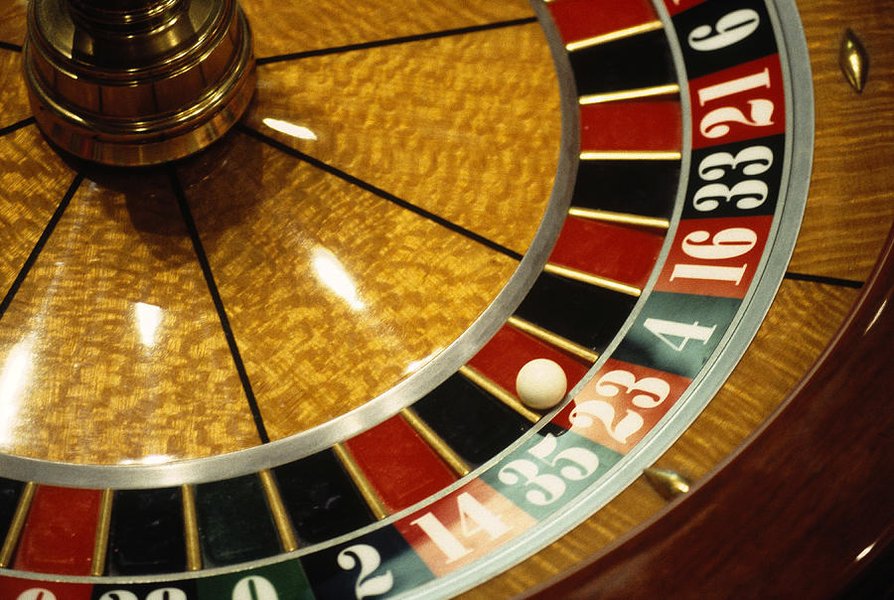
A close-up view highlights the numbered pockets on a roulette wheel, the arena where chance and probability play out.
Optimizing Betting Strategies
Beyond prediction, AI can be used to develop and test sophisticated betting strategies. Techniques like Reinforcement Learning (RL) can simulate millions of roulette spins to evaluate and refine betting systems based on predefined goals, such as maximizing payout potential or minimizing risk over time.
Strategy Refinement Examples:
- System Testing: AI can rapidly backtest traditional betting systems (Martingale, Fibonacci, etc.) or novel, complex strategies against simulated data to assess their performance under various conditions.
- Risk Management: Algorithms can suggest bet sizing and placement based on a player's risk tolerance and bankroll, aiming for more disciplined play.
- Adaptive Betting: Some experimental systems might adjust betting patterns based on recent outcomes or perceived trends, although, again, this doesn't change the underlying odds of the next independent spin.
While AI can find mathematically optimal ways to place bets according to a chosen strategy, it cannot alter the fundamental odds or guarantee profitability against the house edge inherent in the game's payout structure.
The Fundamental Obstacles: Why AI Can't Beat Fair Roulette
Despite AI's analytical prowess, the core characteristics of roulette create significant barriers to achieving consistent wins through prediction or strategy alone.
The Indomitable House Edge
Casinos make money from roulette not by cheating, but through mathematics. The payout for winning bets is slightly less than the true odds of hitting the number. For example, a single number bet pays 35-to-1, but there are 37 (or 38) numbers on the wheel. This discrepancy creates the house edge, a small percentage of every bet that, on average, goes to the casino over the long term. AI cannot negate this mathematical reality.
The Nature of Randomness
Modern roulette, whether physical or digital, is designed to be as random as possible.
Physical Wheels:
While minor imperfections *can* exist, casinos regularly maintain and test their equipment to ensure fairness. Predicting outcomes based on physics (like the chaos theory approach used by Doyne Farmer) requires precise measurements of ball and wheel speeds, often needing sophisticated equipment and specific conditions, making it impractical and often illegal in casinos.
Online Roulette (RNGs):
Reputable online casinos use Random Number Generators certified for fairness and unpredictability by independent auditors. These algorithms produce sequences of numbers that pass rigorous statistical tests for randomness, leaving no discernible patterns for AI to exploit.
In a truly random system, past outcomes have no influence on future results. Each spin is an independent event. Believing otherwise is known as the Gambler's Fallacy.
Casino Vigilance and Countermeasures
Casinos are highly motivated to prevent any form of advantage play that significantly impacts their bottom line.
Countermeasures Include:
- Monitoring betting patterns for suspicious activity.
- Using technology to detect prohibited devices (like computers or sensors for physics-based prediction).
- Regularly inspecting and rotating roulette wheels.
- Employing sophisticated and audited RNGs for online games.
- Banning players suspected of using prohibited systems or devices.
Any system, AI-based or otherwise, that demonstrably beat the house would quickly be identified and neutralized by casino operators.
Visualizing AI's Challenge in Roulette
This radar chart illustrates key factors influencing the potential effectiveness (or lack thereof) of AI in predicting or beating roulette. Higher values generally indicate a greater challenge or limitation for AI.
The chart visually reinforces that factors like randomness and the house edge pose significant, almost insurmountable challenges ('Challenge Level for AI' scores are high), while the potential for AI to successfully exploit the game under fair conditions is very low ('Potential for AI Exploitation' scores are low).
Mapping the AI-Roulette Landscape
This mindmap outlines the core concepts and relationships involved when considering AI's application to roulette.
(Wheel/RNG)"] id1c["House Edge
(Mathematical Advantage)"] id1c1["European (~2.7%)"] id1c2["American (~5.26%)"] id2["AI Applications"] id2a["Data Analysis"] id2a1["Historical Spin Data"] id2a2["Pattern Recognition (ML/NN)"] id2b["Strategy Optimization"] id2b1["Betting Systems (RL)"] id2b2["Risk Management"] id2c["AI Tools"] id2c1["RouletteGPT"] id2c2["RouletteAi"] id2c3["Prediction Apps"] id3["Potential Exploits (Limited)"] id3a["Physical Wheel Bias"] id3a1["Requires Specific Wheel Data"] id3a2["Often Impractical/Detected"] id3b["Flawed RNGs (Online)"] id3b1["Rare in Reputable Casinos"] id3b2["Requires Weak Algorithm"] id3c["Physics-Based Prediction"] id3c1["Chaos Theory (Doyne Farmer)"] id3c2["Requires Sensors/Timing"] id3c3["Not Pure AI Sequence Analysis"] id4["Key Limitations"] id4a["Inherent Randomness"] id4b["Unbeatable House Edge (Long-Term)"] id4c["Casino Countermeasures"] id4d["Data Requirements & Overfitting"] id4e["Gambler's Fallacy"] id5["Conclusion"] id5a["AI is an Analytical Aid, Not a Guarantee"] id5b["Cannot Consistently Beat Fair Roulette"] id5c["Focus on Responsible Gaming"]
The mindmap connects the central question to the game's nature, how AI attempts to tackle it, the very limited scenarios where an edge *might* be found, the significant limitations, and the overall conclusion.
AI Techniques vs. Roulette Reality: A Summary
The following table summarizes common AI approaches applied to roulette and their realistic effectiveness against fair, standard games:
| AI Technique / Application | Potential Use in Roulette | Realistic Effectiveness & Limitations |
|---|---|---|
| Machine Learning (e.g., Neural Networks, Random Forest) | Analyzing past spins for patterns or biases. Predicting likely outcomes based on historical data. | Ineffective against truly random RNGs or fair physical wheels. Cannot overcome the house edge. Prone to overfitting. Might detect significant bias on a *specific* physical wheel given vast data, but this is rare. |
| Reinforcement Learning (RL) | Optimizing betting strategies (e.g., bet placement, sizing) based on simulations and defined goals (e.g., maximizing wins, minimizing losses). | Can find optimal ways to apply a *given* strategy but cannot change the game's fundamental probabilities or house edge. Useful for disciplined play or testing systems, not for guaranteeing profit. |
| Data Analytics / Statistical Analysis | Identifying statistical anomalies, 'hot'/'cold' numbers (Gambler's Fallacy), tracking frequencies. | Provides insights into past events but has no predictive power for future independent spins in a random game. Cannot overcome the house edge. |
| Computer Vision (Combined with Physics) | Analyzing video feeds of physical wheels to measure ball/wheel speed for trajectory prediction (related to chaos theory methods). | Potentially effective under specific conditions (e.g., predictable wheel/ball dynamics) but requires specialized equipment, is often illegal/prohibited by casinos, and faces countermeasures. Not purely AI sequence analysis. |
| AI Prediction Tools (e.g., RouletteGPT, Apps) | Claim to predict next numbers based on user-inputted recent spins. | Highly questionable effectiveness against fair games. Likely rely on pattern analysis that doesn't hold up against true randomness. No verifiable proof of overcoming the house edge consistently. Should be viewed with extreme skepticism. |
A Historical Attempt: Physics, Computers, and Beating the Wheel
While modern AI focuses heavily on data patterns, some of the most famous attempts to "beat" roulette involved physics and early computing. The story of Doyne Farmer and his collaborators in the 1970s provides fascinating context. They didn't use AI as we know it today but built wearable computers to predict the ball's landing zone based on physical dynamics.
This video delves into the story of how physicists attempted to use computer science and the principles of chaos theory to gain an edge over the casino. While they reported some success under specific conditions, their methods relied on predicting physical motion rather than analyzing number sequences like many modern AI approaches. It highlights the ingenuity applied to the problem but also underscores the practical difficulties and the casinos' response to such threats.
Frequently Asked Questions (FAQ)
Can AI guarantee winnings in roulette?
No. In a fair game of roulette (physical or online with a secure RNG), AI cannot guarantee winnings. The inherent randomness of each spin and the mathematical house edge mean that the casino always has a statistical advantage over the long term. AI can analyze past data and optimize betting strategies, but it cannot eliminate chance or overcome the built-in odds favoring the house.
What about biased physical roulette wheels? Can AI exploit them?
Potentially, yes, but with significant caveats. If a physical wheel develops a consistent bias (due to wear, damage, or imperfect balancing), AI analyzing a massive dataset of spins *from that specific wheel* might detect it. However, casinos actively work to prevent and correct biases through maintenance and wheel rotation. Furthermore, gathering enough data from a single wheel without detection is extremely difficult, and casinos monitor for betting patterns indicative of bias exploitation.
Are AI roulette prediction apps and software reliable?
Generally, no. Apps and software claiming to predict roulette numbers using AI should be treated with extreme skepticism. They often rely on analyzing short sequences of recent numbers, which has no statistical bearing on the next outcome in a random game (Gambler's Fallacy). Reputable casinos use certified RNGs or maintain fair wheels, making predictable patterns virtually non-existent. These tools cannot overcome the house edge and offer no scientifically proven advantage.
Is using AI to play roulette legal or allowed by casinos?
Using external devices or software (including AI-powered tools) to gain an advantage is generally prohibited by casino terms and conditions, both online and in physical establishments. Methods like physics-based prediction using sensors or computers are considered cheating. While using AI purely for analysis or basic strategy reminders might be a gray area, any system designed to systematically beat the game would likely lead to bans or other penalties if detected.
Recommended Reading
Explore related topics to deepen your understanding:
- How do online casino Random Number Generators work?
- What is the house edge in roulette and how does it affect winnings?
- Can chaos theory be used to predict roulette outcomes?
- Examples of successful advantage play in casino history
References
Last updated May 4, 2025