
The Intelligence Race: Is AI Destined to Outsmart Humanity?
Exploring the rapid ascent of artificial intelligence and whether it will ultimately surpass human cognitive abilities.
The question of whether artificial intelligence (AI) will eventually surpass human capabilities isn't just science fiction anymore; it's a central topic of debate among technologists, ethicists, and futurists. As AI systems demonstrate increasingly sophisticated abilities, understanding the trajectory of this technology is crucial. Will machines one day think, reason, and create better than us? Let's delve into the current state, future projections, and complexities surrounding AI's potential to exceed human intelligence.
Highlights: The Race Towards Superintelligence
- Current AI excels in specific tasks: Today's AI, known as Narrow AI, already outperforms humans in many specialized areas like complex calculations, data analysis, and strategic games, but lacks general cognitive flexibility.
- Artificial General Intelligence (AGI) is the next frontier: The goal is AGI – AI with human-like understanding and learning across diverse domains. Achieving AGI remains a significant, uncertain challenge.
- Timelines are debated, but predictions are accelerating: While some experts forecast AGI decades away, prominent figures predict AI could surpass humans in many tasks within the next 2-5 years (by 2027-2030), though these timelines are speculative.
- Collaboration over competition: Many foresee a future where AI augments human abilities, handling complex data and automation, while humans focus on creativity, empathy, and strategic oversight.
The Current Landscape: AI's Specialized Prowess
Modern AI has achieved remarkable success, but primarily in narrowly defined areas. This is often referred to as Artificial Narrow Intelligence (ANI). These systems are designed and trained for specific functions, and within those boundaries, they often operate at superhuman levels.
Examples of Current AI Superiority:
- Complex Games: AI systems have decisively beaten world champions in games requiring deep strategic thinking, such as Chess (Deep Blue) and Go (AlphaGo).
- Data Analysis & Pattern Recognition: AI can sift through massive datasets to identify patterns, anomalies, and insights far faster and sometimes more accurately than human analysts. This is applied in fields from finance to scientific research.
- Image and Speech Recognition: AI powers technologies like facial recognition, medical image analysis, and voice assistants, often matching or exceeding human accuracy in specific recognition tasks.
- Automation: From optimizing logistics and manufacturing processes to assisting in robotic surgery and powering autonomous vehicle systems (though still with limitations), AI drives efficiency and precision.
- Language Processing: Large Language Models (LLMs) like those powering advanced chatbots can generate human-like text, translate languages, write code, and even pass complex professional exams. Some sources note AI outperforming PhD-level experts in certain academic evaluations.
However, this prowess is specialized. An AI that masters Go cannot suddenly understand nuanced human emotions or adapt its knowledge to solve a completely unrelated real-world problem without specific retraining.

AI excels at processing vast amounts of data and recognizing complex patterns.
The Quest for Artificial General Intelligence (AGI)
The true threshold for AI "surpassing" humans is often considered the achievement of Artificial General Intelligence (AGI). Unlike narrow AI, AGI refers to a theoretical form of AI possessing cognitive abilities comparable to, or exceeding, those of humans across a wide spectrum of tasks.
Defining the Levels of AI
- Artificial Narrow Intelligence (ANI): Specializes in one or a few specific tasks (this is where current AI largely resides).
- Artificial General Intelligence (AGI): Possesses human-level cognitive abilities – learning, reasoning, problem-solving, and adapting across diverse domains.
- Artificial Superintelligence (ASI): Intellect significantly surpasses the brightest human minds across virtually all fields, including scientific creativity, general wisdom, and social skills. This often ties into the concept of the "technological singularity."
AGI would be capable of understanding context, learning dynamically, exhibiting common sense, and potentially even possessing consciousness or self-awareness – attributes currently unique to humans. Achieving AGI is considered a monumental leap requiring fundamental breakthroughs beyond current AI paradigms.
Mapping AI's Potential Evolution
This mindmap illustrates the progression from today's specialized AI towards the more theoretical concepts of general and superintelligence, highlighting the key distinctions and related concepts.
Expert Predictions: When Might AI Reach Human-Level?
Predicting the arrival of AGI, let alone ASI, is fraught with uncertainty. Expert opinions vary widely, ranging from cautious optimism to near-term projections.
Accelerating Timelines?
Recent years have seen some high-profile figures suggest that AI surpassing human capabilities in many areas might be closer than previously thought:
- Elon Musk: Has repeatedly warned about AI risks and predicted that AI could become "vastly smarter than humans" potentially as early as 2025 or within the next five years from his statements.
- Dario Amodei (CEO, Anthropic): Suggested that AI might surpass human capabilities in "almost everything" within the next two to three years (around 2027), potentially handling most economically valuable tasks better than humans shortly thereafter.
- Ray Kurzweil (Futurist): Famously predicted that AI will achieve human-level intelligence by 2029 and potentially surpass the combined intelligence of all humans later.
- OpenAI Researchers: Have indicated goals for AI to potentially surpass human coding skills around 2025, reflecting rapid advancements in specific high-value domains.
These near-term predictions often stem from observing the exponential progress in AI model capabilities, particularly Large Language Models (LLMs).
A Spectrum of Views
However, many other experts remain more cautious. Some argue that current AI approaches, while powerful, might hit fundamental limitations before reaching true general intelligence. They point to the vast differences between AI processing and genuine human understanding, creativity, and consciousness. Surveys of AI researchers often show a wider range of timelines, with median estimates for AGI sometimes placed decades into the future (e.g., a 50% chance within 45 years, according to some older surveys, though recent progress might shift these views).
Summary of Notable Predictions
The following table summarizes some prominent predictions regarding AI surpassing human capabilities. It's crucial to remember these are estimates and subject to significant uncertainty.
| Expert / Organization | Prediction Focus | Estimated Timeline | Notes |
|---|---|---|---|
| Elon Musk | AI becoming "vastly smarter" than humans | ~2025 / Next 5 years (from recent statements) | Often emphasizes rapid progress and potential risks. |
| Dario Amodei (Anthropic CEO) | AI surpassing humans in "almost everything" / most tasks | ~2027 | Based on observed exponential growth in model capabilities. |
| Ray Kurzweil | AI reaching human-level intelligence (IQ) | ~2029 | Long-standing prediction based on exponential trends (Law of Accelerating Returns). |
| OpenAI | AI surpassing human coding skills | ~2025 | Reflects rapid progress in specialized areas like code generation. |
| General AI Researcher Surveys (Various) | Human-Level Machine Intelligence (HLMI/AGI) | Highly varied; median estimates often decades out (e.g., 50% chance by ~2060s in older surveys, potentially sooner now) | Reflects broader expert community uncertainty and diverse views. |
The Factors Shaping AI's Trajectory
Whether and when AI surpasses human intelligence depends on navigating a complex interplay of technological advancements, inherent limitations, and crucial ethical choices.
Technological Accelerators
- Computing Power: Continued growth in processing power (Moore's Law, though slowing) and potential paradigm shifts like quantum computing could drastically accelerate AI training and capabilities. Quantum computing, in particular, might solve complex optimization problems currently intractable for classical computers, boosting certain AI approaches.
- Algorithmic Breakthroughs: New AI architectures, learning techniques (like self-supervised learning), and more efficient models are constantly being developed.
- Data Availability: The digitization of society provides vast datasets for training AI, although accessing high-quality, unbiased data is becoming a challenge.
Bottlenecks and Hurdles
- Data Limitations: Training cutting-edge models requires enormous amounts of data, raising concerns about data scarcity (especially high-quality text and specialized data), privacy, and intellectual property rights.
- Energy Consumption: Training large AI models is incredibly energy-intensive, posing significant environmental and cost challenges.
- Lack of True Understanding: Current AI excels at pattern matching but arguably lacks deep contextual understanding, common sense reasoning, genuine creativity, and emotional intelligence – key aspects of human cognition.
- Scalability and Efficiency: While powerful, AI systems often require massive computational resources compared to the biological efficiency of the human brain.
Ethical and Societal Considerations
- Job Displacement: Automation driven by increasingly capable AI could disrupt labor markets, requiring societal adaptation and reskilling efforts.
- Bias and Fairness: AI systems trained on biased data can perpetuate and even amplify societal inequalities. Ensuring fairness and mitigating bias is critical.
- Misinformation and Malicious Use: Generative AI can create convincing deepfakes and spread misinformation at scale. AI could also be used for cyberattacks or autonomous weapons systems, posing significant security risks.
- Control and Alignment: As AI becomes more powerful, ensuring its goals remain aligned with human values (the "alignment problem") becomes paramount, especially concerning potential superintelligence.
- Human-Centered Development: Experts like Fei-Fei Li emphasize the need to develop AI responsibly, focusing on augmenting human capabilities and addressing societal challenges rather than solely pursuing superhuman performance.
Comparing AI Strengths: A Visual Analysis
While a direct comparison is complex, we can visualize the relative strengths of current advanced AI versus average human capabilities across different domains. This radar chart offers a conceptual illustration based on current understanding – AI dominates in computational tasks, while humans excel in areas requiring nuanced understanding and adaptability.
This chart highlights AI's current dominance in speed, data handling, and logical pattern finding, while humans retain an edge in creativity, social intelligence, common sense, adaptability to truly novel contexts, and ethical decision-making.
Beyond Superiority: The Future of Human-AI Collaboration
Rather than a simple scenario of AI surpassing and replacing humans, many experts envision a future defined by synergy and augmentation. In this view, AI acts as a powerful tool that enhances human capabilities, taking over repetitive, data-intensive, or computationally demanding tasks, thereby freeing humans to focus on higher-level functions.
The Augmentation Model:
- Enhanced Productivity: AI can automate routine tasks, analyze complex data, and provide insights, allowing humans to make better, faster decisions in fields like medicine, finance, research, and engineering.
- Creative Partnership: AI tools can assist in creative processes, generating ideas, drafting content, or creating visuals, while humans provide the guiding vision, refinement, and emotional depth.
- Focus on Human Strengths: By offloading cognitive labor to AI, humans can concentrate on areas where they naturally excel: critical thinking, complex problem-solving in novel contexts, emotional intelligence, interpersonal communication, ethical judgment, and strategic leadership.
- New Roles and Skills: While some jobs may be automated, new roles will emerge focused on designing, managing, and collaborating with AI systems, requiring skills in data science, AI ethics, and human-AI interaction.
This "humans with AI" paradigm emphasizes developing AI systems that are aligned with human values and serve as collaborators rather than mere replacements. It requires a focus on human-centered design and ongoing societal adaptation to harness AI's benefits responsibly.
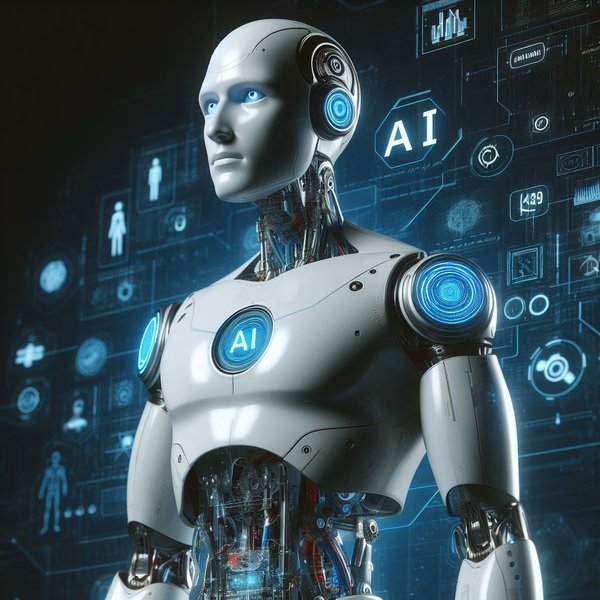
The future may involve deep integration and collaboration between humans and intelligent machines.
Futurist Perspectives: AI Surpassing Human Intelligence
Some prominent futurists and technologists offer compelling, albeit sometimes controversial, predictions about the timeline and implications of AI exceeding human intelligence. One notable voice is Ray Kurzweil, known for his predictions on technological singularity.
The following video features Ray Kurzweil discussing his prediction that AI will surpass the intelligence of all humans combined by 2029. While specific timelines are debated, such forecasts highlight the potential scale and speed of AI advancements envisioned by some leading thinkers in the field. Understanding these perspectives is crucial for grasping the full spectrum of possibilities and preparing for potential futures.
Ray Kurzweil discusses his prediction for AI surpassing human intelligence by 2029.
The Technological Singularity: A Distant Possibility?
The concept of the "technological singularity" often arises in discussions about AI surpassing humans. It refers to a hypothetical future point where technological growth, particularly in AI, becomes uncontrollable and irreversible, resulting in unforeseeable changes to human civilization. This is often linked to the emergence of ASI capable of recursive self-improvement – designing ever-smarter versions of itself at an accelerating rate.
While a staple of science fiction and futurist thought, the singularity remains highly speculative. Critics argue that achieving such rapid, unbounded intelligence growth faces immense practical and theoretical hurdles. Max More, for example, suggests that superfast AI alone might not guarantee a societal discontinuity without integration and collaboration. There's no consensus on if or when a singularity might occur, but the possibility underscores the profound long-term implications of developing superintelligent AI and the critical importance of safety and alignment research.
Frequently Asked Questions (FAQ)
What is the difference between Narrow AI, AGI, and ASI?
Narrow AI (ANI): AI specialized for specific tasks (e.g., playing chess, facial recognition, language translation). This is the type of AI widely used today.
Artificial General Intelligence (AGI): AI with human-level cognitive abilities – capable of understanding, learning, and applying intelligence across a wide range of tasks, similar to a human.
Artificial Superintelligence (ASI): AI that significantly surpasses human intelligence and cognitive ability across virtually all domains. This is a theoretical future stage.
Is AI already smarter than humans?
In specific, narrow tasks, yes. AI can outperform humans in areas like complex calculations, processing vast amounts of data, or playing strategic games like Go. However, AI currently lacks the broad, flexible intelligence, common sense, creativity, and emotional understanding that characterize human intelligence. So, while superior in certain domains, AI is not yet "smarter" than humans in a general sense.
Will AI take away all human jobs?
It's unlikely AI will eliminate *all* human jobs. Historically, technology has automated tasks, leading to shifts in the labor market rather than mass unemployment. AI is expected to automate many routine and data-intensive tasks, potentially displacing some jobs. However, it's also expected to create new jobs related to developing, managing, and working alongside AI. The future likely involves significant job transformation and a greater emphasis on skills AI cannot easily replicate, such as creativity, critical thinking, emotional intelligence, and complex interpersonal interaction. Augmentation (AI assisting humans) is seen as a more probable outcome than complete replacement across the board.
What are the biggest risks associated with advanced AI?
Several significant risks are associated with increasingly capable AI:
- Bias and Discrimination: AI systems can learn and amplify biases present in their training data, leading to unfair or discriminatory outcomes.
- Misinformation and Manipulation: Generative AI can create highly realistic fake content (deepfakes) used to spread disinformation or manipulate public opinion.
- Security Threats: AI could be used to enhance cyberattacks, create autonomous weapons, or cause unintended harm through complex system interactions.
- Job Displacement: Rapid automation could cause significant economic disruption if societies don't adapt.
- Loss of Control (Alignment Problem): As AI approaches superintelligence, ensuring its goals remain aligned with human values becomes a critical and potentially existential challenge.
- Privacy Concerns: AI systems often require vast amounts of data, raising concerns about surveillance and data misuse.
Addressing these risks requires careful research, ethical guidelines, robust governance, and international cooperation.
Recommended Reading
- What is Artificial General Intelligence (AGI) and how close are we?
- How is AI currently augmenting human capabilities in different industries?
- What are the main ethical challenges in developing advanced AI?
- Explore the concept of the technological singularity and its implications.
References
Last updated May 5, 2025