
Kitab al-Jabr wa al-Muqabala Explained
A comprehensive exploration of the treatise's significance and meaning
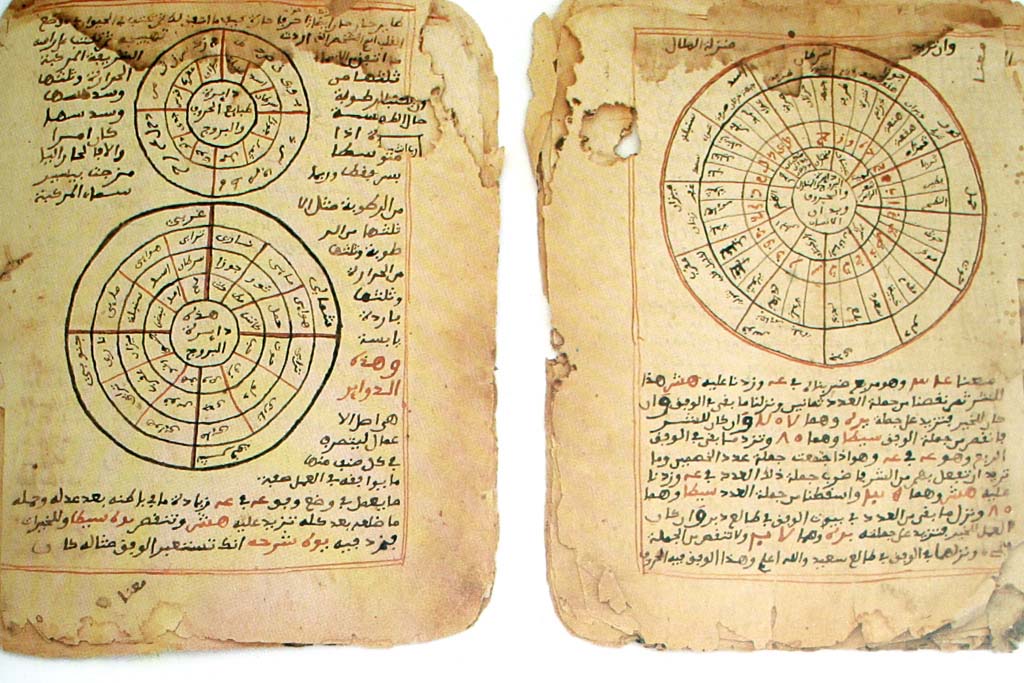
Highlights
- The treatise introduced systematic methods for solving linear and quadratic equations.
- It established algebra as a distinct discipline through processes of restoration and balancing.
- The work laid the foundation for mathematical innovations that influenced both Islamic and European scholarship.
Introduction
"Kitab al-Jabr wa al-Muqabala" is a seminal work composed by the renowned mathematician Muhammad ibn Musa al-Khwarizmi around the year 820 CE. The title of this treatise, which translates to "The Compendious Book on Calculation by Completion and Balancing," encapsulates the dual methodology that underpins the work. In this text, al-Khwarizmi lays out a series of procedures that not only solve linear and quadratic equations but also delineate the foundational techniques of algebra. The treatise is celebrated for formalizing algebra as a separate branch of mathematics and providing systematic approaches for equation resolution.
Historical Context and Significance
Historical Background
The emergence of "Kitab al-Jabr wa al-Muqabala" is interwoven with the rich tapestry of the Islamic Golden Age. During this period, advancements in science, mathematics, and philosophy flourished, bridging earlier Greco-Roman wisdom and the innovations of the far East. The treatise by al-Khwarizmi was written in Baghdad—a hub of cultural, scientific, and scholarly exchange—where scholars, translators, and intellectuals from diverse backgrounds contributed to a vibrant exchange of ideas. The work itself reflects this synthesis of knowledge, drawing upon Indian, Greek, and earlier Babylonian mathematical traditions.
Mathematical Revolution
Prior to al-Khwarizmi’s contributions, the prevailing mathematical practices largely revolved around geometric and arithmetic methods. By isolating algebra as a unique discipline, al-Khwarizmi’s treatise marked a paradigm shift in the history of mathematics. The introduction of systematic methods facilitated the handling of equations that were previously solved in an ad hoc manner. More importantly, the techniques he put forward laid the foundation for future mathematical innovations, influencing later medieval mathematicians and eventually Western algebra.
Core Concepts of the Treatise
The Meaning of "Al-Jabr" and "Al-Muqabala"
The title "Kitab al-Jabr wa al-Muqabala" is composed of two significant terms:
Al-Jabr
The word "al-jabr" is translated as "completion" or "restoration." In the context of the treatise, it refers to the process of moving a term from one side of an equation to another—essentially neutralizing negative terms or reintroducing a positive form. This method allows a more straightforward representation of equations and is critical in transitioning towards a systematic approach. The significance of this process cannot be overstated, as it transforms an equation by 'completing' it, thereby simplifying subsequent manipulations.
Al-Muqabala
Complementary to al-jabr is the term "al-muqabala," which means "balancing." This process involves the cancellation or neutralization of like terms that appear on either side of an equation. The cancellation is performed by adjusting the magnitude of the coefficients or constants, hence achieving equilibrium within the equation. By systematically balancing the equation, al-Khwarizmi’s methods underscore the necessity of maintaining equality, an idea that is central to modern algebraic thought.
Establishing Algebra as an Independent Field
Before the advent of "Kitab al-Jabr wa al-Muqabala," mathematical problems were mostly approached through procedural arithmetic manipulations often tied to specific geometrical configurations. By introducing generalized techniques that could be applied to a variety of problems, al-Khwarizmi was instrumental in establishing algebra as an independent and abstract mathematical discipline. His systematic approach meant that problems could be addressed regardless of their contextual geometric representations, thereby paving the way for abstraction in mathematics.
Application to Linear and Quadratic Equations
A hallmark of the treatise is its detailed exposition of methods for solving both linear and quadratic equations. Linear equations, involving terms of the first degree, were approached using transformations that ensured every term could be manipulated in a balanced manner. Quadratic equations, which include squared terms, were handled through processes that restructured the original equation into a completed form—a process now commonly recognized as “completing the square.” Although the algorithmic techniques in al-Khwarizmi’s work differ in certain respects from today’s approaches, they laid the groundwork for future developments in solving polynomial equations.
Methodologies and Procedures
Systematic Approaches to Problem Solving
Al-Khwarizmi’s treatise is celebrated for introducing a methodical procedure that revolutionized how mathematical problems were approached. The systematic method derived from his work involves several clear steps:
- Transposition (Al-Jabr): This involves shifting all terms containing the unknown to one side of the equation and the constant terms to the opposite side.
- Simplification (Al-Muqabala): After transposition, like terms are combined and simplified to reduce the equation to its simplest form.
- Restoration and Resolution: Finally, any necessary operations (such as extraction of square roots in quadratic equations) are performed to isolate the unknown and resolve the equation.
This structured approach not only made the problem-solving process more efficient but also laid down a universal framework that could be applied irrespective of the specific characteristics of the problem. The clarity of these steps, which place emphasis on logical progression from one stage to the next, was a groundbreaking development in mathematical thought.
Detailed Examination of Equations
The methods introduced by al-Khwarizmi cover a wide range of equation types. A significant aspect of the treatise is its comprehensive treatment of quadratic equations. His approach can be summarized in several significant points:
- Identification: Recognizing the quadratic equation in its different manifestations.
- Rearrangement: Reconfiguring the equation by separating variables and constant terms.
- Application of Restoration: Restoring negative terms to a positive form to simplify the equation.
- Balancing: Systematically canceling out equivalent elements to narrow down the solution space.
Each of these steps is designed to progressively transform the equation into a form where the unknown can be easily isolated and determined. The clear logical structure not only enhances readability and understandability but also minimizes computational errors.
Symbolic and Algorithmic Legacy
Although modern algebra has evolved to use symbolic notation far more abstract than what was available in al-Khwarizmi’s era, the logical basis of the processes of restoration and balancing remains embedded in contemporary practices. The treatise’s methodology served as a precursor to algorithmic thinking in mathematics, with procedural steps that are reminiscent of algorithms used in modern computational methods. Moreover, the term “algorithm” itself is derived from the Latinized version of al-Khwarizmi’s name, thus memorializing his lasting influence on the discipline.
Influence and Legacy in Mathematics
Impact on Islamic Mathematics
The influence of "Kitab al-Jabr wa al-Muqabala" on Islamic mathematics is profound. Scholars across the Islamic world adopted and further refined the methodologies set forth by al-Khwarizmi. The proliferation of these ideas was facilitated by the translation movements, which eventually rendered the text into Latin and other European languages. This interchange of intellectual ideas significantly contributed to the subsequent flowering of mathematics during the medieval period.
European Renaissance and Beyond
The translation of the treatise into Latin during the 12th century provided European scholars with a new framework for approaching mathematical challenges. The concepts of transposition and balancing became integral to the solution of equations and spurred developments that eventually led to the formulation of modern mathematical notation and theory. In essence, the influence of al-Khwarizmi’s work reached far beyond the boundaries of its original cultural context, shaping the evolution of mathematics in Europe and laying the foundation for modern algebraic methods.
Cultural and Linguistic Imprints
In addition to its mathematical contributions, the treatise also had a noteworthy impact on language. The term "algebra" is a direct derivative from "al-jabr," signifying not only a mathematical operation but also representing a shift in how problems were conceptualized and solved. Such linguistic influence highlights how a single work can leave an indelible mark on multiple facets of human knowledge.
Comparative Analysis with Modern Algebra
Methodological Continuities and Innovations
Modern algebra, while bearing its own notational and methodological advancements, retains echoes of al-Khwarizmi’s systematic approach. The logical process of isolating the unknown, reconfiguring equations, and maintaining balance is evident in contemporary computational techniques. For example, the modern method of completing the square when solving quadratic equations is a direct evolution of the restoration process described in the treatise.
Additionally, the algorithmic nature of the methods outlined in "Kitab al-Jabr wa al-Muqabala" has informed the design of computer algorithms that solve complex mathematical problems. Today’s symbolic algebra systems and computational solvers operate on principles that can be traced back to the structured procedures first introduced by al-Khwarizmi.
Practical Applications and Educational Value
The teachings encapsulated in the treatise are not only of historical significance but continue to serve a practical role in mathematics education. The fundamental concepts of moving terms across the equality sign and combining like terms are taught in early algebra courses worldwide. These principles help students build a strong foundation in not only solving equations but also in understanding the broader logic of mathematical manipulation.
Presentation of Data: A Tabular Overview
A comparative table can help encapsulate the key differences between the traditional methods detailed by al-Khwarizmi and modern algebraic techniques.
| Aspect | Traditional Method (Al-Khwarizmi) | Modern Algebra |
|---|---|---|
| Conceptual Framework | Systematic process of restoration (al-jabr) and balancing (al-muqabala). | Use of symbolic notations, general formulas, and abstract algebraic structures. |
| Equation Types | Linear and quadratic equations solved via procedural steps. | Equations of diverse degrees solved using algorithms, software, and calculators. |
| Algorithmic Approach | Sequential operations to isolate the unknown. | Advanced computational methods and iterative algorithms. |
| Educational Impact | Foundation for early algebra teaching and logical problem solving. | Integrated into curricula with advanced symbolic manipulation and software tools. |
The table above provides a concise yet broad comparison, showcasing how the core ideas from al-Khwarizmi’s work continue to resonate in modern algebra despite significant advances in notation and computational tools.
Broader Implications of Al-Khwarizmi’s Work
Intellectual Legacy
The methodologies and ideas introduced in "Kitab al-Jabr wa al-Muqabala" represent a turning point not just in mathematics but in the history of human thought. The treatise embodies the spirit of inquiry and systematic analysis that is the hallmark of scientific progress. By pioneering a methodical approach for solving equations, al-Khwarizmi helped move mathematics into a new era—one that emphasized abstraction, generalization, and logical consistency.
Beyond the realm of pure mathematics, the ideas from the treatise have permeated various domains, influencing fields such as physics, engineering, and even computer science. The essence of balancing equations is a fundamental concept underlying modern statistical models, chemical reactions, and algorithmic designs. In many ways, the treatise’s impact on the evolution of systematic problem-solving can be seen across disciplines.
Modern-Day Relevance
Today, educators and scholars continue to refer to al-Khwarizmi’s work as a key historical text that explains the origins of algebra. Even in advanced mathematical studies, there is a growing appreciation for the transition from ad hoc arithmetic methods to the abstraction that defines modern algebra. This historical perspective is not merely academic; it deepens our understanding of how logical structures develop and evolve into the sophisticated methodologies we rely on today.
Furthermore, in an era where computational power and symbolic manipulation techniques have vastly expanded the horizons of mathematics, the spirit of innovation embedded in "Kitab al-Jabr wa al-Muqabala" remains a source of inspiration for modern thinkers. The treatise serves as a reminder that the pursuit of knowledge often begins with simple, yet revolutionary, ideas expressed through clear and logical steps.
Conclusion and Final Thoughts
In summary, "Kitab al-Jabr wa al-Muqabala" is much more than an ancient mathematical treatise; it is the cornerstone of algebra, representing a monumental shift in the development of mathematical thought. By introducing the notions of restoration (al-jabr) and balancing (al-muqabala), al-Khwarizmi provided a systematic methodology that continues to influence both theoretical and applied mathematics. His work laid the foundation for treating algebra not as a subset of arithmetic or geometry, but as an independent field with its own logical structure and methods.
The treatise's impact is seen not only in the systematic solving of linear and quadratic equations but also in the broader intellectual legacy it created by ushering in algorithmic thinking. From its historical significance as a bridge between ancient and medieval scholarship to its modern-day applications in education and computational mathematics, the treatise remains a testament to the enduring power of systematic problem solving.
Through its clear logical structure, the treatise has inspired generations of mathematicians. Today, its influence permeates educational curricula and forms the foundation upon which more advanced methods are built. Its legacy reminds us that great advances often start with simple ideas, transformed by a commitment to clarity, systematic reasoning, and a deep understanding of the inherent balance in mathematical equations.
References
The discussions and ideas presented here are derived from extensive research on the historical and mathematical significance of "Kitab al-Jabr wa al-Muqabala." For further reading and detailed exploration, please refer to the following sources:
- Al-Jabr - Wikipedia - Wikipedia
- Al-Jabr - Islam Wiki - Fandom
- The Compendious Book on Calculation by Completion and Balancing - LOC
-
Kitab al-Jabr wa al-Muqabala - Fiveable
Recommended
If you found this discussion intriguing, you may also find the following queries valuable for a deeper dive into the realm of historical mathematics and algebra:
 nataatmadja.blogspot.com
Last updated February 24, 2025