
Quantum Computing Explained
Unlocking the Future of Computation with Quantum Mechanics
Key Takeaways
- Qubits and Superposition: Unlike classical bits, qubits can exist in multiple states simultaneously, exponentially increasing computational power.
- Entanglement and Quantum Interference: These phenomena enable quantum computers to perform complex calculations more efficiently by linking qubits and manipulating their states.
- Applications and Challenges: Quantum computing holds promise for fields like cryptography, drug discovery, and artificial intelligence, but faces significant hurdles such as decoherence and error correction.
Introduction to Quantum Computing
Quantum computing represents a paradigm shift in the realm of computation, harnessing the principles of quantum mechanics to process information in ways that classical computers cannot. Traditional computers use bits as the smallest unit of data, which can be either 0 or 1. In contrast, quantum computers use quantum bits or qubits, which can exist in a state of 0, 1, or both simultaneously, thanks to the principle of superposition. This fundamental difference allows quantum computers to perform a vast number of calculations simultaneously, offering the potential to solve complex problems much more efficiently than classical computers.
Core Concepts of Quantum Computing
1. Qubits (Quantum Bits)
At the heart of quantum computing are qubits, the quantum counterpart to classical bits. Unlike a classical bit, which can be in one of two states (0 or 1), a qubit can exist in a superposition of both states simultaneously. This property enables quantum computers to handle and process a vast amount of information in parallel.
The state of a qubit is typically represented using the Dirac notation as |0⟩, |1⟩, or a combination α|0⟩ + β|1⟩, where α and β are complex numbers that describe the probability amplitudes of the qubit’s state. The ability of qubits to be in multiple states at once is a key factor in the exponential growth of computational power in quantum systems.
2. Superposition
Superposition is one of the most intriguing aspects of quantum mechanics and a cornerstone of quantum computing. It allows qubits to exist in multiple states simultaneously. In a superposition state, a qubit can represent both 0 and 1 at the same time, rather than being limited to a single state as in classical computing.
This capability means that a quantum computer with n qubits can represent and manipulate 2^n states simultaneously. For example, a quantum computer with just 50 qubits can represent more states than there are atoms in the observable universe, enabling it to perform highly complex calculations that would be infeasible for classical computers.
3. Entanglement
Entanglement is a uniquely quantum phenomenon where pairs or groups of qubits become interconnected in such a way that the state of one qubit directly affects the state of another, regardless of the distance separating them. When qubits become entangled, their quantum states are dependent on each other, creating a complex network of correlated qubits.
This property allows quantum computers to perform coordinated operations across multiple qubits, significantly enhancing their computational power. Entanglement is essential for many quantum algorithms, enabling the simultaneous processing of interconnected data streams and facilitating complex problem-solving capabilities.
4. Quantum Interference
Quantum interference is the phenomenon where quantum states overlap and interact, leading to the amplification of certain probabilities while canceling out others. In the context of quantum computing, interference is used to guide the computation towards the correct solution.
Quantum algorithms utilize interference to amplify the probabilities of correct answers while reducing the probabilities of incorrect ones. This selective reinforcement and cancellation of probability amplitudes allow quantum computers to zero in on the most likely solutions to complex problems, making the computation process more efficient compared to classical methods.
How Quantum Computers Operate
Quantum computers operate by manipulating qubits through a series of quantum gates, which are the quantum equivalent of classical logic gates. These gates perform operations that alter the state of qubits, taking advantage of superposition, entanglement, and quantum interference to perform computations.
Quantum Gates and Circuits
Quantum gates are fundamental building blocks in quantum computing. They perform specific transformations on qubits, allowing for the creation and manipulation of superposition and entanglement states. Common quantum gates include the Hadamard gate, which creates superposition, and the CNOT gate, which entangles qubits.
Quantum circuits are sequences of quantum gates that perform complex operations on qubits. By arranging multiple gates in a specific order, quantum circuits can implement quantum algorithms designed to solve particular problems efficiently.
Quantum Algorithms
Quantum algorithms are designed to leverage the unique properties of quantum mechanics to solve problems more efficiently than classical algorithms. Two of the most notable quantum algorithms are:
-
Shor's Algorithm: Designed for integer factorization, Shor's algorithm can break widely used encryption methods like RSA by efficiently factoring large numbers, a task that is computationally intensive for classical computers.
-
Grover's Algorithm: This algorithm provides a quadratic speedup for unstructured search problems, allowing quantum computers to search unsorted databases more efficiently than classical counterparts.
Applications of Quantum Computing
1. Cryptography
Quantum computing has profound implications for the field of cryptography. While it poses a threat to traditional encryption methods like RSA and ECC by potentially breaking them through algorithms like Shor's, it also paves the way for new forms of secure communication through quantum cryptography. Quantum Key Distribution (QKD) ensures secure data transmission by detecting any eavesdropping attempts through the principles of quantum mechanics.
2. Drug Discovery and Molecular Modeling
Quantum computers can revolutionize drug discovery by simulating molecular interactions at an atomic level with unprecedented precision. This capability allows for the rapid identification of potential drug candidates, accelerating the development of new medications and materials. Quantum simulations can model complex chemical reactions and properties that are challenging for classical computers to handle.
3. Optimization Problems
Optimization is a critical aspect of various industries, including logistics, finance, and manufacturing. Quantum computing can tackle complex optimization problems more efficiently by exploring multiple solutions simultaneously and identifying the optimal outcome faster than classical algorithms. Applications include route planning, supply chain management, financial portfolio optimization, and more.
4. Artificial Intelligence and Machine Learning
Quantum computing has the potential to significantly enhance artificial intelligence (AI) and machine learning algorithms. By processing large datasets more quickly and efficiently, quantum computers can improve the training and performance of AI models. Quantum machine learning algorithms can perform tasks like pattern recognition, data classification, and predictive analytics with greater speed and accuracy.
5. Climate Modeling and Weather Prediction
Accurate climate modeling and weather prediction require processing vast amounts of complex data. Quantum computers can enhance these models by handling the enormous computational demands more effectively, leading to more precise predictions and better-informed decisions regarding climate change and disaster preparedness.
6. Financial Modeling
In the financial sector, quantum computing can optimize portfolio management, risk analysis, and derivative pricing. The ability to process and analyze large datasets swiftly allows financial institutions to make more informed decisions and develop sophisticated financial products tailored to market dynamics.
Challenges in Quantum Computing
1. Quantum Decoherence
Quantum decoherence refers to the loss of quantum coherence, where qubits lose their quantum properties due to interactions with their environment. Decoherence introduces errors in quantum computations, making it a significant challenge in maintaining qubit stability. Overcoming decoherence is essential for building reliable and scalable quantum computers.
2. Quantum Error Correction
Error correction in quantum computing is more complex than in classical computing due to the nature of qubits and quantum states. Quantum error correction codes are necessary to detect and correct errors caused by decoherence and other factors. However, implementing these codes requires additional qubits and computational resources, increasing the complexity and overhead of quantum systems.
3. Scalability
Building large-scale quantum computers with millions of qubits is a significant engineering and technological challenge. Current quantum computers are limited in the number of qubits they can effectively manage, and scaling them up while maintaining coherence and minimizing errors remains an ongoing area of research and development.
4. Hardware Limitations
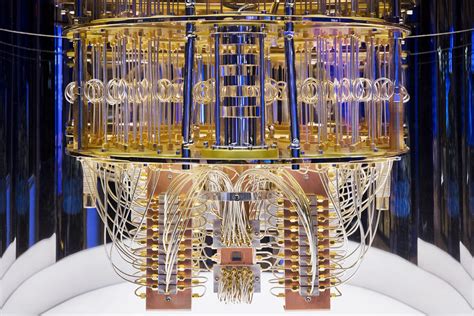
Quantum computers require specialized hardware, including qubits that can operate at near absolute zero temperatures to maintain quantum coherence. The development and maintenance of such hardware are complex, costly, and require sophisticated infrastructure. Advances in materials science and engineering are necessary to overcome these limitations.
5. Practical Use and Quantum Advantage
Achieving quantum advantage, where quantum computers outperform classical computers in practical applications, is still a work in progress. While theoretical algorithms demonstrate significant speedups, implementing these algorithms on physical quantum hardware remains challenging. Research continues to bridge the gap between theoretical potential and practical application.
Current State of Quantum Computing
As of 2025, quantum computing is in a nascent stage with ongoing research and development. Major technology companies like IBM, Google, Microsoft, and various startups are at the forefront of developing quantum processors with increasing numbers of qubits. Despite significant advancements, practical, large-scale quantum computers capable of solving real-world problems remain largely experimental.
Research efforts are focused on improving qubit stability, developing robust error-correction methods, and scaling up the number of qubits in quantum processors. Quantum supremacy, the point at which a quantum computer can perform a task that is infeasible for classical computers, has been demonstrated in controlled environments, but widespread practical applications are still being explored.
Collaborations between academia, industry, and government institutions are driving progress, with substantial investments aimed at overcoming the technical challenges and unlocking the full potential of quantum computing.
Future Potential and Impact
The future of quantum computing holds immense promise across various domains. Its ability to solve complex problems more efficiently than classical computers could revolutionize industries, drive scientific discoveries, and address some of the most pressing global challenges.
1. Healthcare and Medicine
Quantum computing can accelerate drug discovery by enabling the simulation of molecular structures and interactions at an unprecedented level of detail. This capability can lead to the discovery of new medications and treatments, personalized medicine, and advancements in biotechnology.
2. Energy and Environment
Optimizing energy grid management, developing more efficient renewable energy sources, and modeling climate change scenarios are areas where quantum computing can have a significant impact. Enhanced simulation capabilities can lead to better strategies for sustainability and environmental conservation.
3. Finance and Economics
Quantum algorithms can optimize investment strategies, enhance risk assessment models, and improve financial forecasting. The ability to process and analyze vast amounts of financial data can lead to more informed decision-making and innovative financial products.
4. Artificial Intelligence and Machine Learning
Quantum computing can provide a substantial boost to AI and machine learning by enabling faster training of models and more efficient data processing. Quantum-enhanced AI could lead to breakthroughs in areas such as natural language processing, image recognition, and autonomous systems.
5. National Security and Defense
Quantum computing has implications for national security, particularly in the realm of cryptography and secure communications. While it poses challenges to existing encryption methods, it also offers new avenues for developing secure communication channels and enhancing cybersecurity measures.
Conclusion
Quantum computing stands at the frontier of technological innovation, promising to transform the landscape of computation and solve problems that are currently intractable for classical computers. By leveraging the unique properties of qubits, superposition, entanglement, and quantum interference, quantum computers offer unparalleled computational power and efficiency.
Despite significant challenges, including quantum decoherence, error correction, and scalability, ongoing research and development efforts are steadily advancing the field. As quantum technology matures, its applications across various industries will expand, driving scientific breakthroughs, economic growth, and societal advancements.
The journey of quantum computing from theoretical concepts to practical applications is paving the way for a new era of computation, with the potential to address some of the most complex and pressing challenges of our time.
References
 aws.amazon.com
Last updated January 17, 2025