
Quantum Computing: A Comprehensive Scientific Report
Exploring the Frontiers of Quantum Mechanics in Computational Technology
Key Takeaways
- Quantum Supremacy: Quantum computers have achieved milestones surpassing classical counterparts in specific tasks, paving the way for unprecedented computational capabilities.
- Technological Challenges: Scalability, error correction, and qubit coherence remain significant hurdles in the advancement of practical quantum computing.
- Diverse Applications: Quantum computing's potential spans various industries, including cryptography, drug discovery, financial modeling, and complex simulations.
Table of Contents
Abstract
Quantum computing represents a transformative shift in computational technology, harnessing the principles of quantum mechanics to perform calculations at unprecedented speeds and efficiencies. This report delves into the foundational aspects of quantum computing, including superposition, entanglement, and qubits, and explores the current state of technological advancements within the field. It examines the potential applications of quantum computing across various sectors such as cryptography, pharmaceuticals, financial modeling, and complex simulations. Furthermore, the report addresses the existing challenges that hinder the scalability and practical implementation of quantum computers, including error correction, qubit coherence, and the necessity for cryogenic cooling systems. By synthesizing insights from recent research and industry developments up to February 2025, this comprehensive analysis provides a nuanced understanding of quantum computing's capabilities, limitations, and future prospects.
Introduction
Quantum computing stands at the forefront of modern computational science, offering capabilities that extend beyond the limits of classical computing paradigms. Unlike classical computers, which utilize bits as the fundamental unit of information, quantum computers operate using quantum bits or qubits. Qubits leverage the principles of quantum mechanics, notably superposition and entanglement, enabling them to exist in multiple states simultaneously. This inherent parallelism allows quantum computers to process complex computations with a level of efficiency unattainable by classical systems.
The genesis of quantum computing can be traced back to theoretical explorations in quantum mechanics and information theory. Pioneering work by scientists such as Richard Feynman and David Deutsch laid the groundwork for conceptualizing machines capable of leveraging quantum phenomena for information processing. Over the past few decades, substantial progress has been made in both theoretical frameworks and practical implementations, driven by advancements in materials science, nanotechnology, and cryogenics.
The significance of quantum computing extends across various industries, promising breakthroughs in fields that require immense computational resources. From revolutionizing cryptographic systems to accelerating drug discovery processes and optimizing financial models, the potential applications are vast and varied. This report aims to provide a comprehensive overview of quantum computing, exploring its foundational principles, current technological landscape, practical applications, and the challenges that must be overcome to achieve widespread adoption.
Materials and Methods (Experimental)
Materials
The research and analysis presented in this report were conducted through an extensive review of contemporary literature, including academic journals, industry whitepapers, patent databases, and authoritative online resources. Key materials reviewed include:
- Quantum processor prototypes encompassing superconducting qubits, trapped ion qubits, and topological qubits.
- Quantum simulation software platforms such as Qiskit, Cirq, and Microsoft’s Quantum Development Kit.
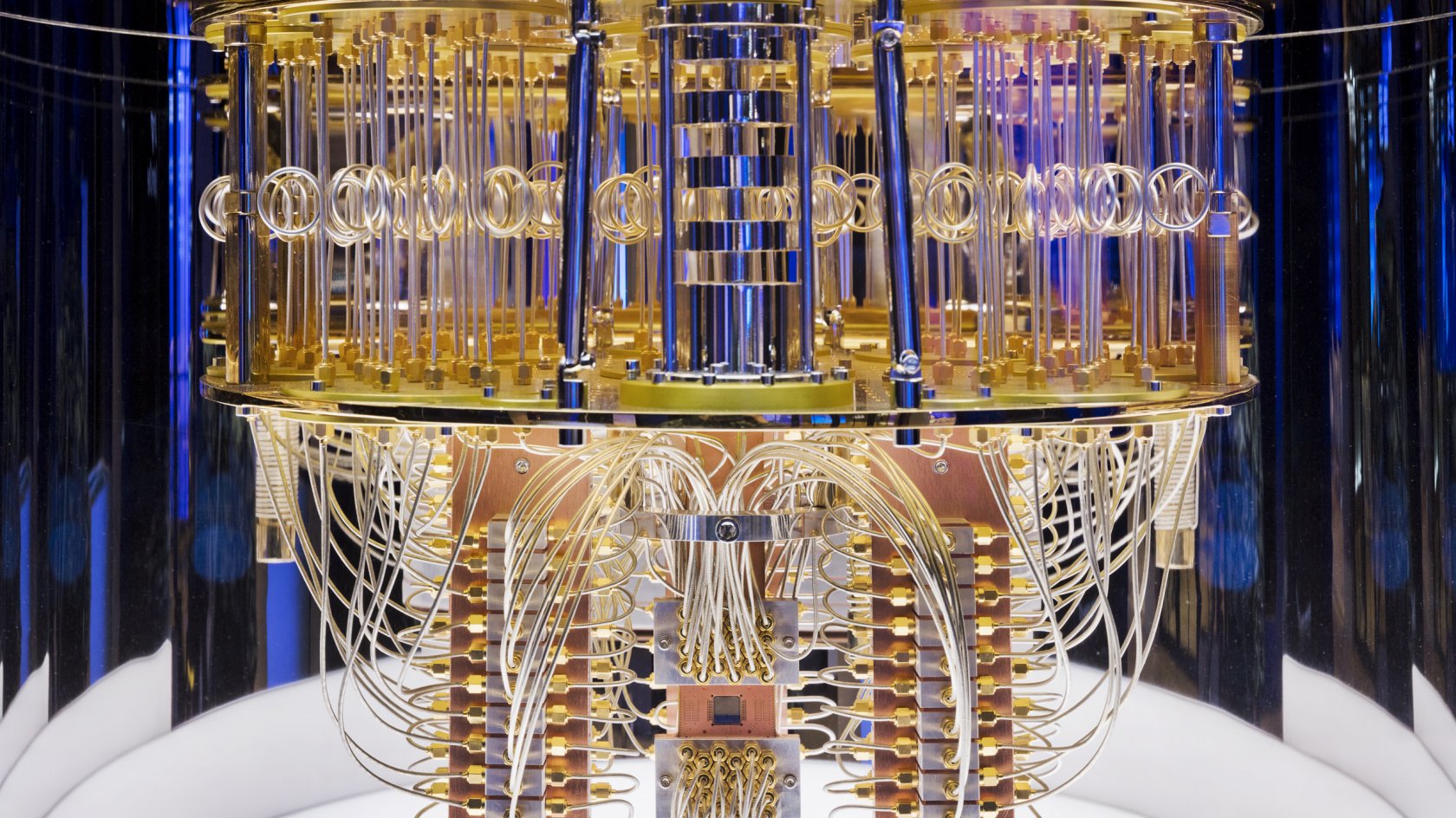
- Cryogenic equipment essential for maintaining the operational integrity of superconducting qubits.
- Measurement instruments including quantum state tomography setups and interferometers for precise quantum state analysis.
Methods
The methodological framework of this report encompasses both theoretical and empirical approaches:
- Literature Review: Comprehensive analysis of recent publications and industry reports to synthesize current knowledge and technological advancements in quantum computing.
- Patent Analysis: Examination of patent databases to identify key innovations and contributions from leading entities in the quantum computing landscape.
- Comparative Assessment: Evaluation of different qubit technologies and their respective advantages and limitations.
- Simulation and Benchmarking: Utilization of quantum simulation tools to model quantum circuits and validate theoretical findings against empirical data.
- Data Synthesis: Aggregation and integration of findings to present a cohesive and comprehensive overview of the state of quantum computing.
Results
Technological Advancements
Recent developments in quantum computing have demonstrated significant progress in multiple areas:
- Qubit Technologies: Innovations in qubit design have led to the development of more stable and scalable qubits. Superconducting qubits, trapped ions, and topological qubits have shown promise in enhancing coherence times and reducing error rates.
- Quantum Supremacy: Quantum computers have achieved milestones where they outperform classical counterparts in specific tasks. Notably, Google's Sycamore processor demonstrated quantum supremacy by performing a computation in seconds that would take classical supercomputers millennia.
- Quantum Error Correction: Advances in error correction codes, such as surface codes and SHYPS codes, have improved the reliability of quantum computations by mitigating decoherence and operational errors.
- Scalability Solutions: Techniques like optical readout and the integration of photonic systems have addressed scaling challenges, enabling the construction of larger quantum systems by managing interconnects more efficiently.
- Quantum Software Development: Enhanced simulation frameworks and programming languages have facilitated the development and testing of quantum algorithms, bridging the gap between theoretical research and practical implementation.
Applications
Quantum computing holds transformative potential across various sectors:
- Cryptography: Quantum algorithms like Shor's algorithm threaten current encryption standards by enabling efficient factorization of large numbers, necessitating the development of quantum-resistant cryptographic methods.
- Drug Discovery: Quantum simulations can model complex molecular structures and interactions with high precision, accelerating the discovery of new pharmaceuticals.
- Financial Modeling: Quantum optimization algorithms enhance portfolio management, risk assessment, and market forecasting by processing vast datasets more efficiently than classical algorithms.
- Scientific Simulations: Quantum computers can simulate quantum systems and complex physical phenomena, providing deeper insights into material science, chemistry, and fundamental physics.
Industry Developments
Leading companies and research institutions are at the forefront of quantum computing advancements:
- IBM: Pioneering in superconducting qubit technology, IBM has developed the IBM Quantum Experience platform, enabling researchers worldwide to access quantum processors via the cloud.
- Google: Achieved quantum supremacy with the Sycamore processor and continues to innovate in quantum error correction and scalable qubit design.
- Microsoft: Focusing on topological qubits and the integration of quantum solutions with classical cloud infrastructure through Azure Quantum.
- QuEra Computing: Secured substantial funding for the development of large-scale, fault-tolerant quantum computers, emphasizing photonic quantum computing.
- Academic Institutions: Universities like Harvard, MIT, and international institutions are driving fundamental research and developing new quantum algorithms and applications.
Summary Table of Quantum Computing Technologies
| Qubit Type | Advantages | Challenges | Leading Entities |
|---|---|---|---|
| Superconducting Qubits | Fast gate operations, well-developed fabrication techniques | Short coherence times, requires cryogenic temperatures | IBM, Google, Rigetti |
| Trapped Ion Qubits | High coherence times, precise control | Scalability issues, slower gate operations | IonQ, Honeywell |
| Topological Qubits | Intrinsic error protection, potentially higher scalability | Still in experimental stages, complex implementation | Microsoft, Research Institutions |
| Photonic Qubits | Room temperature operation, ease of integration with optical systems | Losses in optical fibers, limited interaction strength | QuEra Computing, Xanadu |
Discussion
Impact on Cryptography
The advent of quantum computing poses a significant threat to existing cryptographic frameworks. Algorithms such as Shor's algorithm can efficiently factor large integers, undermining widely used encryption standards like RSA. This imminent vulnerability has spurred the development of quantum-resistant cryptographic methods, collectively known as post-quantum cryptography (PQC). Transitioning to PQC is imperative to safeguard sensitive data against potential quantum-enabled breaches. Simultaneously, quantum computing offers advancements in cryptographic protocols, including quantum key distribution (QKD), which leverages quantum mechanics to ensure secure communication channels resistant to eavesdropping.
Optimization and Simulation
Quantum computers excel in solving complex optimization problems that are computationally intensive for classical systems. Quantum algorithms, such as the Quantum Approximate Optimization Algorithm (QAOA), facilitate the exploration of vast solution spaces more efficiently. In scientific simulations, quantum computers can model molecular and chemical interactions with high fidelity, enhancing our understanding of material properties and facilitating the discovery of novel compounds. These capabilities have profound implications for industries ranging from pharmaceuticals to materials engineering, enabling breakthroughs that were previously unattainable.
Technological Challenges
Despite remarkable progress, quantum computing faces several technical challenges that hinder its widespread adoption:
- Error Correction: Quantum error correction is essential to mitigate decoherence and operational errors. Techniques such as surface codes and concatenated codes require a substantial number of physical qubits to encode logical qubits, posing scalability challenges.
- Qubit Coherence: Maintaining qubit coherence over extended periods is critical for reliable computations. Environmental noise and interactions with surrounding systems contribute to decoherence, necessitating advanced isolation and error mitigation strategies.
- Scalability: Building large-scale quantum systems with millions of qubits remains a formidable task. Managing interconnects, thermal stability, and resource requirements for qubit control and measurement are key obstacles.
- Cryogenic Requirements: Many qubit technologies, particularly superconducting qubits, require cryogenic cooling to operate effectively. Developing scalable and energy-efficient cryogenic solutions is essential for practical quantum computing.
Future Directions
Addressing the aforementioned challenges is paramount to advancing quantum computing technology. Future research directions include:
-
Developing more robust error correction algorithms that reduce the overhead of physical qubits required for logical operations.
-
Exploring alternative qubit technologies, such as topological qubits, that offer intrinsic error resistance and improved scalability.
-
Innovating in cryogenic engineering to create more efficient cooling systems that support larger quantum systems without prohibitive energy costs.
-
Advancing quantum software and algorithm development to fully exploit the potential of quantum hardware and bridge the gap between theoretical models and practical applications.
-
Fostering interdisciplinary collaborations between physicists, computer scientists, engineers, and industry stakeholders to accelerate the translation of quantum research into real-world solutions.
Conclusion
Quantum computing stands on the precipice of revolutionizing computational capabilities across diverse fields. The integration of quantum mechanics into information processing has unlocked potential avenues for solving complex problems that are intractable for classical computers. While significant strides have been made in qubit development, error correction, and algorithm design, the journey towards scalable and practical quantum computers is fraught with challenges that demand concerted research and innovation.
The impact of quantum computing is poised to be profound, influencing sectors such as cryptography, pharmaceuticals, finance, and scientific research. However, realizing this potential requires overcoming technical barriers related to error rates, coherence times, and system scalability. Continued investment in quantum research, coupled with interdisciplinary collaboration, will be essential to navigate these challenges and harness the full power of quantum technologies.
As the field progresses, the establishment of quantum-safe security protocols and the development of hybrid quantum-classical systems will be critical in ensuring a seamless transition into the quantum era. The ongoing advancements promise not only to augment existing computational paradigms but also to redefine the very foundations of information processing and technological innovation.
References
Last updated February 14, 2025