
Quantum Computing: A Comprehensive Report
Exploring the Current State and Future of Quantum Technology
Key Takeaways
- Significant advancements in quantum hardware and error correction are paving the way for practical applications.
- Global investments and international initiatives are crucial for the rapid development and adoption of quantum technologies.
- Overcoming challenges in scalability, decoherence, and post-quantum cryptography is essential for the future of quantum computing.
Introduction
Quantum computing represents a paradigm shift in computational capabilities, leveraging the principles of quantum mechanics to solve problems that are intractable for classical computers. Unlike classical bits, which exist in a state of 0 or 1, quantum bits or qubits can exist in multiple states simultaneously through superposition and entanglement. This inherent parallelism allows quantum computers to process vast amounts of information concurrently, offering unprecedented speed and efficiency in various applications ranging from cryptography to scientific simulations.
Current State of Quantum Computing
Technological Advancements
Quantum Hardware
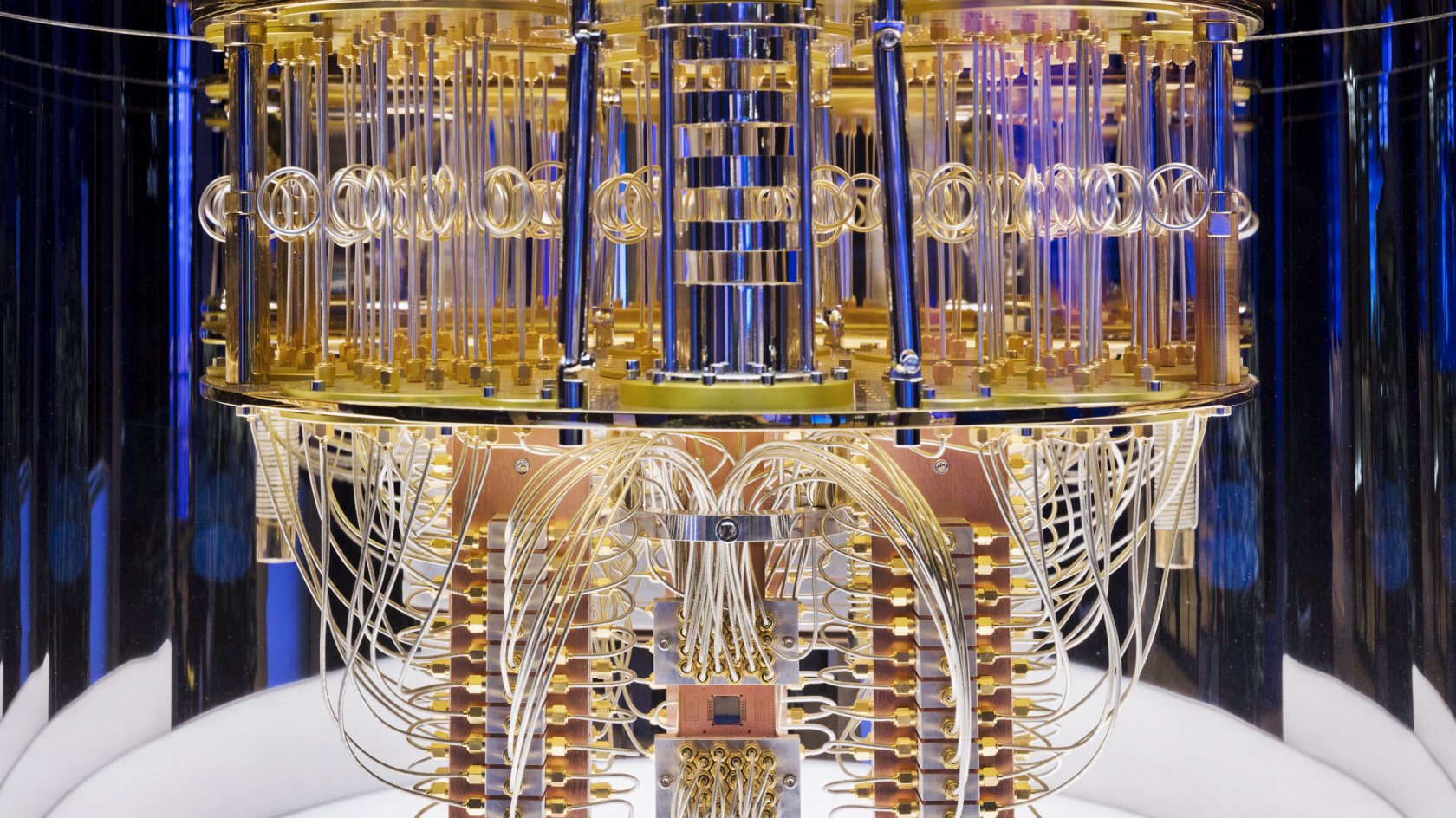
Advancements in quantum hardware have been pivotal in pushing the boundaries of what quantum computers can achieve. Superconducting qubits have emerged as a leading technology, with companies like Google and IBM developing sophisticated quantum processors. The MIT research team has recently achieved record-setting fidelity in superconducting qubits, enhancing the stability and reliability of quantum operations. Trapped ion systems, utilized by organizations such as IonQ and Rigetti Computing, offer high-fidelity operations and long coherence times, making them viable candidates for scalable quantum computing.
Quantum Algorithms and Simulations
Quantum algorithms are the cornerstone of quantum computing's potential. Shor’s algorithm for factoring large numbers exponentially outperforms classical algorithms, posing significant implications for cryptography. Grover’s algorithm provides a quadratic speed-up for unstructured search problems, enhancing data retrieval processes. Recently, the development of 'entanglement microscopy' has enabled the visualization and mapping of quantum states, offering deeper insights into quantum phenomena. Additionally, quantum simulations of complex systems, such as the non-Hermitian skin effect in ultracold fermions, demonstrate the capability of quantum computers to model intricate physical systems efficiently.
Error Correction
Error correction remains a critical challenge in quantum computing. Recent breakthroughs, such as Google's Willow quantum chip, have demonstrated significant reductions in error rates, allowing complex computations that surpass the capabilities of classical supercomputers. Robust error correction techniques and fault-tolerant architectures are being actively developed to maintain coherence and accuracy in quantum operations, a necessary step toward practical and reliable quantum computing.
Research and Development
Substantial investments from both public and private sectors are fueling research and development in quantum computing. Governments, particularly the United States, China, and members of the European Union, are committing significant resources to establish quantum research hubs. The US National Quantum Initiative, China's comprehensive quantum strategy, and the EU Quantum Flagship program are major drivers of this investment, fostering innovation and supporting the development of essential quantum technologies.
International Initiatives
The global landscape of quantum computing is marked by international cooperation and strategic initiatives. The United Nations has designated 2025 as the International Year of Quantum Science and Technology, underscoring the global recognition of quantum computing's transformative potential. Collaborative efforts among nations aim to standardize quantum technologies, promote knowledge sharing, and ensure that advancements benefit a wide range of industries and sectors worldwide.
Challenges in Quantum Computing
Technological Challenges
Despite significant progress, quantum computing faces several technological hurdles. Decoherence, the loss of quantum coherence due to environmental disturbances, remains a primary obstacle. Maintaining stable qubits requires extreme conditions, such as ultra-cold temperatures, which increase operational costs and complicate scaling efforts. Additionally, scaling quantum systems from hundreds to millions of qubits involves intricate engineering challenges, including managing error rates, ensuring inter-qubit connectivity, and maintaining overall system stability.
Post-Quantum Cryptography Transition
The advent of quantum computing poses a substantial threat to current cryptographic systems, particularly those relying on the difficulty of factoring large numbers. Transitioning to post-quantum cryptography (PQC) is imperative to safeguard data security. This shift requires significant investment and coordination across various industries to develop and implement quantum-resistant algorithms, ensuring the protection of sensitive information against quantum-enabled attacks.
Policy and Regulation
Governments and regulatory bodies are grappling with policy challenges related to the integration of quantum technologies. Balancing economic growth, national security, and scientific advancement is crucial. Policymakers must develop frameworks that support innovation while addressing the ethical and security implications of quantum computing. Effective regulation will facilitate the responsible development and deployment of quantum technologies, ensuring they contribute positively to societal advancement.
Future Prospects and Market Potential
Market Growth Projections
Quantum computing is projected to generate between $450 billion to $850 billion in economic value by 2040. The market for quantum computing hardware and software alone is expected to reach $90 billion to $170 billion within the same timeframe. This growth is driven by advancements in quantum technologies, increased investment from both public and private sectors, and the expanding range of applications that benefit from quantum computing’s unique capabilities.
Industry Readiness
A survey of over 700 quantum experts and industry leaders indicates that while significant advancements have been made, the industry is still in the process of becoming fully 'quantum-ready.' Achieving readiness involves not only technological advancements but also the development of an ecosystem that supports quantum software, algorithms, and applications. Preparatory efforts across various sectors are essential to facilitate the seamless integration of quantum computing into mainstream industries.
Education and Workforce Development
Education is a critical component in the advancement of quantum computing. Efforts are underway to integrate quantum physics and computing into educational curricula at all levels, from primary schools to universities. Developing a skilled workforce equipped with knowledge in quantum mechanics, computer science, and engineering is essential to meet the growing demand for quantum computing expertise. Innovative teaching approaches and specialized training programs are being developed to cultivate the next generation of quantum scientists and engineers.
Applications of Quantum Computing
Cryptography and Cybersecurity
Quantum computing has the potential to revolutionize cybersecurity. While it threatens existing cryptographic systems, it also enables the development of quantum-resistant encryption methods and secure communication protocols like quantum key distribution (QKD). Organizations are increasingly focusing on transitioning to quantum-resistant cryptography to protect sensitive data from future quantum-enabled threats.
Optimization and Simulation
Quantum computers excel in solving complex optimization problems that are computationally intensive for classical computers. Applications span logistics, finance, materials science, and more, where quantum optimization algorithms can significantly enhance efficiency and innovation. Additionally, quantum simulations allow for the accurate modeling of molecular and chemical reactions, accelerating advancements in drug discovery, materials engineering, and energy solutions.
Artificial Intelligence and Machine Learning
The integration of quantum computing with artificial intelligence (AI) and machine learning (ML) promises substantial advancements in data processing and pattern recognition. Quantum-enhanced algorithms could lead to faster training of AI models and the ability to handle larger datasets more efficiently, opening new frontiers in AI research and applications.
Scientific Research
Quantum computers are expected to accelerate scientific research by providing powerful tools for simulating quantum phenomena. Fields such as high-energy particle physics, condensed matter physics, and quantum chemistry stand to benefit from the enhanced computational capabilities of quantum systems, leading to a deeper understanding of the fundamental laws of nature and the development of new technologies.
Technological Innovations and Alternative Approaches
In addition to traditional gate-based quantum computing, researchers are exploring alternative models such as analog and hybrid quantum computing. These approaches aim to leverage the strengths of quantum mechanics without requiring extensive gate operations, potentially offering near-term commercial applications. Hybrid models that integrate classical and quantum computing resources are also being developed to maximize computational efficiency and versatility.
Conclusion
Quantum computing stands at a pivotal juncture, with significant advancements in research, hardware, and algorithms driving the field forward. The potential to revolutionize industries such as cryptography, optimization, and scientific research underpins the substantial investments and global initiatives supporting its development. However, overcoming challenges related to decoherence, scalability, and post-quantum cryptography is essential for realizing the full promise of quantum computing. Continued innovation, coupled with strategic policy and educational efforts, will be critical in shaping a future where quantum technologies contribute profoundly to technological and societal advancements.
References
ScienceDaily - Quantum Computing
ScienceDaily - Quantum Computers
NewsNow - Quantum Computing
QuantumZeitgeist
The Quantum Insider
Moody's - Quantum Computing Trends 2025
Azure Blog - Quantum Ready
The Quantum Insider - Expert Predictions
Forbes - Quantum Singularity
Quantum Computing Report - Quantum Readiness
Quantum.gov - NQI Annual Report
The Quantum Insider - Advances in Quantum Chips
HPCwire - Quantum Computing 2025
GlobeNewswire - Global Market for Quantum Computing
IDTechEx - Quantum Computing Market Report
Google Blog - Willow Quantum Chip
US News - Europol on Quantum Risks
MIT Technology Review - Quantum Computing
MIT News - Quantum Computing
| Year | Market Size (USD Billion) | Key Developments |
|---|---|---|
| 2025 | 15 | Introduction of advanced error-corrected quantum processors |
| 2030 | 50 | Expansion of quantum cloud services and hybrid computing models |
| 2040 | 850 | Widespread adoption across industries and realization of quantum supremacy |
Last updated February 14, 2025