
Unraveling the Chemistry: How to Analyze Your Thiourea, Sulfamic Acid, and BCDMH Solution
A comprehensive guide to identifying components and reactions in a complex aqueous mixture.
Analyzing a chemical solution prepared by mixing 2.5 g/L thiourea, 2.5 g/L sulfamic acid, and 0.5 g/L BCDMH (1-bromo-3-chloro-5,5-dimethylhydantoin) presents a fascinating challenge. This isn't just about measuring the initial ingredients; it's about understanding the dynamic chemical interactions occurring in the water and identifying the resulting species. Because these components can react with each other, particularly the oxidizing BCDMH and the reducing thiourea, a multi-faceted analytical approach is required.
Highlights
- Reactive Mixture: BCDMH releases reactive bromine and chlorine species (HOBr, HOCl) which readily oxidize thiourea, altering the solution's composition over time.
- Key Interactions: The primary reaction involves the oxidation of thiourea by halogens from BCDMH. Sulfamic acid primarily controls the solution's pH, influencing reaction rates and species stability, and might act as a halogen stabilizer.
- Analytical Necessity: Determining the final composition requires a combination of techniques, including chromatography (HPLC, IC) for separation/quantification, titration for active halogens and acidity, and potentially spectroscopy for structural information.
Understanding the Initial Components
Before diving into the analysis, let's understand the roles and properties of the starting materials in your aqueous solution:
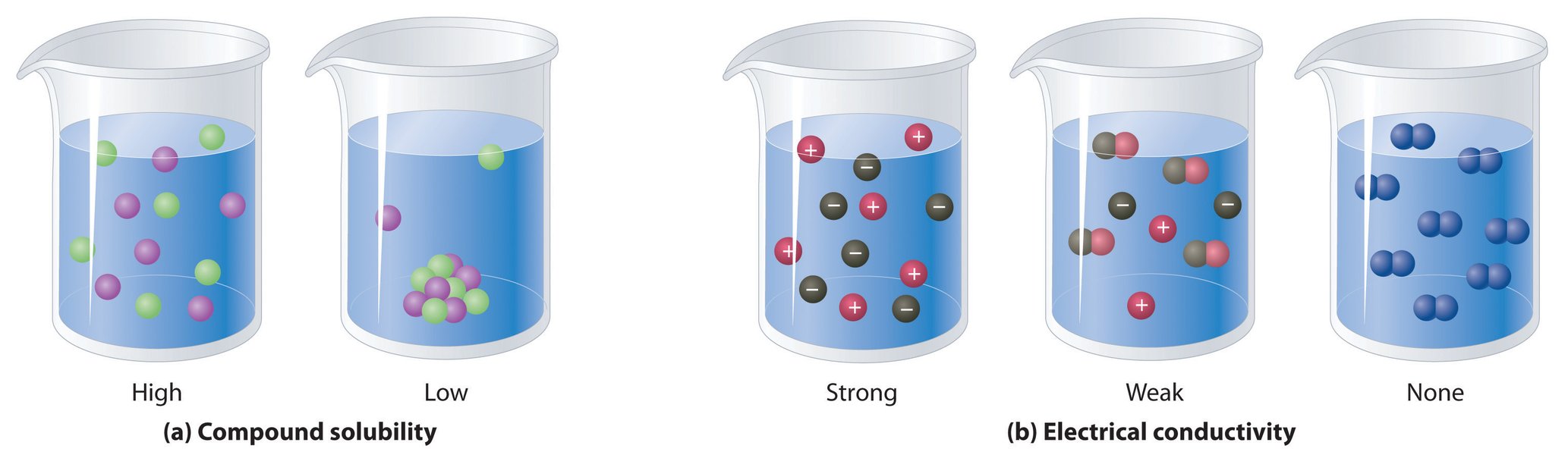
Representation of substances dissolving in an aqueous solution.
Thiourea (CH4N2S)
Properties and Role
Thiourea is an organosulfur compound soluble in water (13.6 g/100 mL at 20 °C). In chemical reactions, it can function as:
- Reducing Agent: It can readily donate electrons, particularly reacting with oxidizing agents like halogens.
- Nucleophile: The sulfur atom can attack electron-deficient centers.
- Ligand: It can coordinate with metal ions.
In your mixture, its primary role is likely as a reductant, reacting with the oxidizing species generated by BCDMH.
Sulfamic Acid (H3NSO3)
Properties and Role
Sulfamic acid is a moderately strong acid (Ka = 0.101) that exists as a stable solid but dissolves readily in water. Its functions include:
- Acidifier: It lowers the solution pH, influencing the stability and reactivity of other species, particularly the halogen acids formed from BCDMH.
- Potential Stabilizer: Some sources mention sulfamic acid or its salts as halogen stabilizers, potentially modulating the release or reactivity of bromine and chlorine from BCDMH.
- Catalyst Component: In some organic synthesis contexts, sulfamic acid and thiourea derivatives act as organocatalysts, though significant direct reaction between sulfamic acid and thiourea in this dilute aqueous solution might be limited compared to the BCDMH reactions.
It's generally considered stable and relatively inert towards direct reaction with thiourea or BCDMH under these conditions, primarily acting to control the chemical environment.
BCDMH (1-bromo-3-chloro-5,5-dimethylhydantoin)
Properties and Role
BCDMH is a halogenated hydantoin derivative commonly used as a disinfectant and biocide in water treatment. Its key characteristic is:
- Halogen Release: Upon dissolving in water, BCDMH undergoes hydrolysis to release hypobromous acid (HOBr) and, more slowly, hypochlorous acid (HOCl).
- Oxidizing Agent: Both HOBr and HOCl are strong oxidizing agents capable of reacting with various substances, including thiourea.
Its presence introduces potent oxidants into the solution, driving the main chemical transformations.
Anticipating Chemical Interactions
The complexity of this solution arises from the simultaneous presence of an oxidant (from BCDMH), a reductant (thiourea), and an acid (sulfamic acid). The primary expected interactions are:
Chemical reactions occur within the solution, changing its composition.
Hydrolysis of BCDMH
BCDMH doesn't remain intact in water. It hydrolyzes, breaking N-Br and N-Cl bonds to release HOBr and HOCl. This process establishes the concentration of active halogen species available for reaction.
BCDMH + H<sub>2</sub>O → Dimethylhydantoin + HOBr + HOCl(Note: This is a simplified representation; the release rates and equilibria are more complex).
Oxidation of Thiourea
Thiourea reacts readily with oxidizing agents like HOBr and HOCl. This redox reaction consumes both thiourea and the active halogens. The exact oxidation products of thiourea can vary depending on conditions (pH, ratio of reactants) but may include species like formamidine disulfide or further oxidized sulfur compounds.
Thiourea + HOBr/HOCl → Oxidized Thiourea Products + Br⁻/Cl⁻ + H₂OThis reaction significantly impacts the effective concentration of both the disinfectant (BCDMH-derived halogens) and thiourea.
Role of Sulfamic Acid
Sulfamic acid maintains an acidic pH. This influences:
- Halogen Speciation: The equilibrium between HOX and OX⁻ (where X is Br or Cl) is pH-dependent. Lower pH favors the more potent HOX forms.
- Reaction Rates: The kinetics of both BCDMH hydrolysis and thiourea oxidation can be pH-dependent.
- Stabilization: As mentioned, sulfamic acid might potentially interact with halogen species to form more stable intermediates (e.g., chlorosulfamates), although the dominant interaction is likely the direct reaction between thiourea and HOBr/HOCl.
Potential Minor Interactions
While the BCDMH-thiourea reaction is expected to dominate, some sources mention interactions between sulfamic acid and thiourea, such as forming crystalline adducts or derivatives under specific (often non-aqueous or concentrated) conditions. In this dilute aqueous system, such reactions are likely secondary but should be considered if unexpected solid phases or products appear.
Designing the Analytical Strategy
A successful analysis requires identifying and quantifying the remaining starting materials and the key reaction products. No single technique will provide all the answers; a combination is essential.
Sample Handling and Preparation
Initial Steps
- Homogenization: Ensure the sample taken for analysis is representative of the bulk solution.
- Filtration: Remove any suspended particulate matter using an appropriate filter (e.g., 0.45 µm syringe filter) to avoid interference with instrumental analysis, especially HPLC.
- Dilution: Depending on the sensitivity of the analytical methods, dilution with deionized water might be necessary to bring concentrations within the optimal range.
- Stability: Analyze the sample promptly after preparation or reaction completion. The reactive nature of the mixture means its composition can change over time due to ongoing reactions or degradation. If storage is necessary, investigate appropriate preservation methods (e.g., refrigeration, pH adjustment if compatible with analysis).
Core Analytical Techniques
Chromatography (HPLC, IC)
Chromatographic methods are powerful tools for separating and quantifying components in complex mixtures.
- High-Performance Liquid Chromatography (HPLC): This is likely the most valuable technique.
- Method: Reversed-phase HPLC with UV detection is suitable for quantifying thiourea and potentially BCDMH-related organic species (like the dimethylhydantoin backbone). Coupling with Mass Spectrometry (HPLC-MS) provides much greater identification power for unknown reaction products (e.g., oxidized thiourea derivatives).
- Target Analytes: Thiourea, Dimethylhydantoin, potential organic reaction byproducts.
- Ion Chromatography (IC): Useful for quantifying ionic species.
- Method: IC with conductivity detection can measure sulfamic acid (as sulfamate anion), bromide (Br⁻), and chloride (Cl⁻) ions formed from the reduction of HOBr and HOCl.
- Target Analytes: Sulfamate, Bromide, Chloride.
- Gas Chromatography (GC-MS): May be applicable if volatile reaction products are formed or if derivatization techniques are used to make components suitable for GC analysis, but HPLC is generally more suited for these types of non-volatile analytes.
Titration Methods
Titration provides quantitative information about specific chemical properties of the solution.
- Redox Titration: Essential for measuring the active halogen content derived from BCDMH.
- Method: Iodometric titration is standard. The sample is reacted with excess iodide (I⁻) under specific pH conditions, releasing iodine (I2) equivalent to the active halogen (HOBr + HOCl). The liberated iodine is then titrated with a standard thiosulfate (S2O32-) solution using starch indicator.
- Target Analytes: Total active halogens (oxidizing capacity).
- Acid-Base Titration: Measures the concentration of the strong acid component.
- Method: Titrate the solution with a standard base (e.g., NaOH) using a suitable indicator or pH meter to detect the endpoint corresponding to the neutralization of sulfamic acid.
- Target Analytes: Sulfamic Acid concentration.
- Complexometric Titration: Mentioned as a possibility for thiourea quantification (e.g., using Hg(II) or Cu(II)), but HPLC is often preferred for its specificity in complex mixtures.
Spectroscopic Insights
Spectroscopy can provide qualitative and sometimes quantitative information about the species present.
- UV-Vis Spectroscopy: Can monitor changes in absorbance related to halogen species or potential colored intermediates/products, although specificity can be low in a mixture.
- Fourier Transform Infrared Spectroscopy (FTIR): Useful for identifying characteristic functional groups present in the starting materials and potential products (e.g., C=S, N-H, S=O, C=O). Can be performed on dried residues or using attenuated total reflectance (ATR) probes for liquids.
- Nuclear Magnetic Resonance (NMR) Spectroscopy: Provides detailed structural information. While powerful for identifying unknown reaction products, it requires relatively high concentrations and pure samples, making it more suitable for isolated products rather than direct analysis of the complex mixture unless specific nuclei (like 1H, 13C, 15N) offer clear signals.
Complementary Analyses
- pH Measurement: Crucial for understanding the reaction environment. Use a calibrated pH meter.
- Ion/Elemental Analysis: Techniques like Ion Chromatography coupled with Mass Spectrometry (IC-MS) or Inductively Coupled Plasma (ICP-OES/MS) can provide more detailed information on specific ions (Br⁻, Cl⁻, SO42- if sulfamic acid degrades) or elemental composition (Sulfur, Bromine, Chlorine).
- X-Ray Diffraction (XRD) / Energy Dispersive X-ray (EDX): Primarily useful if solid precipitates form (e.g., potential thiourea-sulfamic acid adducts under specific conditions, though less likely here). XRD identifies crystalline structures, while EDX provides elemental composition of solids or residues.
Visualizing the Analysis Plan
This mindmap outlines the components, their interactions, potential outcomes, and the analytical techniques suited to investigate this chemical system.
Reductant, Nucleophile"] id1b["Sulfamic Acid (2.5 g/L)
Acid, Stabilizer?"] id1c["BCDMH (0.5 g/L)
Oxidant, Halogen Source"] id2["Key Interactions"] id2a["BCDMH Hydrolysis
Releases HOBr, HOCl"] id2b["Thiourea Oxidation
Consumes Thiourea & Halogens"] id2c["pH Control
By Sulfamic Acid"] id3["Potential Resulting Species"] id3a["Residual Reactants
Thiourea, Sulfamate, DMH?"] id3b["Oxidized Thiourea
e.g., Disulfides, Sulfinates?"] id3c["Inorganic Ions
Br⁻, Cl⁻, Sulfamate"] id3d["Active Halogens
HOBr, HOCl (residual)"] id4["Analytical Techniques"] id4a["Chromatography"] id4a1["HPLC-UV/MS
Thiourea, Organics, Products"] id4a2["IC
Sulfamate, Br⁻, Cl⁻"] id4b["Titration"] id4b1["Redox (Iodometric)
Active Halogens"] id4b2["Acid-Base
Sulfamic Acid"] id4c["Spectroscopy"] id4c1["UV-Vis
Halogens?, Changes"] id4c2["FTIR
Functional Groups"] id4d["Other Methods"] id4d1["pH Measurement
Reaction Environment"] id4d2["IC-MS / ICP
Specific Ions / Elements"]
Comparing Analytical Techniques
Different analytical techniques offer distinct advantages for characterizing your solution. This chart provides a comparative overview based on common analytical goals for this specific mixture. The scores (ranging from 3 to 10, higher is better) reflect a qualitative assessment of each technique's suitability for:
- Quantification Accuracy: Precision in measuring concentrations.
- Identification Power: Ability to confirm the identity of knowns and unknowns.
- Reactant Monitoring: Tracking the disappearance of starting materials.
- Product Identification: Discovering and identifying reaction products.
- Cost/Accessibility: General cost and availability of the technique.
- Speed: Typical time required for analysis per sample.
Summary of Recommended Analytical Approach
This table consolidates the key techniques and their primary purpose in analyzing your specific solution:
| Analytical Target | Recommended Technique(s) | Purpose |
|---|---|---|
| Initial Solution State | pH Measurement, Visual Inspection | Assess acidity and check for precipitates/color changes. |
| Active Halogen Content | Redox (Iodometric) Titration | Quantify the remaining oxidizing capacity from BCDMH (HOBr + HOCl). |
| Sulfamic Acid Concentration | Acid-Base Titration, Ion Chromatography (IC) | Quantify residual sulfamic acid (as sulfamate). |
| Thiourea Concentration | HPLC-UV | Quantify residual thiourea. |
| Inorganic Anions | Ion Chromatography (IC) / IC-MS | Quantify bromide (Br⁻) and chloride (Cl⁻) ions formed. |
| Reaction Products / Byproducts | HPLC-MS, GC-MS (if applicable), FTIR, NMR | Identify and potentially quantify organic oxidation products of thiourea or other species formed. |
| Overall Composition Profile | Combination of HPLC, IC, Titrations | Provide a comprehensive mass balance and understanding of the solution composition. |
Understanding Aqueous Solutions
The analysis takes place in an aqueous solution, meaning water is the solvent. Understanding the behavior of substances dissolved in water is fundamental. This video provides a basic overview of different types of solutions and mixtures.
In your case, thiourea, sulfamic acid, and BCDMH dissolve in water, but then react, forming a complex aqueous mixture containing the initial ions (sulfamate), remaining reactants, reaction products (oxidized thiourea, bromide, chloride), and the dimethylhydantoin molecule.
Frequently Asked Questions (FAQ)
Why is BCDMH considered 'reactive' in this mixture?
BCDMH is reactive because it readily undergoes hydrolysis in water to release hypobromous acid (HOBr) and hypochlorous acid (HOCl). These are strong oxidizing agents that readily react with reducing agents present in the solution, such as thiourea. This inherent ability to generate potent oxidants makes BCDMH reactive in this context.
What are the most likely reaction products to look for?
The primary reaction products will likely be:
- Oxidized forms of thiourea: Such as formamidine disulfide or potentially further oxidation products depending on the stoichiometry and reaction conditions.
- Bromide ions (Br⁻): Formed from the reduction of HOBr.
- Chloride ions (Cl⁻): Formed from the reduction of HOCl.
- Dimethylhydantoin: The organic backbone of BCDMH remaining after halogen release.
Why is measuring the pH important?
pH is critical because:
- It is primarily controlled by the concentration of sulfamic acid.
- It affects the stability and speciation of the active halogens (HOBr/OBr⁻ and HOCl/OCl⁻ equilibria).
- It can influence the rate of the redox reaction between thiourea and the halogens.
- Knowing the pH helps interpret the results from other analyses and understand the overall chemical environment.
Is one analytical technique sufficient?
No, a single technique is generally insufficient for a comprehensive analysis of this complex reactive mixture. For example:
- Titration can quantify total active halogens but doesn't identify specific organic products.
- HPLC-UV can quantify thiourea but might miss inorganic ions or unidentified products.
- IC measures ions but not neutral organic molecules.
Are there any safety considerations?
Yes. Sulfamic acid is corrosive. BCDMH releases active halogens (bromine and chlorine species), which are irritants and oxidizers. Thiourea has associated health warnings. Handle the chemicals and the resulting solution with appropriate personal protective equipment (gloves, eye protection) in a well-ventilated area or fume hood. Consult the Safety Data Sheets (SDS) for each component before handling.
References
- Chemical Composition Analysis - Intertek
- The Composition of Solutions - Chemistry LibreTexts
- Sulfamic acid - Wikipedia
- Thiourea - Wikipedia
- Biofouling control composition containing stabilized halogen - Google Patents
-
Sulfamic Acid - ScienceDirect Topics
- Chemical analysis - Britannica
- BCDMH Technical Booklet - Enviro Tech Chemical Services
Recommended
Last updated April 21, 2025