
Is The Arm System On Module Only For Professionals? Geniatech Breaks The Misconception!
Discover how ARM-based technology is becoming accessible to everyone, powering innovation from your garage to global industries.
Have you ever stumbled upon terms like "ARM System on Module" or "ARM Single Board Computer" and felt a wave of technical intimidation? Many believe these powerful pieces of technology are exclusively for the realm of seasoned engineers and large corporations. But what if we told you that this perception is rapidly changing? Imagine holding the core of a smart device or a sophisticated industrial controller in a compact, ready-to-use package. That's precisely what an ARM system on module (SoM) offers. These modules, along with their close relatives, ARM Single Board Computers (SBCs), are designed to simplify the intricate process of embedded system development. They integrate key components like processors, memory, and connectivity interfaces onto a single, efficient board. This modular approach dramatically cuts down development time, reduces costs, and accelerates the journey from a brilliant idea to a tangible product. Whether you're a hobbyist eager to build your first robot, a startup aiming to disrupt an industry, or an educator looking for versatile teaching tools, these technologies are more within reach than ever before, thanks to forward-thinking companies committed to democratizing innovation.
Key Insights: Your Gateway to ARM Innovation
- Accessibility for All: ARM SoMs and SBCs are no longer confined to expert use; they are designed for hobbyists, students, and professionals alike, simplifying complex development.
- Reduced Development Hurdles: Leverage pre-designed modules and boards to significantly cut down on hardware design efforts, costs, and time-to-market for your projects.
- Versatile Applications: From smart home devices and IoT solutions to industrial automation and AI-powered gadgets, the potential uses for ARM-based platforms are vast and ever-expanding.
Empowering Creators: ARM Tech for Every Skill Level
Unlocking Innovation with User-Friendly Embedded Solutions
The journey into embedded systems can seem daunting, but it doesn't have to be. Consider the ARM single board computer (SBC) – a compact, powerful, and remarkably versatile tool that's like a miniature computer ready for your command. These boards typically come with pre-loaded operating systems like Linux or Android, offering a plug-and-play experience that gets you started almost immediately. Companies like Geniatech are at the forefront of this accessibility revolution, providing robust SoMs and SBCs packed with features like high-performance ARM processors, AI acceleration capabilities, and diverse I/O options. This means you spend less time wrestling with complex hardware configurations and more time bringing your unique vision to life. Whether you're prototyping an AI-driven edge device, developing an interactive kiosk, or creating a custom home automation system, these platforms offer the scalability and support needed for projects of any size, ensuring that your innovative ideas are not limited by technical barriers or a steep learning curve. The focus is on modularity, ease of use, and comprehensive support, including Board Support Packages (BSPs) and detailed documentation.
Demystifying ARM SoMs and SBCs
Understanding the Core of Modern Embedded Systems
At their heart, both System on Modules (SoMs) and Single Board Computers (SBCs) are designed to streamline the development of electronic devices. They are built around ARM processors, renowned for their efficiency and performance, making them ideal for a wide array of applications requiring a balance of power and low energy consumption.
What is an ARM System on Module (SoM)?
An ARM SoM is a small, integrated circuit board that encapsulates the core components of an embedded processing system. This typically includes the ARM CPU, memory (RAM), flash storage, power management circuits, and often wireless connectivity modules (Wi-Fi, Bluetooth). The SoM is designed to be plugged into a carrier board or baseboard, which provides application-specific peripherals and I/O interfaces (like USB, Ethernet, HDMI, GPIOs). This modular approach offers several advantages:
- Reduced Design Complexity: Developers don't need to design the most complex parts of the system (processor, memory interfaces) from scratch.
- Faster Time-to-Market: Using a pre-verified SoM significantly shortens the development cycle.
- Scalability and Upgradability: SoMs can often be upgraded to newer versions with more processing power or features without redesigning the entire carrier board.
- Cost-Effectiveness: For medium to high volume production, SoMs can be more cost-effective by centralizing complex components.
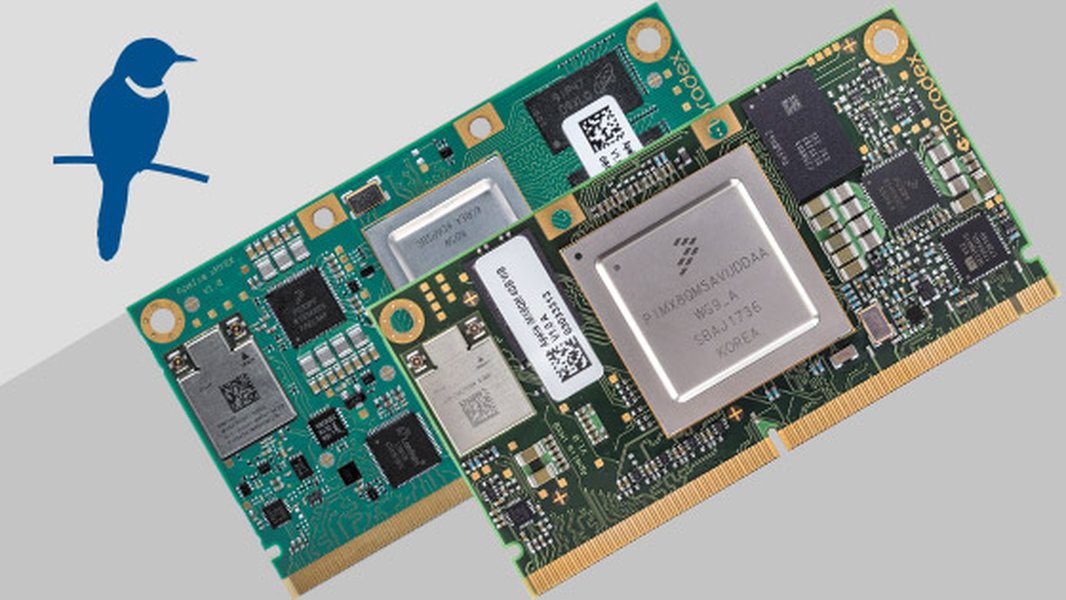
A Computer on Module (SoM) is designed to integrate into a larger system via a carrier board.
What is an ARM Single Board Computer (SBC)?
An ARM SBC is a complete computer built on a single circuit board. It includes a microprocessor (typically ARM-based), memory, input/output (I/O) interfaces, and often other features like network connectivity (Ethernet, Wi-Fi), display outputs (HDMI), and USB ports. Unlike SoMs that require a carrier board, SBCs are generally ready to use out-of-the-box by simply connecting peripherals like a display, keyboard, mouse, and power supply. Popular examples include the Raspberry Pi series. Key characteristics include:
- Ease of Use: SBCs are often targeted at hobbyists, educators, and developers looking for a quick way to prototype or build projects.
- All-in-One Solution: They provide a fully functional computer system on one board.
- Community Support: Many popular SBCs have large online communities, extensive documentation, and readily available software.
- Defined Form Factor: SBCs usually come in standard sizes, making them easy to integrate into various enclosures.
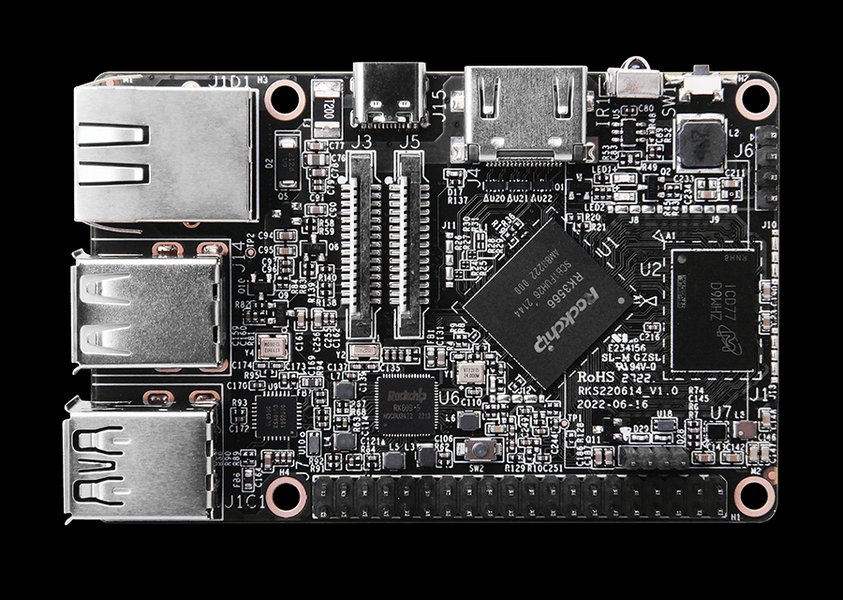
The Geniatech XPI-3566, an example of an ARM Single Board Computer.
Geniatech: Your Partner in Accessible Innovation
Geniatech champions the idea that powerful technology should be within everyone's grasp. They achieve this by designing ARM SoMs and SBCs that are not only high-performing but also user-friendly. Their commitment extends to providing comprehensive support, including readily available Board Support Packages (BSPs) for popular operating systems like Linux and Android, detailed documentation, and long-term product availability (often 7-10 years). This ensures that whether you are a startup developing a new IoT device, a hobbyist building a smart home gadget, or an industrial firm seeking reliable automation solutions, Geniatech provides a stable and accessible platform for your innovations.
Visualizing the Landscape: SoMs, SBCs, and Development Paths
The following mindmap illustrates the interconnected world of ARM embedded solutions, highlighting the roles of SoMs and SBCs, their benefits, common applications, and how companies like Geniatech facilitate access for a diverse range of users.
Choosing Your Path: SoM vs. SBC vs. DIY
When embarking on an embedded project, selecting the right hardware foundation is crucial. The choice between developing a custom Printed Circuit Board (PCB) from scratch (DIY), using a Single Board Computer (SBC), or integrating a System on Module (SoM) depends on various factors like project complexity, volume, time-to-market, and available expertise. The radar chart below provides a comparative overview of these approaches across several key development aspects. Geniatech's SoM and SBC solutions aim to optimize these factors, making advanced technology more manageable and efficient for a broader audience.
Note: The radar chart values are illustrative (scaled 1-10, higher is generally better/easier, except for Cost and Complexity where lower is better). "Development Time" and "Time-to-Market" are shown with higher values indicating faster completion. "Initial Cost" and "Complexity to Manage" are shown where lower values are more favorable.
SoM vs. SBC: A Closer Look at Key Features
While both ARM SoMs and SBCs simplify embedded development, they cater to slightly different needs and project phases. Understanding their distinctions can help you make an informed decision for your next project. The table below highlights some key differences:
| Feature | ARM System on Module (SoM) | ARM Single Board Computer (SBC) |
|---|---|---|
| Definition | Core compute module (CPU, RAM, Flash, PMIC) requiring a carrier board for I/O. | Complete, standalone computer on a single board with integrated I/O. |
| Hardware Customization | High (via custom carrier board design for specific I/O and form factor). | Low to moderate (limited by fixed I/O and form factor, some expansion possible). |
| Development Effort (Hardware) | Moderate (carrier board design needed, but core is pre-built). | Low (minimal hardware setup required). |
| Time to Prototype | Can be fast with off-the-shelf carrier boards; longer if custom carrier is needed initially. | Very fast (often plug-and-play). |
| Suitability for Mass Production | Excellent (allows optimized carrier board for cost and features). | Good for smaller volumes or when standard I/O suffices; may not be cost-optimal for large, specific needs. |
| Form Factor Flexibility | High (carrier board defines final product shape and size). | Fixed by the SBC's design. |
| Typical Users | OEMs, industrial applications, products requiring specific I/O or form factors. | Hobbyists, educators, rapid prototyping, developers needing a quick off-the-shelf solution. |
| Example Geniatech Focus | SOM-iMX8MP-SMARC, SOM3576 (modules for integration) | XPI-3566, DB3576 (ready-to-run boards) |
See Geniatech's Innovations in Action
Geniatech is actively showcasing its ARM-based embedded and AI solutions at major tech events. These platforms are designed to power a wide range of applications, from smart city infrastructure to advanced AIoT devices. The following video offers a glimpse into Geniatech's diverse product portfolio, highlighting new open standard modules and their capabilities. It underscores their commitment to providing versatile and powerful tools for developers and innovators across various industries.
Geniatech showcasing ARM Embedded and AI solutions, demonstrating their commitment to innovation.
Frequently Asked Questions (FAQ)
What exactly is an ARM processor, and why is it popular in SoMs and SBCs? ▾
ARM processors are a family of CPUs based on a RISC (Reduced Instruction Set Computer) architecture. They are known for their excellent balance of performance and power efficiency. This makes them ideal for battery-powered devices, mobile phones, embedded systems, and increasingly, servers and laptops. Their low power consumption and good performance per watt are key reasons for their prevalence in SoMs and SBCs, which often operate in space or power-constrained environments.
Can I run common operating systems like Linux or Android on these ARM boards? ▾
Absolutely! Most ARM SoMs and SBCs, including those from Geniatech, offer extensive support for Linux (various distributions like Ubuntu, Debian, Yocto) and Android. Geniatech often provides Board Support Packages (BSPs) which include the necessary drivers and software to get these operating systems running smoothly on their hardware. This allows developers to leverage familiar environments and a vast ecosystem of open-source software.
How does using an SoM or SBC reduce development time and cost? ▾
Developing the core processing part of an embedded system (CPU, memory interface, power management) is complex and time-consuming. SoMs and SBCs provide these critical components pre-designed, tested, and verified. This means:
- Reduced Hardware Design Effort: You don't have to design intricate high-speed circuits from scratch.
- Faster Prototyping: You can start software development and system integration much earlier.
- Lower NRE Costs: Non-Recurring Engineering costs associated with complex PCB design and testing are significantly reduced.
- Simplified Supply Chain: Sourcing and managing numerous high-density components is handled by the SoM/SBC manufacturer.
This allows teams to focus on their application-specific software and hardware, leading to a quicker time-to-market.
Are these ARM boards suitable for AI and Machine Learning projects? ▾
Yes, many modern ARM SoMs and SBCs are well-suited for AI and Machine Learning (ML) applications, especially at the edge. Many ARM processors now include NPUs (Neural Processing Units) or support for ML acceleration libraries. Geniatech, for example, offers boards based on chipsets like Rockchip RK3588 or NXP i.MX8 series, which have dedicated hardware for AI inference tasks. This enables development of smart cameras, voice assistants, predictive maintenance systems, and other AI-powered edge devices.
Recommended Further Exploration
Continue your journey into the world of ARM embedded systems with these related queries:
- What are the best ARM single board computers for beginners in IoT projects?
- How do ARM System on Modules accelerate product development for startups?
- Explore industrial applications of Geniatech ARM-based embedded systems.
- Compare ARM vs x86 architecture for embedded computing solutions.
References
Last updated May 16, 2025