
Unveiling Earth's Protective Shield: A Chemistry Lesson Plan on Atmospheric Layers
Exploring the Troposphere, Stratosphere, Mesosphere, Thermosphere, and Exosphere for Class 9 students.
The Earth's atmosphere, a vast blanket of gases extending up to 1500 km, is not just empty space above us; it's a complex, structured system vital for life. Understanding its layers is fundamental in chemistry and environmental science, revealing how this gaseous envelope protects us, regulates temperature, and hosts phenomena from weather to auroras. This lesson plan provides a comprehensive guide for Class 9 Chemistry students to explore the composition, structure, and significance of each atmospheric layer.
Lesson Highlights
- Layered Protection: Discover the five distinct layers of the atmosphere – Troposphere, Stratosphere, Mesosphere, Thermosphere, and Exosphere – and their unique characteristics.
- Chemical Composition & Phenomena: Understand the varying chemical makeup, temperature gradients, and specific phenomena (like the ozone layer, meteors burning up, and auroras) occurring within each atmospheric layer.
- Environmental Significance: Recognize the crucial role the atmosphere plays in sustaining life, regulating climate, absorbing harmful radiation, and how human activities can impact its delicate balance.
Class 9 Chemistry Lesson Plan: Exploring the Atmosphere's Layers
This lesson plan provides a structured approach to teaching the layers of the Earth's atmosphere, tailored for a Class 9 Chemistry curriculum.
I. Lesson Details
- Grade Level: 9th Grade
- Subject: Chemistry
- Topic: Layers of the Atmosphere
- Estimated Time: 45-60 minutes (flexible based on activities)
II. Learning Objectives
By the end of this lesson, students will be able to:
- Identify and name the five primary layers of the Earth's atmosphere.
- Describe the key characteristics of each layer, including approximate altitude, temperature trends, and unique features or phenomena.
- Explain the general composition of the atmosphere (major gases).
- Understand the significance of specific atmospheric components like the ozone layer.
- Recognize the atmosphere's role in protecting life and influencing weather and climate.
III. Materials
- Whiteboard or projector
- Markers or pens
- Diagrams/Visual aids showing the layers of the atmosphere (use provided images or create simpler versions)
- Handouts with key facts or a worksheet for labeling/description activities
- (Optional) Access to computers/tablets for research extension
- (Optional) Video explaining atmospheric layers (see embedded video below)
IV. Lesson Procedure
A. Introduction (10 minutes)
- Engage: Start by asking students: "What is the atmosphere? Why is it important for us?" Write down key ideas. Discuss initial thoughts about air, weather, and space.
- Introduce Topic: Explain that the atmosphere isn't uniform but is structured in distinct layers, like an onion around the Earth. State the lesson's goal: to explore these layers.
- Overview: Briefly mention the five main layers: Troposphere, Stratosphere, Mesosphere, Thermosphere, and Exosphere.
B. Direct Instruction & Exploration (20-25 minutes)
- Visual Presentation: Use a clear diagram showing the layers, their relative altitudes, and temperature changes.
- Layer-by-Layer Breakdown: Describe each layer sequentially, from the ground up. For each layer, cover:
- Name & Altitude Range: Approximate height above sea level.
- Temperature Trend: Does it get colder or warmer with increasing altitude? Why? (briefly mention gas density, radiation absorption).
- Key Characteristics/Composition: What makes this layer unique? (e.g., weather, ozone, meteors, auroras, satellites, transition to space). Mention the primary atmospheric gases (Nitrogen ~78%, Oxygen ~21%, Argon ~1%, trace gases like Carbon Dioxide).
- Relevance: Why is this layer important? (Life support, UV protection, communication, space exploration).
- Visual Reinforcement: Show related pictures for each layer (clouds, ozone diagram, meteors, auroras, satellites) as you discuss them.
C. Activity (10-15 minutes)
- Worksheet/Labeling: Distribute a worksheet with an unlabeled diagram of the atmosphere. Have students label the layers and write one key characteristic for each. Alternatively, provide descriptions and have students match them to the correct layer.
- Think-Pair-Share: Pose questions like: "Where does weather happen and why?" or "Why is the ozone layer important?" Have students discuss in pairs before sharing with the class.
- (Optional) Group Research Snippets: Assign each small group one layer to quickly look up one additional interesting fact using provided resources or online access.
D. Conclusion & Assessment (5-10 minutes)
- Recap: Briefly review the five layers and their main features using the diagram. Emphasize the atmosphere's overall importance.
- Q&A / Quick Quiz: Ask targeted questions to check understanding (e.g., "Which layer is coldest?", "Where is the ozone layer found?"). Collect worksheets for assessment.
- Connect to Chemistry: Briefly link the topic back to chemistry by mentioning the gases involved (N₂, O₂, O₃, CO₂), chemical reactions (ozone formation/depletion), and concepts like pressure and density varying with altitude. Touch upon atmospheric pollution (acid rain from SOx/NOx, greenhouse effect from CO₂/CH₄) primarily impacting the troposphere and stratosphere.
V. Extension Activities (Optional)
- Research specific atmospheric phenomena (auroras, ozone hole).
- Investigate the impact of human activities (pollution, greenhouse gases) on different atmospheric layers.
- Build a simple model of the atmospheric layers.
- Invite a meteorologist or environmental scientist as a guest speaker.
Diving Deeper: The Five Layers of the Atmosphere
Let's explore the specific characteristics of each atmospheric layer in more detail.
1. Troposphere
- Altitude: 0 to ~12 km (varies with latitude and season, higher at the equator).
- Temperature: Decreases with altitude (average lapse rate of about 6.5°C per km). Gets colder the higher you go.
- Characteristics: Densest layer, contains ~75-80% of the atmosphere's mass and nearly all water vapor. This is where weather (clouds, rain, snow, wind) occurs. Airplanes typically fly within this layer. Life as we know it exists here.
- Composition: Primarily Nitrogen (N₂) and Oxygen (O₂), with trace amounts of other gases including water vapor (H₂O) and Carbon Dioxide (CO₂).
2. Stratosphere
- Altitude: ~12 km to ~50 km.
- Temperature: Increases with altitude. This temperature inversion is caused by the absorption of ultraviolet (UV) radiation from the sun by the ozone layer.
- Characteristics: Contains the crucial Ozone Layer (O₃), which absorbs most of the Sun's harmful UV-B and UV-C radiation, protecting life on Earth. Very dry and stable air; commercial jets often fly in the lower stratosphere to avoid turbulence.
- Composition: Similar composition to the troposphere but much thinner air and significantly less water vapor. Higher concentration of ozone, especially between 15-30 km.
3. Mesosphere
- Altitude: ~50 km to ~80-85 km.
- Temperature: Decreases rapidly with altitude, reaching the coldest temperatures in the atmosphere (around -90°C or -130°F).
- Characteristics: Most meteors ("shooting stars") burn up in this layer due to friction with air molecules, though the air is still extremely thin. Difficult to study directly as it's too high for balloons/jets and too low for satellites.
- Composition: Very thin air, low concentrations of gases.
4. Thermosphere
- Altitude: ~80-85 km to ~600 km or more.
- Temperature: Increases sharply with altitude, potentially reaching 500°C to 2000°C or higher. However, the air is so thin that it would feel very cold because there are too few molecules to transfer significant heat.
- Characteristics: Absorption of high-energy solar radiation (X-rays, UV) causes the high temperatures. The Ionosphere, a sub-region containing charged particles (ions), overlaps the mesosphere and thermosphere and is crucial for reflecting radio waves. The spectacular Auroras (Borealis and Australis) occur here. The International Space Station (ISS) orbits within this layer.
- Composition: Extremely thin air composed mainly of individual oxygen (O) and nitrogen (N) atoms.
5. Exosphere
- Altitude: ~600 km to ~10,000 km (no clear upper boundary).
- Temperature: Very high, similar to the thermosphere, but the concept of temperature is less meaningful due to the extremely low density.
- Characteristics: The outermost layer, essentially the transition zone between Earth's atmosphere and outer space. Air is incredibly thin, molecules are far apart and can escape Earth's gravity. Some satellites orbit here.
- Composition: Mainly hydrogen and helium atoms.
Visualizing Atmospheric Layer Characteristics
This chart provides a comparative overview of key characteristics across the different atmospheric layers. It helps visualize how factors like temperature range, altitude span, density, potential for human activity (like flight or habitation), and notable phenomena vary significantly as we move away from the Earth's surface. Note that values are generalized representations for comparison.
Atmospheric Layers at a Glance: Summary Table
This table provides a quick comparison of the primary characteristics of each atmospheric layer.
| Layer | Approximate Altitude Range (km) | Temperature Trend with Altitude | Key Characteristics / Phenomena |
|---|---|---|---|
| Troposphere | 0 - 12 km | Decreases | Densest layer, contains most air mass and water vapor, weather occurs here, supports life. |
| Stratosphere | 12 - 50 km | Increases | Contains the Ozone Layer (absorbs UV radiation), stable and dry, jet aircraft fly here. |
| Mesosphere | 50 - 85 km | Decreases | Coldest layer, meteors burn up here. |
| Thermosphere | 85 - 600+ km | Increases | Very high temperatures (but thin air), contains Ionosphere, Auroras occur here, ISS orbits here. |
| Exosphere | 600+ km | Increases (concept less meaningful) | Outermost layer, transition to space, extremely thin air (mainly H, He), satellites orbit, gases escape. |
Mapping the Atmosphere: Key Concepts
This mindmap illustrates the structure of the lesson and the key features associated with each atmospheric layer, providing a visual summary of the information covered.
Visualizing the Layers and Phenomena
Seeing is believing! These images help illustrate the distinct characteristics and phenomena associated with different layers of our atmosphere. From the clouds we see daily in the troposphere to the distant auroras in the thermosphere, each layer has its visual signature.
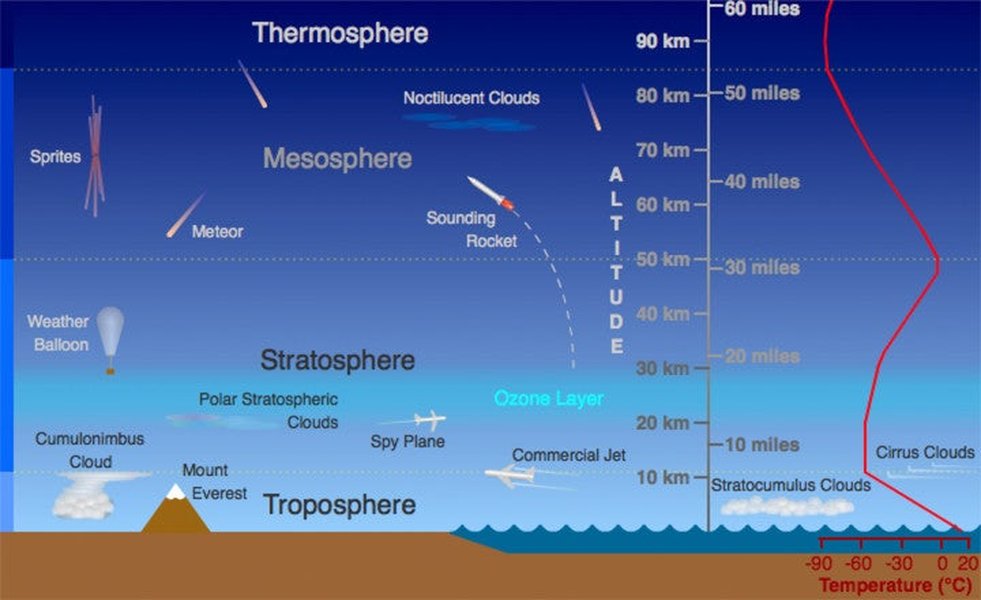

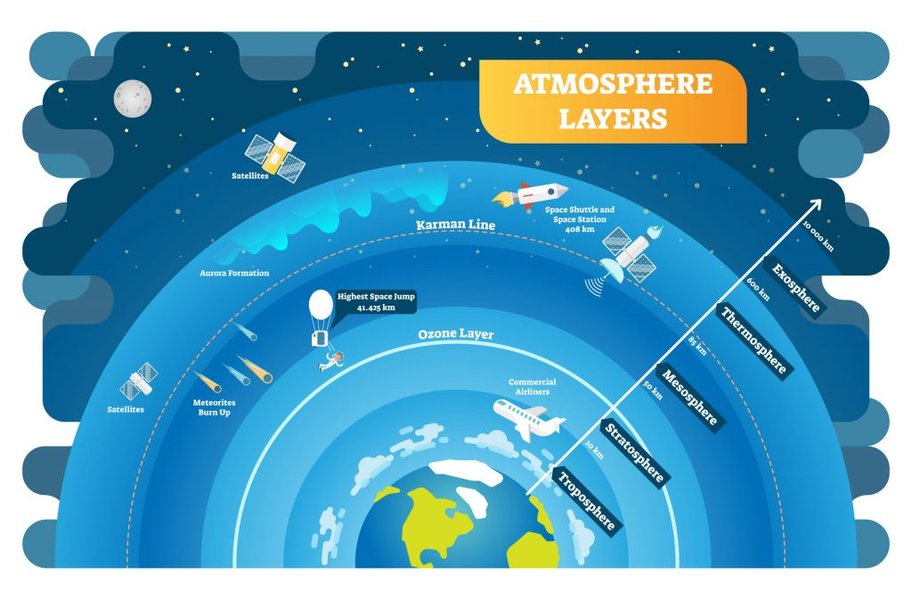
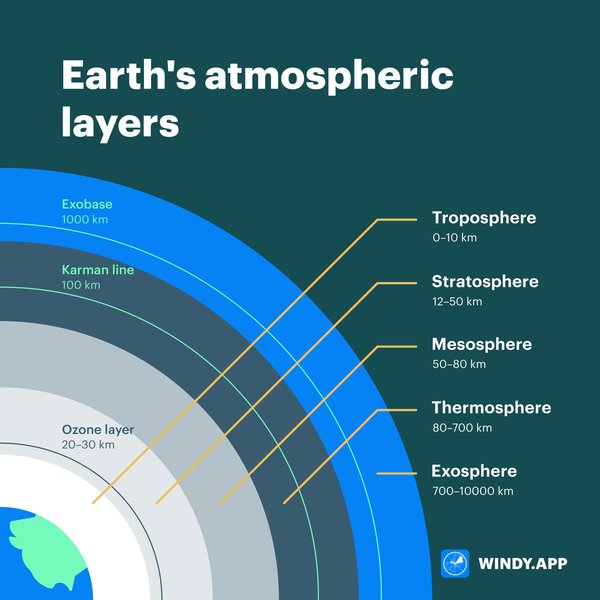
These visuals depict the layered structure, highlighting features like the ozone layer's position in the stratosphere, meteors disintegrating in the mesosphere, and the vastness of the thermosphere where auroras dance. They serve as excellent references during the lesson to help students associate specific altitudes and phenomena with the correct atmospheric layer.
Exploring the Atmosphere Visually
This video provides an engaging and kid-friendly overview of the Earth's atmospheric layers, reinforcing the concepts discussed in the lesson plan with animation and clear explanations. It's a great way to visualize the different altitudes, temperature changes, and key features of each layer.
Watching this can help solidify understanding by presenting the information in a dynamic format, making the abstract concept of atmospheric layers more concrete and memorable for students.
Frequently Asked Questions (FAQ)
What are the main gases in the atmosphere?
The Earth's atmosphere is primarily composed of Nitrogen (N₂), making up about 78%, and Oxygen (O₂), accounting for about 21%. The remaining 1% consists of Argon (Ar), Carbon Dioxide (CO₂), and trace amounts of other gases like Neon (Ne), Helium (He), Methane (CH₄), Krypton (Kr), Hydrogen (H₂), and Water Vapor (H₂O).
Why does the temperature increase with altitude in the Stratosphere?
The temperature increases in the stratosphere primarily because the Ozone Layer (O₃) is located there. Ozone molecules absorb high-energy ultraviolet (UV) radiation from the sun. This absorption process converts UV energy into heat, warming this layer. The higher you go in the stratosphere, the greater the concentration of ozone and the more UV radiation is absorbed, leading to higher temperatures.
Where do meteors burn up?
Most meteors, often called "shooting stars," burn up in the Mesosphere. As space rocks enter the Earth's atmosphere at high speeds, they encounter air molecules. Although the air in the mesosphere is very thin, the friction generated between the meteoroid and these molecules is intense enough to heat the meteoroid to incandescence, causing it to vaporize and leave a bright streak.
What is the difference between weather and climate?
Weather refers to the short-term atmospheric conditions in a specific place at a specific time, including temperature, humidity, precipitation, wind, and cloud cover. It's what's happening right now or over a few days. Climate, on the other hand, describes the long-term average weather patterns in a particular region, typically averaged over 30 years or more. Weather happens primarily in the Troposphere.
How does atmospheric pollution affect the layers?
Atmospheric pollution primarily affects the lower layers. In the Troposphere, pollutants like sulfur dioxide (SO₂) and nitrogen oxides (NOx) can cause acid rain, while greenhouse gases (CO₂, CH₄) contribute to global warming. In the Stratosphere, certain chemicals, particularly chlorofluorocarbons (CFCs), have depleted the ozone layer, reducing its ability to block harmful UV radiation. Understanding atmospheric chemistry helps address these issues.
References
- ICSE Solutions for Class 9 Geography Composition and Structure of the Atmosphere - APlusTopper
- Gases in the Atmosphere Revision Notes - Save My Exams
- ICSE Solutions for Atmospheric Pollution Class 9 Chemistry - ICSE Rankers
- Atmospheric Pollution Solutions (Selina Concise Chemistry Class 9) - KnowledgeBoat
- Lesson plan Layers of the Atmosphere - Scribd
- The Earth's Atmosphere lesson GCSE Chemistry Unit 9 - TES
- Diagram of Atmosphere Layers - UCAR Center for Science Education
Recommended Queries
Last updated April 5, 2025