
Tired of Clicking Subscribe? Exploring AI & Automation for Your Substack Flood
While a dedicated AI agent isn't waiting, discover powerful ways to automate subscribing to multiple Substack newsletters efficiently.
Highlights: Key Insights into Automating Substack Subscriptions
- No Dedicated AI Subscription Agent: Currently, there isn't a specific, publicly available AI agent designed solely for subscribing users to multiple Substack newsletters automatically.
- Automation is Possible: You can achieve bulk or automated subscriptions using various methods, including integration platforms (like Zapier, Make.com), custom scripts interacting with Substack's systems, and browser automation tools.
- Compliance is Crucial: Any automation attempt must respect Substack's Terms of Service and avoid spammy behavior to prevent potential account issues or ethical concerns.
Understanding the Automation Landscape for Substack
You're looking for a way to streamline subscribing to numerous Substack newsletters, perhaps using an AI agent. While the idea of an intelligent assistant handling this repetitive task is appealing, the reality is a bit more complex. Substack, like many platforms, implements measures to prevent spam and ensure genuine user intent behind subscriptions. This often means limitations on direct, large-scale automated subscribing via easily accessible tools or public APIs specifically for this purpose.
Search results indicate that while AI is increasingly used around the Substack ecosystem (for content creation, social media sharing automation, or customer support by Substack itself), an AI agent designed purely for *user-side bulk subscribing* isn't a standard offering. Instead, automation relies on leveraging existing web technologies and integration tools, sometimes enhanced with AI logic for smarter execution.
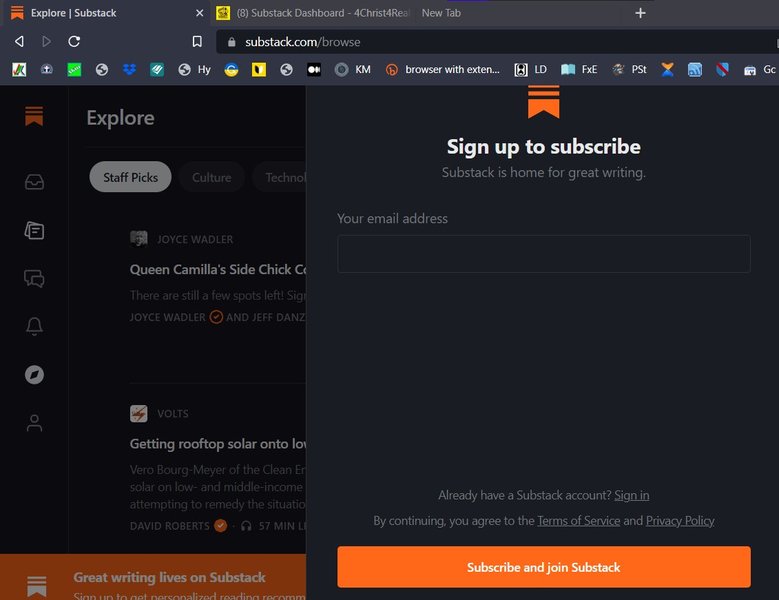
Substack offers a platform for writers, but automating interactions like mass subscriptions requires external tools.
Viable Methods for Automating Substack Subscriptions
Even without a dedicated AI agent, several pathways exist to automate or semi-automate the process of subscribing to multiple Substacks:
1. Integration Platforms (No/Low-Code Approach)
Leveraging Zapier, Make.com (formerly Integromat), and Similar Tools
These platforms connect different web applications and automate workflows. You could potentially set up a system where:
- You maintain a list of Substack URLs (e.g., in a spreadsheet).
- The platform iterates through the list.
- An action attempts to subscribe your email address, possibly by simulating form submissions or using webhook/API calls if available for specific setups (like integrating with a landing page builder that connects to Substack).
Pros: Relatively user-friendly interface, requires minimal coding. Can integrate with many other tools.
Cons: May require paid plans for sufficient task volume. Success can depend on the specifics of Substack's forms and any anti-bot measures. Direct Substack subscription actions might be limited.
2. Scripting and API Interaction (Technical Approach)
Using Python, HTTP Requests, or Custom Scripts
For those comfortable with coding, it's possible to write scripts that directly interact with Substack's subscription mechanism. This typically involves:
- Sending HTTP POST requests to Substack's subscription endpoints with your email and the target newsletter identifier. Some sources mention automating submissions via specific URL formats (
https://your-account.substack.com/welcome?email=...). - Parsing website structures (web scraping) to find subscription forms and programmatically submitting them.
Pros: Highly flexible and customizable. Potentially free if self-hosted.
Cons: Requires programming knowledge. Scripts can break if Substack changes its website structure or API endpoints. Higher risk of triggering anti-spam mechanisms if not implemented carefully (e.g., without appropriate delays or headers).
Conceptual Example (Illustrative Python Snippet):
# NOTE: This is a simplified concept and may not work directly
# due to Substack's anti-automation measures (CSRF tokens, CAPTCHAs etc.)
# Always respect Terms of Service.

import requests

def subscribe_to_substack(email_address, substack_domain):
    """Attempts to subscribe an email to a Substack newsletter."""
    # The actual endpoint and required data payload will vary
    # and likely require more complex handling (e.g., fetching CSRF tokens).
    subscribe_url = f"https://{substack_domain}/api/v1/free_email_signup" # Example endpoint, likely incorrect
    payload = {
        'email': email_address,
        # Other necessary fields might be required
    }
    headers = {
        'User-Agent': 'My Automation Bot (Respecting ToS)',
        # Other headers like CSRF token might be needed
    }

    try:
        response = requests.post(subscribe_url, data=payload, headers=headers)
        response.raise_for_status() # Raise an exception for bad status codes
        print(f"Subscription request sent for {email_address} to {substack_domain}. Status: {response.status_code}")
        # Add delays between requests to avoid rate limiting
    except requests.exceptions.RequestException as e:
        print(f"Failed to subscribe to {substack_domain}: {e}")

# List of Substacks to subscribe to
substack_list = ["newsletter1.substack.com", "coolreads.substack.com", "aiupdates.substack.com"]
my_email = "your_email@example.com"

# for domain in substack_list:
#     subscribe_to_substack(my_email, domain)
#     # time.sleep(10) # IMPORTANT: Implement delays
3. Browser Automation (Robotic Process Automation - RPA)
Using Tools like Puppeteer, Playwright, or Selenium
RPA tools control a web browser programmatically. You can create a script that:
- Opens a browser window.
- Navigates to each Substack URL from your list.
- Locates the email input field and subscribe button.
- Enters your email address and clicks "Subscribe."
- Potentially handles confirmation steps if needed.
Pros: Closely mimics human interaction, potentially bypassing some simpler anti-bot measures. Can handle complex JavaScript-heavy sites.
Cons: Can be slower than direct API calls. Requires coding expertise. Scripts need maintenance if website layouts change. May still encounter CAPTCHAs or more advanced bot detection.
4. Custom AI Agent Development (Advanced Approach)
Building with Frameworks like CrewAI, LangGraph, or Smol Pointers
This involves creating a more sophisticated agent that might combine several techniques. For instance, an AI agent could:
- Accept a high-level goal (e.g., "Subscribe me to top AI newsletters on Substack").
- Use web search tools or browsing capabilities to *discover* relevant newsletters.
- Analyze the content or description to decide *if* it should subscribe.
- Select an appropriate method (API call, browser automation) to execute the subscription.
Pros: Most powerful and flexible option, capable of complex decision-making.
Cons: Significant development effort required. Needs expertise in AI, APIs, and potentially web automation. Still subject to Substack's technical limitations and ToS.
Summarizing Automation Methods
Choosing the right method depends on your technical skills, budget, and the scale of automation needed. Here's a comparative overview:
| Method | Typical Tools | Technical Skill Required | Pros | Cons |
|---|---|---|---|---|
| Integration Platforms | Zapier, Make.com | Low | User-friendly interface, connects many apps, good for simple workflows. | Can be costly at scale, limited by available integrations/actions, might not directly support bulk Substack subscriptions easily. |
| Scripting & API | Python (requests library), other languages | Medium-High | High flexibility, potentially fast and efficient, low cost if self-managed. | Requires coding, scripts break with site changes, risk of triggering anti-spam. |
| Browser Automation (RPA) | Puppeteer, Playwright, Selenium | Medium-High | Mimics human interaction, handles complex sites. | Slower than API, requires coding, brittle to UI changes, can be blocked by CAPTCHAs. |
| Custom AI Agent | CrewAI, LangGraph, Custom Code | High | Intelligent decision-making, handles complex multi-step tasks, adaptable. | Complex to build and maintain, high development effort, still bound by platform limitations. |
Visualizing Automation Approaches
To help conceptualize these methods, the following chart compares them across key dimensions based on general expectations. "Ease of Use" reflects non-technical user accessibility, "Scalability" refers to handling large numbers of subscriptions, "Flexibility" means adaptability to different scenarios, and "Technical Skill" indicates the level of expertise needed.
The Role of AI in Subscription Automation
While the core *action* of subscribing might be handled by simpler automation (like sending an HTTP request or clicking a button via RPA), AI can play a significant role in the *surrounding process*. Think of AI not as the button-pusher itself, but as the intelligent director deciding which buttons to push and when.
This mindmap illustrates how different components could work together in an advanced, potentially AI-enhanced, automation workflow:
As shown, AI's strength lies in tasks like discovering relevant newsletters based on your interests (using natural language processing), filtering large lists, and potentially orchestrating the chosen execution method based on context or detected obstacles (like CAPTCHAs).
Exploring AI Agents in Browser Environments
The concept of AI agents operating within your browser to perform tasks is a growing area. While not specifically tailored for Substack subscriptions out-of-the-box, general-purpose browser AI agents or RPA tools represent one technical path towards achieving this kind of automation. The following video discusses the idea of AI agents interacting with web environments, which is relevant to the RPA approach mentioned earlier:
This video explores the concept of AI agents operating within web browsers, relevant to automating online tasks.
Such agents, when programmed or configured correctly, could navigate to Substack pages, identify subscription forms, and input your details, effectively automating the manual click-by-click process using browser control.
Important Considerations and Best Practices
Before embarking on automating Substack subscriptions, keep these points in mind:
Substack's Terms of Service (ToS)
Aggressive or large-scale automated subscribing could violate Substack's terms, potentially leading to issues with your email address or account. Always review and comply with their policies. Use automation responsibly.
Ethical Considerations
Ensure you genuinely want to subscribe to the newsletters. Mass subscribing without interest contributes to email clutter and can negatively impact sender reputations. Only automate subscriptions for newsletters you intend to read.
Technical Hurdles
Substack likely employs anti-bot measures (like CAPTCHAs, CSRF tokens, rate limiting). Your automation solution needs to be robust enough to handle these, which adds complexity, especially for scripting and RPA methods.
Maintenance
Websites change. Scripts or RPA bots relying on specific HTML structures or API endpoints will break if Substack updates its platform. Be prepared for ongoing maintenance.
Potential Costs
While some tools offer free tiers (like Zapier or Make.com), heavy usage or advanced features often require paid subscriptions. Custom development also incurs time and potentially software costs.
Frequently Asked Questions (FAQ)
+ Is it safe to automate Substack subscriptions?
+ Which automation method is the easiest for a non-programmer?
+ Can AI help me *find* relevant Substack newsletters to subscribe to?
+ Does Substack offer an official API for bulk subscriptions?
Recommended Next Steps
To delve deeper into automating tasks related to Substack, consider exploring these related topics:
- Learn how to use Zapier to automate tasks related to your Substack activities.
- Discover Python scripts for web browser automation using tools like Playwright.
- Explore any available Substack API documentation relevant to developers (keeping in mind limitations).
- Understand the best practices for using automation tools ethically and respecting platform terms of service.
References
Last updated May 5, 2025