
Unlock Korean Fluency: Your First Graded Reader Story Awaits!
Dive into a simple Korean tale designed for beginners, with no romanization to boost your Hangul reading skills.
Embarking on your Korean language journey can be exciting, and one of the most effective ways to build your reading comprehension and vocabulary is through graded readers. These are stories specially written for language learners, using simplified grammar and vocabulary tailored to different proficiency levels. This approach allows you to start reading authentic texts early on, building confidence and making the learning process more enjoyable. Below, you'll find a story crafted for beginners, written entirely in Hangul.
Key Insights for Your Learning Journey
- Immersive Reading: Engaging with stories written purely in Hangul helps you to think in Korean and accelerates your recognition of characters and words in their natural context.
- Vocabulary Acquisition: Graded readers introduce new words gradually and repeat key vocabulary, aiding retention without overwhelming you.
- Grammar Reinforcement: Simple sentence structures used in beginner stories help solidify your understanding of basic Korean grammar in a practical way.
이야기: 공원에서의 하루 (A Day at the Park)
Beginner-Level Korean Graded Reader
아래 이야기는 한국어를 배우는 초보자를 위해 만들어졌습니다. 로마자 표기 없이 한글로만 되어 있어 읽기 연습에 도움이 될 것입니다.
이야기 시작
오늘은 날씨가 아주 좋습니다. 하늘이 맑고 파랗습니다.
민지는 기분이 좋습니다. 민지는 공원에 가기로 했습니다.
공원은 집에서 가깝습니다.
공원에 도착하니, 사람들이 많습니다.
아이들은 뛰어놀고, 어른들은 벤치에 앉아 이야기합니다.
민지는 예쁜 꽃들을 봅니다. 빨간 꽃, 노란 꽃, 하얀 꽃이 있습니다.
"와, 꽃이 정말 아름답다!" 민지가 혼잣말을 합니다.
그때, 민지는 친구 지훈이를 만났습니다.
"지훈아, 안녕!" 민지가 반갑게 인사합니다.
"어, 민지야! 여기서 뭐 해?" 지훈이가 웃으며 대답합니다.
"그냥 산책하러 왔어. 같이 걸을래?"
"좋아!"
민지와 지훈이는 공원을 함께 걷습니다.
큰 나무 아래 그늘에서 잠시 쉽니다.
새들이 지저귀는 소리가 들립니다. 정말 평화로운 오후입니다.
"우리 아이스크림 먹으러 갈까?" 지훈이가 제안합니다.
"정말 좋은 생각이야!" 민지가 신나서 대답합니다.
둘은 공원 근처 아이스크림 가게로 향합니다.
민지는 딸기 맛 아이스크림을, 지훈이는 초콜릿 맛 아이스크림을 선택합니다.
아이스크림은 시원하고 달콤합니다.
민지와 지훈이는 즐거운 시간을 보냈습니다.
공원에서 친구와 함께한 하루는 정말 행복했습니다.
"다음에 또 같이 놀자!" 민지가 말합니다.
"응, 꼭 그러자!" 지훈이가 약속합니다.
끝
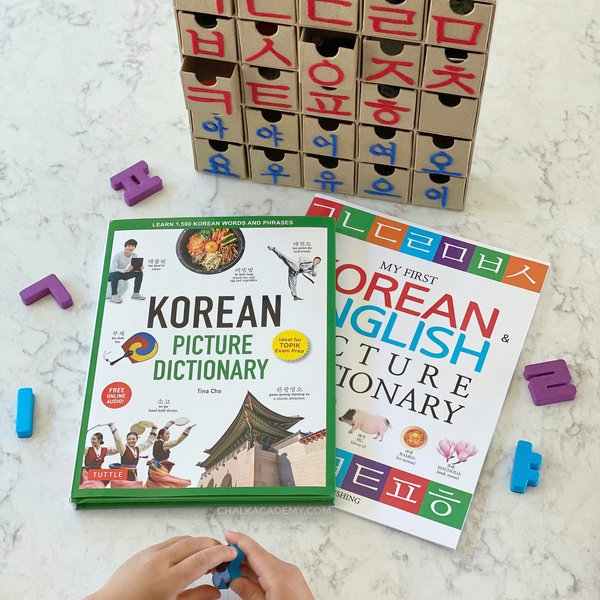
Engaging with age-appropriate materials, like graded readers, makes learning Korean fun and effective for beginners.
Understanding the Story: Vocabulary and Translation
Key Vocabulary (주요 어휘)
Here are some of the words used in the story. Focusing on learning these words will help you understand this story and many other beginner-level Korean texts. Notice there is no romanization, to encourage direct Hangul recognition.
| 한국어 (Korean) | 영어 (English) |
|---|---|
| 오늘 (oneul) | Today |
| 날씨 (nalssi) | Weather |
| 아주 (aju) | Very |
| 좋다 (jota) | To be good |
| 하늘 (haneul) | Sky |
| 맑다 (makda) | To be clear (weather/sky) |
| 파랗다 (parata) | To be blue |
| 기분 (gibun) | Feeling, mood |
| 공원 (gong-won) | Park |
| 가다 (gada) | To go |
| 집 (jip) | Home, house |
| 가깝다 (gakkapda) | To be close, near |
| 사람들 (saramdeul) | People |
| 많다 (manta) | To be many, much |
| 아이들 (aideul) | Children |
| 뛰어놀다 (ttwieonolda) | To run around and play |
| 어른들 (eoreundeul) | Adults |
| 벤치 (benchi) | Bench |
| 앉다 (anta) | To sit |
| 이야기하다 (iyagihada) | To talk, to chat |
| 예쁘다 (yeppeuda) | To be pretty |
| 꽃 (kkot) | Flower |
| 보다 (boda) | To see, to look at |
| 빨갛다 (ppalgata) | To be red |
| 노랗다 (norata) | To be yellow |
| 하얗다 (hayata) | To be white |
| 아름답다 (areumdapda) | To be beautiful |
| 친구 (chingu) | Friend |
| 만나다 (mannada) | To meet |
| 안녕 (annyeong) | Hi, hello (casual) |
| 인사하다 (insahada) | To greet |
| 웃다 (utda) | To laugh, to smile |
| 대답하다 (daedapada) | To answer, to reply |
| 산책하다 (sanchaekada) | To take a walk |
| 같이 (gachi) | Together |
| 걷다 (geotda) | To walk |
| 크다 (keuda) | To be big |
| 나무 (namu) | Tree |
| 아래 (arae) | Below, under |
| 그늘 (geuneul) | Shade |
| 쉬다 (swida) | To rest |
| 새 (sae) | Bird |
| 소리 (sori) | Sound |
| 들리다 (deullida) | To be heard |
| 평화롭다 (pyeonghwaropda) | To be peaceful |
| 오후 (ohu) | Afternoon |
| 아이스크림 (aiseukeulim) | Ice cream |
| 먹다 (meokda) | To eat |
| 생각 (saenggak) | Thought, idea |
| 가게 (gage) | Store, shop |
| 딸기 맛 (ttalgi mat) | Strawberry flavor |
| 초콜릿 맛 (chokollit mat) | Chocolate flavor |
| 선택하다 (seontaekada) | To choose, to select |
| 시원하다 (siwonhada) | To be cool, refreshing |
| 달콤하다 (dalkomhada) | To be sweet |
| 즐겁다 (jeulgeopda) | To be enjoyable, pleasant |
| 시간 (sigan) | Time |
| 보내다 (bonaeda) | To spend (time) |
| 행복하다 (haengbokada) | To be happy |
| 다음 (da-eum) | Next time |
| 또 (tto) | Again |
| 놀다 (nolda) | To play |
| 약속하다 (yaksokada) | To promise |
English Translation (영어 번역)
Today the weather is very good. The sky is clear and blue.
Minji feels good. Minji decided to go to the park.
The park is close to her home.
When she arrived at the park, there were many people.
Children are running and playing, and adults are sitting on benches talking.
Minji sees pretty flowers. There are red flowers, yellow flowers, and white flowers.
"Wow, the flowers are really beautiful!" Minji says to herself.
Then, Minji met her friend Jihun.
"Jihun, hi!" Minji greets him cheerfully.
"Oh, Minji! What are you doing here?" Jihun replies with a smile.
"I just came for a walk. Want to walk together?"
"Sure!"
Minji and Jihun walk together in the park.
They rest for a moment in the shade under a big tree.
The sound of birds chirping can be heard. It's a really peaceful afternoon.
"Shall we go get ice cream?" Jihun suggests.
"That's a great idea!" Minji replies excitedly.
The two head to an ice cream shop near the park.
Minji chooses strawberry-flavored ice cream, and Jihun chooses chocolate-flavored ice cream.
The ice cream is cool and sweet.
Minji and Jihun had a pleasant time.
The day spent with a friend at the park was truly happy.
"Let's play together again next time!" Minji says.
"Yes, let's definitely do that!" Jihun promises.
Visualizing Effective Graded Readers
To understand what makes a beginner Korean graded reader effective, consider the following aspects. An ideal story balances simplicity with engagement to facilitate learning without causing frustration. The chart below visualizes these factors, comparing an "Ideal Beginner Story" with a more "Advanced Text" not suitable for early learners. The scores are on a scale of 1 to 10, where 10 is most optimal/simple for a beginner.
This radar chart highlights that beginner stories should excel in vocabulary and grammar simplicity, utilize short sentences, and repeat key terms to reinforce learning. While engagement is important, it's often achieved through relatable scenarios rather than complex narratives at this stage.
Core Components of Learning with Graded Readers
Using graded readers for Korean involves several interconnected elements that contribute to language acquisition. The mindmap below illustrates these key components and their benefits.
(e.g., daily life, friends, family)"] id2["Learner Benefits"] id2a["Improved Reading Comprehension"] id2b["Vocabulary Expansion"] id2c["Grammar Reinforcement in Context"] id2d["Increased Confidence"] id2e["Cultural Insights (subtle)"] id2f["Fun and Engaging Learning"] id3["Effective Usage Tips"] id3a["Read Aloud for Pronunciation"] id3b["Re-read Multiple Times"] id3c["Make Vocabulary Lists"] id3d["Try Summarizing the Story"] id3e["Use Accompanying Audio (if available)"] id3f["Progress Gradually to Higher Levels"]
As the mindmap shows, graded readers are structured to support various aspects of language learning, from understanding basic story elements to applying effective study habits. The goal is a holistic improvement in your Korean skills.
Watch and Learn: Beginner Korean Storytelling
Visual and auditory input can significantly enhance your learning. The video below provides an example of a beginner Korean short story, which can help you with listening comprehension and see how stories are structured for learners. It complements reading practice by familiarizing you with the sounds and rhythms of Korean.
This video, titled "BEGINNER KOREAN SHORT STORY | 우리 가족 (Our Family) | A1-A2," is an excellent resource. It presents a simple narrative about family, a common and relatable topic for beginners. Listening to such stories helps attune your ear to Korean pronunciation and intonation, while the A1-A2 level ensures the vocabulary and grammar are accessible. Many learners find that combining reading with listening accelerates their understanding and speaking abilities.
Frequently Asked Questions (FAQ)
Why is reading without romanization important for beginners?
Reading Hangul directly, without relying on romanization, is crucial for several reasons:
- Accurate Pronunciation: Romanization can often be misleading as English letters may not perfectly capture Korean sounds. Learning to read Hangul helps you associate the correct sounds with the characters.
- Faster Recognition: Constantly translating Hangul to romanized equivalents in your head slows down reading. Direct Hangul reading builds faster recognition and fluency.
- Foundation for Advanced Learning: All authentic Korean materials (books, websites, signs) are in Hangul. Building this skill early is essential for future progress.
- Understanding Sound Change Rules: Korean has many sound change rules that are more apparent when reading Hangul directly. Romanization often obscures these important phonetic principles.
How often should I practice reading graded readers?
Consistency is key. Aim for short, regular reading sessions rather than long, infrequent ones. Even 15-30 minutes daily can make a significant difference. The more you read, the more comfortable you'll become with vocabulary, grammar, and sentence structures. As you progress, you can gradually increase the length or difficulty of the stories.
What should I do if I encounter many unknown words in a story?
If a story feels too difficult with too many new words, it might be slightly above your current level. Here are some strategies:
- Choose simpler texts: Look for stories specifically labeled for absolute beginners or with a very low unique word count.
- Use provided vocabulary lists: Many graded readers come with vocabulary lists (like the one provided here). Review these before or during reading.
- Focus on gist: Try to understand the main idea of sentences or paragraphs even if you don't know every word. Context can often help.
- Look up key words: Identify words that seem crucial to understanding and look them up. Don't try to look up every single unknown word, as this can be demotivating.
- Re-read: Each time you re-read, you'll likely understand more.
The goal of graded readers is to be "comprehensible input," meaning you should understand most of it. If not, find an easier reader.
Where can I find more beginner-level Korean stories?
There are many excellent resources for beginner Korean graded readers:
- Talk To Me In Korean (TTMIK): They offer books like "Easy Korean Reading For Beginners" and an app called "TTMIK Stories" with numerous graded stories.
- StoryKorean.com: This website provides a collection of stories for learners.
- FluentU: While primarily a video-based platform, FluentU often has blog posts recommending reading resources and sometimes incorporates story-like content.
- Bookstores and Online Retailers: Search for "Korean graded readers for beginners" on platforms like Amazon. You can find series specifically designed for language acquisition.
- YouTube Channels: Many channels create video stories for Korean learners, often with Hangul subtitles.
Recommended Next Steps
Continue your Korean learning journey by exploring these related topics:
- What are the most common Korean vocabulary words for beginners?
- How can I practice Korean listening comprehension with simple stories?
- What are basic Korean sentence structures I should learn first?
- Are there any apps that offer interactive Korean stories for learners?
References
This response was informed by concepts and resources discussed in the following (and similar) materials:
 amazon.com
Last updated May 15, 2025