
Unlock Fluency Faster: The Secrets to Rapid Language Acquisition
Discover proven strategies to accelerate your language learning journey, combining immersion, smart techniques, and consistent effort.
Highlights: Key Takeaways for Fast Language Learning
- Immersion is Crucial: Surround yourself with the target language daily through media, conversation, and environment simulation for the quickest gains.
- Strategic Practice Pays Off: Focus on core vocabulary using Spaced Repetition Systems (SRS) and prioritize speaking from day one, even with mistakes.
- Consistency is King: Short, regular study sessions are more effective than infrequent marathon studies. Build a routine and stick to it.
Embarking on Your Language Learning Sprint
Learning a new language can feel like a monumental task, but achieving fluency faster than you might think is possible. While there's no single "magic pill" for instant proficiency, combining several scientifically-backed and expert-recommended strategies can significantly accelerate your progress. The journey requires dedication, but the right approach makes it efficient and enjoyable. This guide synthesizes the most effective methods as of 2025 to help you learn a language rapidly.
Why Speed Matters (And What 'Fast' Really Means)
Accelerating your learning isn't just about saving time; it's about maintaining momentum and motivation. Seeing tangible progress quickly keeps you engaged. "Fast" is relative – it depends on the language, your starting point, time commitment, and chosen methods. However, by employing the strategies below, learners can often reach conversational ability much sooner than traditional classroom methods might suggest, sometimes within months rather than years.
Featured Insights: Learning from Polyglots
Experienced language learners often share valuable insights. Many polyglots emphasize practical application and consistent exposure over rote memorization alone. The following video discusses several powerful methods used by successful language learners:
Video discussing effective methods for faster language learning.
Core Strategies for Accelerated Language Learning
Combining the following techniques forms a powerful framework for rapid language acquisition.
1. Dive Deep with Immersion
Creating Your Language Bubble
Immersion is consistently cited as one of the most potent accelerators. It means surrounding yourself with the target language as much as possible, making it a part of your daily life. Even if you can't travel to a country where the language is spoken, you can simulate immersion:
- Media Consumption: Watch movies, TV shows (start with children's programming or familiar plots), listen to music, and podcasts in the target language. Initially, use target language subtitles if needed, then remove them.
- Digital Environment: Change the language settings on your phone, computer, and social media accounts.
- Label Your World: Use sticky notes to label common household items in the target language.
- Think in the Language: Try to narrate your daily activities or formulate thoughts directly in the new language, even if it's simple at first.
- Language 'Islands': Focus on consuming content related to specific topics you enjoy (e.g., cooking, sports) in the target language to build specialized vocabulary quickly.

Immersion techniques help integrate the language into daily life.
2. Consistency and Routine: The Power of Habit
Making Language Learning Automatic
Daily exposure, even in short bursts, is far more effective than sporadic, long study sessions. Consistency builds neural pathways and prevents the "forgetting curve" from erasing your progress. Aim for at least 15-30 minutes of focused practice every day.
- Schedule It: Treat your language learning time like an important appointment. Block it out in your calendar.
- Habit Stacking: Link your language practice to an existing habit (e.g., "After my morning coffee, I will review flashcards for 15 minutes").
- Track Your Progress: Use a journal or app to track your study time and achievements. Seeing your streak grow can be highly motivating.
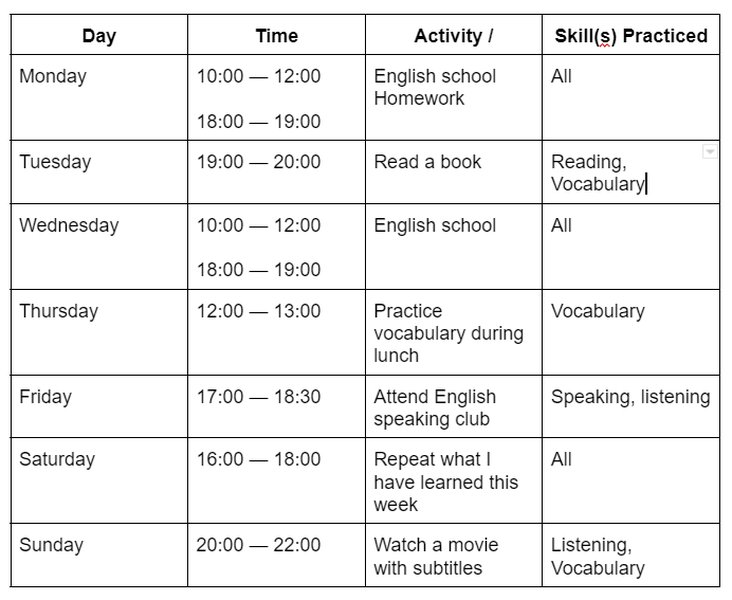
A structured study plan aids consistency and tracking.
3. Smart Vocabulary Acquisition: SRS and Core Words
Learning What Matters Most, Efficiently
You don't need to know every word to communicate effectively. Focus on the most common words first. Often, the top 1000-2000 words cover around 80% of everyday conversation.
- High-Frequency Lists: Start with lists of the most common words and useful phrases in your target language.
- Spaced Repetition Systems (SRS): Use SRS tools like Anki or Memrise. These flashcard apps use algorithms to show you information just before you're about to forget it, maximizing memory retention efficiency. This is a scientifically proven method to rapidly build vocabulary.
4. Speak from Day One: Embrace Imperfection
Activating Your Knowledge
Passive study (reading, listening) is essential, but active production (speaking, writing) solidifies learning. Don't wait until you feel "ready" – start speaking from the very beginning.
- Talk to Yourself: Narrate your actions or thoughts aloud in the target language.
- Find Language Partners: Use language exchange apps (e.g., Tandem, HelloTalk) or websites (e.g., italki, Preply) to connect with native speakers for conversation practice.
- Hire a Tutor: A tutor provides structured practice, personalized feedback, and accountability.
- Focus on Communication: Prioritize getting your message across over grammatical perfection, especially initially. Mistakes are a natural and necessary part of learning.
5. Master Pronunciation Early
Sounding Natural, Understanding Better
Good pronunciation is crucial for both being understood and understanding others. Focusing on it early prevents fossilized errors.
- Listen Intently: Pay close attention to the sounds, rhythm, and intonation of native speakers.
- Mimic and Record: Repeat words and phrases aloud. Record yourself and compare it to native audio.
- Shadowing: Listen to audio and speak along with the speaker simultaneously, trying to match their pronunciation and cadence.
6. Set Clear, Actionable Goals
Knowing Your Destination
Define why you're learning the language and set specific, measurable, achievable, relevant, and time-bound (SMART) goals. Examples: "Learn 30 new vocabulary words related to food this week," or "Be able to hold a 5-minute basic conversation about my hobbies in two months." Clear goals provide direction and motivation.
7. Leverage Technology and Varied Resources
Tools to Enhance Your Learning
Modern technology offers powerful tools to aid language learning. Combine different resources to engage various skills (listening, speaking, reading, writing) and keep things interesting.
- Language Apps: Use apps for vocabulary (Memrise), grammar practice (Duolingo), interactive exercises (Mondly), or audio-based learning (Pimsleur).
- Online Dictionaries & Translators: Essential tools for quick lookups (e.g., WordReference, Google Translate – use cautiously for single words/phrases).
- Multimedia Content: Utilize YouTube channels, language learning blogs, online news sites, and digital libraries in your target language.
Popular Language Learning Apps (2025)
Different apps cater to different learning styles and goals. Here's a quick comparison of some popular options mentioned:
| App Name | Primary Focus | Key Features | Best For |
|---|---|---|---|
| Duolingo | Gamified learning, vocabulary, basic grammar | Short lessons, points/streaks, wide language selection | Beginners, motivation through gamification, daily practice |
| Memrise | Vocabulary acquisition, SRS | Spaced Repetition, user-generated courses, video clips of native speakers | Efficient vocabulary building, remembering specific terms |
| Mondly | Interactive exercises, conversation simulation | Daily lessons, chatbot conversations, AR features | Practical phrase practice, interactive learning |
| Pimsleur | Spoken proficiency, listening comprehension | Audio-based lessons, spaced repetition (Graduated Interval Recall), pronunciation focus | Auditory learners, developing conversational skills quickly |
8. Make it Fun and Relevant
Connecting Learning to Your Life
You're more likely to stick with language learning if you enjoy it. Connect your studies to your interests and hobbies. If you love cooking, learn cooking vocabulary and watch cooking shows in the language. If you enjoy music, learn the lyrics to songs.
9. Focus on One Language at a Time
Avoiding Cognitive Overload
While it might be tempting to tackle multiple languages, experts generally advise focusing on one language until you reach a comfortable level (e.g., intermediate). This prevents confusion and allows for deeper immersion and faster progress in that single language.
Visualizing Language Learning Effectiveness
While the "fastest" way depends on the individual, certain strategies are generally considered more impactful for rapid progress. This chart offers a perspective on the relative importance of key language learning components for speed and efficiency. Note that all components are valuable, but some yield faster initial results when prioritized.
This visualization suggests that consistent practice and immersion have a high impact on both speed and long-term fluency, while speaking practice becomes increasingly crucial for achieving genuine fluency over time.
Mapping Your Language Learning Journey
To synthesize these strategies, here is a mindmap outlining the core components of an effective and rapid language learning approach:
This map illustrates how various elements – principles like consistency and immersion, specific techniques for vocabulary and pronunciation, and the right mindset – interconnect to accelerate language learning.
Frequently Asked Questions (FAQ)
How long does it *really* take to learn a language fast?
Are language learning apps enough on their own?
Should I focus on grammar rules from the beginning?
What if I don't have time for full immersion or travel?
Recommended Further Exploration
- What daily habits are most effective for learning a language?
- Can you explain how to use Spaced Repetition Systems like Anki for vocabulary?
- Where can I find language exchange partners online safely and effectively?
- What are the benefits of focusing on pronunciation early when learning a language?
References
Last updated May 6, 2025