
Cracking the Code: What Elite Tech & Business Dual-Degree Programs Like Berkeley M.E.T. and Penn M&T Truly Seek
An inside look at the demanding criteria and standout strategies for aspiring innovators applying to top-tier integrated programs.
Highlights: Key Insights for Applicants
- Demonstrated Interdisciplinary Passion: Success hinges on proving a genuine, deep-seated interest not just in technology and business individually, but critically, at their dynamic intersection.
- Academic Rigor Meets Real-World Impact: Exceptional grades in challenging STEM courses are foundational, but must be complemented by tangible experiences showcasing leadership, creativity, and problem-solving through projects, internships, or ventures.
- Compelling Narrative and Fit: Your application, especially essays, must articulate a unique vision, clearly explaining how the specific dual-degree program is essential for your goals and how you'll contribute to the program's innovative community.
Programs like the University of California, Berkeley's Management, Entrepreneurship, & Technology (M.E.T.) program and the University of Pennsylvania's Jerome Fisher Program in Management & Technology (M&T) represent the pinnacle of undergraduate education for students aiming to lead at the confluence of technology and business. These dual-degree programs are notoriously selective, seeking a rare breed of student capable of excelling in rigorous engineering and business curricula simultaneously. Understanding precisely what these programs look for is the first step toward crafting a compelling application.
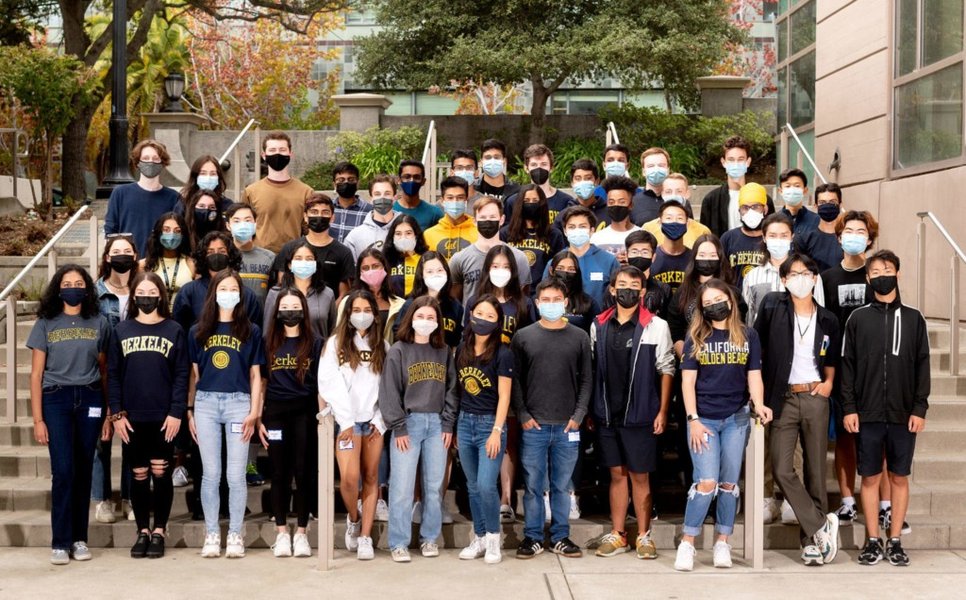
Students in programs like Berkeley M.E.T. engage in collaborative, interdisciplinary learning.
Decoding the Ideal Candidate Profile
While specific nuances exist between Berkeley M.E.T. and Penn M&T, they share core expectations for their applicants. They seek individuals poised to become future leaders and innovators who can bridge the technical and commercial worlds.
Academic Prowess: The Foundation
Rigorous Coursework and Stellar Grades
Exceptional academic performance is non-negotiable. These programs expect applicants to have challenged themselves with the most demanding coursework available, particularly in STEM fields.
- STEM Focus: A strong foundation in advanced mathematics (including calculus), physics, and computer science is crucial. Penn M&T explicitly lists prerequisites like calculus, physics, and economics.
- High GPA: Applicants consistently rank at the top of their class, demonstrating mastery across subjects. While minimum GPAs might be stated (e.g., 3.0 for Berkeley continuing students), the reality for freshman admits is significantly higher.
- Standardized Tests: While many institutions, including Penn and UC Berkeley, have adopted test-optional policies, submitting high SAT/ACT scores can still strengthen an application, especially if they corroborate high grades in relevant subjects. Check the latest policy for each program during your application cycle.
The Interdisciplinary Spark: Bridging Tech and Business
Demonstrated Passion for the Intersection
Simply being good at math and liking business isn't enough. Successful applicants demonstrate a deep, authentic interest in how technology and business strategy intertwine to create value and drive innovation. This should be evident through:
- Experiences: Participation in activities, projects, or internships that explicitly combine technical skills with business acumen (e.g., developing an app and drafting its business plan, participating in tech entrepreneurship competitions).
- Clear Vision: Articulating specific interests within this intersection (e.g., fintech, biotech management, sustainable tech ventures) and explaining *why* a dual degree is necessary to pursue them.
- Curiosity: Showing intellectual curiosity about how technological advancements impact markets, organizations, and society.
Beyond the Classroom: Leadership, Creativity, and Initiative
Evidence of Impact and Potential
These programs seek future leaders and innovators. Your application needs to showcase these qualities through tangible experiences:
- Leadership Roles: Holding meaningful leadership positions in clubs, projects, or community organizations, demonstrating responsibility and the ability to motivate others.
- Problem-Solving Skills: Providing concrete examples of how you identified a problem, devised a creative solution, and implemented it, especially in contexts related to tech or business. Penn M&T specifically asks for an essay detailing such an experience.
- Entrepreneurial Spirit: Evidence of initiative, whether through starting a small venture, developing a novel project, or contributing significantly to a startup environment. Berkeley M.E.T. explicitly includes "Entrepreneurship" in its name and focus.
- Teamwork: Ability to collaborate effectively within diverse teams, a crucial skill in both engineering and business environments.
Personal Qualities and Program Fit
Authenticity and Community Contribution
Beyond metrics and achievements, admissions committees look for individuals who align with the program's values and will contribute positively to the cohort.
- Motivation and Goals: A clear understanding of why you are applying specifically to M.E.T. or M&T, and how the program's unique resources will help you achieve your future aspirations.
- Unique Perspective: Sharing experiences or backgrounds that offer a distinct viewpoint and enrich the learning environment.
- Community Engagement: Demonstrating a commitment to contributing to communities, whether school, local, or global. Berkeley M.E.T. sometimes uses a video essay prompt focused on community contributions.
- Resilience and Adaptability: Implicitly assessed through the rigor of your background and how you frame challenges in your essays.
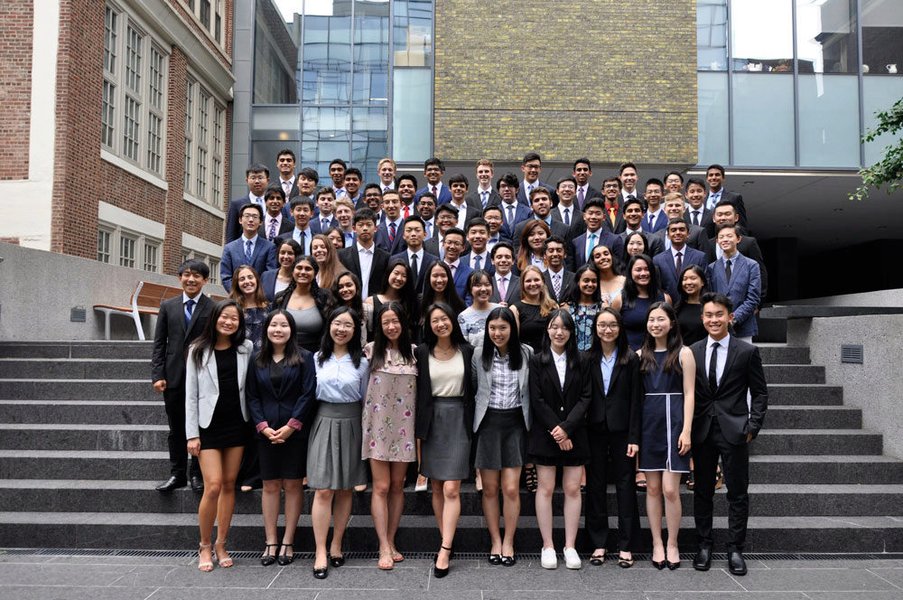
Collaboration and discussion are central to the Penn M&T experience.
Crafting a Standout Application: Strategies for Success
Given the intense competition, simply meeting the criteria isn't enough. Applicants need to strategically build their profile and present it compellingly.
Strategic Academic and Experiential Planning
Building a Relevant Foundation
- Course Selection: Deliberately choose challenging courses in math, physics, computer science, and economics throughout high school. Aim for AP, IB HL, or equivalent levels.
- Early Exploration: Don't wait until senior year. Start exploring the intersection of tech and business early through clubs (Robotics, DECA, FBLA, Coding Club), online courses, or personal projects.
- Seek Interdisciplinary Experiences: Prioritize internships, research opportunities, or projects that genuinely blend technical challenges with business considerations. This could involve market analysis for a tech product, developing software for a non-profit, or participating in innovation challenges.
- Document Everything: Keep track of your roles, responsibilities, and specific achievements in each activity. Quantify your impact whenever possible.
Visualizing an Interconnected Profile
A strong applicant demonstrates synergy between their academic pursuits, technical skills, business interests, and leadership experiences. The mindmap below illustrates how these elements connect to form a compelling profile for programs like M.E.T. and M&T.
for M.E.T./M&T"] id1["Academic Excellence"] id1a["Rigorous STEM Courses
(Calc, Physics, CS)"] id1b["High GPA / Rank"] id1c["Strong Test Scores (Optional)"] id1d["Economics/Business Coursework"] id2["Demonstrated Interdisciplinary Interest"] id2a["Tech + Business Projects"] id2b["Relevant Internships"] id2c["Entrepreneurial Ventures"] id2d["Clear Essay Articulation"] id3["Leadership & Initiative"] id3a["Club/Organization Leadership"] id3b["Project Management"] id3c["Community Impact"] id3d["Proactive Problem Solving"] id4["Technical Skills"] id4a["Coding / Software Dev"] id4b["Engineering Design"] id4c["Data Analysis"] id4d["Research Experience"] id5["Business Acumen"] id5a["Market Awareness"] id5b["Basic Finance/Economics Understanding"] id5c["Communication Skills"] id5d["Strategic Thinking"]
Mastering the Narrative: Essays and Communication
Telling Your Unique Story
Essays are your primary opportunity to connect the dots and showcase your personality, motivations, and fit. Generic statements won't suffice.
- Be Specific: Go beyond stating interest. Detail *specific* projects, challenges, and insights gained at the intersection of technology and business. Reference specific aspects of the M.E.T. or M&T program (faculty, courses, labs, clubs) that excite you and align with your goals.
- Authenticity: Write in your own voice. Admissions committees read thousands of essays; sincerity stands out. Reflect genuinely on your experiences, successes, and even informative failures.
- Answer the Prompt Directly: Pay close attention to the specific questions asked in the supplemental essays for each program. For example, Penn M&T often asks about solving a problem with leadership/creativity and exploring the intersection, while Berkeley M.E.T. asks how the program helps achieve goals and about motivating experiences.
- Video Essays (Berkeley M.E.T.): If invited, treat the video essay seriously. Prepare thoughtful responses, practice your delivery, and let your personality shine through while directly addressing the prompt (e.g., community contribution).
Leveraging Recommendations
Choosing Wisely and Providing Context
Strong letters of recommendation provide crucial third-party validation of your abilities and character.
- Choose Recommenders Carefully: Select teachers (especially STEM teachers, as Penn M&T recommends) or mentors who know you well and can speak concretely about your skills, intellectual curiosity, work ethic, and potential in both technical and collaborative settings.
- Provide Context: Give your recommenders your resume, a draft of your essays, and reminders about specific projects or achievements you'd like them to highlight. Explain why you're applying to the specific dual-degree program.
Visualizing Applicant Strengths: A Comparative View
Success in applying to these programs requires a blend of strengths. The radar chart below compares hypothetical applicant profiles across key dimensions valued by programs like Berkeley M.E.T. and Penn M&T. This illustrates how different combinations of strengths might be perceived. Note that these are illustrative archetypes, and successful applicants often present unique combinations.
This chart suggests that while excellence across the board is ideal, different profiles can be compelling. A 'Balanced Innovator' shows strong aptitude everywhere, a 'Tech-Focused Leader' excels in academics and technical projects while demonstrating leadership, and an 'Entrepreneurial Problem-Solver' shines in initiative, business sense, and communication, even if pure academics are slightly less dominant than the tech leader.
Hearing from the Source: Application Advice
Sometimes, the best insights come directly from those involved with the program. Hearing current students discuss their experiences navigating the application process can provide valuable context and practical tips, especially regarding the nuances of the essays and showcasing fit.
This video features Berkeley M.E.T. students sharing specific advice on tackling the supplemental essays, offering perspectives on what makes a response compelling and how to effectively communicate your suitability for the program's unique interdisciplinary focus.
Program Structures at a Glance
Understanding the core features of each program helps tailor your application to demonstrate fit. Both offer integrated curricula leading to dual degrees, but they have distinct structures and emphases.
| Feature | Berkeley M.E.T. | Penn M&T |
|---|---|---|
| Degrees Awarded | B.S. in Business Administration (Haas School of Business) + B.S. in an Engineering field (College of Engineering) | B.S. in Economics (The Wharton School) + B.S. or B.A.S. in an Engineering field (School of Engineering and Applied Science) |
| Core Focus | Management, Entrepreneurship, & Technology; integrating engineering innovation with business leadership and startup creation. | Management & Technology; preparing leaders to make strategic decisions informed by both technological and economic/business principles. |
| Key Application Emphasis | Demonstrated interest in combining engineering and business, entrepreneurial potential, community contribution, essays + potential video essay. | Demonstrated interest in business, engineering, and their intersection; leadership & creativity in problem-solving; strong STEM & Econ preparation; specific essays. |
| Selectivity | Extremely high (historically sub-3% freshman acceptance rate). | Extremely high (admits ~50-55 students per year). |
This table highlights the dual-degree nature and core focus areas, reinforcing the need for applicants to demonstrate capabilities and interests aligned with both the business and engineering schools involved.
Frequently Asked Questions (FAQ)
Do I need prior business experience to apply?
While formal business experience (like an internship) isn't strictly required, demonstrating genuine interest and initiative in business or entrepreneurship is crucial. This can be shown through relevant coursework, leadership in business-related clubs, participation in entrepreneurship competitions, developing a business plan for a technical project, or even self-study. The key is showing you've actively explored the business/management side, not just the technical one.
How important are extracurricular activities compared to academics?
Both are critically important. Exceptional academics are the baseline requirement – without top grades in rigorous courses, an application is unlikely to pass the initial screening. However, given that nearly all applicants have stellar academics, extracurriculars become a key differentiator. Activities that demonstrate leadership, creativity, problem-solving, initiative, and, most importantly, a passion for the intersection of technology and business are essential for standing out.
What kind of projects best demonstrate interest in the tech/business intersection?
Ideal projects involve both building/creating something technical and considering its real-world application or market viability. Examples include: developing a mobile app to solve a specific community need and outlining a potential business model; designing a hardware prototype and researching its manufacturing costs and target market; participating in a hackathon focused on social entrepreneurship; or conducting research that has clear commercial or policy implications.
Should I choose specific engineering and business tracks before applying?
You typically need to indicate your intended engineering major when applying, as the engineering coursework is specific. While you don't need your entire career path mapped out, having a clear idea of the engineering field that interests you (e.g., Computer Science, Bioengineering, Electrical Engineering) is important. Your interest in business/management should be broad enough to fit the program's curriculum, but having specific areas of interest (like entrepreneurship or finance) can strengthen your application narrative.
Recommended Further Exploration
- Explore strategies for writing compelling supplemental essays tailored to competitive dual-degree programs.
- Discover examples of high school projects that successfully combine technology and entrepreneurship.
- Compare the specific curricula and course requirements of the Berkeley M.E.T. and Penn M&T programs.
- Understand the significance of strong STEM recommendation letters in competitive engineering admissions.
References
Last updated May 4, 2025