
Embracing Errors: The Ultimate Guide to Learning and Growing from Your Mistakes
Turning Setbacks into Stepping Stones for Success
Key Takeaways
- Acknowledge and Analyze: The foundational step to learning from mistakes is to honestly acknowledge they happened and then meticulously analyze what went wrong to identify the root cause.
- Embrace a Growth Mindset: Viewing mistakes not as personal failures but as valuable learning opportunities fosters resilience and encourages continuous improvement.
- Develop and Implement Strategies: Actively creating and implementing plans based on the lessons learned from mistakes is crucial for preventing repetition and fostering positive change.
Mistakes are an inevitable part of life and a fundamental component of the learning process. Instead of viewing them with dread or embarrassment, we can reframe them as valuable opportunities for growth and improvement. Learning effectively from our mistakes can lead to enhanced skills, greater resilience, and ultimately, more significant success in both personal and professional spheres.
The Power of Acknowledgment and Analysis
The journey of learning from mistakes begins with a crucial first step: acknowledging that a mistake has occurred. This might seem straightforward, but it can be challenging due to feelings of shame, guilt, or embarrassment. However, avoiding or minimizing a mistake prevents any possibility of learning from it. Admitting the error, both to yourself and, when necessary, to others involved, is essential for moving forward constructively.
Following acknowledgment, a thorough analysis is vital. This involves dissecting the situation to understand precisely what went wrong. Ask yourself critical questions:
-
What were the circumstances leading up to the mistake?
-
What specific actions or decisions contributed to the error?
-
Were there any external factors at play?
-
What was my thought process at the time?
Analyzing your mistakes helps you identify patterns, understand underlying causes, and gain clarity on areas for improvement. It's about gathering data from your experience to inform future actions.

Analyzing the aftermath of a situation to understand what went wrong.
Identifying the Root Cause
Beyond simply identifying what went wrong, strive to uncover the root cause. Was it a lack of knowledge, poor planning, a misjudgment, or perhaps an emotional reaction? Understanding the root cause allows you to address the fundamental issue rather than just the symptoms, leading to more sustainable learning and change.
Cultivating a Growth Mindset Towards Mistakes
How we perceive mistakes significantly impacts our ability to learn from them. Adopting a growth mindset, which views intelligence and abilities as malleable and capable of development, is crucial. In a growth mindset framework, mistakes are not indicators of inherent inability but rather opportunities to learn and grow.
Shifting from a fixed mindset (where abilities are seen as static) to a growth mindset allows you to approach mistakes with curiosity and resilience. Instead of feeling defeated, you become empowered to analyze what happened and strategize for future success.

Embracing a mindset where mistakes are seen as opportunities for growth.
Embracing Imperfection and Self-Compassion
It's easy to be hard on ourselves after making a mistake, but practicing self-compassion is vital for effective learning. Recognize that everyone makes mistakes and that these errors do not define your worth. Treat yourself with the same kindness and understanding you would offer a friend who made a similar error. Forgiving yourself allows you to release guilt and focus your energy on learning and improving.
Accepting your mistakes and showing self-love can significantly impact your ability to move forward positively.
Developing and Implementing Strategies for Change
Learning from mistakes is not merely an intellectual exercise; it requires action. Based on your analysis, develop concrete strategies to avoid repeating the same error in the future. These strategies should be specific, actionable, and tailored to the root cause of the mistake.
Creating an Action Plan
Your action plan might involve acquiring new skills, changing your approach to a task, implementing new organizational systems, seeking external feedback, or adjusting your emotional responses in certain situations. Writing down your plan can help solidify your commitment and provide a roadmap for change.
Here's a simple table illustrating how to translate mistakes into actionable strategies:
| Mistake Identified | Root Cause Analysis | Actionable Strategy |
|---|---|---|
| Missed an important deadline | Poor time management and lack of a clear schedule | Implement a detailed daily schedule and use a project management tool to track deadlines. |
| Miscommunicated expectations on a project | Assumption that others had the same understanding | Establish clear communication protocols, including written summaries and opportunities for questions. |
| Made a hasty decision without enough information | Feeling pressured to respond quickly | Allocate dedicated time for research and analysis before making important decisions; practice pausing before responding under pressure. |
Putting Learning into Practice
The most critical step is implementing your action plan. This requires discipline and conscious effort. As you encounter similar situations in the future, actively apply the lessons you've learned and the strategies you've developed. Practice makes perfect, and consistently applying your new approaches will help solidify the learning.
Applying the knowledge gained from past errors to navigate future challenges.
Additional Strategies for Enhanced Learning
Seeking Feedback and External Perspectives
Sometimes, it can be difficult to objectively analyze our own mistakes. Seeking feedback from trusted colleagues, mentors, or friends can provide valuable external perspectives and insights that you might have overlooked. Constructive criticism, when received openly, can significantly accelerate your learning.
Reflection and Journaling
Regular reflection on your experiences, including your mistakes, can deepen your learning. Consider keeping a journal to document your errors, analyze their causes, and track your progress in implementing new strategies. This practice provides a structured way to process your experiences and reinforce lessons learned.
Teaching Others
One of the most effective ways to solidify your own learning is by teaching others what you've learned from your mistakes. Explaining your experience and the lessons you've gained to someone else reinforces the concepts in your own mind and helps you articulate them clearly.
The Link Between Mistakes and Failure
While often used interchangeably, there's a subtle but important distinction between mistakes and failure. A mistake is a specific error in judgment or action. Failure, on the other hand, is typically the outcome of a series of mistakes or a significant setback that prevents the achievement of a goal. Learning from individual mistakes is crucial in preventing overall failure and increasing the likelihood of eventual success.
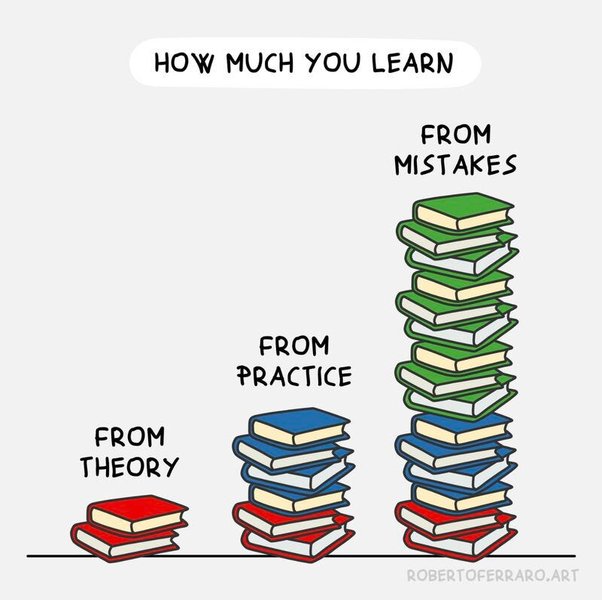
Mistakes as stepping stones on the path towards success.
Many highly successful individuals and organizations attribute their achievements to the lessons learned from past failures. They view setbacks not as endpoints but as essential data points that inform future strategies and build resilience.
Why is Learning From Mistakes So Important?
Learning from your mistakes is a cornerstone of personal and professional development. It builds resilience, enhances problem-solving skills, and fosters a deeper understanding of yourself and the world around you. By actively engaging with your errors, you become more adaptable, more capable of navigating challenges, and ultimately, more likely to achieve your goals.
Here is a video that further discusses the importance of learning from mistakes:
This video from Psychology Today explores the fundamental reasons why learning from our mistakes is a critical aspect of personal growth and development. It highlights how mistakes serve as invaluable learning opportunities that can shape our behavior and decision-making processes for the better.
Frequently Asked Questions
Is it better to learn from your own mistakes or the mistakes of others?
While learning from your own mistakes can be more impactful due to the direct experience and emotional connection, learning from the mistakes of others is also highly valuable. Observing and analyzing the errors of others can help you avoid similar pitfalls without having to experience the negative consequences firsthand. A combination of both approaches is often the most effective way to accelerate learning and growth.
How can I stop being afraid of making mistakes?
Overcoming the fear of making mistakes involves shifting your perspective. Recognize that mistakes are a natural and necessary part of learning. Focus on the process of learning and improvement rather than the outcome. Practice self-compassion and remind yourself that your worth is not tied to your performance. Start by taking small, calculated risks and gradually expose yourself to situations where mistakes are possible but not catastrophic.
What is the difference between a mistake and a failure?
A mistake is generally a specific error in action or judgment. Failure is typically a more significant outcome, often resulting from a series of mistakes or a significant setback that prevents the achievement of a goal. While mistakes are discrete events, failure can be a more prolonged state or result. However, both offer valuable learning opportunities.
How long does it take to learn from a mistake?
The time it takes to learn from a mistake varies depending on the complexity of the error, your willingness to analyze it, and your commitment to implementing changes. Some lessons are immediately apparent, while others require more time and reflection to fully understand and integrate. The key is to engage in the process of acknowledgment, analysis, and action consistently.
References
Last updated April 19, 2025