
Exploring the Wonders of Biogeographical Regions and Realms
A Comprehensive Lecture Note on Global Biodiversity Patterns
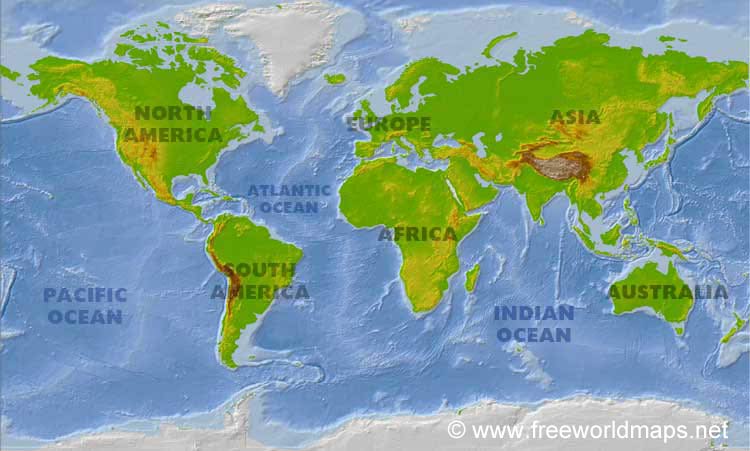
Key Highlights
- Definition and Significance: Understand how biogeographical regions and realms delineate the Earth's biodiversity.
- Historical and Scientific Context: Learn about the contributions of pioneers such as Alfred Russel Wallace and Sclater, and the evolution of biogeographical thought.
- Implications for Conservation: Explore how these concepts aid in conservation planning, ecological research, and understanding evolutionary history.
Introduction to Biogeography
Biogeography is the scientific study of the distribution of life on Earth, exploring the patterns and mechanisms that determine where species are found. It intersects various disciplines, drawing on concepts from ecology, evolutionary biology, geology, and climatology. The field examines how organisms and their ecosystems are distributed across diverse landscapes and through deep geological time, providing insights into both current biodiversity patterns and the historical processes that have shaped them.
Understanding the Concepts
Two principal concepts in biogeography are biogeographical regions and biogeographical realms. Although these terms are sometimes used interchangeably in popular discourse, they have distinct meanings:
Biogeographical Regions
A biogeographical region is defined as a geographical area whose flora, fauna, and ecosystem characteristics exhibit similarities due to shared environmental conditions. These regions can vary in size—from local ecological zones to vast territories—and often serve as a framework for understanding ecological niches and the distribution of species. Natural barriers such as rivers, mountain ranges, and climatic boundaries frequently dictate the borders of these regions.
Biogeographical Realms
In contrast, biogeographical realms denote the broadest divisions of the Earth's terrestrial surface. They are determined by the long-term evolutionary history and distribution patterns of organisms, reflecting the deep geological and climatic forces that have influenced the diversification of life. Each realm is characterized by distinctive assemblages of species that have evolved in relative isolation, giving each realm a unique biological identity. Current classification identifies eight major realms, which include the Nearctic, Neotropical, Palearctic, Afrotropical, Indo-Malayan, Australasian, Antarctic, and Oceania.
Historical Perspectives and Scientific Development
The foundational work on biogeographical regions and realms is attributed to 19th-century naturalists and explorer-biologists, notably Alfred Russel Wallace and Philip Sclater. Sclater initially proposed the division of the Earth's surface into six major regions based on the bird fauna, a scheme later expanded upon by Wallace to reflect the distinct evolutionary histories of organisms across continents and islands.
The Evolution of Biogeographical Thought
The work of Wallace and his contemporaries laid the groundwork for modern biogeographical research. Their observations of the distribution patterns of plants and animals provided early evidence for geographic isolation as a driver of evolutionary change. Over time, advances in molecular biology and paleoclimatology have enriched our understanding, allowing scientists to reconstruct historical connections between regions and to identify the roles of plate tectonics, glaciation, and climate change in shaping the Earth's biota.
Key Biogeographical Realms: An Overview
The Earth is conventionally divided into eight biogeographical realms. The following table summarizes the main characteristics and examples of each realm:
| Realm | Geographical Coverage | Key Characteristics |
|---|---|---|
| Nearctic | North America, including parts of the Arctic regions of Canada and the United States | Temperate forests, grasslands, tundra; diverse climatic zones |
| Palearctic | Europe, North Africa, and most of Asia north of the Himalayas | Extensive variety from tundra to deserts with a complex mosaic of climates |
| Neotropical | Central and South America and the Caribbean | High biodiversity with tropical rainforests, savannas, and unique endemic species |
| Afrotropical | Sub-Saharan Africa | Diverse ecosystems ranging from dense forests to arid deserts, rich in endemic fauna |
| Indo-Malayan | South and Southeast Asia | Tropical forests, high levels of endemism, and complex island biogeography |
| Australasian | Australia, New Guinea, and neighboring islands | Distinctive fauna including marsupials and monotremes; unique evolutionary history |
| Antarctic | Antarctica and surrounding islands | Extreme cold, specialized species adapted to harsh environments |
| Oceania | Pacific Islands not included in the Australasian definition | Coral reefs and diverse marine ecosystems along with terrestrial island biodiversity |
In-Depth Realm Characteristics
Nearctic and Palearctic Realms
The Nearctic realm covers vast portions of North America, showcasing a blend of ecosystems such as boreal forests, temperate grasslands, and arctic tundra. Its flora and fauna have evolved adaptations specific to variable seasonal patterns and climatic extremities. Similarly, the Palearctic realm spans from Europe to parts of Asia and North Africa, encompassing a wide range of environments from cold tundra zones to arid deserts. Both realms are deeply influenced by glacial histories and possess significant fossil records that document their complex evolutionary trajectories.
Neotropical and Afrotropical Realms
The Neotropical realm is famed for its abundant tropical rainforests, such as the Amazon, which is the largest and most biodiverse rainforest globally. This realm also includes savannas and mountainous regions, hosting an incredible variety of life forms. The Afrotropical realm, by contrast, is noted for its megafauna, such as elephants, giraffes, and a plethora of endemic species adapted to both forest and savanna climates. Both realms are significant for their contributions to global biodiversity and present unique challenges and opportunities in the realm of conservation.
Indo-Malayan, Australasian, Antarctic, and Oceania Realms
The Indo-Malayan realm, which spans South and Southeast Asia, is distinguished by its dynamic tropical ecosystems and high rates of species endemism. The Australasian realm, including Australia and New Guinea, stands out for its evolutionary isolation, resulting in unique faunal groups like marsupials and monotremes. In stark contrast, the Antarctic realm comprises the icy continent and surrounding waters, where life is highly specialized to endure extreme cold conditions. Lastly, the Oceania realm is characterized by its myriad islands and marine habitats, which offer insights into island biogeography and marine biodiversity.
Factors Influencing Biogeographical Patterns
A multitude of factors determines the distribution of species across biogeographical regions and realms:
Climatic Influences
Climate plays a decisive role in shaping biodiversity. Regional variations in temperature, precipitation, and seasonality influence the types of organisms that can thrive in a particular area. For instance, tropical regions host lush rainforests, whereas arid areas are dominated by drought-resistant species. Variations in climate over time, including the impacts of glaciation and warming periods, have driven evolutionary change and migration patterns.
Geological and Tectonic Activity
The physical shaping of the Earth through plate tectonics, volcanic activity, and orogeny (mountain building) has long been a crucial factor in the evolution of biogeographical patterns. The breakup of ancient supercontinents, the uplift of mountain ranges, and the shifting of continents have not only redefined land mass configurations but have also created natural barriers. These barriers have contributed to the isolation of populations, thus facilitating speciation and driving the distinctiveness of each biogeographical realm.
Evolutionary History
Over millions of years, species have evolved in an environment shaped by both gradual change and catastrophic events. The evolutionary history of each realm includes periods of isolation that have led to unique adaptive radiations. Consequently, while two regions may exhibit similar environmental parameters and even share similar types of vegetation, the species inhabiting those regions might have significantly different evolutionary origins and genetic makeups.
Human Impact and Conservation
In recent centuries, human activities have emerged as a dominant force affecting biogeographical patterns. Deforestation, urbanization, and climate change have led to habitat loss, fragmentation, and alterations in local ecosystems. As a result, understanding biogeographical regions and realms is imperative for conservation strategies. By identifying areas of high endemism and biodiversity, researchers and policymakers can better prioritize conservation efforts to preserve these natural habitats against rapid environmental changes.
Biomes Versus Biogeographical Realms
It is crucial to differentiate between biomes and biogeographical realms when discussing Earth's ecological diversity. While biomes are primarily defined by climatic conditions and the life forms best adapted to those conditions (e.g., deserts, tropical rainforests, tundras), biogeographical realms are defined based on the evolutionary histories of the organisms. For example, two tropical moist broadleaf forests, one in the Neotropical realm and another in the Indo-Malayan realm, may share many climatic and vegetation features. However, the species present in these forests have evolved under different historical and geographical pressures, thus belonging to entirely separate biogeographical realms.
Applications of Biogeographical Studies
The study of biogeographical regions and realms is not only academic; it has practical implications for ecological research, conservation planning, and the understanding of global biodiversity patterns. Some of the key applications include:
Conservation Initiatives
Recognizing the unique biodiversity of each biogeographical realm helps conservationists identify key regions that require protection. For example, areas with high levels of endemism are prioritized for conservation to prevent irreversible losses in biodiversity. Furthermore, by understanding historical and current species distributions, conservationists can better predict how climate change and human encroachment might impact various regions.
Ecological and Evolutionary Research
Biogeographical studies provide a framework for examining how species evolve and interact within their environments. Researchers use data from various realms to investigate questions about speciation, adaptation, and ecological interactions. This information is invaluable for constructing models that predict ecological responses to environmental changes, thereby offering insights into the resilience and vulnerability of ecosystems.
Guiding Land-Use and Resource Management
Governments and environmental agencies utilize biogeographical classifications to guide land-use planning and natural resource management. By aligning development projects with biogeographical data, planners can minimize ecological disruption and promote sustainable practices that maintain regional biodiversity.
Interactive Tools and Further Exploration
With advances in geographic information systems (GIS) and remote sensing, scientists can now model biogeographical patterns with unprecedented precision. Interactive tools and databases enable researchers to visualize species distributions, simulate historical migration pathways, and analyze the impact of environmental changes over time. Such tools facilitate a deeper understanding of how the interplay between climate, geography, and evolution continues to shape the Earth's living systems.
Sample Code: Mapping Species Distribution
Researchers often use programming languages like Python to analyze and visualize species distribution data. Below is a sample pseudo-code snippet that illustrates how one might load and plot species distribution data on a map:
# Import libraries
import matplotlib.pyplot as plt
import geopandas as gpd

# Load species distribution data and geographical boundaries
species_data = gpd.read_file("species_distribution.shp")
world_map = gpd.read_file("world_boundaries.shp")

# Plot the data
ax = world_map.plot(color="lightgrey", figsize=(10, 6))
species_data.plot(ax=ax, markersize=5, color="green", label="Species Occurrence")
plt.title("Species Distribution Map")
plt.legend()
plt.show()
In practical applications, such code is enhanced to include interactive layers, climatic variables, and temporal data to provide comprehensive visualizations that aid in analyzing biogeographical dynamics.
Future Challenges and Opportunities in Biogeography
As environmental challenges like climate change, deforestation, and urban sprawl continue to alter natural landscapes, the study of biogeographical regions and realms becomes ever more critical. Understanding these patterns is essential for predicting how species distributions may shift in response to environmental stressors, thereby informing timely conservation strategies. Emerging research incorporates advanced genomic tools and spatial analysis techniques, which further elucidate the evolutionary processes that drive diversification and adaptation.
The ability to integrate historical data, modern technology, and sophisticated statistical models represents one of the most promising avenues for future biogeographical research. This interdisciplinary approach not only enhances our comprehension of Earth's biota but also supports the implementation of effective measures to safeguard nature’s intricate tapestry for future generations.
References
- Biogeographic Region - Encyclopedia Britannica
- Biogeographic Realm - Wikipedia
- What Are The Eight Biogeographic Realms? - WorldAtlas
-
8 Realms of Biogeography: Earth's Natural Barriers - Interesting Engineering
- World Biogeography Class Notes - Fiveable
Recommended Further Exploration
Last updated March 23, 2025