
Unlocking Nature's Power: The Comprehensive Guide to Biomass Energy
Discover how organic materials are transforming into a vital renewable energy source for our future.
Biomass energy stands as a significant pillar in the global pursuit of renewable and sustainable energy solutions. Derived from organic materials, it represents a way to harness the energy stored by plants and other living organisms, offering an alternative to finite fossil fuels. This comprehensive guide explores the nature of biomass, its diverse sources, the methods used for its conversion into usable energy, and a balanced view of its advantages and disadvantages.
Highlights of Biomass Energy
- Renewable Foundation: Biomass is derived from organic matter like plants, agricultural residues, and various waste streams, offering a replenishable energy alternative to finite fossil fuels as these materials can regrow or be naturally replenished.
- Versatile Conversion & Application: It can be transformed into heat, electricity, or liquid and gaseous biofuels through diverse methods including direct combustion, gasification, anaerobic digestion, and pyrolysis, catering to various energy needs.
- Balanced Perspective: While promoting significant benefits such as waste reduction, potential carbon neutrality (when sustainably sourced), and enhanced energy security, biomass energy also presents challenges like land use competition, potential air emissions, and cost considerations that necessitate careful management and technological advancement.
What Exactly is Biomass?
Understanding This Organic Energy Source
Biomass refers to any organic material derived from plants, animals, and microorganisms that can be used as a source of energy. This includes matter from recently living or once-living organisms. The energy stored in biomass originates from the sun; plants capture solar energy through photosynthesis and convert it into chemical energy. When biomass is utilized for energy production, this stored chemical energy is released. It is considered a renewable energy source because the organic materials used can be replenished naturally or through sustainable agricultural and forestry practices over a relatively short timescale, unlike fossil fuels which take millions of years to form.
Historically, biomass, primarily wood, has been humanity's oldest energy source, used for heating and cooking. Today, its applications have expanded significantly, contributing to electricity generation, industrial process heat, and the production of transportation fuels. In 2023, biomass accounted for approximately 5% of the total primary energy consumption in the United States, underscoring its role in the contemporary energy landscape.
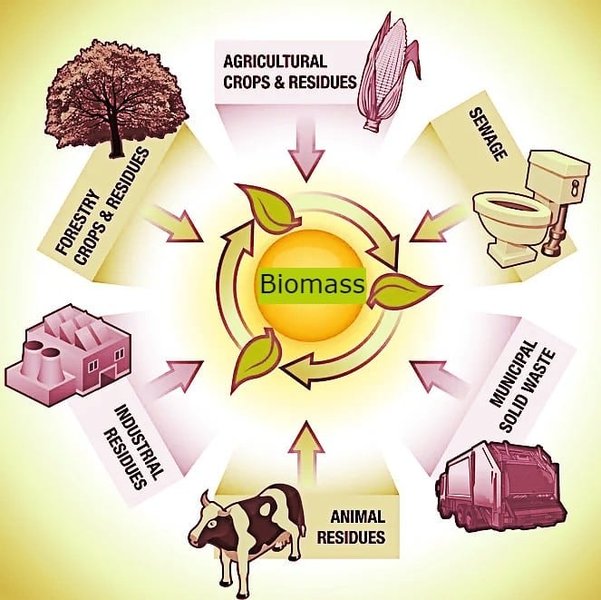
A visual representation of different biomass feedstocks and their potential conversion to energy.
Diverse Origins: Sources of Biomass
Where Does Biomass Come From?
Biomass feedstocks are varied and abundant, originating from multiple sectors. The suitability of a particular feedstock depends on its availability, cost, energy content, and the conversion technology to be used. Key sources include:
Wood and Forestry Residues
This is currently the largest global source of biomass energy. It includes logs, wood chips, wood pellets, sawdust, bark, and residues from forestry operations (e.g., branches, treetops) and wood processing industries (e.g., lumber mills). Forests provide a substantial portion of biomass, with sustainable forest management being crucial to ensure its renewability.
Agricultural Residues and Crops
Crop residues like corn stalks (stover), wheat straw, rice husks, and sugarcane bagasse are significant sources. Additionally, dedicated "energy crops" are cultivated specifically for energy production. These include fast-growing trees (e.g., poplar, willow), perennial grasses (e.g., switchgrass, miscanthus), and certain food crops like maize and sugarcane (primarily for biofuels).
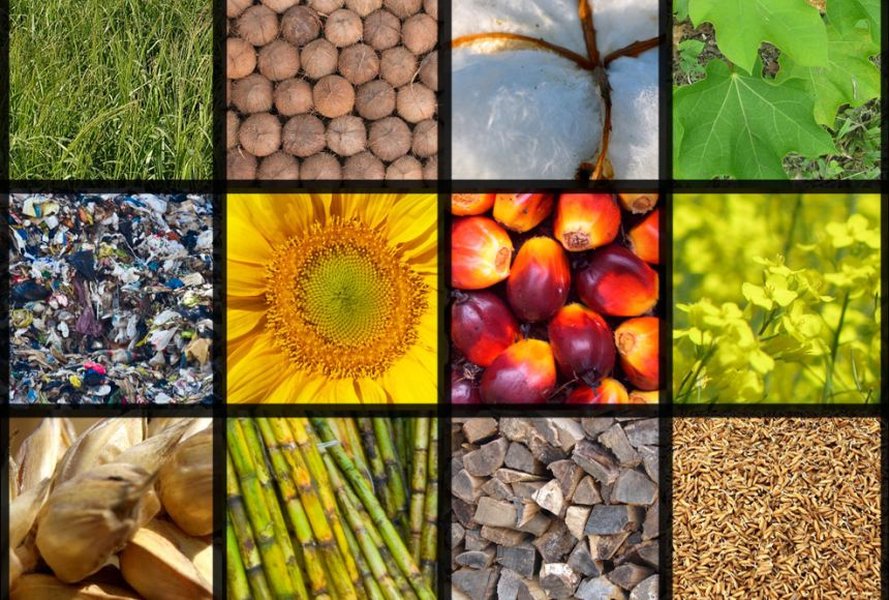
A collection of common biomass feedstocks, highlighting their organic nature.
Municipal Solid Waste (MSW)
The organic fraction of MSW is a valuable biomass resource. This includes paper, cardboard, food waste, yard trimmings (grass clippings, leaves), wood, and leather products. Utilizing MSW for energy helps divert waste from landfills, reducing methane emissions and land pressure.
Animal and Human Wastes
Manure from livestock operations (e.g., dairy farms, poultry houses) and biosolids from municipal wastewater (sewage) treatment plants can be converted into biogas through anaerobic digestion. Landfills also produce methane-rich gas from decomposing organic waste, which can be captured and used.
Algae
Microalgae and macroalgae are emerging as promising feedstocks, particularly for biofuel production. They can be cultivated in diverse water environments, including wastewater, and often have high growth rates and lipid content. However, large-scale commercial production still faces economic and technological challenges.
Transforming Biomass: Conversion Methods
How is Biomass Converted into Usable Energy?
Several pathways exist to convert raw biomass into useful forms of energy such as heat, electricity, or fuels. These methods can be broadly categorized into thermochemical, biochemical, and chemical processes.
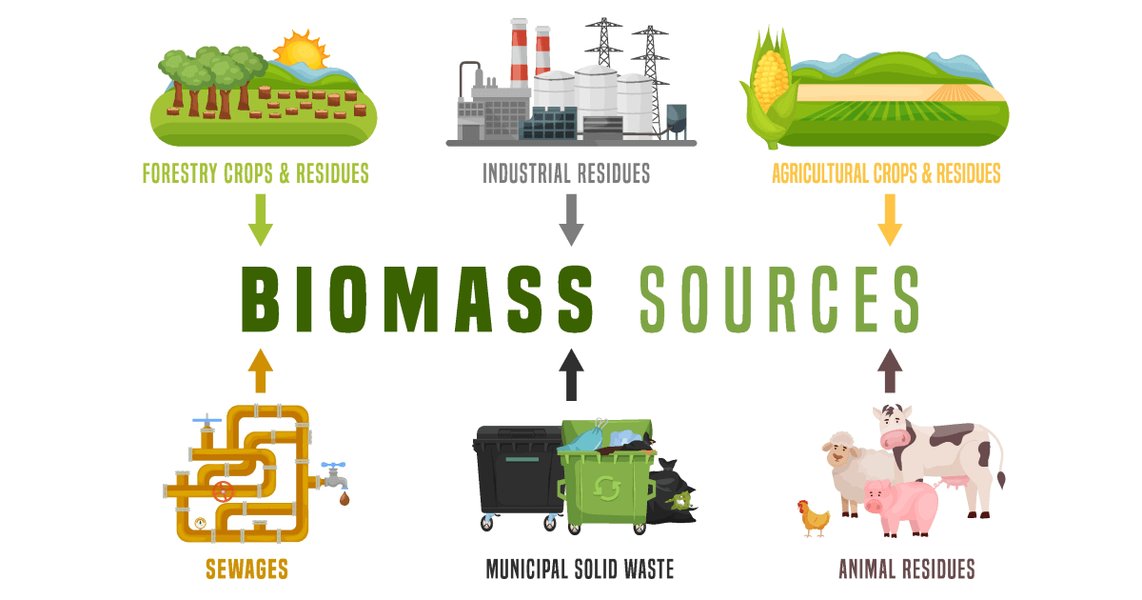
An illustration depicting the cycle of biomass energy generation, from photosynthesis to power.
Direct Combustion
This is the oldest and most common method. Biomass is burned directly in furnaces or boilers to produce high-temperature heat. This heat can be used for space and water heating, industrial processes, or to produce steam that drives turbines to generate electricity. This method is suitable for dry biomass like wood and agricultural residues.
Anaerobic Digestion
A biochemical process where microorganisms break down wet organic materials (e.g., animal manure, food waste, sewage sludge) in the absence of oxygen. This process produces biogas, primarily composed of methane (CH4) and carbon dioxide (CO2). Biogas can be burned to produce heat and electricity or upgraded to biomethane (renewable natural gas) for injection into natural gas pipelines or use as vehicle fuel. The solid residue, digestate, can be used as a soil conditioner.
Pyrolysis
A thermochemical process that involves heating biomass to high temperatures (typically 300-700°C) in an oxygen-deprived environment. Pyrolysis breaks down the organic material into three main products: bio-oil (a liquid fuel), syngas (a mixture of hydrogen, carbon monoxide, and methane), and biochar (a carbon-rich solid). Fast pyrolysis maximizes bio-oil yield, while slow pyrolysis is often optimized for biochar production.
Gasification
Another thermochemical process where biomass is heated with a controlled amount of oxygen or steam, but not enough for full combustion. This converts the biomass into a combustible gas mixture called synthesis gas (syngas), primarily composed of carbon monoxide (CO), hydrogen (H2), and methane (CH4). Syngas can be burned to generate electricity, used as a fuel, or further processed to produce liquid transportation fuels (like Fischer-Tropsch diesel) and chemicals.
Torrefaction
A thermal pretreatment process where biomass is heated to 200–320°C in a low-oxygen atmosphere. This process dries the biomass, removes volatile compounds, and makes it brittle and hydrophobic (water-repellent). Torrefied biomass, often densified into pellets or briquettes, has a higher energy density and improved handling and storage properties compared to raw biomass, making it more suitable for co-firing in coal power plants or for gasification.
Biofuel Production (Fermentation and Chemical Conversion)
Biomass can be converted into liquid transportation fuels. Ethanol is typically produced through the fermentation of sugars or starches from crops like corn, sugarcane, or cellulosic biomass (e.g., wood, grasses) by yeast or bacteria. Biodiesel is produced from vegetable oils, animal fats, or recycled greases through a chemical process called transesterification. Advanced biofuels, such as renewable diesel and sustainable aviation fuel, are also being developed from various biomass sources.
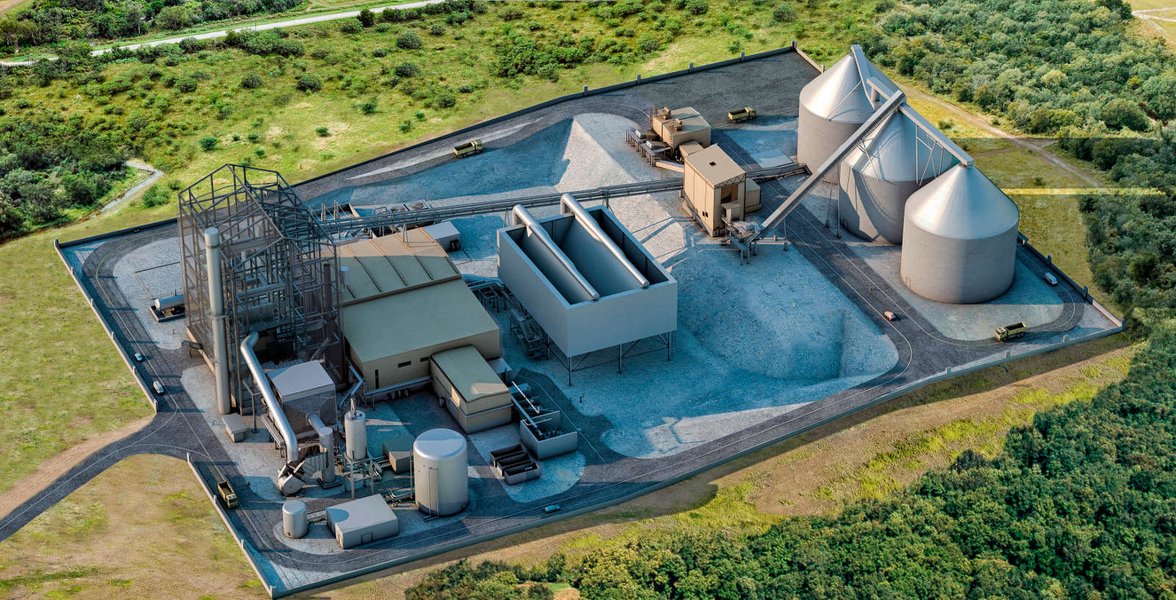
Exterior view of a modern biomass power plant, showcasing the scale of such energy conversion facilities.
Comparative Analysis of Biomass Feedstocks
Evaluating Different Biomass Sources
The choice of biomass feedstock is critical for the viability and sustainability of bioenergy projects. Different sources offer varying characteristics in terms of energy content, availability, cost, and environmental impact. The radar chart below provides a comparative, opinionated analysis of key biomass feedstocks across several important attributes. These attributes include 'Energy Density' (energy per unit mass/volume), 'Current Availability' (how readily accessible the feedstock is), 'Cost-Effectiveness (Current)' (economic viability at present), 'Sustainability Potential (Lifecycle)' (long-term environmental and social viability when managed well), and 'Conversion Process Maturity' (how well-developed and reliable the technologies are for converting that feedstock).
For instance, Wood & Forestry Residues generally score well on availability and process maturity, while Algae show high future sustainability potential but currently face challenges in cost-effectiveness and large-scale availability. Municipal Solid Waste (MSW) is highly available and helps with waste management, but its energy density can be lower and more variable.
Note: The values in this chart are illustrative and represent generalized assessments rather than precise empirical data. Actual values can vary significantly based on specific conditions, technologies, and regional factors.
Mindmap of Biomass Energy
Visualizing the World of Biomass
To provide a holistic view, the mindmap below structures the key concepts related to biomass energy. It outlines the definition, the primary sources from which biomass is derived, the main methods used for its conversion into energy, and a summary of its principal advantages and disadvantages. This visual tool helps in quickly grasping the interconnectedness of these aspects and understanding the overall landscape of biomass as an energy resource.
Renewable energy from
organic materials (plants, animals, waste)"] id2["Sources of Biomass"] id2_1["Wood & Forestry Residues
(logs, chips, pellets, sawdust)"] id2_2["Agricultural Residues & Crops
(e.g., corn stover, wheat straw, switchgrass)"] id2_3["Municipal Solid Waste (MSW)
(organic components like paper, food, yard waste)"] id2_4["Animal & Human Waste
(manure, sewage sludge, landfill gas)"] id2_5["Dedicated Energy Crops
(e.g., miscanthus, poplar, algae)"] id3["Biomass Conversion Methods"] id3_1["Direct Combustion
(Produces heat, steam for electricity)"] id3_2["Anaerobic Digestion
(Produces biogas - methane & CO2)"] id3_3["Pyrolysis
(Produces bio-oil, syngas, biochar)"] id3_4["Gasification
(Produces syngas for fuel/chemicals)"] id3_5["Torrefaction
(Produces dry, energy-dense solid fuel)"] id3_6["Biofuel Production
(Fermentation for ethanol, transesterification for biodiesel)"] id4["Advantages of Biomass Energy"] id4_1["Renewable Resource
(Replenishable through natural cycles)"] id4_2["Potential Carbon Neutrality
(If sustainably sourced and managed)"] id4_3["Waste Reduction & Management
(Utilizes agricultural, forestry, and municipal wastes)"] id4_4["Energy Security
(Reduces reliance on fossil fuels, domestic source)"] id4_5["Versatile Applications
(Heat, electricity, transportation fuels)"] id4_6["Supports Rural Economies
(Job creation in agriculture & forestry)"] id5["Disadvantages of Biomass Energy"] id5_1["Environmental Impacts
(Air pollution if not controlled, deforestation if unsustainable)"] id5_2["Land Use Competition
(Food crops vs. energy crops, habitat loss)"] id5_3["Cost & Infrastructure
(Can be expensive, requires dedicated facilities)"] id5_4["Efficiency & Energy Density
(Often lower than fossil fuels, bulky to transport)"] id5_5["Supply Chain Challenges
(Seasonality, transportation, storage)"] id5_6["Water Resource Demands
(For irrigation of energy crops)"]
Weighing the Pros and Cons
Advantages and Disadvantages of Biomass Energy
Biomass energy offers a compelling renewable alternative to fossil fuels, but its implementation is not without challenges. A balanced assessment of its benefits and drawbacks is crucial for sustainable development and policy-making.
Advantages of Biomass Energy
- Renewable and Sustainable: Biomass resources can be replenished through natural growth cycles or sustainable management practices, making them a long-term energy solution.
- Potential for Carbon Neutrality: Plants absorb CO2 during growth. If biomass is harvested and used sustainably, the CO2 released during energy conversion can be largely offset by this prior absorption, potentially making the cycle carbon neutral or even carbon negative with technologies like bioenergy with carbon capture and storage (BECCS).
- Waste Reduction and Management: Biomass energy utilizes organic wastes from agriculture, forestry, and municipalities (MSW), diverting them from landfills, reducing landfill methane emissions, and turning a disposal problem into an energy resource.
- Enhanced Energy Security: Biomass is often a domestically available resource, reducing dependence on imported fossil fuels and contributing to national energy independence.
- Economic Benefits: The biomass industry can stimulate rural economies by creating jobs in agriculture, forestry, feedstock collection, transportation, and at bioenergy facilities.
- Versatility in Application: Biomass can be converted into various energy forms – solid fuels (pellets, briquettes), liquid fuels (ethanol, biodiesel), gaseous fuels (biogas, syngas), heat, and electricity – catering to diverse energy demands.
- Consistent Energy Production: Unlike intermittent renewables like solar and wind, biomass power plants can provide baseload power as long as feedstock supply is consistent and reliable.
Disadvantages of Biomass Energy
- Environmental Impacts:
- Air Pollution: Burning biomass can release pollutants such as particulate matter (PM2.5), nitrogen oxides (NOx), carbon monoxide (CO), and volatile organic compounds (VOCs), which can affect air quality and human health if not adequately controlled with emission technologies.
- Greenhouse Gas Emissions: While potentially carbon neutral, the overall carbon footprint depends on factors like land-use change (e.g., deforestation for energy crops), fossil fuel use in cultivation, harvesting, transportation, and processing, and methane or nitrous oxide emissions from agricultural practices or incomplete combustion.
- Deforestation and Habitat Loss: Unsustainable harvesting of wood or clearing land for energy crops can lead to deforestation, soil degradation, biodiversity loss, and disruption of ecosystems.
- Water Use: Cultivation of some energy crops can be water-intensive, potentially straining water resources in arid or semi-arid regions.
- Land Use Competition: Growing dedicated energy crops can compete with food production for arable land and water resources, potentially impacting food security and prices.
- Cost and Efficiency:
- High Initial Costs: The capital costs for biomass power plants and biorefineries can be high.
- Feedstock Costs: The cost of biomass feedstock can be variable and influenced by transportation distances, seasonality, and competing uses.
- Conversion Efficiency: Some biomass conversion processes have lower energy efficiencies compared to fossil fuel technologies, although advancements are improving this. Biomass generally has a lower energy density than fossil fuels, requiring larger volumes for the same energy output.
- Supply Chain and Logistics: Ensuring a consistent, reliable, and affordable supply of biomass feedstock can be challenging due to its bulky nature, distributed availability, seasonality, and storage requirements.
- Space Requirements: Large areas may be needed for cultivating energy crops and for storing biomass feedstocks.
The following table summarizes these key points:
| Advantages | Disadvantages |
|---|---|
|
|
Learn More: Biomass Energy Basics
An Engaging Video Explainer
For a visual and dynamic understanding of biomass energy, the following video from the National Renewable Energy Laboratory (NREL) provides an excellent overview. It explains how biomass harnesses energy from waste and organic materials, detailing the fundamental concepts and processes involved. This resource helps to clarify how plants store solar energy and how this energy can be converted into various useful forms, reinforcing the concepts discussed above.
This video touches upon the diversity of biomass sources and the technologies used to transform them into power, offering insights into why biomass is considered a key component of the renewable energy portfolio. Understanding these basics is essential for appreciating both the potential and the complexities of biomass energy utilization.
Frequently Asked Questions (FAQ)
Is biomass truly carbon neutral?
The carbon neutrality of biomass is a complex issue. The basic premise is that plants absorb CO2 from the atmosphere as they grow. When this biomass is burned for energy, it releases that same amount of CO2 back into the atmosphere. In theory, this creates a closed loop. However, true carbon neutrality depends on several factors:
- Sustainable Sourcing: Biomass must be harvested sustainably, meaning forests are replanted or agricultural lands are managed to ensure continued carbon sequestration. If deforestation occurs, or if land that was storing carbon (like old-growth forests or peatlands) is converted to biomass production, it can result in a net increase in atmospheric CO2 for decades or even centuries (known as the "carbon debt").
- Lifecycle Emissions: Emissions from cultivating, harvesting, processing, and transporting biomass (often using fossil fuels) must be accounted for.
- Time Lag: There's a time lag between CO2 release during combustion and its reabsorption by new plant growth. For slow-growing forests, this lag can be significant.
- Type of Biomass: Using waste biomass (e.g., agricultural residues, MSW) generally has a better carbon profile than dedicating land to new energy crops if it leads to indirect land-use change.
So, while biomass can be significantly lower in net carbon emissions than fossil fuels, it's not inherently carbon neutral in all cases. Careful management and adherence to sustainability criteria are essential.
What are the main challenges in scaling up biomass energy?
Scaling up biomass energy faces several key challenges:
- Sustainable Feedstock Supply: Ensuring a large-scale, consistent, and sustainably sourced supply of biomass without negative environmental or social impacts (like deforestation or food price hikes) is a major hurdle.
- Logistics and Infrastructure: Biomass is often bulky and has a lower energy density than fossil fuels, making transportation and storage costly and complex. Significant infrastructure investment is needed.
- Competition for Land and Resources: Increased demand for biomass can intensify competition for land (food vs. fuel vs. conservation) and water resources.
- Economic Viability: The cost of biomass energy can be higher than conventional fossil fuels or other renewables in some cases, depending on feedstock costs, conversion technology, and scale. Policy support is often required.
- Technological Advancement: While some conversion technologies are mature (like combustion), others (e.g., advanced biofuels, efficient gasification) still require further development and cost reduction for widespread deployment.
- Public Perception and Social Acceptance: Concerns about air quality, land use, and genuine sustainability can affect public acceptance of large-scale biomass projects.
Can biomass energy replace fossil fuels entirely?
It is highly unlikely that biomass energy alone can replace fossil fuels entirely on a global scale. While biomass is a versatile renewable resource, its total sustainable potential is limited by factors such as land availability, water resources, and the need to maintain food security and biodiversity. Over-reliance on biomass could lead to unsustainable practices.
However, biomass is expected to play a significant role in a diversified future energy mix, alongside other renewables like solar, wind, hydro, and geothermal energy, as well as energy efficiency measures and potentially carbon capture technologies. Its strengths lie in areas where other renewables face challenges, such as providing dispatchable (on-demand) electricity, high-temperature industrial heat, and sustainable liquid fuels for sectors like aviation and heavy transport that are difficult to electrify.
How does biomass compare to solar or wind energy?
Biomass, solar, and wind are all renewable energy sources, but they have different characteristics:
- Dispatchability: Biomass power plants can often provide baseload or dispatchable power (available when needed), similar to fossil fuel plants, as long as feedstock is available. Solar and wind are intermittent sources, dependent on sunlight and wind availability, respectively, often requiring energy storage or backup generation.
- Land Use: Large-scale solar farms and wind farms require significant land area, as can energy crop cultivation for biomass. However, biomass can also utilize waste streams, reducing its direct land footprint.
- Emissions: Solar and wind power generation are virtually emission-free at the point of operation (though manufacturing has an environmental footprint). Biomass combustion releases CO2 and potentially other air pollutants, with its overall carbon footprint depending on lifecycle factors.
- Resource Availability: Solar and wind resources vary geographically. Biomass availability also varies but can often be sourced more locally from agricultural or forestry activities.
- Versatility: Biomass is highly versatile and can produce heat, electricity, and liquid/gaseous fuels. Solar is primarily for electricity (and thermal heat), while wind is for electricity.
- Cost: The costs of solar and wind have fallen dramatically, often making them the cheapest sources of new electricity in many regions. Biomass energy costs can be more variable depending on feedstock and technology.
Each renewable energy source has its own set of strengths and weaknesses, and they are often complementary within a broader clean energy strategy.
Recommended Further Exploration
Delve Deeper into Related Topics
- What are the latest advancements in biomass conversion technologies for improved efficiency?
- How do sustainability certification schemes for biomass ensure responsible sourcing?
- What is the role of bioenergy with carbon capture and storage (BECCS) in climate change mitigation?
- Compare the lifecycle greenhouse gas emissions of different biomass feedstocks and fossil fuels.
References
Sources for This Information
Last updated May 15, 2025