
Comprehensive Review of Blackbox Testing: English and Legitimate Research (2021-2025)
An in-depth exploration of recent studies on testing and evaluation through blackbox methodologies
Key Highlights
- Recent Advances: Numerous studies from 2021 to 2025 have advanced the field of blackbox testing, evaluating various strategies and tools to improve software reliability and security.
- Diverse Applications: Research spans multiple domains, including software engineering, cybersecurity, machine learning, and algorithmic evaluation, demonstrating the versatility of blackbox testing techniques.
- Systematic Evaluation Frameworks: Several studies propose frameworks and comparative analyses to assess the effectiveness of different blackbox approaches, providing standardized measures and benchmarks.
Introduction
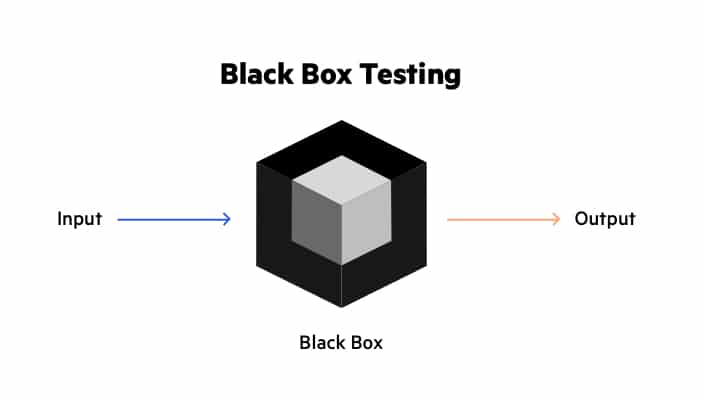
Blackbox testing, a pivotal methodology in evaluating software systems, operates by assessing the system's outputs based on a variety of predetermined inputs while remaining agnostic to its internal structure. This approach ensures user-centric validation and has been increasingly relevant in a broad range of applications, from traditional software testing to the evaluation of artificial intelligence and cyber-physical systems. In this review, we provide a comprehensive discussion of recent academically rigorous work published between 2021 and 2025 that focuses on testing and evaluation using blackbox testing methods. The following sections critically analyze the evolution of testing procedures, detail key research contributions, and highlight systematic frameworks developed to standardize and enhance these methodologies.
Understanding Blackbox Testing
Concept and Fundamentals
Blackbox testing, also known as behavioral testing, prioritizes the verification of functionalities through observable outputs while disregarding the internal mechanisms guiding these operations. By focusing solely on the input-output relations, this method emulates how an end-user would interact with the system, ensuring that all possible scenarios and edge cases are accounted for.
Key Characteristics
- Interface-Oriented: Blackbox testing evaluates the system as an integrated whole, concentrating on interface behavior, input handling, and output accuracy.
- User-Centric Design: It simulates real-world interaction patterns, ensuring that the functionality aligns with user expectations.
- Risk Mitigation: The methodology is widely applied for security testing, including penetration tests, vulnerability assessments, and fuzzing, thus playing a critical role in mitigating potential security risks.
Evolution in Recent Years
The phase between 2021 and 2025 has seen an increase in the employment of blackbox testing across various industries. Researchers have focused on refining test case generation strategies, developing empirical frameworks for performance evaluation, and employing these techniques for adversarial testing in machine learning systems.
One of the major trends has been the systematic review of test generation methods for deep learning systems. Empirical evaluations have identified the strengths and limitations of several blackbox testing strategies, emphasizing the importance of test case prioritization and the development of robust frameworks for streamlined evaluation.
Recent Academic Contributions (2021-2025)
Systematic Literature Reviews and Frameworks
Major academic contributions include comprehensive reviews and the proposition of new frameworks aimed at evaluating the effectiveness of blackbox testing strategies. Research articles published in renowned journals have categorized test generation techniques and proposed standardized metrics for comparing the efficiency of various methods.
Evaluation Metrics and Comparative Analysis
One pivotal study underscores the adoption of empirical evaluation frameworks designed to measure the efficiency of blackbox testing relative to white-box approaches. This work introduces a variety of metrics focusing on fault detection, coverage, and overall testing efficiency. The research systematically compares traditional test case selection against advanced prioritization and aggregation strategies.
Researchers have provided detailed quantitative analyses on the efficacy of test case prioritization strategies, demonstrating that improved prioritization directly correlates with higher fault detection rates and reduced testing time. By employing statistical methodologies and controlled experiments, these studies underscore the necessity of adapting blackbox testing to meet ever-evolving software complexity.
Applications in Artificial Intelligence and Machine Learning
The intersection of blackbox testing with artificial intelligence has grown in prominence over recent years. One area of significant exploration is the evaluation of deep learning systems where traditional white-box methods are impractical due to the opaque nature of neural network models. Researchers have thus adopted blackbox techniques to ascertain the robustness of machine learning models.
These studies leverage blackbox testing for spotting vulnerabilities in adversarial scenarios. For example, by subjecting models to controlled perturbations, the research quantitatively assesses the error margins and risk exposures in machine learning applications, thereby enhancing the models' resiliency and trustworthiness.
Algorithm Auditing and Bias Detection
Another innovative application of blackbox methodologies is seen in the auditing of content recommendation algorithms. These studies deploy input/output testing patterns to detect biases and evaluate cross-exposure of content in recommendation systems. Evaluations are performed by simulating various user interaction scenarios to automatically identify algorithmic aberrations.
Such frameworks not only identify security and operational issues but also pave the way for developing more transparent and efficient recommendation engines.
Security Testing and Cyber-Physical Systems
Blackbox testing has been rigorously applied in the field of cybersecurity, particularly for systems where the internal architecture is either proprietary or too complex to analyze thoroughly. In recent research, this methodology has been used to simulate real-world hacker behavior, performing penetration tests for vulnerability assessments.
Penetration Testing and Vulnerability Analysis
In these studies, security analysts conduct blackbox penetration tests, evaluating applications and systems from an external perspective. This approach is especially effective in identifying potential vulnerabilities such as issues related to authentication and authorization, and in highlighting risks like insecure direct object references (IDOR).
The research emphasizes how blackbox security testing significantly cuts costs and time compared to white-box assessments while ensuring robust perimeter security, particularly for web-facing assets. Such studies have provided in-depth case analyses and real-world applications demonstrating the advantage of using blackbox methods in dynamic and real-time systems.
Systematic Approaches and Practical Tools
Development of Standardized Evaluation Frameworks
A recurrent theme in the recent academic literature is the development of standardized evaluation frameworks for blackbox testing. Researchers have proposed multifaceted frameworks comprising test case generation, prioritization, and performance measurement. These frameworks provide a systematic method to compare different techniques and determine the most effective ones under various conditions.
Empirical Studies and Quantitative Metrics
Among the proposed frameworks, empirical studies have introduced well-defined quantitative metrics that assess testing performance. Such metrics include:
| Metric | Description | Importance |
|---|---|---|
| Fault Detection Rate | Number of faults detected per testing cycle | Indicates the efficiency of the test cases |
| Test Coverage | The proportion of inputs or functionalities tested | Ensures comprehensive testing of the system |
| Test Case Prioritization | Ordering of tests based on likelihood of failure detection | Optimizes resources by identifying critical issues early |
| Performance Overhead | Time and computational resources consumed | Ensures that testing is time-efficient and resource-aware |
These metrics not only enhance the reproducibility of blackbox testing approaches but also help integrate automated tools into existing development pipelines for continuous testing.
Practical Guides and Toolkits
In addition to theoretical frameworks, practical guidebooks and toolkits have emerged, detailing various aspects of blackbox testing; from performing systematic evaluations in traditional software systems to specialized applications in mobile and network penetration testing. These practical resources often accompany experimental validations and case studies, equipping practitioners with the knowledge and tools to implement robust testing regimes.
Detailed guides often encapsulate real-world examples and best practices, including equivalence partitioning, boundary value analysis, state transition testing, and decision table testing. They also discuss contemporary tools that facilitate automated test generation and result analysis, which are crucial as software systems grow in complexity.
Accessing Legitimate and Trusted Academic Sources
Utilizing Academic Databases
To source reliable and legally accessible academic literature, researchers and practitioners are encouraged to access renowned digital libraries and academic databases such as IEEE Xplore, ACM Digital Library, Google Scholar, ResearchGate, and ScienceDirect. By using comprehensive queries that combine keywords like “blackbox testing,” “software testing,” “evaluation,” and specifying publication years, one can retrieve a curated list of peer-reviewed articles.
An example of an effective search query is:
("black box testing" OR "blackbox testing") AND ("software testing" OR "evaluation" OR "penetration testing")
AND ("2021" OR "2022" OR "2023" OR "2024" OR "2025")
This refined query will help locate studies that align with the specific focus on testing methodologies and evaluation processes within the outlined timeframe.
Evaluating the Quality of Sources
When determining the legitimacy and reliability of a given research paper, look for:
- Peer Review: Ensure that the paper was published by a reputable peer-reviewed journal or conference proceedings.
- Affiliated Institutions: High-quality work is often associated with well-known universities or research institutions.
- Citations and Impact: Consider the number of citations and impact factor of the publication venue to gauge its influence in the field.
These criteria collectively help in distinguishing high-quality studies from less reliable sources.
Case Studies and Notable Research Examples
Evaluation of Deep Learning Systems
One line of research that has garnered significant attention deals with enhancing the evaluation of deep learning models using blackbox testing strategies. Such studies have focused on addressing adversarial attacks—where models are intentionally exposed to deceptive inputs—to verify their resiliency. By employing controlled perturbations and measuring the resultant performance degradation, these studies provide actionable insights to fortify models against potential security breaches.
Algorithm Validation and Bias Detection
In another prominent study, researchers evaluated the performance of recommendation systems through input/output testing paradigms. This research not only identified potential algorithmic biases but also provided methods to audit and improve content delivery in dynamic environments. The outcomes of the study are being used to inform subsequent designs of more robust recommendation frameworks.
Cyber-Physical Systems and Safety Validation
Blackbox testing is also integral to ensuring the safety of cyber-physical systems. Research in this area often incorporates Bayesian approaches to validate complex safety systems without assuming prior knowledge of internal processes. Such papers have outlined methodologies that successfully bridge the gap between classical testing paradigms and modern computational safety models, emphasizing both efficiency and reliability.
Challenges and Future Directions
Current Limitations
Despite the significant advancements, current blackbox testing techniques still face challenges. One ongoing limitation is the reliance on heuristic methods that may not cover all potential input combinations, especially in high-dimensional systems. Moreover, while many studies have demonstrated effective models under controlled environments, translating these approaches into real-world industrial applications poses logistical and technical challenges.
Addressing Scalability and Complexity
Future research is expected to further refine automated test case generation and prioritization. Advancements in machine learning and statistical modeling are anticipated to bring more scalable solutions that can handle increasingly complex systems without sacrificing accuracy or performance.
Emerging Trends
The convergence of blackbox testing with artificial intelligence and cybersecurity continues to grow. Emerging trends include the integration of real-time analytics, the use of adaptive testing frameworks for dynamic systems, and further exploration into the standardization of metrics for a more objective comparison across different testing methods.
These trends signify a forward-thinking approach where continuous innovation in testing methodologies will ensure that validations remain rigorous and comprehensive in the face of evolving software architectures.
Conclusion
In conclusion, the period from 2021 to 2025 has been marked by significant progress in the methods and applications of blackbox testing. The literature in this timeframe provides robust evidence of how systematic frameworks and empirical studies can enhance testing effectiveness while addressing the complexities of modern software systems, machine learning models, and cyber-physical installations. Through the development of standardized metrics and practical toolkits, blackbox testing continues to serve as a crucial technique in ensuring system integrity, mitigating cyber-security risks, and evaluating algorithmic behavior.
For practitioners and researchers aiming to delve deeper into the subject, accessing academic databases using refined search queries is recommended. By prioritizing peer-reviewed literature and reputable journals, one can obtain comprehensive insights that not only evaluate current methodologies but also suggest pathways for future research, ultimately fostering a more secure and reliable digital landscape.
References
- International Conference on Machine Learning Papers - ICML
- Top Black Box Testing Techniques - Testlio
- What is Black Box Testing? - Imperva
- A Comprehensive Guide to Black Box Testing - Caltech Bootcamps
- Black Box Testing: Types, Tools & Examples - BrowserStack
Recommended
Last updated February 20, 2025