
Understanding Causal Dynamic Feedback in Retrieval-Augmented Generation (CDF-RAG)
Enhancing Generative AI with Causal Reasoning and Adaptive Feedback Loops
Retrieval-Augmented Generation (RAG) has significantly advanced the capabilities of large language models (LLMs) by allowing them to access and incorporate external knowledge. However, traditional RAG systems often rely solely on semantic similarity for information retrieval. This can lead to limitations in identifying true cause-and-effect relationships, potentially resulting in responses that are factually correct but lack a deep understanding of underlying causal mechanisms. The concept of Causal Dynamic Feedback for Adaptive Retrieval-Augmented Generation (CDF-RAG) emerges as a promising solution to address these shortcomings by integrating causal reasoning and dynamic feedback into the RAG framework.
Key Highlights of CDF-RAG
- Integration of Causal Reasoning: CDF-RAG moves beyond simple semantic similarity by incorporating causal graphs and reasoning to understand the relationships between concepts.
- Dynamic Feedback Loops: The framework utilizes a dynamic feedback mechanism, potentially guided by reinforcement learning or human input, to iteratively refine queries and improve the retrieval process.
- Enhanced Accuracy and Explainability: By focusing on causal pathways and validating responses against them, CDF-RAG aims to improve the factual accuracy and provide more explainable and logically coherent outputs.
The Evolution of RAG and the Need for Causality
The landscape of RAG systems has been continuously evolving. From basic RAG implementations that simply retrieve documents based on keyword matching or vector similarity, the field has progressed to more advanced RAG techniques that involve sophisticated indexing, retrieval, and generation strategies. However, a persistent challenge in RAG is the potential for retrieving information that is semantically similar but causally unrelated. This can lead to the generation of plausible-sounding but ultimately incorrect or misleading responses, a phenomenon often referred to as hallucination.
Integrating causal graphs and causal inference into RAG systems represents a significant step forward. Causality provides a structured way to understand dependencies within data, allowing AI systems to not only retrieve relevant information but also to analyze and reason about cause-and-effect relationships. This is particularly crucial in domains where understanding causality is paramount, such as healthcare, finance, and scientific research.
Limitations of Traditional RAG
Traditional RAG's reliance on semantic similarity can lead to several issues:
- Spurious Correlations: Retrieving information based solely on how words are used together can result in identifying correlations that are not indicative of a true causal link.
- Lack of Explanability: Without understanding the causal pathways, it can be difficult to explain why a RAG system generated a particular response, hindering trust and debugging.
- Incomplete Insights: Responses may be factually grounded based on retrieved information, but they might fail to explain the underlying reasons or consequences, leading to incomplete insights.
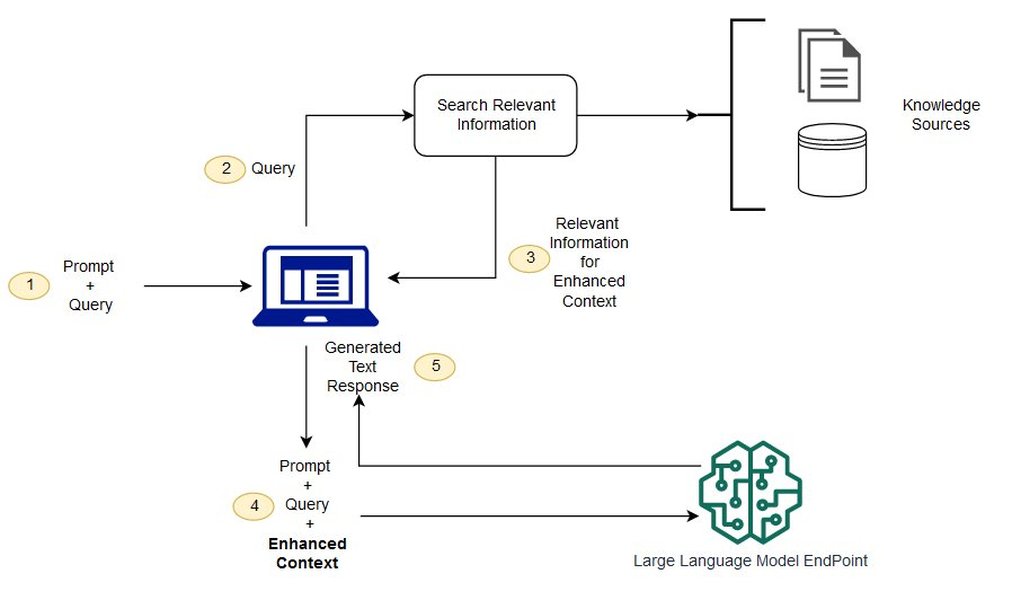
A typical diagram illustrating the components of a RAG system.
Introducing Causal Dynamic Feedback (CDF)
The Causal Dynamic Feedback mechanism, as proposed in CDF-RAG, aims to bridge the gap between semantic retrieval and causal reasoning. This mechanism introduces a feedback loop that allows the system to dynamically refine its retrieval process based on an understanding of causal relationships. This feedback can be informed by various sources, including:
- Reinforcement Learning: An agent can learn to optimize query refinement and retrieval strategies based on rewards related to causal consistency and accuracy.
- Human Feedback: Expert or user feedback on the causal validity and explainability of generated responses can be used to train and improve the system.
- Automated Evaluation: Metrics specifically designed to assess causal correctness and consistency can provide automated feedback signals.
By dynamically adjusting the retrieval process based on causal feedback, CDF-RAG can prioritize information that is not only semantically relevant but also causally sound. This iterative refinement allows the system to delve deeper into complex relationships and avoid misleading associations.
CDF-RAG Framework: A Deeper Dive
The CDF-RAG framework is designed to integrate causal reasoning throughout the RAG pipeline. While the specific architecture can vary, the core components often involve:
Causal Graph Retrieval
Instead of solely retrieving unstructured text documents, CDF-RAG emphasizes the retrieval of structured causal graphs or information that can be used to construct or infer causal relationships. This could involve accessing knowledge bases specifically designed to represent causal links or using advanced techniques to extract causal information from text.
Query Refinement with Causal Awareness
The dynamic feedback loop is crucial for refining the initial user query. Based on preliminary retrieval results and an evolving understanding of the causal landscape related to the query, the system can adjust its retrieval strategy. For instance, if an initial search retrieves information about two variables that are correlated, the system might refine its query to specifically look for evidence of a direct causal link between them.
Multi-Hop Causal Reasoning
Complex questions often require reasoning across multiple pieces of information to establish a causal chain. CDF-RAG facilitates multi-hop causal reasoning by navigating interconnected knowledge sources, following causal pathways to arrive at a comprehensive and causally sound answer.
Response Validation against Causal Pathways
A key aspect of CDF-RAG is the validation of generated responses against the retrieved or inferred causal pathways. This step helps to ensure that the generated output is not only factually accurate but also logically coherent and consistent with known or discovered causal relationships. This process acts as a safeguard against the generation of misleading or nonsensical explanations.
Comparison with Existing RAG Approaches
CDF-RAG distinguishes itself from other RAG methods by its explicit focus on causality and dynamic feedback. Here's a brief comparison with some existing approaches:
| RAG Approach | Key Characteristic | Causal Reasoning Integration | Feedback Mechanism |
|---|---|---|---|
| Naive RAG | Simple retrieval based on semantic similarity. | Limited or None | Limited or None |
| Advanced RAG | Improved indexing, retrieval strategies, and generation. | Implicit (may retrieve causally related text but doesn't explicitly model causality) | Limited (may involve some post-processing feedback) |
| GraphRAG | Leverages knowledge graphs for structured retrieval. | Can represent causal links if present in the graph. | Varies depending on implementation. |
| CDF-RAG | Integrates causal graph retrieval, dynamic query refinement, and causal validation. | Explicit and Core Component | Dynamic and Adaptive |
As the table illustrates, CDF-RAG represents a significant advancement by making causal reasoning a central part of the RAG process and incorporating dynamic feedback for continuous improvement.
Practical Applications and Benefits
The integration of causal dynamic feedback in RAG has the potential to unlock numerous benefits across various domains:
- Healthcare: CDF-RAG can help in understanding complex disease pathways, predicting patient outcomes based on causal factors, and providing more explainable diagnostic or treatment recommendations.
- Finance: Analyzing causal relationships between economic indicators, market events, and financial outcomes can lead to more accurate forecasting and risk assessment.
- Scientific Research: CDF-RAG can assist researchers in discovering novel causal links in experimental data, generating hypotheses, and summarizing complex scientific literature with a focus on causal mechanisms.
- Customer Service: Understanding the causal factors behind customer issues can enable AI assistants to provide more targeted and effective solutions.
Improving Explainability and Trust
One of the major benefits of CDF-RAG is the enhanced explainability of AI-generated responses. By grounding responses in causal pathways, the system can provide a clear and logical rationale for its conclusions. This transparency is crucial for building trust in AI systems, especially in high-stakes applications where understanding the "why" behind a recommendation or prediction is essential.
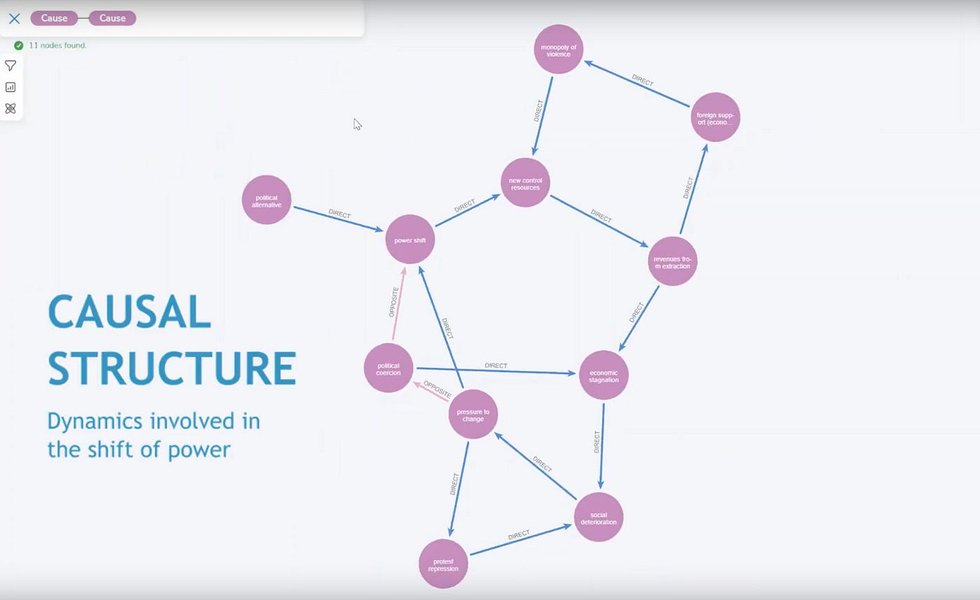
A visual representation of a causal loop diagram, illustrating interconnected variables and their influences.
Addressing Hallucinations
By validating responses against causal pathways, CDF-RAG offers a mechanism to mitigate the problem of hallucinations. If a generated statement is not supported by the retrieved causal evidence or contradicts known causal principles, the feedback loop can signal the need for revision or alternative retrieval.
Challenges and Future Directions
While CDF-RAG holds significant promise, there are also challenges to consider:
-
Causal Graph Acquisition: Building and maintaining comprehensive and accurate causal graphs can be a complex and resource-intensive task.
-
Dynamic Feedback Implementation: Designing effective and stable dynamic feedback loops, particularly those involving reinforcement learning, requires careful consideration and experimentation.
-
Evaluation Metrics: Developing robust evaluation metrics that can accurately assess the causal consistency and explainability of RAG systems is an ongoing area of research.
Future research in CDF-RAG will likely focus on developing more efficient and scalable methods for causal graph discovery and representation, exploring novel dynamic feedback mechanisms, and creating more sophisticated evaluation benchmarks. The integration of human feedback and expert knowledge into the loop is also a crucial area for further exploration.
This video discusses Generative Feedback Loops, a concept relevant to the dynamic feedback mechanism in CDF-RAG.
Frequently Asked Questions about CDF-RAG
What is the main difference between traditional RAG and CDF-RAG?
The primary difference lies in the integration of causal reasoning and dynamic feedback. Traditional RAG relies mainly on semantic similarity, while CDF-RAG explicitly models and utilizes causal relationships and employs feedback to refine its processes iteratively.
How does CDF-RAG improve factual accuracy?
By validating generated responses against causal pathways, CDF-RAG can identify and correct statements that are factually incorrect or inconsistent with known cause-and-effect relationships, thereby improving accuracy.
What kind of feedback is used in CDF-RAG?
The feedback in CDF-RAG can be diverse, including reinforcement learning signals based on desired outcomes, human feedback on the quality and causal correctness of responses, and automated evaluation metrics.
Is CDF-RAG only applicable to specific domains?
While domains like healthcare and finance with well-defined causal relationships are strong candidates, the principles of integrating causal reasoning and dynamic feedback can be applied to any domain where understanding cause and effect is important for generating accurate and explainable responses.
References
Last updated April 21, 2025