
New Hop RAG Projects
Exploring Advancements in Multi-Hop Retrieval-Augmented Generation and Retro-Inspired Projects
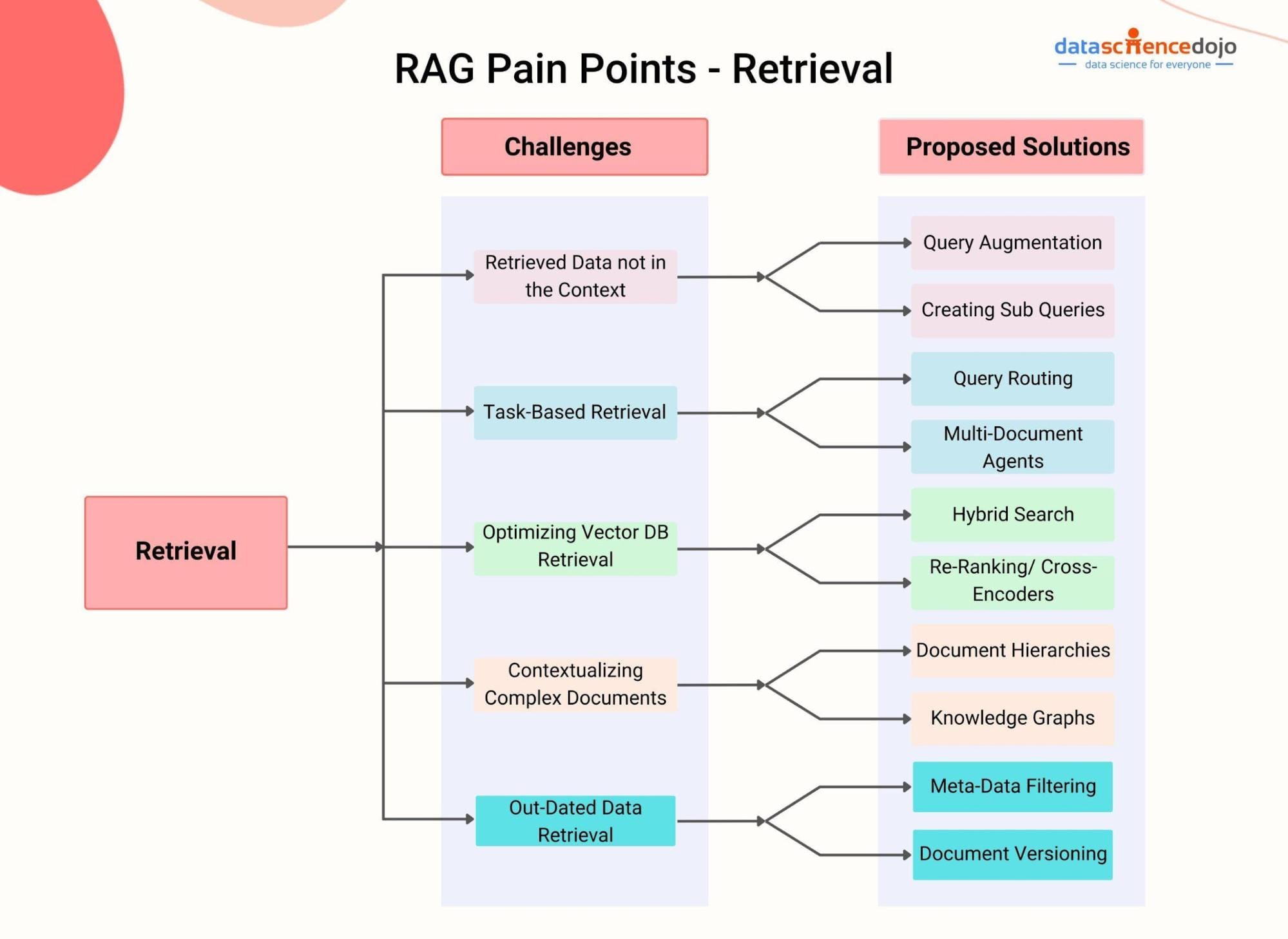
Key Highlights
- Advanced Multi-Step Reasoning Frameworks: Projects like HopRAG, MultiHop-RAG, and EfficientRAG enhance logical reasoning and multi-document retrieval.
- Graph-Structured Knowledge: Innovations integrate graph representations to better model entity relationships and domain-specific hierarchies.
- Diverse Applications: Beyond text retrieval systems, the “RAG” term appears in reimagined retro arcade game projects that revitalise classic gameplay with modern tricks.
Overview of Retrieval-Augmented Generation (RAG)
Retrieval-Augmented Generation (RAG) systems combine the strengths of traditional retrieval methods and modern large language models (LLMs) to produce responses enriched with factual evidence pulled from multiple sources. In advanced settings, these systems are extended with multi-hop reasoning—addressing multi-step queries where an answer is synthesized from several passages—and graph-based representations that logically structure the relationships among diverse pieces of information.
Multi-Hop RAG Frameworks
Multi-hop RAG frameworks are designed for scenarios where a single query requires a series of retrieval steps across multiple documents. These steps enable the model to combine disparate sources of evidence, culminating in a coherent answer. Several projects and frameworks have emerged in this area:
HopRAG
HopRAG is a novel framework that augments Retrieval-Augmented Generation by incorporating logical reasoning with graph-structured knowledge exploration. The framework constructs a passage graph during the indexing phase. This graph representation helps in navigating through evidence that might be distributed across various documents, ensuring that even when initial retrieval is imperfect, the reasoning process can effectively link related pieces of knowledge.
MultiHop-RAG
Designed primarily for benchmarking, MultiHop-RAG focuses on multi-hop queries by providing a comprehensive dataset consisting of complex queries, supporting evidence spread over multiple documents, and ground-truth answers. The dataset enables the evaluation of RAG systems on how well they synthesize information from two to four different sources.
EfficientRAG Framework
EfficientRAG emphasizes the need to conduct multi-hop retrieval without multiple costly calls to LLMs. It achieves this by training auxiliary components such as a Labeler and a Filter, which help in streamlining the retrieval process. This makes the overall system more efficient while retaining accuracy in multi-hop reasoning tasks.
LevelRAG, CoRAG, and MBA-RAG
Additional frameworks such as LevelRAG, CoRAG, and MBA-RAG (which utilizes reinforcement learning for adaptive retrieval strategy selection) have surfaced. These projects focus on breaking down complex queries into simpler segments (LevelRAG) or chaining retrieval operations (CoRAG) to ensure comprehensive coverage of evidence and logical consistency. MBA-RAG, in particular, leverages bandit algorithms to decide the optimal retrieval strategy based on query complexity.
Graph-Structured Knowledge and Advanced Methodologies
An increasingly common trend in the design of advanced RAG systems is the use of graph-structured knowledge representations. GraphRAG is a pioneering example that capitalizes on graph-aware retrieval mechanisms, specifically in domain-specific applications:
GraphRAG
GraphRAG redefines RAG paradigms by incorporating the notion of graph-based knowledge. Instead of relying solely on text-based retrieval, GraphRAG constructs a knowledge graph where nodes represent entities and edges denote their relationships. This structure vastly improves the model's understanding of context, allowing it to integrate hierarchies, entity relationships, and contextual cues from different documents. Consequently, the graph-aware retrieval process results in richer and more accurate contextual synthesis.
Dataset Innovations for Multi-Hop Reasoning
Another worthwhile innovation is the development of new datasets explicitly curated for multi-hop reasoning. These datasets contain not only complex queries but also segmented supporting evidence scattered across various documents. They are designed to push the capabilities of RAG systems, by ensuring that the models are trained to handle splits in data and logical chains where evidence from one document must be combined with another.
Intersecting Domains: Retro Gaming and RAG Inspirations
In a coincidental yet interesting overlap, some projects have adopted the term “RAG” in contexts seemingly unrelated to retrieval-augmented generation. In the gaming industry, for example, “new hop RAG projects” have emerged that reimagine classic arcade experiences.
Retro-Inspired Arcade Games
A number of new projects in the field of retro gaming draw inspiration from classic arcade games and give them a modern twist. Examples include:
Epic Games RAG-Inspired Titles
Some developers associated with Epic Games have experimented with arcade-style projects that borrow elements from RAG algorithms. Games such as "Trover Saves the Universe" and "Shockwave" blend modern graphics with the charm of early arcade titles, revisiting gameplay styles with updated mechanics.
Modern Retro Sequels
Other projects build on the legacy of classic games. For instance, sequels like "Shovel Knight 2" and spin-offs such as "Bloodstained: Curse of the Moon 2" focus on the nostalgic 8-bit era while bringing in more challenging gameplay and advanced graphical techniques. These games underscore the continuing appeal of retro aesthetics, demonstrating that the spirit of classic arcade challenges can be innovatively revived.
Other Retro-Inspired Projects
Additional projects like "Teenage Mutant Ninja Turtles: Shredder's Revenge," "Asteroids: Recharged," "Pac-Man Mega Tunnel Battle," and "Xeno Crisis" infuse modern mechanics into their arcade roots. These games provide both nostalgia and innovation, appealing to old-school gamers and new audiences alike.
While the major focus in Retrieval-Augmented Generation is on multi-hop reasoning and graph-based knowledge exploitation, the usage of “RAG” in retro gaming projects serves as a reminder that innovative reimaginings can occur across platforms. Although these domains are distinct, they both embrace the principle of integrating legacy strengths with modern advancements.
Comparative Analysis of New Hop RAG Projects
To visualize and compare the diverse projects within the RAG ecosystem, the following table summarizes key aspects such as methodology, application area, and unique features:
| Project/Framework | Description | Methodology | Unique Feature |
|---|---|---|---|
| HopRAG | Integrates logical reasoning through graph-structured knowledge exploration. | Graph-based construction during indexing | Efficient linking of evidence across multiple documents |
| MultiHop-RAG | Framework for evaluating multi-hop queries using dedicated datasets. | Multi-document retrieval synthesis | Benchmark dataset with evidence across 2-4 documents |
| EfficientRAG | Framework using Labeler and Filter for adaptive multi-hop retrieval. | Auxiliary training components | Reduction in repeated LLM calls for efficiency |
| GraphRAG | Utilizes graph-aware retrieval for domain-specific applications. | Graph-based reasoning | Domain hierarchy modeling through knowledge graphs |
| LevelRAG / CoRAG / MBA-RAG | Approaches focusing on modular query breakdown and chained retrieval. | Query decomposition and reinforcement learning (MBA-RAG) | Adaptive strategy selection for complex query resolution |
| Retro-Inspired RAG Projects | Modern reimaginings of classic arcade games. | Integration of classic gameplay with modern graphics and mechanics | Blend of nostalgia and innovation in gaming |
Opportunities and Future Trends
Advancements in Retrieval Technology
The evolution of RAG systems is bound to accelerate as advancements in both retrieval algorithms and LLM architectures continue. Key opportunities include:
Improved Efficiency
With frameworks like EfficientRAG and MBA-RAG, the focus is on reducing the computational cost by optimizing when and how many calls are made to generate a response. This efficiency is crucial for applications in real-time scenarios and systems where computational resources are limited.
Enhanced Contextual Understanding
Utilizing graph-based knowledge, as seen in GraphRAG, greatly enhances context understanding by preserving entity relations and domain-specific nuances. This richer structure allows RAG systems to produce more accurate and context-aware responses.
Robust Multi-Document Integration
Multi-document retrieval and synthesis play a vital role in providing comprehensive answers. By carefully curating datasets and employing multi-hop strategies, future systems are likely to handle more complex queries that demand the integration of diverse sources of information.
Cross-Domain Inspirations
Although the primary emphasis in RAG research is on text and knowledge retrieval, the design principles from these frameworks may inspire adjacent fields. The aesthetic and design considerations seen in retro-inspired arcade projects provide insight into reimagining established concepts—whether they be in text processing or game development—to capture both efficiency and creativity.
References
- HopRAG: Multi-Hop Reasoning for Logic-Aware Retrieval - ArXiv
- MultiHop-RAG: Benchmarking Retrieval-Augmented Generation for Multi-Hop Queries - ArXiv
- NIL-zhuang/EfficientRAG-official - GitHub
- Awesome-GraphRAG - GitHub
- CoRAG: A New Paradigm for Retrieval-Augmented Generation - Medium
Recommended Further Inquiries
Last updated March 21, 2025