
Unlocking Your CenterPoint Energy LTIP: A Comprehensive Guide to How It Works and Tax Reporting
Navigate the complexities of your Long-Term Incentive Plan with clarity, from award structure to tax implications.
CenterPoint Energy's Long-Term Incentive Plan (LTIP) is a key component of its compensation strategy, designed to reward employees for their contributions to the company's sustained success. Understanding how this program operates and its impact on your personal finances, particularly tax obligations, is crucial. This guide offers a detailed exploration of the CenterPoint LTIP and provides insights into its tax reporting requirements.
Essential Insights: Key Takeaways
- Alignment with Long-Term Goals: The LTIP aims to align employee incentives with CenterPoint Energy's long-term performance and shareholder value, typically through stock-based awards.
- Vesting and Payouts: Awards like Restricted Stock Units (RSUs) and Performance Shares generally vest over several years, often with "cliff" vesting (e.g., three years), contingent on continued employment and sometimes specific performance metrics.
- Taxable Events: The vesting of LTIP awards is typically a taxable event, with the fair market value of the shares treated as ordinary income. Subsequent sale of these shares can result in capital gains or losses.
Decoding CenterPoint Energy's LTIP: How It Functions
Purpose and Governance
The CenterPoint Energy LTIP is structured to motivate and retain key employees, including executives and high-performing individuals, by linking a significant portion of their compensation to the company's long-term achievements. The plan's overarching goal is to foster a culture of ownership and drive shareholder value. The specifics of the LTIP are governed by formal plan documents and agreements, often detailed in filings with the Securities and Exchange Commission (SEC). The Compensation Committee of CenterPoint Energy's Board of Directors typically oversees the plan, approving awards, setting performance goals, and defining vesting terms.
Eligibility and Award Types
Participation in the LTIP is generally extended to select employees based on their role and contribution to the company. Awards can take various forms, providing flexibility in how incentives are delivered:
- Restricted Stock Units (RSUs): These are grants of company stock that convert into actual shares once specific vesting conditions, primarily continued employment over a set period, are met.
- Performance Shares/Awards: These awards are contingent on achieving pre-defined company performance targets over a specified performance period (e.g., three years). The number of shares ultimately received can vary based on the level of achievement. For instance, some executive offer letters mention LTIP awards with aggregate target incentive levels expressed as a percentage of annual base salary (e.g., 260%).
- Stock Options: These give employees the right to purchase CenterPoint Energy stock at a predetermined price (the strike price) after a vesting period.
- Other Authorized Forms: The plan may allow for other types of long-term incentives as authorized by the Compensation Committee.
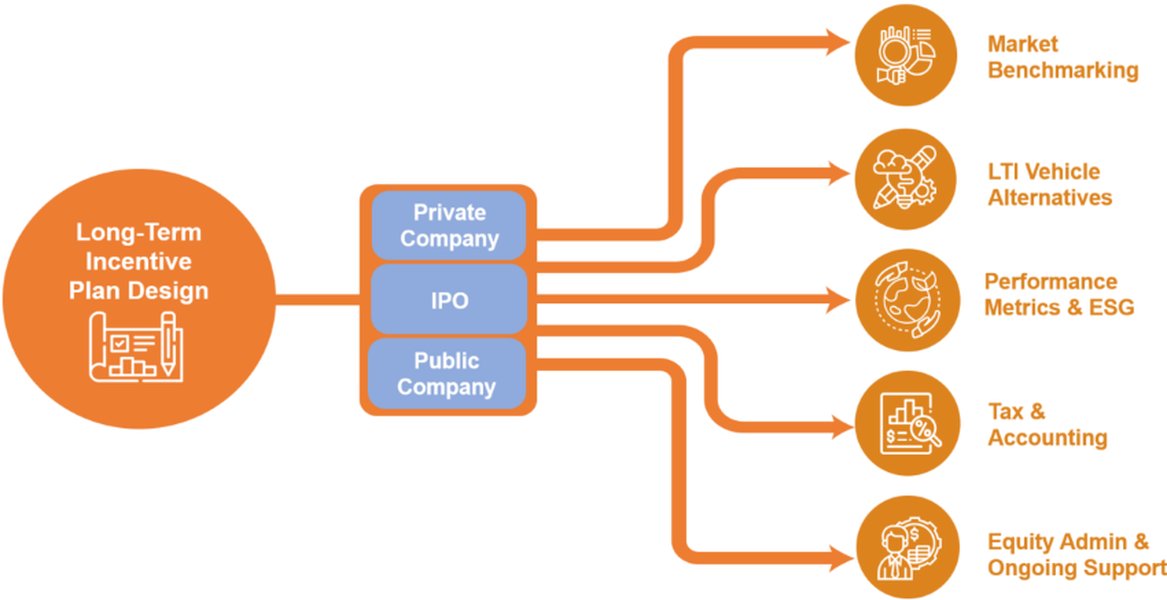
Elements typically considered in Long-Term Incentive Plan design.
Vesting and Payout Mechanisms
Vesting Schedules
LTIP awards are subject to vesting schedules, which define when an employee gains full ownership of the award. Common structures include:
- Cliff Vesting: The entire award vests at once after a specified period, such as a three-year "cliff." This means no portion of the award is owned until the end of the vesting period.
- Graded or Ratable Vesting: Portions of the award vest incrementally over time (e.g., 25% per year over four years).
Vesting is also typically contingent on continued employment. Some plans may have specific provisions for "retirement eligibility" (e.g., age 55 with at least five years of service) that can affect vesting upon retirement.
Performance Conditions
For performance-based awards, vesting also depends on the company achieving specific financial or operational targets outlined at the grant date. These metrics are designed to ensure that rewards are directly tied to the company's success.
Payout
Upon vesting, employees typically receive shares of CenterPoint Energy stock or, in some cases, a cash equivalent based on the value of the vested awards. The specifics are detailed in individual award agreements.
Navigating the Tax Landscape of Your LTIP Awards
Understanding the tax implications of your LTIP awards is essential for proper financial planning and compliance. The tax treatment can vary depending on the type of award and actions taken by the employee.
Taxation at Vesting (RSUs, Performance Shares)
When RSUs or performance shares vest, the fair market value (FMV) of the shares on the vesting date is generally considered ordinary income to the employee. This amount is subject to federal income tax, state income tax (if applicable), Social Security tax, and Medicare tax.
- Reporting: This income is reported by CenterPoint Energy as wages on your Form W-2 in Box 1.
- Withholding: Employers are typically required to withhold taxes on this income. This is often done by withholding a portion of the vested shares (a "sell-to-cover" transaction) or by requiring the employee to pay the withholding amount in cash.
Taxation of Stock Options
Non-Qualified Stock Options (NQSOs)
For NQSOs, which are a common type of stock option:
- At Exercise: When you exercise NQSOs, the difference between the FMV of the stock on the exercise date and the exercise price (the "spread") is taxed as ordinary income. This income is reported on your Form W-2 and is subject to tax withholding.
- Cost Basis: Your cost basis in the shares acquired will be the FMV on the exercise date (exercise price + spread).
Incentive Stock Options (ISOs)
ISOs have different tax rules:
- At Exercise: Generally, there is no regular income tax due when you exercise ISOs. However, the spread may be subject to the Alternative Minimum Tax (AMT).
- At Sale: If you meet specific holding period requirements (holding the stock for more than two years from the grant date and more than one year from the exercise date), any gain from the sale is taxed as a long-term capital gain. If these holding periods are not met (a "disqualifying disposition"), a portion of the gain is treated as ordinary income.
Taxation Upon Sale of Shares
When you sell shares acquired through your LTIP (after they have vested and, in the case of options, been exercised):
- Capital Gains/Losses: You will have a capital gain or loss equal to the difference between your sale proceeds and your cost basis.
- For shares from RSUs or performance shares, the cost basis is generally the FMV on the vesting date (the amount included in your W-2 income).
- For shares from NQSOs, the cost basis is generally the FMV on the exercise date.
- For shares from ISOs, the cost basis is generally the exercise price (if it was a qualifying disposition).
- Reporting: The sale is reported by your broker on Form 1099-B, showing the gross proceeds. You must report the sale on Form 8949 (Sales and Other Dispositions of Capital Assets) and summarize it on Schedule D (Capital Gains and Losses) of your tax return. It's crucial to ensure your cost basis is correctly reported to avoid overpaying taxes.
- Holding Period:
- Short-Term Capital Gain/Loss: If you hold the shares for one year or less after vesting (or exercise for options), the gain or loss is short-term.
- Long-Term Capital Gain/Loss: If you hold the shares for more than one year, the gain or loss is long-term, which typically benefits from lower tax rates.
Summary of Key Tax Forms
The following table summarizes the primary tax forms involved with LTIP compensation:
| Award Type / Event | Taxable Event | Income Type | Employer Reporting | Employee Reporting |
|---|---|---|---|---|
| RSUs / Performance Shares (Vesting) | Vesting Date | Ordinary Income (FMV of shares) | Form W-2 (Box 1) | Form 1040 (Income) |
| Stock Options (NQSO - Exercise) | Exercise Date | Ordinary Income (Spread) | Form W-2 (Box 1) | Form 1040 (Income) |
| Stock Options (ISO - Exercise) | Exercise Date | Potential AMT Income | Form 3921 (from employer) | Form 6251 (if AMT applies) |
| Sale of Vested/Exercised Shares | Sale Date | Capital Gain or Loss | Form 1099-B (from broker) | Form 8949, Schedule D (Form 1040) |
Note: This table provides a general overview. Specific circumstances and award details can influence tax treatment.
Visualizing LTIP Award Characteristics
Different types of LTIP awards have varying characteristics in terms of risk, reward, and complexity. The radar chart below offers a conceptual comparison of common award types based on several factors. This is an illustrative representation and actual attributes can vary based on specific plan design.
This chart compares RSUs, Performance Shares, and Stock Options (NQSOs) on a scale of 1 to 10 (higher being more significant for that attribute). For example, Performance Shares typically have a stronger direct link to company performance targets, while RSUs might offer greater vesting certainty if only time-based.
The LTIP Journey: A Visual Overview
The following mindmap illustrates the typical lifecycle of an LTIP award, from the initial grant to the eventual tax reporting implications. This provides a simplified visual pathway to understand the various stages involved.
This mindmap highlights the key stages, from receiving an LTIP award to navigating the associated vesting processes, potential sale of shares, and the crucial tax reporting steps that follow.
Understanding LTIPs: Further Insights
Long-Term Incentive Plans are a common tool companies use to reward and retain employees. The video below offers a general explanation of what LTIPs are and how they generally function, providing broader context to CenterPoint Energy's specific program.
A general overview of Long-Term Incentive Plans (LTIPs).
This video explains that LTIPs are designed to provide substantial financial incentives for achieving long-term company goals, typically over a defined period. They often involve equity, aligning employee interests with those of shareholders by encouraging performance that increases the company's value.
Important Considerations
- Cost Basis Accuracy: When selling shares, ensure your cost basis is correctly reported on Form 8949. The basis for shares acquired through RSUs or performance awards is the ordinary income recognized at vesting. For NQSOs, it's the FMV at exercise. Incorrect basis reporting can lead to overpayment of capital gains tax.
- Tax Planning: LTIP income can significantly impact your overall tax liability. Consider consulting with a financial advisor or tax professional to plan for potential tax payments, especially if a large award vests or if you plan to sell a substantial number of shares.
- Impact of Performance Goals: For performance-based awards, the actual payout can vary. Understand the metrics and how they might affect the timing and amount of your taxable income.
- Consult a Tax Professional: Tax laws regarding equity compensation are complex and can change. The information provided here is for general guidance. It is highly recommended to consult with a qualified tax advisor for personalized advice based on your specific financial situation and the details of your LTIP awards.
Frequently Asked Questions (FAQ)
What happens if I leave CenterPoint Energy before my LTIP awards fully vest?
Generally, unvested LTIP awards are forfeited upon termination of employment. However, the specific terms depend on the plan documents and your award agreement. Certain circumstances, such as retirement (if meeting specific age and service requirements), disability, or death, may have special provisions regarding vesting. Always refer to your official LTIP documentation or consult with HR.
How is the Fair Market Value (FMV) determined for tax purposes at vesting?
The Fair Market Value (FMV) is typically determined based on the closing price of CenterPoint Energy's stock on the New York Stock Exchange (NYSE) on the vesting date. Some plans might use an average price over a short period around the vesting date. Your award agreement or plan document will specify the exact method used.
What is an 83(b) election, and does it apply to CenterPoint LTIP awards?
An 83(b) election is an IRS provision that allows an employee to pay taxes on the fair market value of restricted stock at the time of grant, rather than at vesting. This is typically relevant for stock grants (not RSUs or options) where the stock is received at grant but is subject to a substantial risk of forfeiture. Most LTIP awards like RSUs are not eligible for an 83(b) election because you don't own the stock until it vests. Performance shares and stock options also have their own specific tax rules. Consult a tax advisor if you believe this might apply to a specific type of award you received, though it's uncommon for typical RSU or performance share grants.
Are dividends paid on unvested LTIP awards?
Some LTIPs may grant dividend equivalents on unvested RSUs or performance shares. These dividend equivalents might accrue and be paid out (often in cash or additional shares) only if and when the underlying award vests. The treatment of dividends or dividend equivalents is specified in the LTIP plan document and your award agreement. If paid, they are typically taxed as ordinary income.
Recommended Further Exploration
- What are the differences between cliff vesting and graded vesting for LTIP awards?
- How can I optimize my tax strategy for selling shares received from an LTIP?
- What are the specific performance metrics CenterPoint Energy uses for its performance-based LTIP awards?
- How does the Alternative Minimum Tax (AMT) affect Incentive Stock Options (ISOs)?
References
Last updated May 6, 2025