
Unpacking "Test Snooze": More Than Just Extra Sleep or Paused Code?
Delving into the dual nature of "snooze" – from software execution delays to the science behind your morning alarm.
The term "Test Snooze" might initially seem cryptic, but it elegantly bridges two distinct yet conceptually related domains: the precise world of software testing and the familiar, often debated, realm of sleep habits and alarm clocks. Understanding "Test Snooze" involves characterizing its function, purpose, and implications in both these contexts. This exploration reveals how a simple concept of 'pausing' or 'delaying' manifests and is utilized differently, whether dealing with lines of code or cycles of sleep.
Key Insights at a Glance
- Dual Definitions: "Test Snooze" primarily refers to (1) temporarily pausing or delaying automated tests in software development to manage execution flow and synchronization, and (2) the act of using an alarm clock's snooze function for short, repeated sleep extensions, a subject of ongoing sleep science research.
- Software Snoozing – A Balancing Act: In tech, "snoozing" tests can aid in synchronizing operations or managing resources. However, fixed-duration snoozes are often less efficient than dynamic, event-driven waits, as they can introduce unnecessary delays or mask underlying issues.
- Alarm Snoozing – A Complex Habit: While hitting the snooze button might offer a gentler awakening or temporarily improve cognitive alertness by mitigating sleep inertia, it can also fragment sleep, potentially disrupting sleep architecture and affecting overall sleep quality and daytime functioning.
"Test Snooze" in the Realm of Software Testing
Defining the Pause in Code Execution
In the context of software testing, particularly automated testing, "test snooze" refers to the capability to intentionally pause or delay the execution of a test case or a sequence of tests for a predetermined period. This function is not about an error, but a deliberate halt introduced by the tester or an automated script.
Purpose and Application
The primary purposes of implementing a "snooze" or delay in software testing include:
- Synchronization: Allowing the application under test (AUT) sufficient time to reach a specific state (e.g., waiting for a UI element to load, a database operation to complete, or a network response).
- Resource Management: In complex environments, tests might be snoozed to avoid overloading system resources or to wait for a shared resource to become available.
- Handling Asynchronous Operations: Modern applications often perform tasks asynchronously. A snooze can provide a simple (though often suboptimal) way to wait for these operations to conclude.
- Debugging and Observation: Testers might insert temporary snoozes to slow down test execution, making it easier to observe the AUT's behavior at specific points.
- Workflow Management: Platforms like Vanta, a compliance automation tool, allow users to "Temporarily Snooze a Test," effectively pausing a compliance check. This is useful if a system component is undergoing maintenance or if known issues are being addressed, preventing false negatives or irrelevant alerts. Similarly, Spur allows delaying test executions for set periods.
Technical Implementation and Considerations
Snooze functionality is often implemented as a command or function within testing frameworks. For example:
- In frameworks like Qt or Squish, a function like
might be available to pause the test script for the specified duration.snooze(milliseconds)
// Example of a conceptual snooze in a test script
function runPaymentTest() {
    navigateToCheckout();
    enterPaymentDetails();
    // Wait for 5 seconds for payment processing to simulate completion
    testFramework.snooze(5000); // Pauses execution for 5000 milliseconds
    verifyPaymentSuccess();
}
However, the use of fixed-time snoozes is generally discouraged in favor of more robust synchronization techniques. Relying on fixed delays can lead to:
- Flaky Tests: If the AUT takes longer than the snooze duration to reach the desired state, the test will fail. If it's faster, the test wastes time.
- Inefficient Test Execution: Cumulative snoozes can significantly extend the overall test suite execution time.
Modern best practices advocate for variable-time synchronization or explicit waits. These mechanisms involve polling for a specific condition (e.g., an element becoming visible, a piece of text appearing) with a timeout, rather than waiting for a fixed duration. This makes tests more resilient to performance variations and more efficient.
Benefits and Drawbacks
Benefits:
- Provides a simple way to handle timing issues in some scenarios.
- Can be useful for quick debugging or temporary workarounds.
- Offers control in managing test execution flow, especially in platforms allowing manual snoozing of scheduled tests.
Drawbacks:
- Fixed snoozes can lead to brittle and unreliable tests.
- Often masks underlying synchronization problems rather than solving them.
- Can significantly increase test execution time.
- Discouraged in favor of dynamic waits or event-driven synchronization.
The Snooze Button: An Exploration in Sleep Science
Defining the Extra Few Minutes
Beyond software, "snooze" is universally recognized as the function on an alarm clock that silences the alarm temporarily, allowing the user a few more minutes of sleep before it sounds again. This brief respite is a common, yet complex, part of many people's waking routines.
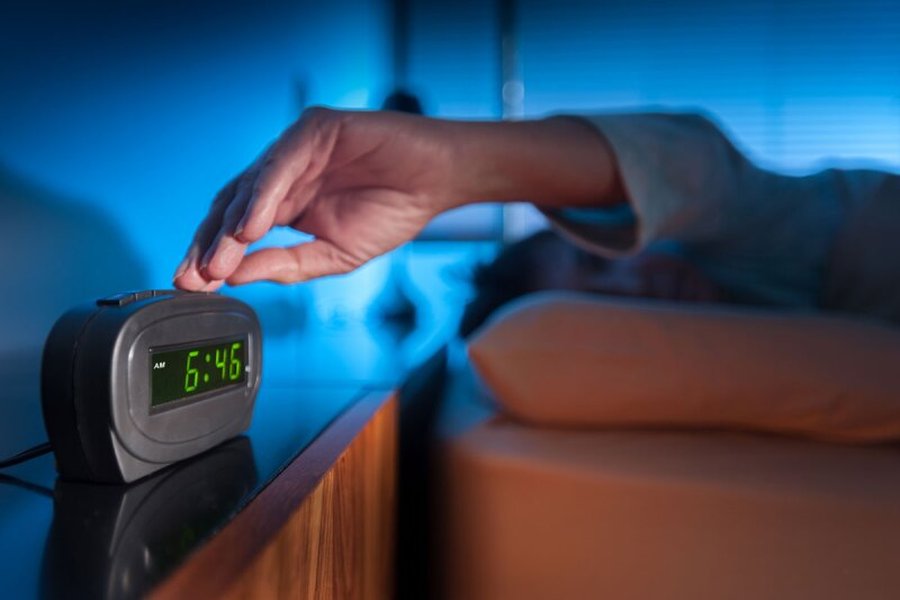
The familiar act of reaching for the snooze button.
The Curious Case of the 9-Minute Snooze
Many have wondered why the snooze duration on alarm clocks often defaults to nine minutes. This isn't based on sleep science but rather on a historical technical constraint. When the snooze feature was first introduced in mechanical alarm clocks (like the 1950s General Electric-Telechron Snooz-Alarm), integrating it with existing gear mechanisms made a roughly ten-minute cycle practical. Adding a new gear specifically for a precise ten-minute snooze would have required significant redesign. Thus, working with the existing components, nine minutes (or a duration close to it) became a common standard that persisted even into the digital age, largely due to convention.
Characterizing Snoozing in Sleep Research
Sleep scientists have taken a keen interest in the effects of using the snooze button. The practice is characterized as a method of "fractionated waking," where sleep is extended in short, interrupted bursts.
Impact on Sleep Inertia
Sleep inertia is the feeling of grogginess, disorientation, and reduced cognitive performance experienced immediately after waking. Some research suggests that snoozing might help mitigate sleep inertia for certain individuals. The repeated, gentle awakenings could act as a gradual transition from sleep to wakefulness, potentially by activating the body's stress response system (e.g., cortisol release) in smaller, controlled doses. Studies have shown that individuals who snooze may perform slightly better on some cognitive tasks immediately upon fully waking compared to those who wake abruptly to a single alarm, especially if they are waking from deep sleep.
Cognitive Performance
The relationship between snoozing and cognitive performance is nuanced. While some studies indicate potential short-term benefits in alertness or specific tasks like arithmetic or memory recall right after waking, these effects might be temporary. The key is whether the snoozing period involves light sleep or dips back into deeper sleep stages. If the latter occurs, waking again can exacerbate sleep inertia.
Sleep Architecture and Overall Health
A significant concern with habitual snoozing is its potential to disrupt sleep architecture. Sleep cycles through various stages, including light sleep, deep sleep, and Rapid Eye Movement (REM) sleep, all crucial for physical and mental restoration.
- Fragmented Sleep: Repeatedly waking and falling back asleep can fragment these cycles. The sleep obtained during snooze intervals is often light and unrefreshing.
- REM Sleep Disruption: Snoozing can particularly truncate REM sleep, which often occurs more towards the end of the sleep period. This can affect mood, memory consolidation, and learning.
- Confusing the Body Clock: An inconsistent wake-up process can confuse the body's internal circadian rhythm, potentially leading to difficulties falling asleep at night or increased daytime sleepiness.
- Sleep Duration: Frequent snoozers may also experience shorter overall sleep duration, as the time spent snoozing is not high-quality, restorative sleep.
Research methodologies like actigraphy (monitoring movement), electroencephalography (EEG, for brain waves), and electromyography (EMG, for muscle activity) are used in sleep labs to objectively measure these effects. While some individuals report feeling better with snoozing, the overall consensus leans towards caution, emphasizing the importance of sufficient, consolidated sleep and a consistent wake-up time.
Visualizing the Snooze: A Comparative Radar Chart
The concept of "snooze" manifests differently in software testing versus alarm clock usage. This radar chart offers a visual comparison across several key attributes, based on an opinionated analysis of their typical characteristics and impacts. The scores range from 1 (Low) to 10 (High).
This chart highlights that while both types of snoozing offer user control and convenience, their impact on efficiency and potential for negative consequences differ, and neither is typically rooted in deep scientific or technical optimization for best outcomes, often serving as more of a temporary or preferential measure.
Snooze Contexts: A Mindmap Overview
To better grasp the multifaceted nature of "Test Snooze," this mindmap illustrates its primary contexts and key characteristics within each. It visually breaks down the term into its software testing and sleep science interpretations, detailing the purpose, mechanisms, and effects associated with each.
snooze() in Qt, Squish)"]
id1c2["Platform features (e.g., Vanta 'Temporarily Snooze a Test')"]
id1d["Pros"]
id1d1["Simple for basic timing"]
id1d2["Temporary workflow adjustments"]
id1e["Cons"]
id1e1["Inefficient (wasted time)"]
id1e2["Brittle/Flaky tests"]
id1e3["Often masks underlying issues"]
id1e4["Variable-time sync preferred"]
id2["Sleep Science / Alarm Clock Context"]
id2a["Definition: Using alarm's snooze for short sleep extensions"]
id2b["The 9-Minute Standard"]
id2b1["Historical: Mechanical clock gearing (e.g., GE Snooz-Alarm)"]
id2b2["Not based on sleep science"]
id2c["Effects on Waking & Sleep"]
id2c1["Sleep Inertia Mitigation(Potential for gentler waking)"] id2c2["Cognitive Performance
(Mixed results; possible short-term boost)"] id2c3["Sleep Architecture Disruption
(Fragmented sleep, reduced REM)"] id2c4["Impact on Circadian Rhythms"] id2d["Physiological Aspects"] id2d1["Stress response system (cortisol)"]
This mindmap provides a structured overview, differentiating the technical application of snoozing in software development from its behavioral and physiological implications in sleep management.
Comparative Breakdown: Software Snooze vs. Alarm Snooze
The following table provides a side-by-side comparison of key characteristics when "snooze" is applied in software testing versus its use with alarm clocks.
| Aspect | Software Test Snooze | Alarm Clock Snooze |
|---|---|---|
| Primary Goal | Synchronize test execution with application state; manage test flow. | Delay full awakening; obtain a few more minutes of perceived rest. |
| Typical Duration Control | Precisely defined by tester/script (milliseconds to minutes). | Often a fixed interval (e.g., 5-15 minutes, commonly 9 minutes) per activation. |
| Underlying Mechanism | Programmatic pause in code execution. | Electronic or mechanical timer delaying alarm reactivation. |
| Key Benefit (Intended) | Allows application to catch up; provides control over test timing. | Offers a gentler transition to wakefulness; psychological comfort. |
| Key Drawback/Risk | Can lead to inefficient, brittle tests; may hide real issues. | May fragment sleep, reduce sleep quality, and worsen sleep inertia long-term. |
| Context of Use | Automated software quality assurance processes. | Personal sleep-wake routines. |
| Alternatives/Best Practices | Dynamic waits, event-driven synchronization. | Consistent sleep schedule, adequate sleep duration, immediate waking. |
This video discusses the pros and cons of using the snooze button on your alarm, exploring its effects on your wake-up process and overall sleep, which is a key aspect of characterizing "snooze" in the context of sleep science.
Frequently Asked Questions (FAQ)
Recommended Further Exploration
- What are the best practices for synchronization in automated software testing?
- How does sleep inertia affect daily cognitive functions and productivity?
- Explore the history of alarm clock technology and the snooze button's invention.
- What are the long-term health impacts of fragmented sleep patterns?
References
Last updated May 9, 2025